English
- Afrikaans
- Albanian
- Amharic
- Arabic
- Armenian
- Azerbaijani
- Basque
- Belarusian
- Bengali
- Bosnian
- Bulgarian
- Catalan
- Cebuano
- Corsican
- Croatian
- Czech
- Danish
- Dutch
- English
- Esperanto
- Estonian
- Finnish
- French
- Frisian
- Galician
- Georgian
- German
- Greek
- Gujarati
- Haitian Creole
- hausa
- hawaiian
- Hebrew
- Hindi
- Miao
- Hungarian
- Icelandic
- igbo
- Indonesian
- irish
- Italian
- Japanese
- Javanese
- Kannada
- kazakh
- Khmer
- Rwandese
- Korean
- Kurdish
- Kyrgyz
- Lao
- Latin
- Latvian
- Lithuanian
- Luxembourgish
- Macedonian
- Malgashi
- Malay
- Malayalam
- Maltese
- Maori
- Marathi
- Mongolian
- Myanmar
- Nepali
- Norwegian
- Norwegian
- Occitan
- Pashto
- Persian
- Polish
- Portuguese
- Punjabi
- Romanian
- Russian
- Samoan
- Scottish Gaelic
- Serbian
- Sesotho
- Shona
- Sindhi
- Sinhala
- Slovak
- Slovenian
- Somali
- Spanish
- Sundanese
- Swahili
- Swedish
- Tagalog
- Tajik
- Tamil
- Tatar
- Telugu
- Thai
- Turkish
- Turkmen
- Ukrainian
- Urdu
- Uighur
- Uzbek
- Vietnamese
- Welsh
- Bantu
- Yiddish
- Yoruba
- Zulu

Telephone: +86 13120555503
Email: frank@cypump.com


Apr . 01, 2024 17:55 Back to list
slurry pump kirloskar Performance Engineering
Introduction
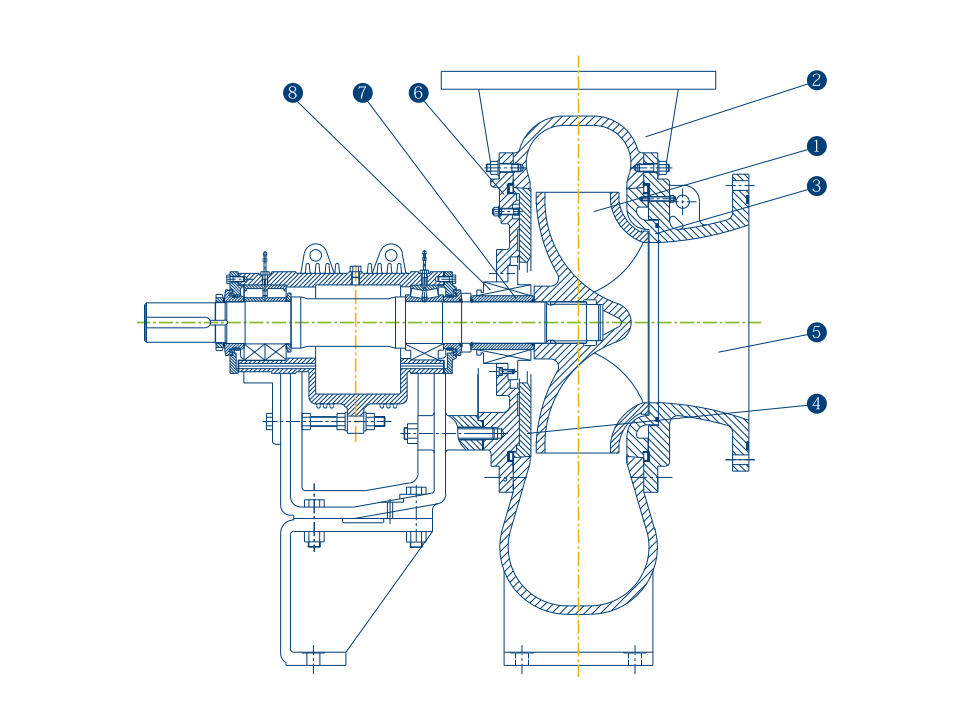
Kirloskar slurry pumps are centrifugal pumps specifically designed for handling abrasive and erosive fluids containing solid particles. These pumps occupy a critical position in numerous industrial processes including mining, mineral processing, chemical processing, wastewater treatment, and dredging. Unlike standard centrifugal pumps, slurry pumps feature robust construction and specialized hydraulic designs to mitigate wear and maintain efficiency when conveying slurries. Their technical performance is defined by factors such as flow rate (m³/hr), head (meters), solids handling capability (percentage by weight, particle size), and pump material selection, all of which are tailored to the specific slurry composition and application. The core performance characteristics differentiate Kirloskar slurry pumps through their optimized impeller designs for high solids concentration, robust bearing assemblies for extended service life, and a variety of casing materials to resist corrosion and erosion, addressing a significant pain point in industries dealing with harsh fluid conditions.
Material Science & Manufacturing
The construction of Kirloskar slurry pumps relies heavily on materials science to withstand the aggressive nature of slurries. Pump casings are commonly manufactured from high-chromium cast iron (typically 27% Cr) due to its exceptional abrasion resistance. Alternative materials include stainless steel (316, duplex), and rubber linings for specific chemical compatibility and erosion resistance. Impellers are similarly constructed from high-chromium cast iron, but can also utilize specialized alloys like hardened steel or ceramics for extreme service conditions. Shafts are typically made of alloy steel, heat-treated for increased strength and toughness. Manufacturing processes crucial to pump performance include sand casting for casing and impeller fabrication, followed by machining to precise tolerances. Welding procedures are rigorously controlled to ensure structural integrity, particularly for multi-piece casings. Critical parameters during manufacturing include chemical composition verification of cast irons and steels, hardness testing (Brinell, Vickers), non-destructive testing (NDT) such as radiographic inspection and liquid penetrant examination to detect flaws, and dimensional accuracy achieved through precision machining. The choice of elastomer for liners (e.g., natural rubber, synthetic rubber) is dictated by slurry pH and temperature, necessitating careful chemical compatibility analysis to prevent degradation and maintain sealing efficiency. Proper heat treatment processes are vital to attain the desired mechanical properties and microstructure of the metallic components, minimizing the risk of premature failure.
Performance & Engineering
Performance engineering for Kirloskar slurry pumps focuses on hydraulic design and mechanical stability under load. The pump’s hydraulic performance is governed by affinity laws – relationships between flow rate, head, and impeller speed. Impeller design is paramount; typically, impellers are designed with recessed or open designs to effectively handle solids without clogging. Volute casing geometry is optimized to minimize turbulence and maximize hydraulic efficiency. Force analysis is critical, considering radial loads imposed by the slurry and axial thrust developed during operation. Bearing selection (typically deep groove ball bearings or roller bearings) must accommodate these loads, and bearing housing design must ensure adequate lubrication and cooling. Environmental resistance is addressed through material selection and protective coatings. Pumps operating in corrosive environments require corrosion-resistant alloys or rubber linings. Compliance with industry standards such as ISO 5199 (hydraulic performance of centrifugal pumps) and ISO 9906 (rotodynamic pumps – hydrodynamic performance) is essential. Net Positive Suction Head Required (NPSHr) calculations are fundamental to prevent cavitation, a phenomenon that can severely damage the impeller and reduce pump efficiency. Pump selection must consider the specific gravity of the slurry, viscosity, and solids concentration, as these parameters significantly influence pump performance and power requirements.
Technical Specifications
| Parameter | Unit | Typical Value (Kirloskar KP Series) | Notes |
|---|---|---|---|
| Flow Rate | m³/hr | 5 - 500 | Dependent on impeller size and speed |
| Head | m | 10 - 120 | Dependent on impeller size and speed |
| Solids Handling | % by weight | Up to 60 | Dependent on pump design and slurry properties |
| Particle Size | mm | Up to 75 | Larger sizes require specialized impeller designs |
| Pump Casing Material | - | High Chromium Iron (27% Cr) | Alternative materials available (SS316, Rubber Lined) |
| Impeller Material | - | High Chromium Iron (27% Cr) | Hardened steel or ceramics for abrasive slurries |
Failure Mode & Maintenance
Slurry pump failure modes are often attributed to abrasive wear, erosion, corrosion, and cavitation. Abrasive wear, caused by the impact of solid particles, leads to impeller and casing erosion, reducing pump efficiency and ultimately causing failure. Erosion is accelerated by high slurry velocity and particle shape. Corrosion occurs when the slurry contains corrosive chemicals, leading to material degradation. Cavitation, as previously mentioned, damages the impeller due to the formation and collapse of vapor bubbles. Fatigue cracking can occur in pump shafts and casings due to cyclical loading. Delamination of rubber linings is a common failure mode in rubber-lined pumps due to bond failure between the rubber and the substrate. Preventive maintenance is crucial to extend pump life. This includes regular inspection for wear, replacement of worn parts (impellers, liners, seals), lubrication of bearings, and monitoring of pump performance parameters (flow rate, head, power consumption). Vibration analysis can detect bearing wear and misalignment. Proper strainer installation upstream of the pump is essential to remove oversized particles and prevent pump damage. Regular cleaning of the pump casing and impeller is also recommended to prevent buildup of solids. Failure analysis, involving metallurgical examination of failed components, helps identify the root cause of failure and prevent recurrence.
Industry FAQ
Q: What is the primary difference between a Kirloskar slurry pump and a standard centrifugal pump?
A: The primary difference lies in the design and materials. Slurry pumps are built with heavier duty components, wear-resistant materials (like high-chromium iron), and specialized impeller designs to handle abrasive particles without rapid degradation. Standard centrifugal pumps are optimized for clean liquids and cannot withstand the erosive forces of slurries.
Q: How do I select the appropriate material for the pump casing based on the slurry composition?
A: Material selection depends on the slurry’s chemical composition, pH, temperature, and particle characteristics. High-chromium iron is suitable for abrasive slurries with neutral pH. Stainless steel (316 or duplex) is preferred for corrosive environments. Rubber linings are ideal for slurries containing abrasive particles and corrosive chemicals, but require careful consideration of chemical compatibility.
Q: What are the common causes of impeller wear in slurry pumps?
A: Impeller wear is primarily caused by abrasion and erosion. The size, shape, and concentration of solid particles, as well as the slurry velocity, significantly influence wear rates. Cavitation and corrosion also contribute to impeller damage.
Q: How can I minimize cavitation damage in a slurry pump?
A: Ensure adequate Net Positive Suction Head Available (NPSHa) exceeds the Net Positive Suction Head Required (NPSHr). Minimize suction lift and ensure the pump is installed at the correct elevation. Avoid operating the pump at excessively high speeds or with low flow rates.
Q: What is the recommended maintenance schedule for a Kirloskar slurry pump?
A: Regular maintenance should include visual inspection for wear, lubrication of bearings, seal checks, and performance monitoring. Impellers and liners should be inspected and replaced as needed. A detailed maintenance schedule should be established based on operating conditions and slurry characteristics.
Conclusion
Kirloskar slurry pumps represent a vital component in industries handling abrasive and erosive fluids. Their performance is deeply rooted in material science, precise manufacturing processes, and thoughtful hydraulic engineering. Proper selection based on slurry characteristics, coupled with a robust preventive maintenance program, is crucial for maximizing pump life and minimizing downtime.
Continued advancements in materials technology, such as the development of more wear-resistant alloys and advanced ceramic materials, will further enhance the performance and reliability of slurry pumps. Optimizing impeller designs through computational fluid dynamics (CFD) simulations will also lead to improved hydraulic efficiency and reduced energy consumption. The integration of condition monitoring systems, leveraging sensors and data analytics, will enable predictive maintenance and further reduce the risk of unexpected failures.
-
Precision at the Pump: How Better Machining Protects Flow and Uptime
News2026-11-20
-
Why Pump Reliability Begins Before the First Drop of Fluid
News2026-11-20
-
Beyond the Pump: Designing Safer Access Around Critical Water Infrastructure
News2026-11-20
-
Why Pumping Stations Depend on the Infrastructure Beneath the Pumps
News2026-11-20
-
Beyond the Pump Room: How Smarter Loading Protects Industrial Equipment
News2026-11-19
-
When Pumps Stop: Designing More Resilient Power for Critical Pumping Systems
News2026-11-19
-
The Hidden Role of Dust and Gas Monitoring in Reliable Pump Operations
News2026-11-19
-
The Hidden Role of Mineral Compounds in Extending Industrial Pump Lifespan
News2026-10-12
-
Why Pump System Reliability Depends on Precision Hose Assembly Methods
News2026-09-15
-
How Advanced Imaging Films Are Transforming Pump Component Quality Control
News2026-08-25
-
How Advanced Filtration Protects Pump Systems from Premature Wear and Costly Downtime
News2026-08-25
-
How Steel Material Selection Drives Pump Reliability in Heavy-Duty Systems
News2026-08-25
-
Ensuring Pump System Efficiency: The Role of High-Quality Pipe Fittings and Tubing
News2026-08-24
-
Optimizing Fluid Dynamics and Material Consistency in Industrial Processing
News2026-08-18
-
Innovations and Challenges in Hydraulic Systems for Heavy Machinery
News2026-08-13




