English
- Afrikaans
- Albanian
- Amharic
- Arabic
- Armenian
- Azerbaijani
- Basque
- Belarusian
- Bengali
- Bosnian
- Bulgarian
- Catalan
- Cebuano
- Corsican
- Croatian
- Czech
- Danish
- Dutch
- English
- Esperanto
- Estonian
- Finnish
- French
- Frisian
- Galician
- Georgian
- German
- Greek
- Gujarati
- Haitian Creole
- hausa
- hawaiian
- Hebrew
- Hindi
- Miao
- Hungarian
- Icelandic
- igbo
- Indonesian
- irish
- Italian
- Japanese
- Javanese
- Kannada
- kazakh
- Khmer
- Rwandese
- Korean
- Kurdish
- Kyrgyz
- Lao
- Latin
- Latvian
- Lithuanian
- Luxembourgish
- Macedonian
- Malgashi
- Malay
- Malayalam
- Maltese
- Maori
- Marathi
- Mongolian
- Myanmar
- Nepali
- Norwegian
- Norwegian
- Occitan
- Pashto
- Persian
- Polish
- Portuguese
- Punjabi
- Romanian
- Russian
- Samoan
- Scottish Gaelic
- Serbian
- Sesotho
- Shona
- Sindhi
- Sinhala
- Slovak
- Slovenian
- Somali
- Spanish
- Sundanese
- Swahili
- Swedish
- Tagalog
- Tajik
- Tamil
- Tatar
- Telugu
- Thai
- Turkish
- Turkmen
- Ukrainian
- Urdu
- Uighur
- Uzbek
- Vietnamese
- Welsh
- Bantu
- Yiddish
- Yoruba
- Zulu

Telephone: +86 13120555503
Email: frank@cypump.com


Apr . 01, 2024 17:55 Back to list
slurry pump for mining Manufacturing Specifications and Performance Analysis
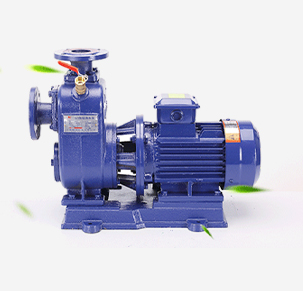
Slurry Pump for Mining: Manufacturing Specifications and Performance Analysis
A slurry pump for mining is a specialized centrifugal pumping system engineered to transport non-Newtonian fluids consisting of water and suspended solid particles, typically ranging from fine tailings to coarse mineral ores. Within the mining industry chain, these pumps serve as the critical nexus between extraction and processing, facilitating the movement of materials through hydrocyclones, thickeners, and flotation cells. The core performance of a mining slurry pump is defined by its ability to manage extreme abrasive wear and corrosive chemical environments while maintaining hydraulic efficiency. Unlike standard water pumps, these machines must handle varying slurry densities and viscosities, requiring precise engineering of the impeller geometry and the selection of advanced wear-resistant materials to minimize the Total Cost of Ownership (TCO) and maximize Mean Time Between Failures (MTBF).
Material Science & Manufacturing
The longevity of a slurry pump for mining is fundamentally dependent on the metallurgical properties of its wetted parts. The primary challenge is the simultaneous occurrence of abrasive wear (mechanical erosion) and corrosive attack (chemical degradation). To combat this, manufacturers employ several advanced material strategies:
1. High-Chromium White Irons (ASTM A532): For extremely abrasive environments, 27% Cr white iron is the industry standard. This material features a hard primary eutectic carbide structure (M7C3) embedded in a martensitic matrix, providing a hardness typically exceeding 600 HB. The high chromium content ensures the formation of a passive oxide layer, reducing corrosion rates in acidic tailings.
2. Natural and Synthetic Elastomers: In applications involving smaller particle sizes or higher impact, polyurethane or natural rubber linings are utilized. These materials possess high resilience and a low modulus of elasticity, allowing them to absorb the kinetic energy of impacting particles rather than fracturing. The manufacturing process involves precision molding and bonding to a steel shell to ensure structural integrity under high pressure.
3. Manufacturing Processes: The production of the pump casing and impeller involves complex centrifugal casting to ensure the highest density of carbides at the inner surface where wear is most concentrated. Post-casting heat treatment, including quenching and tempering, is critical to eliminate internal stresses and optimize the hardness-to-toughness ratio. Precision machining of the wearing plates and impeller vanes is conducted using CNC grinding to maintain strict hydraulic tolerances, reducing turbulence-induced erosion.
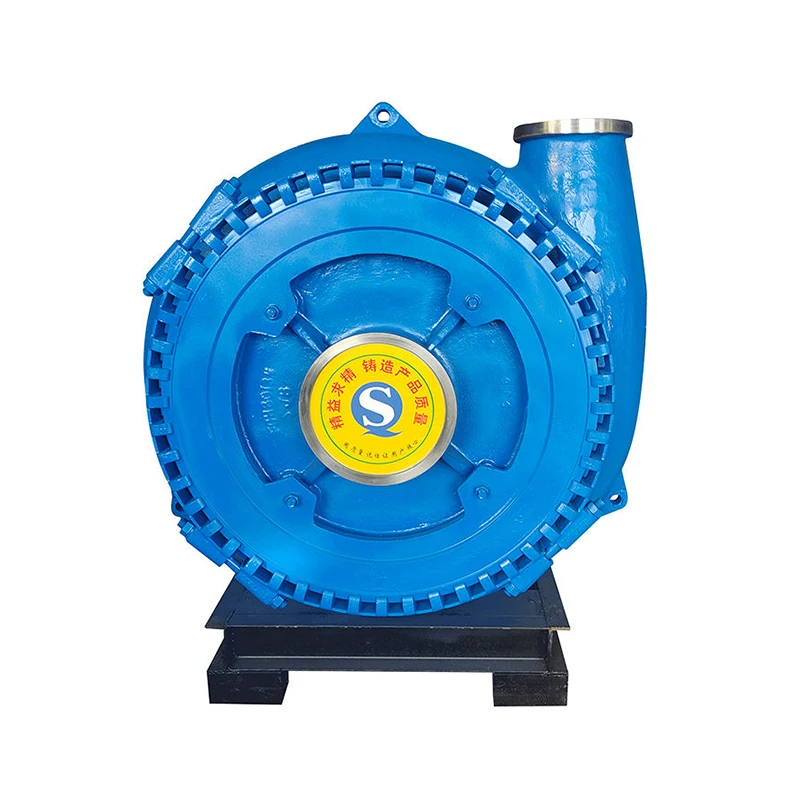
Performance & Engineering
Engineering a slurry pump requires a deep analysis of fluid dynamics and mechanical force. The central engineering objective is to maintain a "critical velocity"—the minimum velocity required to keep solids in suspension and prevent sedimentation (plugging) within the pipeline—without exceeding the velocity threshold that triggers exponential abrasive wear.
Hydraulic Design and Force Analysis: The impeller is designed with a wide flow passage to reduce the probability of clogging. Force analysis focuses on the radial thrust exerted on the shaft, which is exacerbated by the non-uniform density of the slurry. To mitigate this, pumps are equipped with heavy-duty bearings and reinforced shafting, often utilizing duplex stainless steels to prevent pitting corrosion.
Environmental Resistance and Compliance: Mining pumps must operate in diverse climates, from arctic temperatures to tropical humidity. Thermal expansion coefficients of the lining materials must be matched with the outer shell to prevent delamination. Furthermore, engineering compliance focuses on sealing systems; expeller seals or mechanical seals with external flushing (API Plan 32/54) are employed to prevent the abrasive slurry from infiltrating the bearing housing, which would lead to catastrophic mechanical failure.
Technical Specifications
| Parameter Dimension | Standard Heavy-Duty Slurry Pump | High-Chrome Alloy Variant | Rubber-Lined Variant | Ultra-High Pressure Series |
|---|---|---|---|---|
| Max Flow Rate (m³/h) | 1200 | 1000 | 800 | 600 |
| Max Discharge Head (m) | 60 | 75 | 45 | 120 |
| Max Particle Size (mm) | 100 | 80 | 60 | 50 |
| Hardness (Brinell/HB) | 500-550 | 620-680 | 80-90 (Shore A) | 650+ |
| Operating Temp (°C) | -10 to 80 | -20 to 120 | -20 to 60 | -10 to 100 |
| Material Grade | ASTM A532 Class III | High Cr 27% | Natural Rubber/PU | Tungsten Carbide Inlay |
Failure Mode & Maintenance
Failure analysis in mining slurry pumps typically identifies three primary degradation modes: erosion, corrosion, and mechanical fatigue.
1. Erosive Wear: This is the most common failure mode, occurring primarily at the impeller vanes and the volute tongue. High-velocity particles cause micro-cutting and plastic deformation. Failure is characterized by a gradual decrease in pump head and efficiency. Maintenance involves the scheduled replacement of interchangeable liners and impellers based on ultrasonic thickness measurements.
2. Cavitation-Induced Pitting: Occurs when the Net Positive Suction Head Available (NPSHa) falls below the required level (NPSHr). The collapse of vapor bubbles creates localized high-pressure shocks that strip the material surface. This is mitigated by optimizing the suction piping geometry and reducing the pump's rotational speed.
3. Shaft Fatigue and Seal Failure: Excessive vibration due to impeller imbalance or slurry solids buildup leads to fatigue cracking of the shaft. Seal failure often results from the drying out of the gland packing or the failure of the flush water system. Professional maintenance requires laser alignment of the pump and motor, and the implementation of a vibration monitoring system (accelerometers) to detect early signs of bearing degradation.
Industry FAQ
Q: How do you determine the optimal material choice between high-chrome alloys and rubber linings?
A: The selection depends on the particle size and the nature of the abrasion. High-chrome alloys are preferred for large, coarse particles and high-pressure applications where hardness is critical to resist cutting. Rubber linings are superior for fine, sandy slurries where the material's elasticity allows it to absorb impacts without fracturing.
Q: What is the impact of slurry density (concentration by weight) on pump efficiency?
A: As slurry density increases, the viscosity rises, leading to higher frictional losses in the pump and pipeline. This shifts the pump curve downward, reducing the total head and flow rate. It is critical to calibrate the pump's RPM to ensure the flow remains above the critical deposition velocity.
Q: Why is the "Critical Velocity" so important in slurry transport engineering?
A: If the velocity drops below the critical threshold, solids begin to settle at the bottom of the pipe, creating a "bed." This not only increases friction and reduces efficiency but can lead to complete pipeline blockage and severe localized wear on the bottom of the pump casing.
Q: How can we reduce the frequency of impeller replacements in highly abrasive gold tailings?
A: Implementing Variable Frequency Drives (VFDs) allows for the optimization of pump speed based on real-time slurry density. Reducing the speed slightly during lower-density cycles significantly reduces the erosive energy (which increases by the cube of the velocity), thereby extending the impeller's lifespan.
Q: What are the signs that a slurry pump is experiencing cavitation?
A: The most prominent signs are an audible "gravel-like" noise coming from the pump casing, erratic discharge pressure readings, and a significant drop in flow rate. Physical inspection usually reveals small, pitted holes on the impeller eye and suction side of the casing.
Conclusion
The engineering of a slurry pump for mining is a complex balance between hydraulic performance and material endurance. By integrating high-chromium metallurgy with optimized centrifugal casting and precision hydraulic design, these pumps can withstand the extreme mechanical and chemical stresses inherent in mineral processing. The technical success of the installation depends not only on the initial material selection but on a rigorous adherence to critical velocity parameters and proactive vibration monitoring.
Looking forward, the industry is moving toward the integration of "smart" pumping systems utilizing IoT sensors for real-time wear tracking and automated flow adjustment. The shift toward more sustainable mining practices will also require pumps capable of handling higher-density "paste" tailings to reduce water consumption, necessitating further innovations in positive displacement hybrids and ultra-high-pressure centrifugal designs.
-
Comprehensive Guide to Waterproof ORings for Optimal Sealing Solutions
News2026-06-09
-
septic system sump pump Performance Analysis
News2026-06-26
-
septic pump company Performance Analysis
News2026-06-26
-
pumps water treatment Performance Analysis
News2026-06-26
-
pumps for septic tanks Material Science and Manufacturing
News2026-06-26
-
pump for septic system Material Science Manufacturing
News2026-06-26
-
heavy duty submersible pump Performance Analysis
News2026-06-25
-
best submersible pump for septic tank Performance Analysis
News2026-06-25
-
basement sewer ejector pump Performance Analysis
News2026-06-25
-
basement pumps ejector pumps Performance Analysis
News2026-06-25
-
basement lift pump Performance and Engineering
News2026-06-25
-
basement bathroom pump systems Performance Analysis
News2026-06-24
-
basement bathroom ejector pump system Performance Engineering
News2026-06-24
-
2 hp sewage pump Performance Engineering
News2026-06-24
-
1 hp septic pump Performance Engineering
News2026-06-24




