English
- Afrikaans
- Albanian
- Amharic
- Arabic
- Armenian
- Azerbaijani
- Basque
- Belarusian
- Bengali
- Bosnian
- Bulgarian
- Catalan
- Cebuano
- Corsican
- Croatian
- Czech
- Danish
- Dutch
- English
- Esperanto
- Estonian
- Finnish
- French
- Frisian
- Galician
- Georgian
- German
- Greek
- Gujarati
- Haitian Creole
- hausa
- hawaiian
- Hebrew
- Hindi
- Miao
- Hungarian
- Icelandic
- igbo
- Indonesian
- irish
- Italian
- Japanese
- Javanese
- Kannada
- kazakh
- Khmer
- Rwandese
- Korean
- Kurdish
- Kyrgyz
- Lao
- Latin
- Latvian
- Lithuanian
- Luxembourgish
- Macedonian
- Malgashi
- Malay
- Malayalam
- Maltese
- Maori
- Marathi
- Mongolian
- Myanmar
- Nepali
- Norwegian
- Norwegian
- Occitan
- Pashto
- Persian
- Polish
- Portuguese
- Punjabi
- Romanian
- Russian
- Samoan
- Scottish Gaelic
- Serbian
- Sesotho
- Shona
- Sindhi
- Sinhala
- Slovak
- Slovenian
- Somali
- Spanish
- Sundanese
- Swahili
- Swedish
- Tagalog
- Tajik
- Tamil
- Tatar
- Telugu
- Thai
- Turkish
- Turkmen
- Ukrainian
- Urdu
- Uighur
- Uzbek
- Vietnamese
- Welsh
- Bantu
- Yiddish
- Yoruba
- Zulu

Telephone: +86 13120555503
Email: frank@cypump.com


Apr . 01, 2024 17:55 Back to list
slurry pump expeller supplier Performance Analysis
Introduction
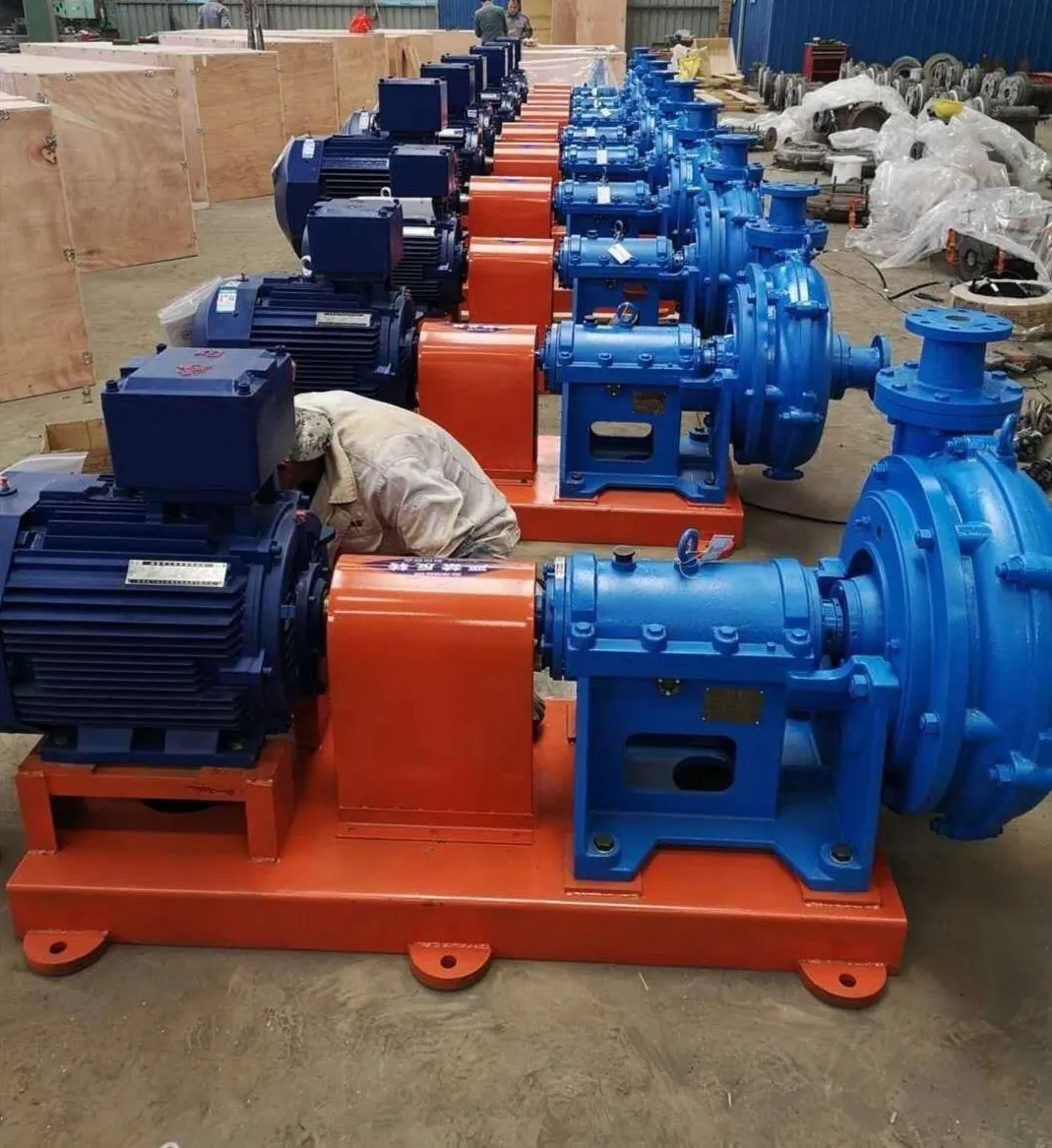
Slurry pump expellers are critical components within centrifugal slurry pumps, functioning as a wear-resistant interface between the impeller and the pump casing. Their primary purpose is to control internal leakage, maintaining optimal pump efficiency and preventing abrasive slurry from entering the mechanical seal area. Expellers are particularly vital in handling highly abrasive slurries common in mining, wastewater treatment, dredging, and heavy industrial applications. Unlike seals, expellers are not designed to completely prevent leakage, but rather to manage it effectively, reducing pressure on the seal and extending its lifespan. The selection of appropriate expeller materials and design directly impacts pump performance, maintenance intervals, and overall operational costs. A robust expeller system minimizes downtime and optimizes slurry transfer efficiency. The market for slurry pump expellers is driven by the increasing demand for efficient and reliable solids handling pumps across diverse industries, coupled with a growing need for extended equipment life in harsh operating environments.
Material Science & Manufacturing
Expeller construction typically employs high-hardness, abrasion-resistant materials. Common choices include high-chrome cast iron (typically 27% Cr), offering a balance of cost and wear resistance; hardened stainless steels (e.g., 316, 410) for improved corrosion resistance in specific slurry compositions; and specialized alloys like tungsten carbide or ceramic materials for extreme abrasive conditions. The manufacturing process starts with material selection based on slurry characteristics (particle size distribution, hardness, chemical composition, and concentration). Casting is a prevalent method for producing expellers, followed by heat treatment to achieve desired hardness levels (typically 58-65 HRC). Machining is then used to achieve precise dimensional tolerances, crucial for proper fit and function within the pump. Critical parameters during manufacturing include alloy composition verification (spectroscopy), hardness testing (Rockwell or Vickers), and dimensional inspection (coordinate measuring machines – CMM). Surface finish is also important; a smooth finish reduces slurry adhesion and minimizes wear. For ceramic expellers, pressing and sintering processes are utilized, requiring stringent control over temperature, pressure, and atmosphere to ensure density and fracture toughness. Weld overlay with hardfacing alloys is another technique employed to enhance wear resistance in specific areas prone to erosion. The compatibility of the expeller material with the slurry chemistry is paramount to prevent galvanic corrosion or accelerated degradation.
Performance & Engineering
The performance of a slurry pump expeller is characterized by its ability to reduce leakage while minimizing energy loss. The expeller creates a counter-rotating flow that increases pressure in the annular space between the impeller and casing, effectively restricting slurry passage toward the seal. Engineering considerations include hydraulic design to optimize flow patterns, minimizing turbulence and head loss. Finite element analysis (FEA) is used to analyze stress distribution within the expeller under various operating conditions, ensuring structural integrity and preventing fatigue failure. The radial clearance between the expeller and the impeller/casing is a critical parameter; too large a clearance reduces effectiveness, while too small a clearance can lead to contact and increased friction. Environmental resistance is a key concern, particularly in corrosive slurries. Material selection must account for pH levels, chloride content, and the presence of other aggressive chemicals. Compliance with industry standards, such as those set by the Hydraulic Institute and API 610, ensures consistent performance and reliability. Cavitation potential must be assessed to prevent damage to the expeller and surrounding components. Proper impeller balancing is also critical to minimize vibration and stress on the expeller. The expeller's geometry influences the radial load on the pump shaft bearings, requiring careful consideration during pump design.
Technical Specifications
| Material Grade | Hardness (HRC) | Maximum Slurry Concentration (%) | Maximum Operating Temperature (°C) |
|---|---|---|---|
| High Chrome Cast Iron (27% Cr) | 60-65 | 60 | 80 |
| Hardened Stainless Steel (316) | 58-62 | 70 | 150 |
| Tungsten Carbide | 68-72 | 80 | 200 |
| Alumina Ceramic | 75+ | 85 | 300 |
| Duplex Stainless Steel (2205) | 55-60 | 75 | 120 |
| Hardened 410 Stainless Steel | 62-66 | 65 | 100 |
Failure Mode & Maintenance
Common failure modes for slurry pump expellers include abrasive wear, erosion, corrosion, and fatigue cracking. Abrasive wear is the most prevalent, resulting from the impact of solid particles on the expeller surface. Erosion occurs due to the impingement of high-velocity slurry particles, particularly at angles. Corrosion can occur in aggressive slurry environments, leading to material degradation. Fatigue cracking can result from cyclic stress fluctuations, especially if the expeller is improperly balanced or subjected to excessive vibration. Failure analysis should involve visual inspection, metallographic examination, and hardness testing to identify the root cause of failure. Preventative maintenance includes regular inspection of the expeller for wear and corrosion, monitoring pump vibration levels, and ensuring proper alignment of the pump and motor. Lubrication of the pump shaft bearings is critical to minimize vibration and stress on the expeller. Replacement of the expeller should be performed when significant wear is detected, or if cracks are present. The use of sacrificial expellers, designed to wear out before other pump components, can extend the overall pump lifespan. Record keeping of expeller replacement intervals and failure analysis results can help optimize maintenance strategies.
Industry FAQ
Q: What is the typical service life of a high-chrome cast iron expeller in a continuous mining slurry application?
A: The service life of a high-chrome cast iron expeller in a continuous mining slurry application typically ranges from 6 to 18 months, depending on slurry abrasiveness, particle size distribution, and slurry flow velocity. Frequent inspection and monitoring are crucial to determine optimal replacement intervals.
Q: How does the material selection of the expeller affect the mechanical seal's longevity?
A: Selecting an expeller material compatible with the slurry chemistry and abrasion characteristics directly impacts the seal’s longevity. An effective expeller minimizes slurry leakage to the seal, reducing abrasive wear and preventing corrosion, thereby extending seal life. Incompatible materials can accelerate seal failure.
Q: What are the key considerations when selecting an expeller for a highly corrosive slurry?
A: For highly corrosive slurries, the primary considerations are material resistance to chemical attack, minimizing galvanic corrosion potential, and ensuring a robust surface finish. Stainless steels with high molybdenum content, or specialized alloys like Hastelloy, are often preferred. Regular corrosion monitoring and inspection are vital.
Q: How can I diagnose if an expeller is contributing to excessive pump vibration?
A: Excessive pump vibration linked to the expeller can be diagnosed by performing a vibration analysis, checking for impeller imbalance, verifying expeller clearances, and inspecting for signs of wear or damage. Shaft misalignment and bearing issues should also be ruled out.
Q: What is the role of the radial clearance between the expeller and impeller in pump efficiency?
A: The radial clearance significantly impacts pump efficiency. Excessive clearance reduces the effectiveness of the expeller in controlling leakage, leading to decreased pump performance. Insufficient clearance can cause contact and increased friction, also reducing efficiency and potentially causing damage.
Conclusion
Slurry pump expellers represent a critical, yet often underestimated, component in maintaining the operational efficiency and longevity of slurry pumping systems. Their proper selection, material science consideration, and manufacturing precision directly correlate with reduced downtime, optimized energy consumption, and extended mechanical seal life. Understanding the potential failure modes and implementing proactive maintenance strategies are essential for maximizing the return on investment in these critical components.
Future advancements in expeller technology will likely focus on the development of novel materials with enhanced wear and corrosion resistance, improved hydraulic designs for minimizing energy loss, and the integration of condition monitoring systems for predictive maintenance. Adopting a holistic approach to expeller management, encompassing material selection, manufacturing quality control, and proactive maintenance, is paramount for optimizing performance and minimizing lifecycle costs in demanding slurry applications.
-
Precision at the Pump: How Better Machining Protects Flow and Uptime
News2026-11-20
-
Why Pump Reliability Begins Before the First Drop of Fluid
News2026-11-20
-
Beyond the Pump: Designing Safer Access Around Critical Water Infrastructure
News2026-11-20
-
Why Pumping Stations Depend on the Infrastructure Beneath the Pumps
News2026-11-20
-
Beyond the Pump Room: How Smarter Loading Protects Industrial Equipment
News2026-11-19
-
When Pumps Stop: Designing More Resilient Power for Critical Pumping Systems
News2026-11-19
-
The Hidden Role of Dust and Gas Monitoring in Reliable Pump Operations
News2026-11-19
-
The Hidden Role of Mineral Compounds in Extending Industrial Pump Lifespan
News2026-10-12
-
Why Pump System Reliability Depends on Precision Hose Assembly Methods
News2026-09-15
-
How Advanced Imaging Films Are Transforming Pump Component Quality Control
News2026-08-25
-
How Advanced Filtration Protects Pump Systems from Premature Wear and Costly Downtime
News2026-08-25
-
How Steel Material Selection Drives Pump Reliability in Heavy-Duty Systems
News2026-08-25
-
Ensuring Pump System Efficiency: The Role of High-Quality Pipe Fittings and Tubing
News2026-08-24
-
Optimizing Fluid Dynamics and Material Consistency in Industrial Processing
News2026-08-18
-
Innovations and Challenges in Hydraulic Systems for Heavy Machinery
News2026-08-13




