English
- Afrikaans
- Albanian
- Amharic
- Arabic
- Armenian
- Azerbaijani
- Basque
- Belarusian
- Bengali
- Bosnian
- Bulgarian
- Catalan
- Cebuano
- Corsican
- Croatian
- Czech
- Danish
- Dutch
- English
- Esperanto
- Estonian
- Finnish
- French
- Frisian
- Galician
- Georgian
- German
- Greek
- Gujarati
- Haitian Creole
- hausa
- hawaiian
- Hebrew
- Hindi
- Miao
- Hungarian
- Icelandic
- igbo
- Indonesian
- irish
- Italian
- Japanese
- Javanese
- Kannada
- kazakh
- Khmer
- Rwandese
- Korean
- Kurdish
- Kyrgyz
- Lao
- Latin
- Latvian
- Lithuanian
- Luxembourgish
- Macedonian
- Malgashi
- Malay
- Malayalam
- Maltese
- Maori
- Marathi
- Mongolian
- Myanmar
- Nepali
- Norwegian
- Norwegian
- Occitan
- Pashto
- Persian
- Polish
- Portuguese
- Punjabi
- Romanian
- Russian
- Samoan
- Scottish Gaelic
- Serbian
- Sesotho
- Shona
- Sindhi
- Sinhala
- Slovak
- Slovenian
- Somali
- Spanish
- Sundanese
- Swahili
- Swedish
- Tagalog
- Tajik
- Tamil
- Tatar
- Telugu
- Thai
- Turkish
- Turkmen
- Ukrainian
- Urdu
- Uighur
- Uzbek
- Vietnamese
- Welsh
- Bantu
- Yiddish
- Yoruba
- Zulu

Telephone: +86 13120555503
Email: frank@cypump.com


Apr . 01, 2024 17:55 Back to list
slurry pump expeller manufacturers Performance Analysis
Introduction
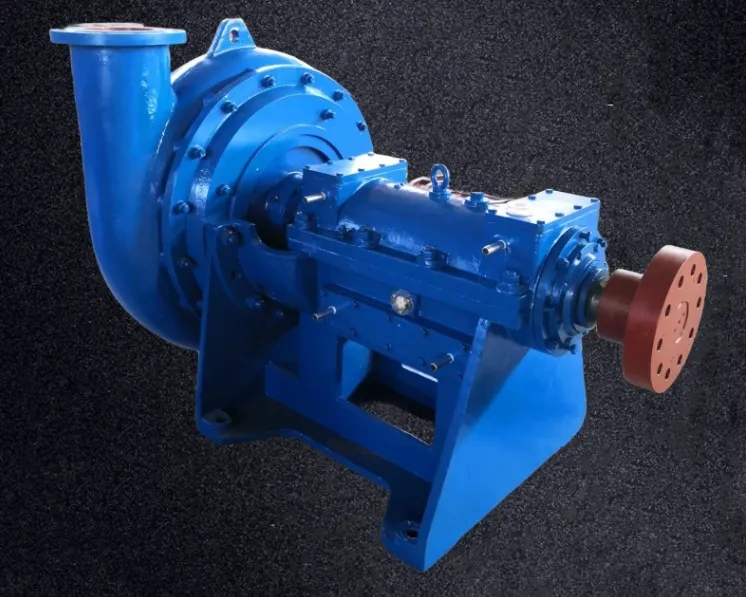
Slurry pump expellers are critical components in centrifugal pumps designed for handling abrasive and erosive slurries. Positioned between the impeller and the pump casing, the expeller’s function is to create a vortex that helps to reduce pressure and prevent backflow, ultimately enhancing pump efficiency and protecting the mechanical seal. Unlike wear rings, which primarily address volumetric losses, expellers specifically manage pressure distributions. Their performance directly impacts pump life, energy consumption, and operational reliability across diverse industries including mining, wastewater treatment, dredging, and chemical processing. The selection and maintenance of these components represent a significant operational cost and potential source of downtime for slurry pump end-users. This guide provides an in-depth technical overview of slurry pump expellers, covering material science, manufacturing, performance characteristics, failure modes, and industry standards.
Material Science & Manufacturing
Expellers are commonly manufactured from high-chromium cast irons (typically 19% to 28% Cr) due to their exceptional abrasion resistance. The chromium carbides formed within the iron matrix provide significant hardness and resistance to wear from solid particle impact. Alternative materials include hardened stainless steels (e.g., Duplex Stainless Steel, 2205) for applications involving corrosive slurries, and ceramic materials (Alumina, Silicon Carbide) for extreme abrasion resistance, particularly in highly concentrated slurries. The choice of material is dictated by the slurry composition (particle size, shape, hardness, concentration, and chemical properties). Manufacturing processes primarily involve sand casting, investment casting, or centrifugal casting. Sand casting is cost-effective for larger expellers but results in a coarser microstructure. Investment casting provides superior dimensional accuracy and surface finish, crucial for tight-fitting expellers. Centrifugal casting produces a dense, homogenous structure, minimizing porosity and enhancing mechanical properties. Key manufacturing parameter controls include mold temperature, pouring temperature, cooling rate, and heat treatment. Post-machining operations, such as grinding and lapping, are critical to achieving the precise dimensional tolerances and surface finish required for optimal performance and sealing. Surface hardness, typically measured by Rockwell C scale (HRC), is a critical quality control parameter. Residual stress analysis via X-ray diffraction is also performed to mitigate potential cracking issues.
Performance & Engineering
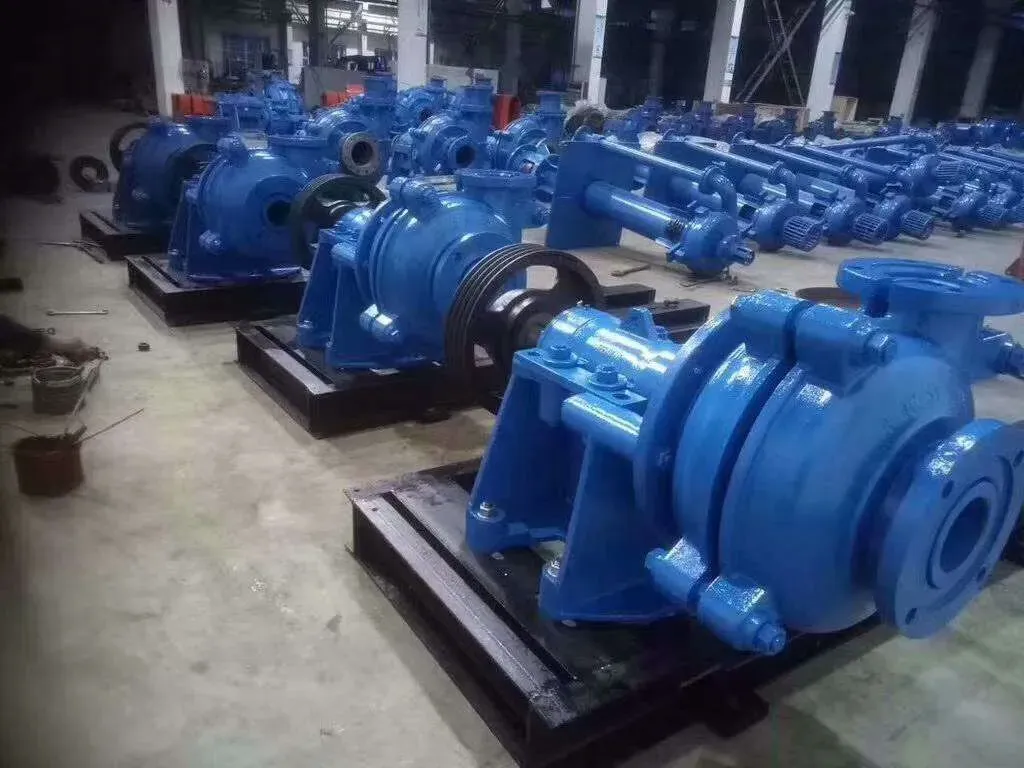
The performance of a slurry pump expeller is fundamentally governed by its hydraulic design and its interaction with the impeller’s discharge flow. The expeller’s geometry – typically consisting of radial vanes – creates a swirling flow that elevates the pressure at the seal chamber, preventing slurry ingress. Engineering analysis involves Computational Fluid Dynamics (CFD) modeling to optimize vane angle, number of vanes, and expeller diameter for maximum pressure rise and minimal energy loss. Force analysis is crucial, particularly considering the radial forces exerted by the slurry on the expeller vanes. These forces induce stress on the expeller and the pump shaft. Finite Element Analysis (FEA) is employed to assess stress distribution and ensure structural integrity. Environmental resistance is a key consideration. Exposure to abrasive slurries causes erosion and wear, reducing expeller efficiency and leading to leakage. Material selection and surface coatings (e.g., tungsten carbide coatings) are used to mitigate erosion. Compliance requirements include adherence to hydraulic institute standards for pump performance and API 610 for centrifugal pump design. The optimal clearance between the expeller and the impeller, and between the expeller and the pump casing, is critical. Too large a clearance results in reduced pressure rise and increased leakage; too small a clearance leads to excessive friction and potential seizure. Proper installation and alignment are paramount for achieving optimal performance.
Technical Specifications
| Material | Hardness (HRC) | Tensile Strength (MPa) | Elongation (%) |
|---|---|---|---|
| High-Chromium Cast Iron (20CrMo) | 62-68 | 400-600 | 8-15 |
| Duplex Stainless Steel (2205) | 30-40 | 550-700 | 20-25 |
| Alumina Ceramic (Al2O3) | 85-90 | 300-400 | <5 |
| Silicon Carbide (SiC) | 90-95 | 400-600 | <5 |
| 4140 Hardened Steel | 38-45 | 860-1030 | 10-18 |
| White Cast Iron | 60-70 | 250-400 | 5-10 |
Failure Mode & Maintenance
Slurry pump expellers are susceptible to several failure modes. Erosion is the most common, particularly with high-velocity, abrasive slurries, leading to a gradual loss of material and a decrease in pressure. Cracking can occur due to thermal stresses, impact loads, or corrosion. Fatigue cracking initiates at stress concentration points (e.g., vane roots) and propagates over time. Delamination can occur in expellers with surface coatings, where the coating separates from the substrate. Oxidation and corrosion are prevalent in chemically aggressive slurries, leading to material degradation. Failure analysis typically involves visual inspection, metallographic examination, and fracture surface analysis (Scanning Electron Microscopy - SEM) to determine the root cause of failure. Maintenance strategies include regular inspections to assess wear and identify potential cracks. Periodic replacement of the expeller is essential to maintain pump efficiency and prevent leakage. Proper lubrication of the pump shaft and expeller is crucial to minimize friction and wear. Implementing a predictive maintenance program based on vibration analysis and performance monitoring can help detect early signs of failure and schedule replacements proactively. The use of sacrificial expellers – less expensive expellers designed to wear out before other components – can extend the life of the pump and reduce downtime.
Industry FAQ
Q: What is the impact of incorrect expeller clearance on pump performance?
A: Incorrect expeller clearance significantly impacts pump performance. Too much clearance reduces the pressure rise generated by the expeller, leading to increased leakage past the mechanical seal and reduced pump efficiency. Too little clearance creates excessive friction between the expeller and impeller/casing, potentially causing seizure, increased power consumption, and accelerated wear. Maintaining optimal clearance, as specified by the pump manufacturer, is crucial for maximizing efficiency and minimizing maintenance.
Q: How does slurry composition affect expeller material selection?
A: Slurry composition is the primary driver of expeller material selection. Highly abrasive slurries require materials with high hardness and abrasion resistance, such as high-chromium cast irons or ceramics. Corrosive slurries necessitate the use of corrosion-resistant alloys like duplex stainless steel. The particle size distribution, shape, and concentration of the slurry also influence the choice. For example, larger, angular particles cause more severe abrasion than smaller, rounded particles.
Q: What are the typical inspection procedures for slurry pump expellers?
A: Typical inspection procedures include visual examination for wear, erosion, and cracks. Dimensional measurements are taken to assess wear and ensure clearance tolerances are within specification. Non-destructive testing methods, such as dye penetrant inspection or magnetic particle inspection, are used to detect surface cracks. Metallographic analysis can be performed to assess material microstructure and identify signs of degradation. Regular documentation of inspection findings is essential for tracking wear rates and optimizing maintenance schedules.
Q: What is the role of surface coatings on expellers?
A: Surface coatings, such as tungsten carbide or chromium plating, are applied to expellers to enhance their wear resistance, particularly in highly abrasive applications. These coatings provide a hard, durable layer that protects the underlying material from erosion. However, the coating must be properly bonded to the substrate to prevent delamination, which can accelerate wear and reduce pump efficiency.
Q: What are the common causes of expeller cracking, and how can they be prevented?
A: Common causes of expeller cracking include thermal stress, impact loads from large particles, and corrosion. Thermal stress can be minimized by ensuring proper pump operation and avoiding rapid temperature fluctuations. Impact loads can be reduced by controlling the slurry flow rate and ensuring adequate particle screening. Corrosion can be prevented by selecting corrosion-resistant materials and implementing appropriate corrosion inhibitors. Proper heat treatment during manufacturing is also critical to minimizing residual stress and enhancing crack resistance.
Conclusion
Slurry pump expellers represent a critical, yet often underestimated, component in maintaining the reliability and efficiency of slurry pumping systems. Their performance is intricately linked to material science, manufacturing precision, and hydraulic engineering principles. Understanding the potential failure modes – primarily driven by erosion, corrosion, and mechanical stress – is crucial for implementing effective maintenance strategies. Proper material selection, adherence to manufacturing standards, and regular inspection programs are paramount for maximizing the lifespan of expellers and minimizing downtime.
Moving forward, advancements in materials science and coating technologies will continue to improve the wear resistance and corrosion resistance of expellers. The integration of sensor technology and data analytics will enable predictive maintenance, allowing for proactive replacement of expellers before catastrophic failure occurs. Optimizing expeller design through advanced CFD and FEA modeling will further enhance pump efficiency and reduce energy consumption. Continued research and development in these areas are vital for meeting the increasingly demanding requirements of slurry pumping applications across diverse industries.
-
Precision at the Pump: How Better Machining Protects Flow and Uptime
News2026-11-20
-
Why Pump Reliability Begins Before the First Drop of Fluid
News2026-11-20
-
Beyond the Pump: Designing Safer Access Around Critical Water Infrastructure
News2026-11-20
-
Why Pumping Stations Depend on the Infrastructure Beneath the Pumps
News2026-11-20
-
Beyond the Pump Room: How Smarter Loading Protects Industrial Equipment
News2026-11-19
-
When Pumps Stop: Designing More Resilient Power for Critical Pumping Systems
News2026-11-19
-
The Hidden Role of Dust and Gas Monitoring in Reliable Pump Operations
News2026-11-19
-
The Hidden Role of Mineral Compounds in Extending Industrial Pump Lifespan
News2026-10-12
-
Why Pump System Reliability Depends on Precision Hose Assembly Methods
News2026-09-15
-
How Advanced Imaging Films Are Transforming Pump Component Quality Control
News2026-08-25
-
How Advanced Filtration Protects Pump Systems from Premature Wear and Costly Downtime
News2026-08-25
-
How Steel Material Selection Drives Pump Reliability in Heavy-Duty Systems
News2026-08-25
-
Ensuring Pump System Efficiency: The Role of High-Quality Pipe Fittings and Tubing
News2026-08-24
-
Optimizing Fluid Dynamics and Material Consistency in Industrial Processing
News2026-08-18
-
Innovations and Challenges in Hydraulic Systems for Heavy Machinery
News2026-08-13




