English
- Afrikaans
- Albanian
- Amharic
- Arabic
- Armenian
- Azerbaijani
- Basque
- Belarusian
- Bengali
- Bosnian
- Bulgarian
- Catalan
- Cebuano
- Corsican
- Croatian
- Czech
- Danish
- Dutch
- English
- Esperanto
- Estonian
- Finnish
- French
- Frisian
- Galician
- Georgian
- German
- Greek
- Gujarati
- Haitian Creole
- hausa
- hawaiian
- Hebrew
- Hindi
- Miao
- Hungarian
- Icelandic
- igbo
- Indonesian
- irish
- Italian
- Japanese
- Javanese
- Kannada
- kazakh
- Khmer
- Rwandese
- Korean
- Kurdish
- Kyrgyz
- Lao
- Latin
- Latvian
- Lithuanian
- Luxembourgish
- Macedonian
- Malgashi
- Malay
- Malayalam
- Maltese
- Maori
- Marathi
- Mongolian
- Myanmar
- Nepali
- Norwegian
- Norwegian
- Occitan
- Pashto
- Persian
- Polish
- Portuguese
- Punjabi
- Romanian
- Russian
- Samoan
- Scottish Gaelic
- Serbian
- Sesotho
- Shona
- Sindhi
- Sinhala
- Slovak
- Slovenian
- Somali
- Spanish
- Sundanese
- Swahili
- Swedish
- Tagalog
- Tajik
- Tamil
- Tatar
- Telugu
- Thai
- Turkish
- Turkmen
- Ukrainian
- Urdu
- Uighur
- Uzbek
- Vietnamese
- Welsh
- Bantu
- Yiddish
- Yoruba
- Zulu

Telephone: +86 13120555503
Email: frank@cypump.com


Apr . 01, 2024 17:55 Back to list
slurry pump expeller factories Performance Analysis
Introduction
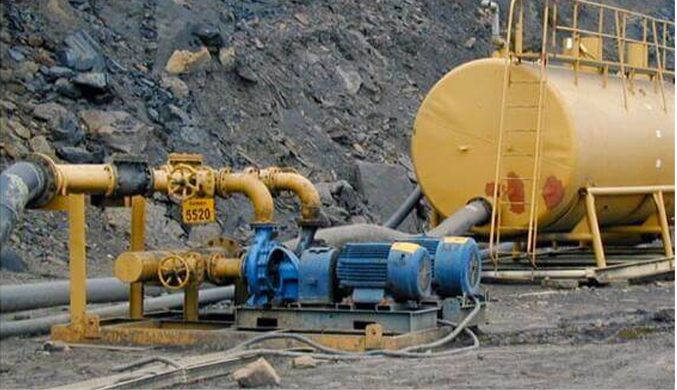
Slurry pump expellers are critical wear components within centrifugal slurry pumps, specifically designed to manage axial thrust generated by impeller pumping action. Their function is to prevent the rotor from drifting axially, ensuring consistent pump performance and preventing mechanical failure. This guide details the material science, manufacturing processes, performance characteristics, failure modes, and maintenance protocols for slurry pump expellers, focusing on the needs of procurement managers and engineers in industries utilizing abrasive and corrosive slurries—mining, dredging, chemical processing, and wastewater treatment. The core pain point addressed is minimizing downtime and maximizing pump operational life in demanding applications. Expeller design and material selection directly impact pump efficiency, reliability, and total cost of ownership. This analysis will explore the key parameters influencing expeller performance and longevity.
Material Science & Manufacturing
Slurry pump expellers are typically manufactured from high-chromium cast irons (e.g., 27-30% chromium) offering excellent abrasion resistance. Alternative materials include duplex stainless steels (e.g., SAF 2205, 2507) for enhanced corrosion resistance in aggressive chemical environments, and hardened alloys (e.g., Ni-Hard) for severe impact loading. The manufacturing process commonly involves sand casting, followed by heat treatment to optimize hardness and toughness. Key parameters during casting include controlling cooling rates to minimize residual stresses and achieving a fine grain structure. Machining operations, including turning and milling, are critical for achieving tight dimensional tolerances and a smooth surface finish, minimizing cavitation initiation points. A critical consideration is the hardness profile; excessively hard expellers can damage pump shafts, while insufficiently hard expellers will erode rapidly. Chemical composition verification is paramount, utilizing spectroscopic analysis to confirm adherence to material specifications. Material traceability is also vital for failure analysis and quality control. For duplex stainless steel expellers, proper solution annealing and subsequent aging treatments are necessary to maintain optimal phase balance and corrosion resistance.
Performance & Engineering
Expeller performance is dictated by hydraulic design, material selection, and manufacturing precision. The number of expeller stages (single, double, or triple) affects axial thrust capacity. The impeller-expeller gap is a crucial parameter; a smaller gap increases thrust control but also elevates the risk of contact and seizure under thermal expansion or shaft deflection. Force analysis involves calculating axial thrust based on pump head, flow rate, impeller diameter, and fluid density. Environmental resistance is vital; expellers operating in seawater or highly acidic slurries require materials with superior corrosion resistance. Compliance with API 610 standards for centrifugal pumps ensures dimensional accuracy and performance validation. Finite Element Analysis (FEA) is used to predict stress distribution within the expeller under operating loads, optimizing the design for fatigue resistance. Proper balancing of the expeller assembly is critical to minimize vibration and extend bearing life. The hydrodynamic design of the expeller vanes must minimize turbulence and promote efficient fluid flow to reduce energy losses and prevent premature wear. Consideration must also be given to the thermal expansion coefficient mismatch between the expeller and the pump shaft.
Technical Specifications
| Material Grade | Hardness (BHN) | Tensile Strength (MPa) | Elongation (%) |
|---|---|---|---|
| High-Chromium Cast Iron (27%) | 550-650 | 400-600 | 2-5 |
| Duplex Stainless Steel (SAF 2205) | 250-320 | 620-800 | 20-25 |
| Ni-Hard Alloy | 580-680 | 700-900 | 5-10 |
| CD4MCu (Cast Alloy) | 500-600 | 350-550 | 3-7 |
| 316 Stainless Steel | 200-280 | 500-700 | 30-50 |
| 410 Stainless Steel | 220-270 | 550-750 | 15-20 |
Failure Mode & Maintenance
Common failure modes for slurry pump expellers include abrasive wear, erosion-corrosion, fatigue cracking, and thermal stress cracking. Abrasive wear occurs due to the impact of solid particles in the slurry, leading to gradual material loss. Erosion-corrosion is accelerated by the combined action of abrasion and corrosive fluids. Fatigue cracking initiates from surface imperfections or stress concentrators and propagates under cyclic loading. Thermal stress cracking results from temperature gradients and differential thermal expansion. Failure analysis should include microscopic examination of fracture surfaces to identify the root cause. Preventive maintenance includes regular inspection for wear, dimensional checks, and replacement of expellers at predetermined intervals based on operating conditions. Proper lubrication of the pump shaft and expeller interface minimizes friction and wear. Maintaining proper pump alignment reduces shaft deflection and minimizes stress on the expeller. For severe service applications, consider using wear-resistant coatings (e.g., tungsten carbide, ceramic) to extend expeller life. Monitoring pump vibration levels can provide early warning of potential expeller failure. Periodic visual inspection during scheduled shutdowns allows for proactive replacement before catastrophic failure occurs.
Industry FAQ
Q: What is the optimal material selection for an expeller operating in a highly abrasive slurry containing 70% solids by weight?
A: For such a demanding application, a high-chromium cast iron (27-30% Cr) is typically the most cost-effective solution. Its inherent abrasion resistance outperforms most other materials in solids-laden slurries. However, consider a Ni-Hard alloy if impact loading is also significant, as it offers superior toughness. Frequent inspection and replacement will be necessary regardless of the material chosen.
Q: How does the impeller-expeller gap affect pump performance and expeller life?
A: A smaller gap improves axial thrust control but increases the risk of contact and seizure due to thermal expansion or shaft deflection. A larger gap reduces the risk of contact but compromises thrust control. The optimal gap is a balance determined by operating temperature, shaft stiffness, and slurry characteristics, typically within the manufacturer’s specifications.
Q: What are the key indicators of impending expeller failure?
A: Increased pump vibration, elevated bearing temperatures, and a noticeable decline in pump efficiency are key indicators. Also, a change in pump discharge pressure or flow rate can suggest expeller wear. Regular monitoring of these parameters is crucial for proactive maintenance.
Q: What role does balancing play in expeller performance?
A: Accurate balancing of the expeller assembly is paramount. Imbalance causes vibration, leading to premature bearing failure, shaft fatigue, and potentially expeller damage. Dynamic balancing, performed to ISO 1940 standards, is recommended.
Q: Can wear-resistant coatings be applied to expellers, and what are the benefits?
A: Yes, coatings such as tungsten carbide or ceramic can significantly extend expeller life, particularly in highly abrasive environments. Coatings improve wear resistance, reduce material loss, and lower the frequency of replacement. However, proper surface preparation and coating application are critical for optimal adhesion and performance.
Conclusion
Slurry pump expellers are integral to the reliable operation of centrifugal slurry pumps. Their selection and maintenance require a thorough understanding of material science, hydraulic design, and potential failure modes. High-chromium cast irons remain the workhorse material for abrasive applications, while duplex stainless steels offer superior corrosion resistance where necessary. Proactive monitoring of pump performance, regular inspection of expellers, and adherence to recommended maintenance procedures are essential for minimizing downtime and maximizing operational lifespan.
Future advancements in expeller technology will likely focus on the development of novel wear-resistant materials and optimized hydrodynamic designs. Implementing condition-based monitoring systems, leveraging sensor data and predictive analytics, will further enhance proactive maintenance strategies. Optimizing the impeller-expeller interface through computational fluid dynamics (CFD) simulations will contribute to improved pump efficiency and reduced energy consumption.
-
Comprehensive Guide to Waterproof ORings for Optimal Sealing Solutions
News2026-06-09
-
best ejector pump for basement bathroom Material Science Manufacturing
News2026-06-28
-
bathroom ejector pump system Material Science Manufacturing
News2026-06-28
-
bathroom ejector pump Performance and Engineering
News2026-06-28
-
basement toilet ejector pump Performance Analysis
News2026-06-28
-
Septic Tank Pump Technology Analysis
News2026-06-28
-
Waste Tank Pump Performance Analysis
News2026-06-27
-
Sewer System Pump Out Material Science
News2026-06-27
-
Sewer Ejector Pit Performance Analysis
News2026-06-27
-
septic tank pumps for sale Performance Engineering
News2026-06-27
-
septic system with lift pump Performance Engineering
News2026-06-27
-
septic system sump pump Performance Analysis
News2026-06-26
-
septic pump company Performance Analysis
News2026-06-26
-
pumps water treatment Performance Analysis
News2026-06-26
-
pumps for septic tanks Material Science and Manufacturing
News2026-06-26




