English
- Afrikaans
- Albanian
- Amharic
- Arabic
- Armenian
- Azerbaijani
- Basque
- Belarusian
- Bengali
- Bosnian
- Bulgarian
- Catalan
- Cebuano
- Corsican
- Croatian
- Czech
- Danish
- Dutch
- English
- Esperanto
- Estonian
- Finnish
- French
- Frisian
- Galician
- Georgian
- German
- Greek
- Gujarati
- Haitian Creole
- hausa
- hawaiian
- Hebrew
- Hindi
- Miao
- Hungarian
- Icelandic
- igbo
- Indonesian
- irish
- Italian
- Japanese
- Javanese
- Kannada
- kazakh
- Khmer
- Rwandese
- Korean
- Kurdish
- Kyrgyz
- Lao
- Latin
- Latvian
- Lithuanian
- Luxembourgish
- Macedonian
- Malgashi
- Malay
- Malayalam
- Maltese
- Maori
- Marathi
- Mongolian
- Myanmar
- Nepali
- Norwegian
- Norwegian
- Occitan
- Pashto
- Persian
- Polish
- Portuguese
- Punjabi
- Romanian
- Russian
- Samoan
- Scottish Gaelic
- Serbian
- Sesotho
- Shona
- Sindhi
- Sinhala
- Slovak
- Slovenian
- Somali
- Spanish
- Sundanese
- Swahili
- Swedish
- Tagalog
- Tajik
- Tamil
- Tatar
- Telugu
- Thai
- Turkish
- Turkmen
- Ukrainian
- Urdu
- Uighur
- Uzbek
- Vietnamese
- Welsh
- Bantu
- Yiddish
- Yoruba
- Zulu

Telephone: +86 13120555503
Email: frank@cypump.com


Apr . 01, 2024 17:55 Back to list
Slurry Pump Design Manufacturing Specifications and Performance Analysis
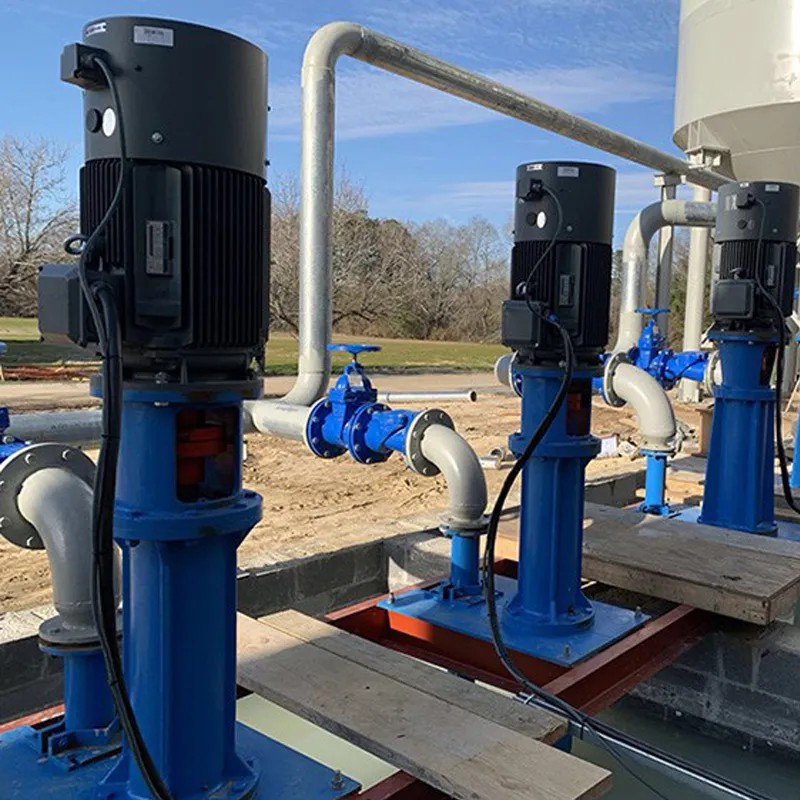
Slurry Pump Design: Manufacturing Specifications and Performance Analysis
Slurry pump design represents a specialized intersection of fluid dynamics and tribology, engineered to transport non-Newtonian fluids containing high concentrations of abrasive solid particles. Positioned as a critical asset in the mineral processing, dredging, and chemical industrial chains, these pumps must maintain hydraulic efficiency while resisting extreme mechanical wear. The primary technical challenge in slurry pump design is the optimization of the trade-off between flow capacity and the rate of erosive wear. Unlike standard centrifugal pumps, slurry pumps are designed with wider clearances, heavier wall thicknesses, and specialized impeller geometries to minimize turbulence and stagnation zones, which are the primary catalysts for localized erosion. The core performance of these systems is measured by their ability to maintain a stable Net Positive Suction Head (NPSH) while handling varying slurry densities and particle size distributions (PSD).
Material Science & Manufacturing
The longevity of a slurry pump is fundamentally dictated by the metallurgical properties of its wetted parts. The industry standard revolves around the deployment of High-Chrome (Hi-Cr) white irons and natural rubber elastomers. High-chrome alloys, typically containing 25% to 28% chromium, form a hard network of M7C3 carbides embedded in a martensitic matrix, providing exceptional resistance to sliding abrasion. For applications involving smaller, sharper particles at lower velocities, natural rubber or polyurethane linings are utilized. These elastomers operate on the principle of resilience; they absorb the kinetic energy of impacting particles and "bounce" them back, preventing the material removal associated with brittle fracture.
Manufacturing processes for slurry pumps prioritize structural integrity and dimensional precision. Casting is the primary method for impeller and casing production, utilizing investment casting or sand casting with precision cooling rates to prevent the formation of oversized carbides that could act as stress concentrators. Post-casting heat treatment, specifically quenching and tempering, is critical to achieve the desired Rockwell C hardness (HRC 60-65). Furthermore, the machining process employs CNC grinding to ensure a precise fit between the impeller and the wear plate, maintaining a tight seal that prevents the slurry from bypassing the impeller and eroding the pump casing's internal surfaces. The assembly phase often incorporates shrink-fitting for liners and the use of heavy-duty mechanical seals with tungsten carbide faces to ensure containment under high pressure.
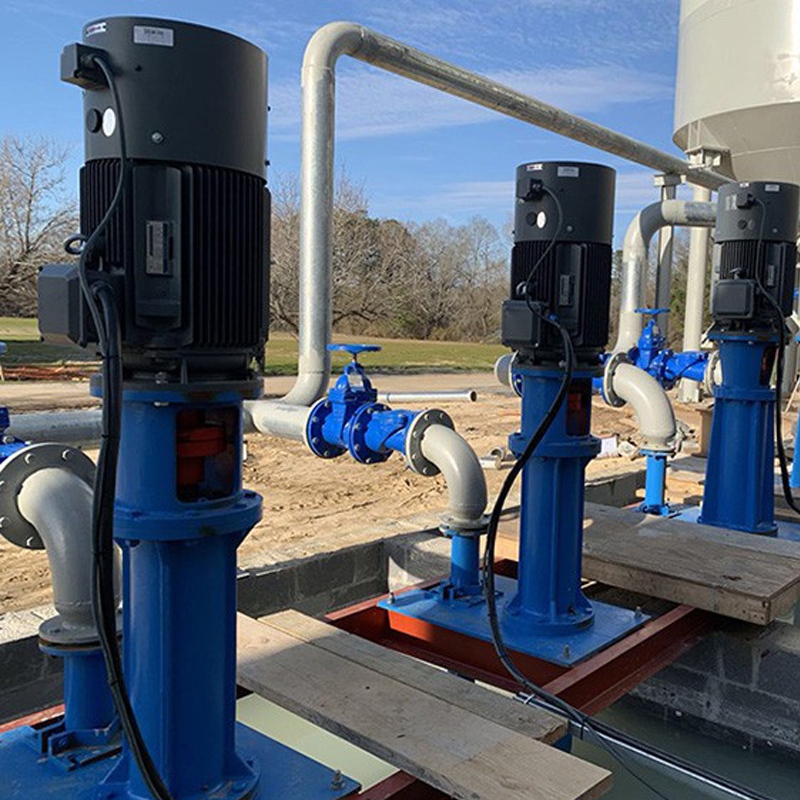
Performance & Engineering
Engineering a slurry pump requires a rigorous force analysis of the slurry-wall interaction. The primary degradation mechanism is erosive wear, which is a function of particle velocity, impact angle, and the hardness ratio between the particle and the pump surface. To mitigate this, designers employ Computational Fluid Dynamics (CFD) to optimize the impeller vane profile, reducing the occurrence of vortices and ensuring a laminar-like flow transition into the volute. The velocity of the slurry must be maintained above the critical settling velocity to prevent sedimentation within the pump, which would lead to catastrophic blockage and imbalance.
Environmental resistance is another critical engineering pillar. In mining applications, slurry pumps often encounter acidic or alkaline reagents, requiring the integration of duplex stainless steels or specialized coatings to prevent galvanic corrosion and pitting. The compliance requirements for these pumps involve stringent vibration analysis and shaft deflection limits to prevent premature bearing failure. The implementation of variable frequency drives (VFDs) allows for the dynamic adjustment of pump speeds to match the slurry's rheological properties, thereby reducing unnecessary wear during periods of lower solids concentration. Engineering specifications also emphasize the "heavy-duty" nature of the shaft design, utilizing high-tensile alloys to resist the bending moments induced by the weight of the slurry and the dynamic forces of the rotating impeller.
Technical Specifications
| Parameter Dimension | High-Chrome Alloy (ASTM A532) | Natural Rubber Lining | Duplex Stainless Steel | Ceramic Coating (Al2O3) |
|---|---|---|---|---|
| Hardness (HRC/Shore A) | 60 - 65 HRC | 60 - 70 Shore A | 25 - 35 HRC | > 90 HRC |
| Abrasion Resistance | Extreme (Coarse Particles) | High (Fine Particles) | Moderate | Exceptional |
| Corrosion Resistance | Moderate | High (Chemicals) | Very High (Chlorides) | Inert |
| Impact Toughness | Low (Brittle) | Very High | High | Very Low |
| Max Operating Temp | Up to 450°C | Up to 70°C | Up to 300°C | Up to 1000°C |
| Typical Application | Tailings/Mining | Sand/Sludge | Chemical Slurry | High-Precision Wear |
Failure Mode & Maintenance
Failure analysis of slurry pumps reveals four primary modes: abrasive erosion, cavitation-induced pitting, fatigue cracking of the shaft, and seal degradation. Abrasive erosion typically manifests as "grooving" in the volute or thinning of the impeller vanes, occurring when the slurry velocity exceeds the critical threshold of the material. Cavitation occurs when the NPSH available falls below the NPSH required, creating vapor bubbles that collapse violently against the metal surface, leading to localized pitting and a significant drop in hydraulic efficiency. Fatigue cracking is often the result of shaft misalignment or unbalanced impeller loads, exacerbated by the high density of the pumped medium.
Professional maintenance protocols require a predictive approach rather than a reactive one. This includes the implementation of ultrasonic thickness gauging to monitor liner wear without dismantling the pump. When liners reach their minimum allowable thickness, they must be replaced to prevent the slurry from eroding the primary pump casing. Shafts should be inspected for run-out using dial indicators to ensure concentricity. For seal maintenance, the use of a pressurized gland water system is mandatory to ensure that slurry particles are flushed away from the seal faces, preventing premature wear and leakage. Lubrication schedules for bearings must be strictly adhered to, using high-viscosity lubricants capable of withstanding the heat generated by the heavy-load operations characteristic of slurry transport.
Industry FAQ
Q: How do you determine whether to use a high-chrome alloy or a rubber liner for a specific slurry?
A: The decision is based on the particle size and impact velocity. High-chrome alloys are superior for large, coarse, and hard particles that would puncture or tear rubber. Conversely, rubber liners are preferred for fine particles at high velocities, as the elastic nature of the material absorbs the impact energy, whereas a brittle chrome alloy would suffer from micro-chipping.
Q: What is the impact of slurry viscosity on the pump's NPSH requirements?
A: Increased viscosity increases the frictional losses in the suction piping, which reduces the Net Positive Suction Head Available (NPSHa). To prevent cavitation, the designer must either increase the suction pipe diameter, raise the source tank level, or reduce the fluid temperature to lower the vapor pressure.
Q: Why is "settling velocity" critical in the design of the pump volute?
A: If the flow velocity drops below the critical settling velocity, solids will precipitate out of the suspension and accumulate in the volute. This leads to localized turbulence, accelerated wear (sand-blasting effect), and potential blockage, which significantly increases the load on the motor and may lead to mechanical failure.
Q: How does the "critical speed" of the shaft influence the selection of the pump's RPM?
A: Slurry pumps often operate at lower speeds to reduce the wear rate, as erosion is exponentially proportional to velocity. However, the RPM must be selected to avoid the shaft's natural frequency (critical speed) to prevent resonance, which would cause excessive vibration and lead to rapid bearing and seal failure.
Q: What is the most effective way to handle slurry with highly acidic pH levels?
A: For acidic slurries, high-chrome alloys may suffer from corrosion-erosion synergy. The optimal solution is the use of duplex stainless steels or nickel-based alloys (like Hastelloy) which provide a stable passive oxide layer. In some cases, a rubber liner with a chemically resistant compound (such as Nitrile or Viton) is used for its inert properties.
Conclusion
The design of slurry pumps is a complex optimization problem that requires a deep integration of material science and hydraulic engineering. By precisely aligning the metallurgical properties of the wetted parts—such as the hardness of high-chrome alloys or the resilience of elastomers—with the specific rheological properties of the slurry, engineers can maximize the Mean Time Between Failures (MTBF) and optimize the Total Cost of Ownership (TCO). The transition from traditional empirical design to CFD-driven optimization has allowed for a significant reduction in turbulence and erosive hotspots, ensuring higher operational stability in extreme industrial environments.
Looking forward, the integration of IoT-based condition monitoring, such as real-time vibration analysis and acoustic emission sensing, will shift slurry pump maintenance from scheduled intervals to true predictive maintenance. As industries push toward higher solids concentrations and more aggressive chemical environments, the development of nano-composite coatings and hybrid material structures will be essential to further extend component life and enhance the sustainability of mineral and chemical processing operations.
-
Comprehensive Guide to Waterproof ORings for Optimal Sealing Solutions
News2026-06-09
-
septic system sump pump Performance Analysis
News2026-06-26
-
septic pump company Performance Analysis
News2026-06-26
-
pumps water treatment Performance Analysis
News2026-06-26
-
pumps for septic tanks Material Science and Manufacturing
News2026-06-26
-
pump for septic system Material Science Manufacturing
News2026-06-26
-
heavy duty submersible pump Performance Analysis
News2026-06-25
-
best submersible pump for septic tank Performance Analysis
News2026-06-25
-
basement sewer ejector pump Performance Analysis
News2026-06-25
-
basement pumps ejector pumps Performance Analysis
News2026-06-25
-
basement lift pump Performance and Engineering
News2026-06-25
-
basement bathroom pump systems Performance Analysis
News2026-06-24
-
basement bathroom ejector pump system Performance Engineering
News2026-06-24
-
2 hp sewage pump Performance Engineering
News2026-06-24
-
1 hp septic pump Performance Engineering
News2026-06-24




