English
- Afrikaans
- Albanian
- Amharic
- Arabic
- Armenian
- Azerbaijani
- Basque
- Belarusian
- Bengali
- Bosnian
- Bulgarian
- Catalan
- Cebuano
- Corsican
- Croatian
- Czech
- Danish
- Dutch
- English
- Esperanto
- Estonian
- Finnish
- French
- Frisian
- Galician
- Georgian
- German
- Greek
- Gujarati
- Haitian Creole
- hausa
- hawaiian
- Hebrew
- Hindi
- Miao
- Hungarian
- Icelandic
- igbo
- Indonesian
- irish
- Italian
- Japanese
- Javanese
- Kannada
- kazakh
- Khmer
- Rwandese
- Korean
- Kurdish
- Kyrgyz
- Lao
- Latin
- Latvian
- Lithuanian
- Luxembourgish
- Macedonian
- Malgashi
- Malay
- Malayalam
- Maltese
- Maori
- Marathi
- Mongolian
- Myanmar
- Nepali
- Norwegian
- Norwegian
- Occitan
- Pashto
- Persian
- Polish
- Portuguese
- Punjabi
- Romanian
- Russian
- Samoan
- Scottish Gaelic
- Serbian
- Sesotho
- Shona
- Sindhi
- Sinhala
- Slovak
- Slovenian
- Somali
- Spanish
- Sundanese
- Swahili
- Swedish
- Tagalog
- Tajik
- Tamil
- Tatar
- Telugu
- Thai
- Turkish
- Turkmen
- Ukrainian
- Urdu
- Uighur
- Uzbek
- Vietnamese
- Welsh
- Bantu
- Yiddish
- Yoruba
- Zulu

Telephone: +86 13120555503
Email: frank@cypump.com


Apr . 01, 2024 17:55 Back to list
Slurry Pump Cost Performance Analysis
Introduction
Slurry pumps are engineered to move abrasive or corrosive materials, commonly found in mining, wastewater treatment, chemical processing, and dredging applications. The cost of a slurry pump is not merely the initial purchase price; it represents a lifecycle cost encompassing material selection, design complexity, operational efficiency, maintenance requirements, and potential downtime. This guide provides a comprehensive technical overview of slurry pump cost drivers, focusing on the interplay between material science, manufacturing processes, performance parameters, and long-term reliability. Understanding these factors is crucial for procurement managers and engineers seeking to optimize total cost of ownership (TCO) rather than focusing solely on upfront capital expenditure. The industry faces ongoing challenges related to maximizing pump lifespan in increasingly demanding environments, requiring a deep dive into the specific cost implications of various design and material choices.
Material Science & Manufacturing
The primary cost driver in slurry pump manufacturing stems from material selection. Pump components exposed to the slurry – impeller, casing, volute liner, and shaft – are typically constructed from high-chrome cast iron, abrasion-resistant alloys, or rubber linings. High-chrome iron (typically 13-28% chromium) offers excellent wear resistance at a moderate cost, making it the most common choice for abrasive slurries. However, its susceptibility to corrosion in acidic or alkaline environments necessitates careful consideration. More expensive alloys like duplex stainless steels (e.g., 2205, 2507) offer superior corrosion resistance but have higher manufacturing costs due to the complexities of alloy melting and casting. Rubber linings (natural rubber, synthetic rubber like EPDM or neoprene) provide excellent resistance to corrosion and impact but are less suitable for high-temperature applications or slurries containing solvents.
Manufacturing processes significantly impact cost. Centrifugal slurry pumps are predominantly manufactured using sand casting, investment casting, or centrifugal casting. Sand casting is the most economical for large components like casings, but it results in a rough surface finish requiring further machining. Investment casting provides superior dimensional accuracy and surface finish, reducing machining costs, but is more expensive, particularly for complex geometries. Centrifugal casting is often used for impellers to create a dense, homogeneous structure with minimal porosity, enhancing wear resistance but increasing production time. Welding processes are critical for assembling pump components. Submerged arc welding (SAW) is commonly employed for joining large casing sections, requiring skilled welders and rigorous quality control to prevent defects. Impeller balancing is a crucial step; dynamic balancing ensures smooth operation and minimizes vibration, extending bearing life and reducing energy consumption. The selection of appropriate welding consumables (electrode composition, shielding gas) is paramount to maintain material integrity and corrosion resistance.
Performance & Engineering
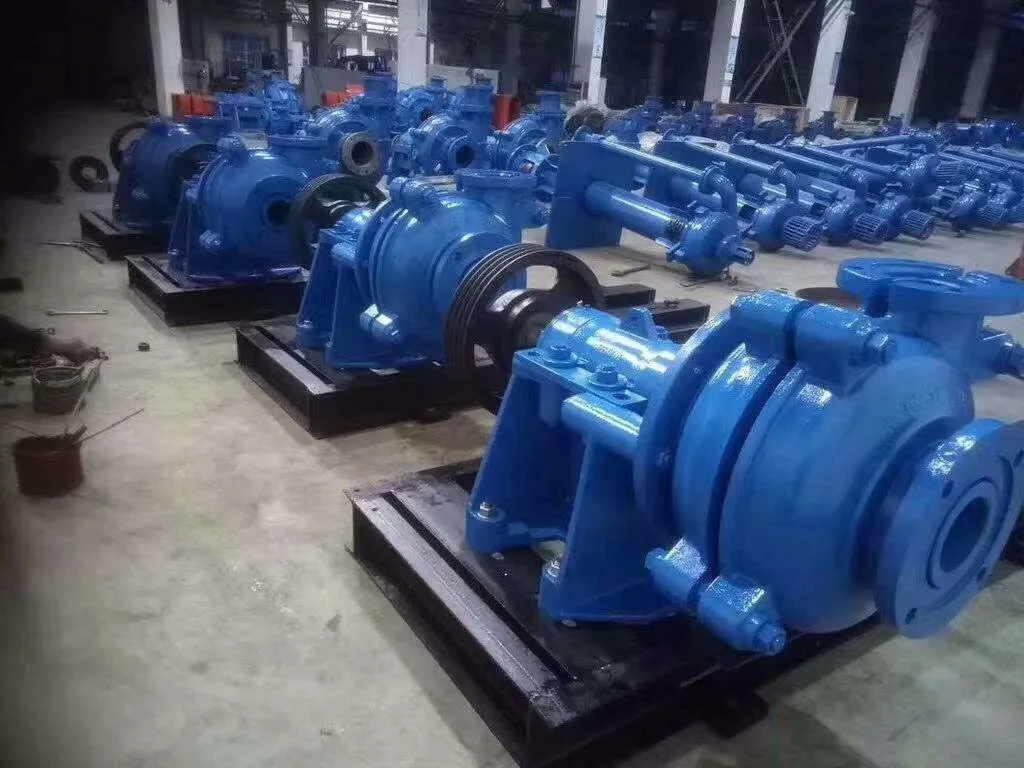
Slurry pump performance and engineering are intrinsically linked to cost. The pump’s hydraulic design – impeller geometry, volute shape, and internal clearances – dictates efficiency and wear rates. Impellers can be open, semi-open, or closed, with open impellers being most suitable for slurries containing large solids but exhibiting lower efficiency. Closed impellers offer higher efficiency but are prone to clogging with solids. Computational Fluid Dynamics (CFD) modeling is increasingly used to optimize impeller design, minimizing turbulence and erosion.
Force analysis is critical, particularly regarding impeller loading and bearing stresses. Slurry impact forces, especially at high flow velocities, contribute significantly to wear. Proper shaft design and bearing selection are crucial for withstanding these loads. Bearing life is a major TCO factor, influenced by lubrication, sealing effectiveness, and slurry contamination. Environmental resistance is paramount, considering temperature extremes, humidity, and exposure to corrosive chemicals. Pumps operating in harsh environments require specialized coatings or materials to prevent degradation. Compliance requirements vary by industry and region. For example, pumps used in food processing must adhere to FDA regulations regarding material biocompatibility. Similarly, pumps handling hazardous materials must meet ATEX or IECEx standards for explosion protection. Pump sizing must accurately match the system’s head-capacity curve to avoid operating outside the pump’s Best Efficiency Point (BEP), which leads to increased energy consumption and accelerated wear.
Technical Specifications
| Parameter | Unit | Typical Range (Low-Chrome Iron Pump) | Typical Range (Duplex Stainless Steel Pump) |
|---|---|---|---|
| Capacity (Q) | m³/hr | 10 - 1000 | 10 - 800 |
| Head (H) | m | 5 - 80 | 5 – 120 |
| Slurry Solids Concentration (%) | % by weight | Up to 70 | Up to 70 |
| Particle Size | mm | Up to 100 | Up to 100 |
| Pump Material (Casing/Impeller) | - | High-Chrome Iron / High-Chrome Iron | Duplex Stainless Steel / Duplex Stainless Steel |
| Sealing Type | - | Mechanical Seal / Packing | Mechanical Seal / Packing |
Failure Mode & Maintenance
Common slurry pump failure modes directly impact lifecycle cost. Abrasion is the most frequent cause of failure, leading to impeller wear, casing erosion, and reduced pump performance. Fatigue cracking can occur in the impeller and shaft due to cyclic loading and stress concentration. Corrosion, particularly in acidic or saline environments, leads to material degradation and component failure. Cavitation, caused by vapor pressure collapse within the pump, erodes impeller surfaces and reduces efficiency.
Preventive maintenance is crucial for minimizing downtime and extending pump life. Regular inspections should focus on bearing condition, seal leakage, impeller wear, and casing thickness. Vibration analysis can detect early signs of bearing damage or impeller imbalance. Lubrication schedules must be strictly followed, using appropriate lubricants compatible with the slurry. Impeller and casing replacement are inevitable, but proper material selection and operating conditions can significantly extend their lifespan. Consider utilizing wear-resistant coatings, such as tungsten carbide or ceramic inserts, to protect critical surfaces. Regular monitoring of pump performance (flow rate, head, power consumption) can identify deviations from normal operation, indicating potential problems. Implementing a robust maintenance management system (CMMS) allows for tracking maintenance activities, scheduling preventative maintenance, and managing spare parts inventory, contributing to optimized TCO.
Industry FAQ
Q: What is the typical payback period for upgrading to a more corrosion-resistant slurry pump material (e.g., duplex stainless steel)?
A: The payback period varies significantly based on the slurry composition, operating hours, and maintenance costs. However, for highly corrosive applications, a duplex stainless steel pump, despite the higher initial cost, can often pay for itself within 2-5 years through reduced downtime, lower maintenance expenses (e.g., less frequent component replacement), and improved energy efficiency due to maintained pump performance. A detailed TCO analysis is crucial to determine the specific payback period for a given application.
Q: How does impeller design influence the cost of replacement impellers?
A: Complex impeller designs, featuring intricate vane geometries, are more expensive to manufacture, particularly when using investment casting. Furthermore, complex designs can be more prone to wear in specific areas, potentially requiring more frequent replacement. While optimized designs improve efficiency, a simpler, more robust design can reduce replacement costs in highly abrasive applications.
Q: What is the impact of pump speed on wear rates and operating costs?
A: Generally, increasing pump speed increases wear rates exponentially due to the higher impact energy of slurry particles. While higher speeds can increase capacity, they also significantly reduce impeller and casing life. Operating at a lower speed, even if it requires a larger pump, can often result in lower TCO due to reduced wear and maintenance. Variable Frequency Drives (VFDs) can be used to optimize pump speed based on system demand, balancing capacity and wear.
Q: What are the typical costs associated with unplanned pump downtime?
A: Unplanned downtime costs are substantial and include lost production, repair expenses, labor costs, and potential penalties for missed deadlines. Depending on the industry and process, downtime can cost anywhere from $500 to $10,000+ per hour. Implementing a robust preventative maintenance program and investing in reliable pumps can significantly reduce the risk of unplanned downtime.
Q: How do mechanical seals compare in cost to packing glands over the pump’s lifecycle?
A: While mechanical seals have a higher initial cost than packing glands, they offer significant long-term cost savings. Mechanical seals provide a superior seal, reducing leakage and environmental contamination. They also require less frequent maintenance and adjustment than packing glands. Over the pump’s lifespan, the reduced maintenance costs and increased reliability of mechanical seals typically result in a lower TCO.
Conclusion
Slurry pump cost analysis extends far beyond the initial purchase price. A comprehensive assessment must incorporate material selection, manufacturing processes, performance characteristics, maintenance requirements, and potential downtime. High-chrome iron remains the dominant material due to its cost-effectiveness for abrasive slurries, but specialized alloys and rubber linings are essential for corrosive environments. Optimizing impeller design, implementing preventative maintenance programs, and carefully considering operating parameters are critical for maximizing pump lifespan and minimizing total cost of ownership.
Future trends in slurry pump technology focus on advanced materials (e.g., ceramic composites), improved impeller designs utilizing CFD modeling, and the integration of predictive maintenance technologies based on sensor data and machine learning. Proactive monitoring of pump performance and condition will enable earlier detection of potential failures, reducing downtime and optimizing maintenance schedules. Furthermore, a shift towards standardized pump components and modular designs can streamline maintenance and reduce spare parts inventory costs. Ultimately, a holistic approach to slurry pump cost management, prioritizing long-term reliability and operational efficiency, will deliver the greatest value.
-
Comprehensive Guide to Waterproof ORings for Optimal Sealing Solutions
News2026-06-09
-
Waste Tank Pump Performance Analysis
News2026-06-27
-
Sewer System Pump Out Material Science
News2026-06-27
-
Sewer Ejector Pit Performance Analysis
News2026-06-27
-
septic tank pumps for sale Performance Engineering
News2026-06-27
-
septic system with lift pump Performance Engineering
News2026-06-27
-
septic system sump pump Performance Analysis
News2026-06-26
-
septic pump company Performance Analysis
News2026-06-26
-
pumps water treatment Performance Analysis
News2026-06-26
-
pumps for septic tanks Material Science and Manufacturing
News2026-06-26
-
pump for septic system Material Science Manufacturing
News2026-06-26
-
heavy duty submersible pump Performance Analysis
News2026-06-25
-
best submersible pump for septic tank Performance Analysis
News2026-06-25
-
basement sewer ejector pump Performance Analysis
News2026-06-25
-
basement pumps ejector pumps Performance Analysis
News2026-06-25




