English
- Afrikaans
- Albanian
- Amharic
- Arabic
- Armenian
- Azerbaijani
- Basque
- Belarusian
- Bengali
- Bosnian
- Bulgarian
- Catalan
- Cebuano
- Corsican
- Croatian
- Czech
- Danish
- Dutch
- English
- Esperanto
- Estonian
- Finnish
- French
- Frisian
- Galician
- Georgian
- German
- Greek
- Gujarati
- Haitian Creole
- hausa
- hawaiian
- Hebrew
- Hindi
- Miao
- Hungarian
- Icelandic
- igbo
- Indonesian
- irish
- Italian
- Japanese
- Javanese
- Kannada
- kazakh
- Khmer
- Rwandese
- Korean
- Kurdish
- Kyrgyz
- Lao
- Latin
- Latvian
- Lithuanian
- Luxembourgish
- Macedonian
- Malgashi
- Malay
- Malayalam
- Maltese
- Maori
- Marathi
- Mongolian
- Myanmar
- Nepali
- Norwegian
- Norwegian
- Occitan
- Pashto
- Persian
- Polish
- Portuguese
- Punjabi
- Romanian
- Russian
- Samoan
- Scottish Gaelic
- Serbian
- Sesotho
- Shona
- Sindhi
- Sinhala
- Slovak
- Slovenian
- Somali
- Spanish
- Sundanese
- Swahili
- Swedish
- Tagalog
- Tajik
- Tamil
- Tatar
- Telugu
- Thai
- Turkish
- Turkmen
- Ukrainian
- Urdu
- Uighur
- Uzbek
- Vietnamese
- Welsh
- Bantu
- Yiddish
- Yoruba
- Zulu

Telephone: +86 13120555503
Email: frank@cypump.com


Apr . 01, 2024 17:55 Back to list
Slurry Pump Company Manufacturing Specifications and Tribological Performance Analysis
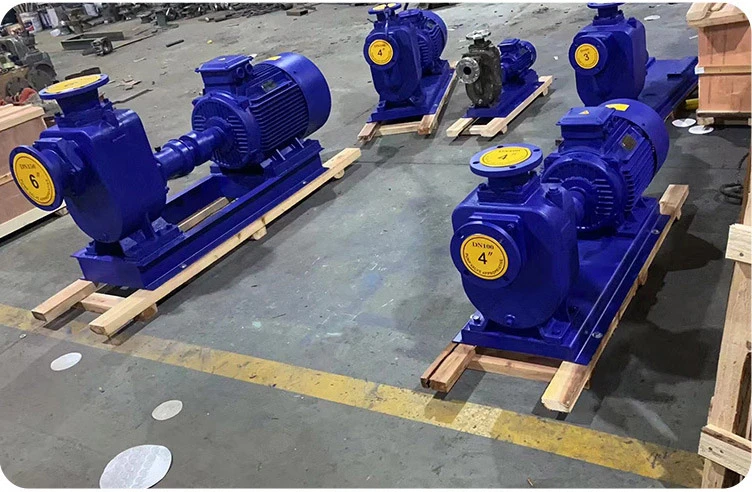
Slurry Pump Manufacturing Specifications and Tribological Performance Analysis
Introduction
A slurry pump company specializes in the engineering of heavy-duty centrifugal machinery designed to transport non-Newtonian fluids containing suspended solid particles. Unlike standard water pumps, slurry pumps operate in extreme environments characterized by high abrasive wear and chemical corrosion. These systems occupy a critical position in the industrial chain of mining, mineral processing, dredging, and chemical manufacturing, acting as the primary conveyance mechanism for tailings, ore slurries, and waste streams. The core performance of a slurry pump is defined by its ability to maintain hydraulic efficiency while resisting the erosive energy of particulate impact. Technical excellence in this field requires a precise equilibrium between the volumetric flow rate, the total dynamic head (TDH), and the wear life of the internal wetted components, ensuring minimal downtime in continuous process operations.
Material Science & Manufacturing
The manufacturing of slurry pumps is primarily a study in material science, specifically focusing on the trade-off between hardness and toughness. To combat the erosive nature of slurries, a slurry pump company utilizes advanced metallurgical compositions for impellers and liners. High-chrome white irons (ASTM A532) are frequently employed, where the formation of M7C3 carbides provides a hardness typically exceeding 60 HRC, essential for resisting sliding abrasion. In applications involving high-velocity impact or extreme acidity, natural rubber liners or thermoplastic elastomers (TPE) are used to absorb the kinetic energy of the particles, effectively "bouncing" the solids off the surface rather than allowing them to gouge the substrate.
The manufacturing process involves precision casting followed by rigorous heat treatment. For high-chrome alloys, controlled quenching and tempering are critical to prevent the formation of brittle martensite, which would lead to catastrophic failure under shock loads. CNC machining is applied to the impeller vanes and volute casings to ensure strict tolerances, reducing internal turbulence—a primary driver of localized erosion. Furthermore, the integration of hardened shaft sleeves and mechanical seals utilizing silicon carbide (SiC) or tungsten carbide ensures that the pumping chamber remains isolated from the bearing housing, preventing the ingress of abrasive grit into the rotational assembly.
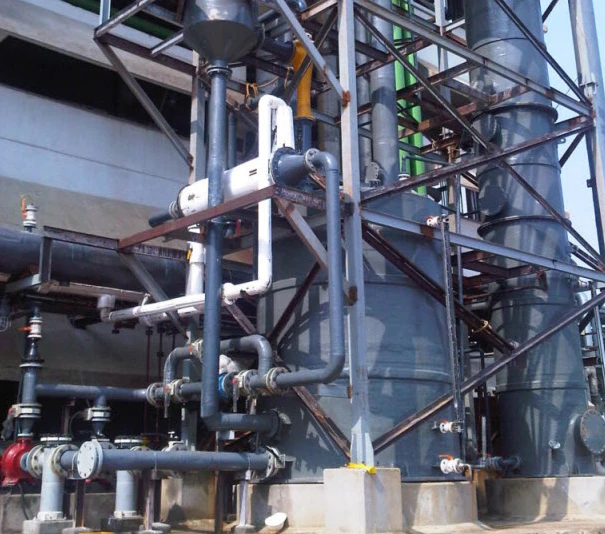
Performance & Engineering
Engineering a slurry pump requires a deep analysis of fluid dynamics and particulate behavior. The primary engineering challenge is managing the "critical settling velocity"—the minimum velocity required to keep solids suspended in the fluid stream to prevent pipeline blockage. Engineers utilize the Durand equation to calculate the necessary flow velocity based on particle size, density, and fluid viscosity. From a force analysis perspective, the impeller is designed to minimize the angle of attack of the particles, thereby reducing the localized shear stress on the material surface.
Environmental resistance is equally paramount. In mining applications, pumps must withstand pH levels ranging from 2 to 12. This necessitates the use of duplex stainless steels or specialized polymer coatings to prevent galvanic corrosion and pitting. The functional implementation also involves the use of Variable Frequency Drives (VFDs) to optimize the pump's operating point relative to the System Curve, ensuring the pump operates near its Best Efficiency Point (BEP) to reduce cavitation and vibration. Cavitation in slurry pumps is particularly destructive, as the collapsing vapor bubbles can strip protective oxide layers from the metal, accelerating the subsequent abrasive wear.
Technical Specifications
| Component/Parameter | High-Chrome Alloy (ASTM A532) | Natural Rubber Liner | Duplex Stainless Steel | Ceramic Composite |
|---|---|---|---|---|
| Hardness (Rockwell C) | 60 - 65 HRC | N/A (Shore A 60-70) | 25 - 35 HRC | > 80 HRC (Equivalent) |
| Wear Resistance | Excellent (Sliding) | Excellent (Impact) | Moderate | Extreme |
| Corrosion Resistance | Moderate | High (Acidic/Alkaline) | Excellent (Chlorides) | Excellent |
| Max Particle Size | Up to 100mm | Up to 50mm | Up to 30mm | Up to 10mm |
| Operating Temp Range | -20°C to 250°C | -20°C to 70°C | -40°C to 300°C | -50°C to 500°C |
| Typical Application | Hard Rock Tailings | Coal Slurry/Sand | Chemical Slurries | Fine Abrasives |
Failure Mode & Maintenance
Failure analysis in slurry pumps typically identifies three primary modes: erosive wear, cavitation-induced pitting, and mechanical seal failure. Erosive wear occurs most aggressively at the impeller eye and the volute tongue, where fluid velocity is highest. This is characterized by a gradual loss of wall thickness leading to a drop in discharge pressure and volumetric efficiency. Cavitation occurs when the Net Positive Suction Head Available (NPSHa) falls below the Net Positive Suction Head Required (NPSHr), creating vacuum bubbles that implode against the impeller surface, causing characteristic "honeycomb" pitting.
Maintenance protocols must transition from reactive to predictive strategies. This includes the implementation of vibration analysis to detect bearing fatigue and ultrasound thickness gauging to monitor liner wear without dismantling the pump. When delamination occurs in rubber liners, it is often due to improper bonding or excessive temperature; the solution involves replacing the liner with a higher-grade elastomer and verifying the operating temperature. For oxidation and corrosion issues, the application of sacrificial anodes or the upgrade to higher molybdenum alloys is recommended to maintain structural integrity.
Industry FAQ
Q: How do we determine whether to use a high-chrome liner or a rubber liner for a specific slurry?
A: The decision is based on particle size and angularity. High-chrome alloys are superior for larger, harder, and more angular particles that cause sliding abrasion. Rubber liners are preferred for smaller, finer particles and high-impact applications where the material's elasticity can absorb the kinetic energy of the slurry.
Q: What is the impact of slurry concentration (percentage of solids) on pump lifespan?
A: Increased solids concentration generally increases the wear rate linearly, but beyond a certain critical concentration, the fluid transitions to a non-Newtonian "paste," which significantly increases viscosity and friction loss, leading to higher motor load and accelerated wear due to increased turbulence.
Q: How can we mitigate the risk of cavitation in high-density slurry applications?
A: Mitigation strategies include increasing the suction head (elevating the source tank), reducing the suction lift, increasing the suction pipe diameter to lower fluid velocity, and ensuring the pump is operated as close to the Best Efficiency Point (BEP) as possible.
Q: Why does the impeller fail prematurely even when using high-hardness materials?
A: Premature failure is often caused by "impingement attack" where particles strike the surface perpendicularly rather than sliding. This can be caused by incorrect impeller sizing or operating the pump too far from its design flow rate, creating vortices that drive particles directly into the metal surface.
Q: What are the signs that a slurry pump's mechanical seal is failing?
A: The primary indicator is the presence of slurry leakage at the gland. More subtle signs include an increase in bearing temperature and an increase in vibration levels, suggesting that abrasive particles have bypassed the seal and entered the bearing housing.
Conclusion
The engineering of slurry pumps is a complex synthesis of hydraulic design and advanced materials science. The ability of a slurry pump company to extend the mean time between failures (MTBF) depends on the precise selection of alloys and elastomers tailored to the specific chemical and physical properties of the transported medium. By optimizing the metallurgical structure of the wetted parts and ensuring rigorous adherence to fluid dynamic principles, operational efficiency is maximized and the total cost of ownership is reduced.
Looking forward, the industry is shifting toward "intelligent pumping," where real-time sensor integration allows for the dynamic adjustment of flow rates to match slurry density changes. This evolution, combined with the development of nano-ceramic coatings, promises to further mitigate erosive wear and enhance the sustainability of industrial mineral processing and waste management systems.
-
Comprehensive Guide to Waterproof ORings for Optimal Sealing Solutions
News2026-06-09
-
Waste Tank Pump Performance Analysis
News2026-06-27
-
Sewer System Pump Out Material Science
News2026-06-27
-
Sewer Ejector Pit Performance Analysis
News2026-06-27
-
septic tank pumps for sale Performance Engineering
News2026-06-27
-
septic system with lift pump Performance Engineering
News2026-06-27
-
septic system sump pump Performance Analysis
News2026-06-26
-
septic pump company Performance Analysis
News2026-06-26
-
pumps water treatment Performance Analysis
News2026-06-26
-
pumps for septic tanks Material Science and Manufacturing
News2026-06-26
-
pump for septic system Material Science Manufacturing
News2026-06-26
-
heavy duty submersible pump Performance Analysis
News2026-06-25
-
best submersible pump for septic tank Performance Analysis
News2026-06-25
-
basement sewer ejector pump Performance Analysis
News2026-06-25
-
basement pumps ejector pumps Performance Analysis
News2026-06-25