English
- Afrikaans
- Albanian
- Amharic
- Arabic
- Armenian
- Azerbaijani
- Basque
- Belarusian
- Bengali
- Bosnian
- Bulgarian
- Catalan
- Cebuano
- Corsican
- Croatian
- Czech
- Danish
- Dutch
- English
- Esperanto
- Estonian
- Finnish
- French
- Frisian
- Galician
- Georgian
- German
- Greek
- Gujarati
- Haitian Creole
- hausa
- hawaiian
- Hebrew
- Hindi
- Miao
- Hungarian
- Icelandic
- igbo
- Indonesian
- irish
- Italian
- Japanese
- Javanese
- Kannada
- kazakh
- Khmer
- Rwandese
- Korean
- Kurdish
- Kyrgyz
- Lao
- Latin
- Latvian
- Lithuanian
- Luxembourgish
- Macedonian
- Malgashi
- Malay
- Malayalam
- Maltese
- Maori
- Marathi
- Mongolian
- Myanmar
- Nepali
- Norwegian
- Norwegian
- Occitan
- Pashto
- Persian
- Polish
- Portuguese
- Punjabi
- Romanian
- Russian
- Samoan
- Scottish Gaelic
- Serbian
- Sesotho
- Shona
- Sindhi
- Sinhala
- Slovak
- Slovenian
- Somali
- Spanish
- Sundanese
- Swahili
- Swedish
- Tagalog
- Tajik
- Tamil
- Tatar
- Telugu
- Thai
- Turkish
- Turkmen
- Ukrainian
- Urdu
- Uighur
- Uzbek
- Vietnamese
- Welsh
- Bantu
- Yiddish
- Yoruba
- Zulu

Telephone: +86 13120555503
Email: frank@cypump.com


Apr . 01, 2024 17:55 Back to list
slurry pump companies Manufacturing Specification and Performance Analysis
Slurry Pump Manufacturing Specification and Performance Analysis
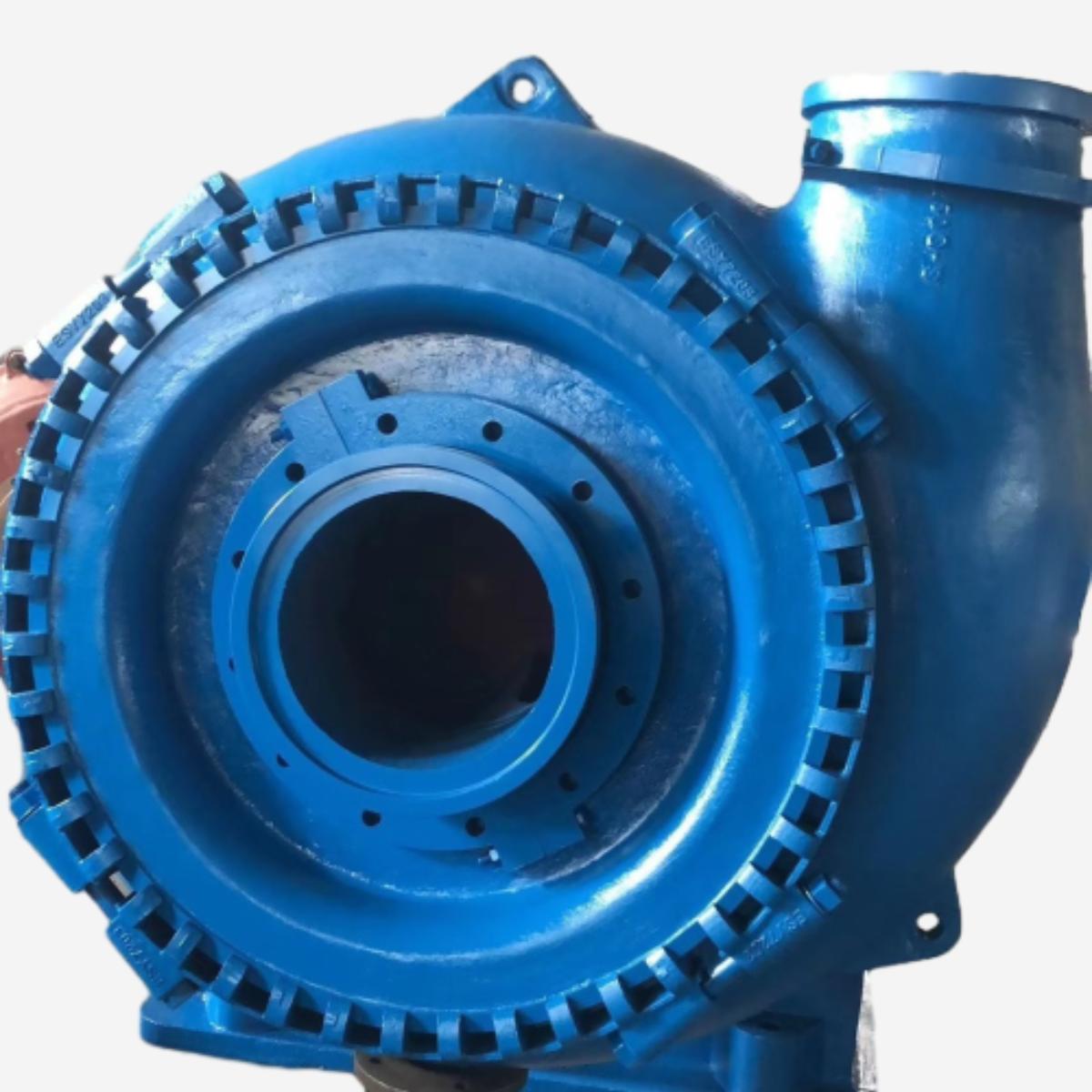
Slurry pumps are specialized centrifugal machinery engineered to transport fluids containing high concentrations of suspended solid particles, ranging from fine silts to coarse, abrasive mineral ores. Within the industrial chain, these pumps serve as the critical nexus between extraction and processing in mining, dredging, and chemical manufacturing. The technical positioning of a slurry pump is defined by its ability to maintain hydraulic efficiency while resisting extreme erosive and corrosive wear. Core performance metrics are governed by the pump's capacity to handle specific gravity (SG) variations, particle size distribution, and the rheological properties of the slurry. Unlike standard water pumps, slurry pump engineering focuses on the mitigation of wall shear stress and the optimization of flow velocity to prevent sediment deposition without inducing premature component failure.
Material Science & Manufacturing
The longevity of slurry pump components is fundamentally dependent on material selection, specifically the balance between hardness and fracture toughness. Slurry pump companies utilize advanced metallurgy to combat the synergistic effect of erosion and corrosion. The primary material categories include High-Chrome White Irons (ASTM A532), which offer exceptional hardness (up to 65 HRC) for abrasive environments, and Natural Rubber liners for finer, more corrosive slurries where elasticity allows the material to absorb particle impact rather than erode. In extreme pH environments, duplex stainless steels or nickel-based alloys are deployed to prevent pitting and stress corrosion cracking.
Manufacturing processes involve precision casting and rigorous heat treatment. The investment casting of impellers requires strict control over the cooling rate to ensure a uniform martensitic structure, preventing internal stresses that lead to catastrophic failure under hydraulic load. Machining is performed using CNC grinding to achieve tight tolerances for the impeller-volute clearance, which is critical for maintaining volumetric efficiency. Furthermore, the integration of hard-facing welding—applying tungsten carbide or chromium carbide overlays—is used in high-velocity zones to extend the mean time between maintenance (MTBM). The manufacturing sequence concludes with dynamic balancing of the rotating assembly to ISO 1940 standards, reducing vibration and protecting the bearing housing from fatigue.
Performance & Engineering
Engineering a slurry pump requires a comprehensive force analysis of the hydraulic circuit. The primary objective is the management of the "critical velocity"—the minimum speed required to keep solids in suspension. If the velocity drops below this threshold, sedimentation occurs, leading to pipe blockages and localized turbulence. Conversely, excessive velocity leads to an exponential increase in erosion rates, as the wear rate is typically proportional to the cube of the velocity (V³). Engineering teams employ Computational Fluid Dynamics (CFD) to optimize the impeller vane geometry, minimizing recirculation zones and cavitation potential, particularly at the suction eye.
Compliance and functional implementation also extend to the sealing systems. Due to the abrasive nature of the media, traditional packing is often replaced by expeller seals or mechanical seals with pressurized flushing systems (API Plan 32 or 54). These systems prevent the ingress of slurry into the seal faces, utilizing a clean fluid barrier to maintain face integrity. From a structural perspective, the pump casing is reinforced with heavy-wall thickness to accommodate the increased hydrostatic pressure exerted by high-density slurries, ensuring the structural integrity of the unit under maximum transient loads.
Technical Specifications
| Material Grade | Hardness (HRC) | Max Particle Size (mm) | Abrasion Resistance | Corrosion Class | Typical Application |
|---|---|---|---|---|---|
| High-Chrome (27% Cr) | 58 - 62 | 10 - 25 | Extreme | Moderate | Iron Ore Tailings |
| High-Chrome (28% Cr) | 62 - 66 | 5 - 15 | Maximum | Low | Hard Rock Mining |
| Natural Rubber | N/A (Shore A 60) | 2 - 8 | High (Fine) | High | Coal Slurry |
| Duplex Stainless Steel | 25 - 35 | 1 - 5 | Moderate | Maximum | Chemical Slurry |
| Polyurethane | N/A (Shore D 90) | 5 - 12 | High | Moderate | Sand Dredging |
| Hardened Cast Iron | 45 - 52 | 10 - 20 | Moderate | Low | General Waste |
Failure Mode & Maintenance
Failure analysis in slurry pumps typically identifies four primary modes: erosive wear, cavitation damage, fatigue cracking, and seal degradation. Erosive wear manifests as localized thinning of the volute liner and impeller vanes, often concentrated at the discharge throat where velocity is highest. This leads to a progressive drop in pump head and efficiency. Cavitation occurs when the Net Positive Suction Head available (NPSHa) falls below the required (NPSHr), creating vapor bubbles that implode violently against the impeller surface, resulting in "pitting" and structural voids.
Fatigue cracking is often a byproduct of excessive vibration or misalignment, leading to stress concentrations in the pump shaft or bearing housing. Maintenance protocols must transition from reactive to predictive strategies. This includes the use of vibration analysis (FFT) to detect bearing wear and ultrasound thickness gauging to monitor liner wear without dismantling the pump. Professional maintenance involves the precise adjustment of the impeller clearance—tightening the gap between the impeller and the wear plate to prevent internal recirculation—and the scheduled replacement of liners before the base casting is compromised.
Industry FAQ
Q: How do you determine the optimal liner material for a specific slurry application?
A: The selection is based on a tripartite analysis of particle size, hardness, and chemical composition. For particles larger than 0.1mm with high hardness (e.g., quartz), High-Chrome alloys are preferred. For fine particles (<0.1mm) with high velocity, rubber liners are superior as they utilize elastic deformation to deflect particles. For acidic or alkaline slurries, we prioritize duplex stainless steels or specialized polymers.
Q: What is the impact of slurry viscosity on pump NPSH requirements?
A: Increased viscosity increases the frictional pressure drop in the suction piping, which reduces the NPSHa. To compensate, the pump must be installed with a lower suction lift or the intake piping diameter must be increased to reduce velocity, thereby preventing cavitation and ensuring stable flow.
Q: Why do we observe accelerated wear in the pump volute despite using high-chrome liners?
A: This is typically due to "turbulent impingement" or "secondary flows." When the pump operates far from its Best Efficiency Point (BEP), flow separation occurs, creating vortices that throw abrasive particles against the liner wall at high angles, significantly accelerating the erosion rate compared to laminar flow.
Q: How does the "Critical Carrying Velocity" affect the operational cost?
A: Operating below the critical velocity leads to solids settling, which increases the risk of pipeline blockage and requires frequent flushing, raising operational costs. However, operating too far above it increases power consumption and wear rates. The engineering goal is to maintain the velocity just above the settling point to optimize the balance between energy and equipment life.
Q: What are the signs of imminent impeller failure in a heavy-duty slurry pump?
A: Key indicators include a gradual increase in motor amperage for the same flow rate, an increase in low-frequency vibration (indicating imbalance due to uneven wear), and a measurable decline in the discharge pressure (head) relative to the pump curve.
Conclusion
The operational integrity of slurry pumps is the result of a precise intersection between metallurgical science and hydraulic engineering. By synthesizing high-hardness materials with CFD-optimized geometries, slurry pump companies can mitigate the destructive forces of abrasion and corrosion, ensuring consistent throughput in the most demanding industrial environments. The transition toward predictive maintenance and the use of advanced wear-resistant alloys are the primary drivers in reducing the total cost of ownership for these critical assets.
Looking forward, the integration of IoT-based real-time wear monitoring and the development of nano-composite liners promise to further extend the service life of pump components. Industry professionals must continue to prioritize the rigorous analysis of slurry rheology and system hydraulics to ensure that equipment specifications align with the evolving demands of global mineral and chemical processing.
-
Comprehensive Guide to Waterproof ORings for Optimal Sealing Solutions
News2026-06-09
-
Waste Tank Pump Performance Analysis
News2026-06-27
-
Sewer System Pump Out Material Science
News2026-06-27
-
Sewer Ejector Pit Performance Analysis
News2026-06-27
-
septic tank pumps for sale Performance Engineering
News2026-06-27
-
septic system with lift pump Performance Engineering
News2026-06-27
-
septic system sump pump Performance Analysis
News2026-06-26
-
septic pump company Performance Analysis
News2026-06-26
-
pumps water treatment Performance Analysis
News2026-06-26
-
pumps for septic tanks Material Science and Manufacturing
News2026-06-26
-
pump for septic system Material Science Manufacturing
News2026-06-26
-
heavy duty submersible pump Performance Analysis
News2026-06-25
-
best submersible pump for septic tank Performance Analysis
News2026-06-25
-
basement sewer ejector pump Performance Analysis
News2026-06-25
-
basement pumps ejector pumps Performance Analysis
News2026-06-25




