English
- Afrikaans
- Albanian
- Amharic
- Arabic
- Armenian
- Azerbaijani
- Basque
- Belarusian
- Bengali
- Bosnian
- Bulgarian
- Catalan
- Cebuano
- Corsican
- Croatian
- Czech
- Danish
- Dutch
- English
- Esperanto
- Estonian
- Finnish
- French
- Frisian
- Galician
- Georgian
- German
- Greek
- Gujarati
- Haitian Creole
- hausa
- hawaiian
- Hebrew
- Hindi
- Miao
- Hungarian
- Icelandic
- igbo
- Indonesian
- irish
- Italian
- Japanese
- Javanese
- Kannada
- kazakh
- Khmer
- Rwandese
- Korean
- Kurdish
- Kyrgyz
- Lao
- Latin
- Latvian
- Lithuanian
- Luxembourgish
- Macedonian
- Malgashi
- Malay
- Malayalam
- Maltese
- Maori
- Marathi
- Mongolian
- Myanmar
- Nepali
- Norwegian
- Norwegian
- Occitan
- Pashto
- Persian
- Polish
- Portuguese
- Punjabi
- Romanian
- Russian
- Samoan
- Scottish Gaelic
- Serbian
- Sesotho
- Shona
- Sindhi
- Sinhala
- Slovak
- Slovenian
- Somali
- Spanish
- Sundanese
- Swahili
- Swedish
- Tagalog
- Tajik
- Tamil
- Tatar
- Telugu
- Thai
- Turkish
- Turkmen
- Ukrainian
- Urdu
- Uighur
- Uzbek
- Vietnamese
- Welsh
- Bantu
- Yiddish
- Yoruba
- Zulu

Telephone: +86 13120555503
Email: frank@cypump.com


Apr . 01, 2024 17:55 Back to list
slurry pump china Technical Dimension and Manufacturing Specification
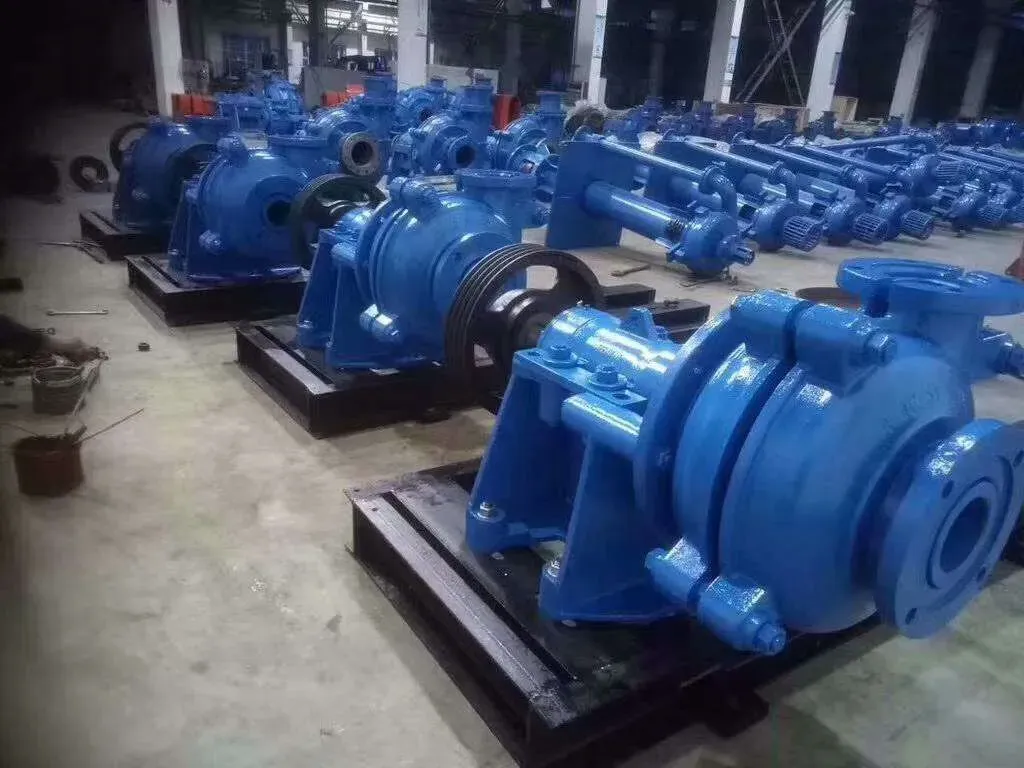
Slurry Pump China: Technical Dimension and Manufacturing Specification
Slurry pumps manufactured in China represent a critical nexus of hydraulic engineering and material science, designed specifically for the transport of abrasive, corrosive, and high-density fluids. In the industrial value chain, these pumps serve as the primary kinetic driver for mineral processing, dredging, waste-water treatment, and chemical refining. Unlike standard centrifugal pumps, a slurry pump must manage the non-Newtonian fluid dynamics of particulate suspensions while resisting catastrophic erosive wear. The core technical position of these machines is to optimize the balance between volumetric efficiency (flow rate) and the Mean Time Between Failure (MTBF) of the wear components. This involves precise calibration of impeller geometry and the application of advanced metallurgical coatings to withstand the constant impact of suspended solids.
Material Science & Manufacturing
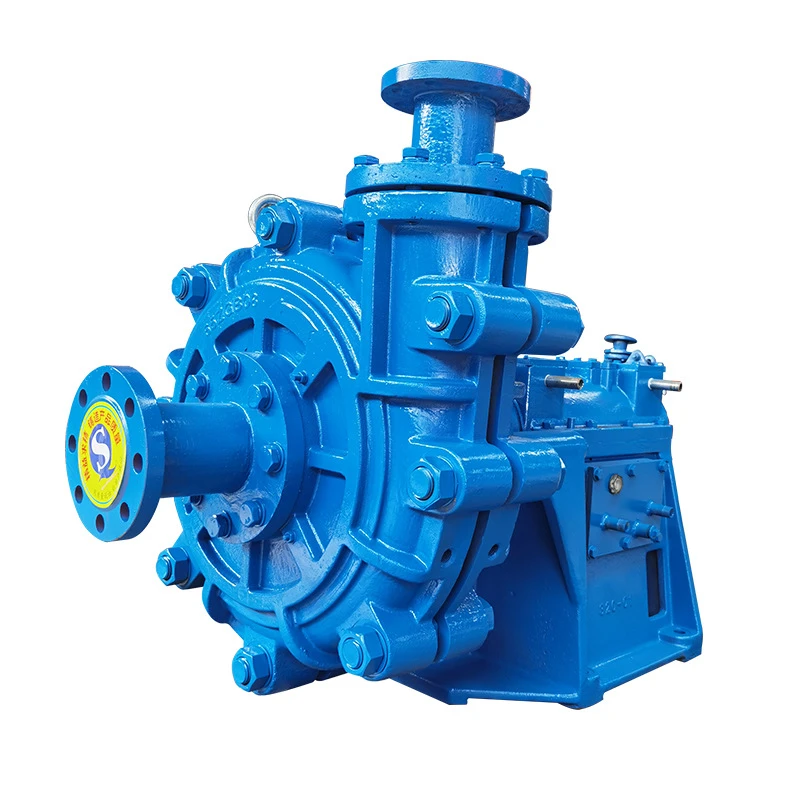
The manufacturing of heavy-duty slurry pumps in China focuses on mitigating the effects of abrasive wear and chemical corrosion. The selection of raw materials is dictated by the Mohs hardness of the particles being transported. High-chromium cast irons (typically 27% Cr) are employed for impellers and liners due to their formation of hard M7C3 carbides, which provide a robust matrix against scouring. For highly acidic or alkaline slurries, duplex stainless steels or specialized rubber linings (Natural Rubber, Nitrile, or Neoprene) are integrated to provide chemical inertness and impact elasticity.
The manufacturing process involves several high-precision stages. Casting is performed using sand-molding or investment casting, followed by rigorous heat treatment (quenching and tempering) to achieve a Rockwell C hardness typically exceeding 60 HRC. CNC machining is then utilized to ensure the tight tolerances required for the volute casing and shaft alignment, reducing vibration and preventing premature bearing failure. Furthermore, the integration of hard-facing welding (using tungsten carbide or cobalt-based alloys) on high-velocity zones of the impeller further extends the service life in extreme abrasive environments.
Performance & Engineering
Engineering a slurry pump requires a deep analysis of fluid-solid interaction. The primary challenge is the "settling velocity" of the solids; if the flow velocity falls below the critical deposition velocity, the pipeline will clog. Therefore, the pump's hydraulic design focuses on maximizing the Net Positive Suction Head available (NPSHa) to prevent cavitation, which can lead to rapid pitting and mechanical failure. Force analysis is conducted on the impeller to ensure that the radial thrust is minimized, reducing the load on the shaft and bearings during the transport of high-density media.
Environmental resistance is another pillar of performance. Seals are engineered using mechanical seal arrangements or expeller seals (seal-less designs) to prevent the ingress of abrasive particles into the bearing housing. Compliance requirements focus on energy efficiency and leakage prevention. From an engineering standpoint, the transition from a standard impeller to a semi-open or open impeller is determined by the maximum particle size (d50) to prevent blockage and ensure a constant volumetric flow under varying slurry concentrations.
Technical Specifications
| Parameter Dimension | High-Chrome Series | Rubber-Lined Series | Duplex Stainless Series | Engineering Standard |
|---|---|---|---|---|
| Max Particle Size (mm) | Up to 100mm | Up to 30mm | Up to 50mm | ISO 5199 |
| Hardness (HRC/Shore A) | 60 - 65 HRC | 60 - 70 Shore A | 25 - 35 HRC | ASTM A532 |
| Max Flow Rate (m³/h) | 2500 | 1200 | 1800 | DIN 24255 |
| Max Head (m) | 150 | 80 | 120 | GB/T 3216 |
| Corrosion Resistance | Moderate | High (Acidic) | Extreme (Chloride) | ASTM G48 |
| MTBF (Typical Hours) | 8,000 - 12,000 | 5,000 - 8,000 | 15,000 - 20,000 | Industry Avg. |
Failure Mode & Maintenance
Failure analysis of slurry pumps typically identifies three primary modes: erosive wear, cavitation, and mechanical seal failure. Erosive wear occurs when the kinetic energy of the slurry particles exceeds the yield strength of the material, leading to "wall thinning" in the volute and "blade recession" in the impeller. Cavitation manifests as vapor bubbles collapsing near the impeller surface, creating micro-jets that pit the metal and cause severe vibration. Mechanical failure often stems from shaft deflection or the failure of the gland packing due to the penetration of abrasive fines.
Professional maintenance requires a proactive regime. This includes the implementation of vibration monitoring to detect early bearing wear and the use of ultrasonic thickness testing (UT) to monitor liner wear without dismantling the pump. When replacing wear parts, it is imperative to ensure the "clearance gap" between the impeller and the suction liner is restored to factory specifications to prevent recirculation and efficiency loss. For rubber-lined pumps, checking for "delamination" (separation of rubber from the cast shell) is critical to prevent the slurry from attacking the outer casing.
Industry FAQ
Q: How do I choose between high-chrome alloys and rubber linings for my application?
A: The choice depends on the particle size and nature of the slurry. High-chrome alloys are superior for large, sharp, and hard particles (high Mohs scale) that would cut through rubber. Rubber linings are preferred for smaller, fine particles and applications involving corrosive chemicals where elasticity is required to absorb impact energy.
Q: What causes the sudden drop in pump efficiency in slurry transport?
A: This is usually attributed to "wear-induced clearance increase." As the impeller and liner wear down, the gap between them widens, allowing fluid to leak back to the suction side (internal recirculation), which drastically reduces the volumetric efficiency and head pressure.
Q: How can cavitation be mitigated in high-density slurry pumps?
A: To mitigate cavitation, one must increase the Net Positive Suction Head available (NPSHa) by either raising the source tank level, reducing the suction lift height, or increasing the diameter of the suction piping to reduce frictional head loss.
Q: Why is shaft misalignment a critical failure point in these pumps?
A: Because slurry pumps operate with heavy components and often under high torque, even a slight misalignment creates cyclical stresses that lead to fatigue cracking of the shaft and accelerated wear of the bearings and mechanical seals.
Q: What is the impact of slurry concentration (percentage of solids) on pump life?
A: Increased concentration increases the viscosity and the frequency of particle impacts. This accelerates the erosive wear rate linearly until a critical concentration is reached, after which the risk of "plugging" and extreme torque spikes increases, potentially leading to motor overload.
Conclusion
The technical efficacy of a slurry pump is fundamentally determined by the synergy between its hydraulic design and the metallurgical properties of its wear components. By optimizing the impeller geometry to manage fluid-solid interactions and employing high-chromium or elastomer materials, manufacturers can significantly reduce the total cost of ownership (TCO) through extended service intervals and reduced energy consumption.
Looking forward, the industry is shifting toward "smart pumping," integrating IoT sensors for real-time wear monitoring and variable frequency drives (VFDs) to maintain the critical velocity of the slurry. For procurement and engineering teams, the focus must remain on a precise match between the slurry's chemical-physical profile and the pump's material specification to ensure operational stability in the most demanding industrial environments.
-
Comprehensive Guide to Waterproof ORings for Optimal Sealing Solutions
News2026-06-09
-
Waste Tank Pump Performance Analysis
News2026-06-27
-
Sewer System Pump Out Material Science
News2026-06-27
-
Sewer Ejector Pit Performance Analysis
News2026-06-27
-
septic tank pumps for sale Performance Engineering
News2026-06-27
-
septic system with lift pump Performance Engineering
News2026-06-27
-
septic system sump pump Performance Analysis
News2026-06-26
-
septic pump company Performance Analysis
News2026-06-26
-
pumps water treatment Performance Analysis
News2026-06-26
-
pumps for septic tanks Material Science and Manufacturing
News2026-06-26
-
pump for septic system Material Science Manufacturing
News2026-06-26
-
heavy duty submersible pump Performance Analysis
News2026-06-25
-
best submersible pump for septic tank Performance Analysis
News2026-06-25
-
basement sewer ejector pump Performance Analysis
News2026-06-25
-
basement pumps ejector pumps Performance Analysis
News2026-06-25




