English
- Afrikaans
- Albanian
- Amharic
- Arabic
- Armenian
- Azerbaijani
- Basque
- Belarusian
- Bengali
- Bosnian
- Bulgarian
- Catalan
- Cebuano
- Corsican
- Croatian
- Czech
- Danish
- Dutch
- English
- Esperanto
- Estonian
- Finnish
- French
- Frisian
- Galician
- Georgian
- German
- Greek
- Gujarati
- Haitian Creole
- hausa
- hawaiian
- Hebrew
- Hindi
- Miao
- Hungarian
- Icelandic
- igbo
- Indonesian
- irish
- Italian
- Japanese
- Javanese
- Kannada
- kazakh
- Khmer
- Rwandese
- Korean
- Kurdish
- Kyrgyz
- Lao
- Latin
- Latvian
- Lithuanian
- Luxembourgish
- Macedonian
- Malgashi
- Malay
- Malayalam
- Maltese
- Maori
- Marathi
- Mongolian
- Myanmar
- Nepali
- Norwegian
- Norwegian
- Occitan
- Pashto
- Persian
- Polish
- Portuguese
- Punjabi
- Romanian
- Russian
- Samoan
- Scottish Gaelic
- Serbian
- Sesotho
- Shona
- Sindhi
- Sinhala
- Slovak
- Slovenian
- Somali
- Spanish
- Sundanese
- Swahili
- Swedish
- Tagalog
- Tajik
- Tamil
- Tatar
- Telugu
- Thai
- Turkish
- Turkmen
- Ukrainian
- Urdu
- Uighur
- Uzbek
- Vietnamese
- Welsh
- Bantu
- Yiddish
- Yoruba
- Zulu

Telephone: +86 13120555503
Email: frank@cypump.com


Apr . 01, 2024 17:55 Back to list
slurry pump casing Manufacturing Specification and Performance Analysis
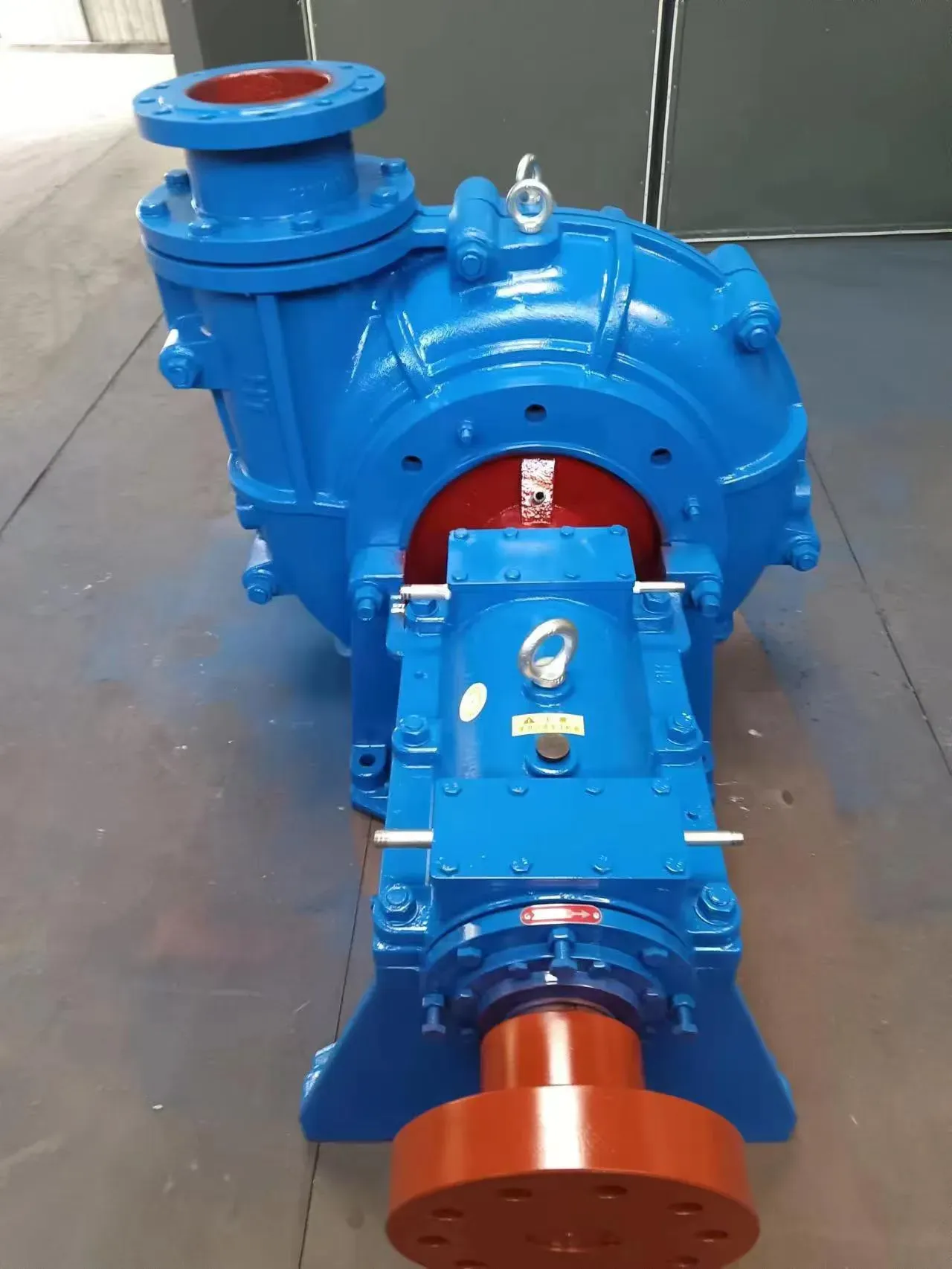
Slurry Pump Casing: Manufacturing Specification and Performance Analysis
The slurry pump casing serves as the primary pressure-containing envelope and hydraulic guide for the transport of abrasive, high-density fluids in mining, mineral processing, and industrial dredging applications. Positioned as a critical component in the fluid transport chain, the casing must withstand extreme synergistic wear—a combination of mechanical abrasion from solid particles and chemical corrosion from acidic or alkaline slurries. Technically, the casing's geometry is engineered to minimize turbulence and prevent stagnant zones, ensuring that the kinetic energy imparted by the impeller is efficiently converted into pressure while mitigating the velocity-induced erosion at the volute walls. The selection of the casing material and the precision of its casting directly determine the Mean Time Between Failures (MTBF) and the overall operational efficiency of the pumping system.
Material Science & Manufacturing
The engineering of a slurry pump casing begins with advanced material science to address the dichotomy between hardness (for abrasion resistance) and toughness (to prevent catastrophic brittle fracture). The primary materials employed include High-Chromium White Cast Irons (ASTM A532), Natural Rubber linings, and duplex stainless steels.
High-Chromium Cast Irons: These alloys typically contain 12% to 28% Chromium. The metallurgical structure is characterized by a matrix of hard M7C3 carbides embedded in a martensitic matrix. The Chromium reacts with Carbon to form these primary carbides, which possess a hardness significantly higher than the abrasive particles (such as silica or alumina) found in the slurry. Control of the cooling rate during casting is critical; insufficient cooling results in coarse carbides that are prone to cracking, while over-cooling can lead to excessive internal stress.
Elastomeric Linings: For slurries with finer particles and higher acidity, natural rubber or polyurethane linings are utilized. These materials operate on the principle of "resilient abrasion," where the material temporarily deforms under particle impact and then rebounds, absorbing the energy rather than losing material via micro-cutting.
Manufacturing Process Flow: 1. Pattern Design & Simulation: Utilizing Computational Fluid Dynamics (CFD) to optimize the volute profile and Finite Element Analysis (FEA) to identify stress concentrations. 2. Precision Casting: Sand casting is predominantly used. For high-chrome alloys, the use of chemically bonded sand ensures high dimensional stability. 3. Heat Treatment: Quenching and tempering are employed to transform the austenite into tempered martensite, optimizing the hardness-to-toughness ratio. 4. Precision Machining: Critical mating surfaces and flange faces are CNC-machined to ensure airtight seals and prevent leakage that could lead to external corrosion of the outer shell. 5. Surface Treatment: For specialized applications, thermal spray coatings or hard-facing welding are applied to high-velocity zones.
Performance & Engineering
The engineering performance of a slurry pump casing is evaluated based on its ability to maintain hydraulic efficiency under degrading internal conditions. The core engineering focus is the management of the Boundary Layer and the prevention of cavitation.
Fluid Dynamics and Erosion: Erosion rates in the casing are proportional to the cube of the fluid velocity. Therefore, engineering the volute to ensure a gradual increase in cross-sectional area allows for a controlled reduction in velocity, minimizing the impact energy of particles against the casing wall. The "cut-water" area—where the fluid exits the volute—is the most critical point of wear and is often reinforced with sacrificial wear plates.
Force Analysis & Structural Integrity: The casing must withstand not only the internal hydrostatic pressure but also the dynamic loads generated by unbalanced impeller forces and the weight of the slurry. Structural rigidity is essential to prevent shaft misalignment; any deflection in the casing can lead to premature failure of the mechanical seals or bearings.
Chemical Compatibility: In corrosive environments (e.g., sulfuric acid leaching), the casing must resist pitting and stress corrosion cracking (SCC). The use of Molybdenum-enhanced alloys creates a stable passive oxide layer that protects the substrate from chemical attack, ensuring the structural integrity of the pump remains intact even as the wear liner is consumed.
Technical Specifications
| Material Grade | Hardness (HB/HRC) | Corrosion Resistance | Primary Application | Max Particle Size | Wear Rate (mm/1000h) |
|---|---|---|---|---|---|
| High-Chrome Iron (A532) | 600-700 HB | Moderate | Coarse Abrasive Slurry | Up to 15mm | 1.2 - 2.5 |
| Natural Rubber (NR) | 60-80 Shore A | High (Acidic) | Fine Sandy Slurry | Up to 3mm | 0.5 - 1.8 |
| Duplex Stainless Steel | 250-350 HB | Excellent | Chemical Slurries | Up to 5mm | 2.0 - 4.0 |
| Ceramic Lined Steel | 1200+ HV | Very High | Ultra-Abrasive Tailings | Up to 8mm | 0.2 - 0.8 |
| Polyurethane (PU) | 90-95 Shore A | Moderate | Medium Grit Slurries | Up to 6mm | 0.8 - 1.5 |
| Hardened Alloy Steel | 45-55 HRC | Low | Low-Concentration Slurry | Up to 10mm | 3.0 - 5.0 |
Failure Mode & Maintenance
Failure in slurry pump casings is rarely the result of a single factor but rather a combination of mechanical and chemical stressors. Analyzing these failure modes is essential for implementing predictive maintenance.
1. Abrasive Wear (Erosion): This is the most common failure mode, appearing as localized thinning of the casing wall, particularly at the volute tongue. It occurs when the hardness of the slurry particles exceeds the hardness of the casing material, leading to micro-plowing and micro-cutting of the surface.
2. Cavitation Pitting: Occurs when the local pressure drops below the vapor pressure of the liquid, forming bubbles that collapse violently. This creates high-pressure micro-jets that "hammer" the surface, leaving a sponge-like appearance. This is often caused by incorrect NPSH (Net Positive Suction Head) calculations.
3. Corrosion-Erosion Synergy: A destructive cycle where the protective oxide layer is mechanically stripped away by abrasive particles, exposing fresh metal to chemical attack, which in turn weakens the metal structure and accelerates further abrasion.
4. Fatigue Cracking: Induced by cyclic pressure pulsations or vibration from oversized particles clogging the impeller, leading to stress fractures in the casting, especially around the bolt holes and flanges.
Maintenance Protocols: - Ultrasonic Thickness Testing: Regular measurement of casing wall thickness to predict the remaining service life. - Liner Replacement: Systematic replacement of wear liners before the base metal of the casing is compromised. - Vibration Analysis: Monitoring the casing's harmonic frequency to detect cavitation or impeller imbalance early.
Industry FAQ
Q: How do we determine whether to use a high-chrome alloy or a rubber-lined casing?
A: The decision depends on the particle size and the nature of the abrasion. High-chrome alloys are superior for large, sharp particles (coarse slurry) where high surface hardness is required to resist cutting. Rubber linings are more effective for fine, sandy particles and corrosive fluids, as they utilize elastic deformation to absorb impact energy.
Q: Why does the casing wear faster at the discharge volute than at the suction?
A: The discharge area experiences the highest fluid velocities and turbulence. Since erosion rates increase exponentially with velocity, the kinetic energy of the particles is concentrated at the volute tongue and discharge curve, leading to accelerated material loss.
Q: Can cavitation be eliminated entirely by changing the casing material?
A: No. Cavitation is a hydraulic phenomenon related to pressure and velocity. While some materials (like duplex stainless steel) resist cavitation damage better than others, the root cause must be addressed through hydraulic redesign, increasing the suction head, or reducing the fluid temperature.
Q: What is the impact of slurry concentration on casing lifespan?
A: Higher concentrations increase the frequency of particle-wall collisions. However, at extremely high concentrations, a "cushioning effect" can occur where particles collide with each other rather than the wall. The critical point is finding the optimal velocity to maintain transport without causing excessive turbulence.
Q: How does thermal expansion affect the casing in high-temperature slurry applications?
A: High temperatures can cause differential expansion between the casing and the impeller or liners. This can lead to a reduction in internal clearances, increasing friction and wear, or causing stress cracks in brittle high-chrome materials. Thermal compensation gaskets and specific alloy selections are required.
Conclusion
The slurry pump casing is a sophisticated engineering component that demands a precise balance of metallurgical properties and hydraulic optimization. By integrating high-chromium alloys or specialized elastomers with CFD-optimized geometries, industry operators can significantly reduce downtime and operational costs. The technical success of the casing lies in its ability to manage the synergistic effects of abrasion and corrosion while maintaining structural integrity under high-pressure dynamic loads.
Moving forward, the industry is shifting toward "smart casings" embedded with wear-sensing technology and the adoption of additive manufacturing for complex internal geometries. It is recommended that procurement and engineering teams prioritize materials based on a detailed analysis of the slurry's mineralogical composition and particle size distribution to maximize the lifecycle efficiency of the pumping system.
-
Comprehensive Guide to Waterproof ORings for Optimal Sealing Solutions
News2026-06-09
-
septic system sump pump Performance Analysis
News2026-06-26
-
septic pump company Performance Analysis
News2026-06-26
-
pumps water treatment Performance Analysis
News2026-06-26
-
pumps for septic tanks Material Science and Manufacturing
News2026-06-26
-
pump for septic system Material Science Manufacturing
News2026-06-26
-
heavy duty submersible pump Performance Analysis
News2026-06-25
-
best submersible pump for septic tank Performance Analysis
News2026-06-25
-
basement sewer ejector pump Performance Analysis
News2026-06-25
-
basement pumps ejector pumps Performance Analysis
News2026-06-25
-
basement lift pump Performance and Engineering
News2026-06-25
-
basement bathroom pump systems Performance Analysis
News2026-06-24
-
basement bathroom ejector pump system Performance Engineering
News2026-06-24
-
2 hp sewage pump Performance Engineering
News2026-06-24
-
1 hp septic pump Performance Engineering
News2026-06-24




