English
- Afrikaans
- Albanian
- Amharic
- Arabic
- Armenian
- Azerbaijani
- Basque
- Belarusian
- Bengali
- Bosnian
- Bulgarian
- Catalan
- Cebuano
- Corsican
- Croatian
- Czech
- Danish
- Dutch
- English
- Esperanto
- Estonian
- Finnish
- French
- Frisian
- Galician
- Georgian
- German
- Greek
- Gujarati
- Haitian Creole
- hausa
- hawaiian
- Hebrew
- Hindi
- Miao
- Hungarian
- Icelandic
- igbo
- Indonesian
- irish
- Italian
- Japanese
- Javanese
- Kannada
- kazakh
- Khmer
- Rwandese
- Korean
- Kurdish
- Kyrgyz
- Lao
- Latin
- Latvian
- Lithuanian
- Luxembourgish
- Macedonian
- Malgashi
- Malay
- Malayalam
- Maltese
- Maori
- Marathi
- Mongolian
- Myanmar
- Nepali
- Norwegian
- Norwegian
- Occitan
- Pashto
- Persian
- Polish
- Portuguese
- Punjabi
- Romanian
- Russian
- Samoan
- Scottish Gaelic
- Serbian
- Sesotho
- Shona
- Sindhi
- Sinhala
- Slovak
- Slovenian
- Somali
- Spanish
- Sundanese
- Swahili
- Swedish
- Tagalog
- Tajik
- Tamil
- Tatar
- Telugu
- Thai
- Turkish
- Turkmen
- Ukrainian
- Urdu
- Uighur
- Uzbek
- Vietnamese
- Welsh
- Bantu
- Yiddish
- Yoruba
- Zulu

Telephone: +86 13120555503
Email: frank@cypump.com


Apr . 01, 2024 17:55 Back to list
Slurry Pump Calculations Hydraulic Performance and Material Engineering Analysis
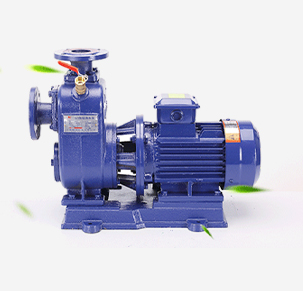
Slurry Pump Calculations: Hydraulic Performance and Material Engineering Analysis
Slurry pump calculations represent a critical intersection of fluid mechanics and tribology, focusing on the transport of non-Newtonian fluids containing suspended solid particles. Unlike clean water pumping, slurry transport involves the complex interplay of particle size distribution, solid concentration (by weight and volume), and the rheological behavior of the carrier fluid. In the industrial chain, these calculations serve as the foundational engineering requirement for determining the Total Dynamic Head (TDH), Net Positive Suction Head available (NPSHa), and the necessary power input to overcome both frictional losses and the internal energy dissipation caused by particle collisions. Precise calculations are essential to prevent premature impeller wear and to avoid the catastrophic failure of the system due to sedimentation or cavitation.
Material Science & Manufacturing
The manufacturing of slurry pumps necessitates materials capable of resisting extreme abrasive wear and corrosive chemical attacks. The primary focus is on the metallurgical structure of the wetted parts. High-Chrome alloys (typically 27% Cr) are employed for their high hardness and carbide distribution, which minimizes the erosion rate in high-velocity zones. For more aggressive chemical environments, duplex stainless steels or synthetic elastomers such as Polyurethane and Natural Rubber are utilized. The selection is based on the "Critical Velocity" calculation—the minimum velocity required to keep solids in suspension—which directly correlates to the wear rate of the material.
Manufacturing processes involve precision casting followed by rigorous heat treatment to ensure a uniform martensitic structure. The impeller is often subjected to dynamic balancing to reduce vibration-induced fatigue. Furthermore, the integration of hard-facing techniques, such as tungsten carbide cladding, is applied to high-wear areas. Control parameters during production focus on the volumetric shrinkage of the casting and the precision of the clearance between the impeller and the wear plate, as excessive clearance leads to internal recirculation and a significant drop in hydraulic efficiency.
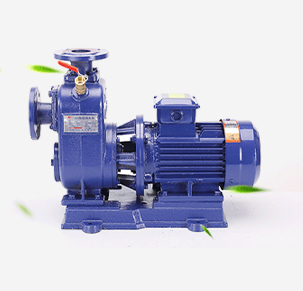
Performance & Engineering
Engineering a slurry pump requires a departure from standard water-based pump curves. The most critical calculation is the adjustment for the specific gravity (SG) of the slurry. The power required is proportional to the SG: $P_{slurry} = P_{water} imes SG$. However, the head generated by the pump is also affected by the viscosity of the mixture. For non-Newtonian slurries, the Bingham Plastic or Power Law models are applied to determine the apparent viscosity, which significantly influences the friction factor in the pipeline.
Force analysis within the pump focuses on the centrifugal force acting on the particles. If the impeller tip speed is too high, the resulting impact energy causes rapid erosion of the vane trailing edges. Conversely, if the speed is too low, particle settling occurs, leading to "sanding" and pump blockage. Compliance with engineering standards requires the calculation of the "Derating Factor," which accounts for the efficiency loss due to the presence of solids. Furthermore, the NPSH calculation must include a safety margin to account for the higher vapor pressure potential in contaminated fluids, ensuring that the pump operates far from the cavitation threshold.
Technical Specifications
| Material Grade | Hardness (HRC) | Max Particle Size (mm) | Max Concentration (Cwv %) | Max Velocity (m/s) | Abrasion Resistance Index |
|---|---|---|---|---|---|
| High-Chrome (A05) | 60-65 | 15.0 | 70% | 12.0 | Extreme |
| Duplex SS (CD4MCu) | 25-30 | 5.0 | 40% | 8.0 | Moderate/High |
| Natural Rubber | - | 3.0 | 50% | 6.0 | High (Fine solids) |
| Polyurethane | - | 4.0 | 45% | 7.0 | Very High |
| Hardened Cast Iron | 45-50 | 10.0 | 30% | 9.0 | Medium |
| Tungsten Carbide | 70+ | 2.0 | 60% | 15.0 | Ultimate |
Failure Mode & Maintenance
Failure in slurry pumps typically manifests as localized erosion or mechanical seal degradation. One primary failure mode is "Cavitation Erosion," occurring when the fluid pressure drops below the vapor pressure, creating bubbles that collapse violently against the impeller surface. This is often caused by incorrect NPSH calculations or clogged suction strainers. Another critical mode is "Abrasive Wear," characterized by the physical removal of material from the impeller vanes, which leads to a gradual increase in internal clearances and a subsequent decline in pump head and efficiency.
Maintenance strategies must transition from reactive to predictive. This involves the use of vibration analysis to detect bearing wear and ultrasonic thickness gauging of the pump casing to monitor wall thinning. Professional maintenance solutions include the implementation of "Expeller" seals to eliminate the need for packing in certain applications and the scheduled rotation of the impeller to redistribute wear. When replacing wear parts, it is imperative to verify that the new components maintain the original hydraulic geometry to avoid altering the calculated system curve.
Industry FAQ
Q: How does the concentration of solids affect the Total Dynamic Head (TDH) calculation?
A: The increase in solids concentration increases the density and apparent viscosity of the fluid. This leads to higher frictional losses in the piping and internal losses within the pump, effectively requiring a higher TDH to maintain the same flow rate compared to a clean water application.
Q: Why is the "Critical Settling Velocity" vital for pump selection?
A: If the fluid velocity falls below the critical settling velocity, the suspended particles will precipitate, leading to blockages in the suction line or the pump volute. This results in erratic flow, increased vibration, and potential motor overload.
Q: When should I choose a rubber-lined pump over a high-chrome alloy pump?
A: Rubber linings are superior for handling fine, abrasive particles (slurry with small grain size) and corrosive chemicals. High-chrome alloys are preferred for coarse, large particles that would puncture or "tear" a rubber lining through high-energy impact.
Q: How do we calculate the power derating for a slurry pump?
A: Power derating is calculated by applying a correction factor to the water power, incorporating the specific gravity of the slurry and a viscosity correction factor (typically derived from the Hydraulic Institute standards) to account for the increased energy required to move a denser, more viscous medium.
Q: What is the impact of particle shape on the wear calculation?
A: Angular or jagged particles cause significantly higher erosion rates than spherical particles due to the increased localized stress concentrated at the particle edges during impact, requiring a higher wear allowance in the design calculations.
Conclusion
The precision of slurry pump calculations is the primary determinant of operational longevity and system efficiency in industrial mining and chemical processing. By integrating the laws of non-Newtonian fluid dynamics with advanced material science—specifically the use of high-chrome alloys and optimized hydraulic geometries—engineers can mitigate the inherent risks of abrasive wear and cavitation. The synthesis of specific gravity, critical velocity, and NPSH adjustments ensures that the equipment operates within its optimal performance envelope.
Looking forward, the integration of real-time sensor data and computational fluid dynamics (CFD) will allow for dynamic adjustment of pump parameters, further reducing energy consumption and extending the mean time between failures (MTBF). It is recommended that procurement and engineering teams prioritize the holistic analysis of slurry rheology over generic pump specifications to achieve maximum industrial reliability.
-
Comprehensive Guide to Waterproof ORings for Optimal Sealing Solutions
News2026-06-09
-
heavy duty submersible pump Performance Analysis
News2026-06-25
-
best submersible pump for septic tank Performance Analysis
News2026-06-25
-
basement sewer ejector pump Performance Analysis
News2026-06-25
-
basement pumps ejector pumps Performance Analysis
News2026-06-25
-
basement lift pump Performance and Engineering
News2026-06-25
-
basement bathroom pump systems Performance Analysis
News2026-06-24
-
basement bathroom ejector pump system Performance Engineering
News2026-06-24
-
2 hp sewage pump Performance Engineering
News2026-06-24
-
1 hp septic pump Performance Engineering
News2026-06-24
-
submersible effluent pump Performance Analysis
News2026-06-24
-
submergable pump Material Science
News2026-06-23
-
sewer injection pump Performance Engineering
News2026-06-23
-
Sewer Ejector Pump System Performance Analysis
News2026-06-23
-
septic tank pump for sale Performance Engineering
News2026-06-23




