English
- Afrikaans
- Albanian
- Amharic
- Arabic
- Armenian
- Azerbaijani
- Basque
- Belarusian
- Bengali
- Bosnian
- Bulgarian
- Catalan
- Cebuano
- Corsican
- Croatian
- Czech
- Danish
- Dutch
- English
- Esperanto
- Estonian
- Finnish
- French
- Frisian
- Galician
- Georgian
- German
- Greek
- Gujarati
- Haitian Creole
- hausa
- hawaiian
- Hebrew
- Hindi
- Miao
- Hungarian
- Icelandic
- igbo
- Indonesian
- irish
- Italian
- Japanese
- Javanese
- Kannada
- kazakh
- Khmer
- Rwandese
- Korean
- Kurdish
- Kyrgyz
- Lao
- Latin
- Latvian
- Lithuanian
- Luxembourgish
- Macedonian
- Malgashi
- Malay
- Malayalam
- Maltese
- Maori
- Marathi
- Mongolian
- Myanmar
- Nepali
- Norwegian
- Norwegian
- Occitan
- Pashto
- Persian
- Polish
- Portuguese
- Punjabi
- Romanian
- Russian
- Samoan
- Scottish Gaelic
- Serbian
- Sesotho
- Shona
- Sindhi
- Sinhala
- Slovak
- Slovenian
- Somali
- Spanish
- Sundanese
- Swahili
- Swedish
- Tagalog
- Tajik
- Tamil
- Tatar
- Telugu
- Thai
- Turkish
- Turkmen
- Ukrainian
- Urdu
- Uighur
- Uzbek
- Vietnamese
- Welsh
- Bantu
- Yiddish
- Yoruba
- Zulu

Telephone: +86 13120555503
Email: frank@cypump.com


Apr . 01, 2024 17:55 Back to list
Slurry Pump Calculation XLS Engineering Analysis and Fluid Dynamics
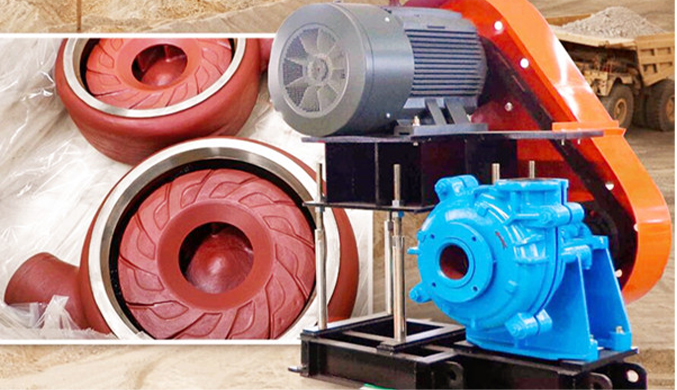
Slurry Pump Calculation XLS: Engineering Analysis and Fluid Dynamics
A slurry pump calculation xls serves as the critical computational bridge between theoretical fluid mechanics and practical industrial application. In the mining, dredging, and chemical processing sectors, the transport of non-Newtonian fluids—mixtures of liquid and solid particles—requires a level of precision far exceeding that of clear-water pumping. The core objective of these calculations is to determine the Total Dynamic Head (TDH), the required Net Positive Suction Head available (NPSHa), and the critical velocity necessary to prevent particle sedimentation within the pipeline. By integrating variables such as slurry density, particle size distribution, and viscosity, the calculation framework ensures that the selected pump can overcome the frictional losses associated with abrasive solids while maintaining structural integrity against erosive wear.
Material Science & Manufacturing
The efficacy of a slurry pump is fundamentally dictated by the material science of its wetted parts. Because the calculation xls must account for the degradation of efficiency over time, the selection of materials is paramount. High-chrome alloys (27% Cr) are frequently employed for impellers and liners due to their extreme hardness and resistance to abrasive wear. For highly corrosive slurries, duplex stainless steels or natural rubber linings are specified to prevent chemical oxidation and pitting. Manufacturing processes focus on precision casting and heat treatment to ensure a uniform metallurgical structure, reducing the likelihood of stress corrosion cracking. The casting process must eliminate porosity to ensure that the physical properties match the theoretical parameters used in the calculation models, as any structural weakness can lead to catastrophic failure when handling high-density solids at high velocities.

Performance & Engineering
Engineering a slurry system revolves around the "Critical Settling Velocity" (Vc). If the flow velocity drops below this threshold, solids precipitate, leading to pipeline blockage and increased pressure drops. The calculation xls utilizes the Durand equation or the Modified Hazen-Williams formula to determine the friction loss of the slurry, which is significantly higher than that of pure water. Force analysis must also consider the "Slurry Correction Factor," which adjusts the water-based pump curve to account for the increased viscosity and density of the medium. Furthermore, the calculation must validate the NPSHa against the NPSHr (Required) to prevent cavitation; however, in slurry applications, cavitation is exacerbated by the presence of solids, which can cause localized "pitting" and rapid impeller erosion. Proper engineering ensures the pump operates at its Best Efficiency Point (BEP) to minimize turbulence and internal recirculation, thereby extending the Mean Time Between Failures (MTBF).
Technical Specifications
| Parameter Category | Calculation Variable | Standard Unit | Industrial Impact |
|---|---|---|---|
| Fluid Properties | Slurry Specific Gravity (SG) | g/cm³ | Directly impacts motor power (kW) |
| Hydraulic Performance | Total Dynamic Head (TDH) | Meters (m) | Determines pump stage and pressure rating |
| Flow Dynamics | Critical Velocity (Vc) | m/s | Prevents sedimentation/pipeline plugging |
| Suction Analysis | NPSH Available | Meters (m) | Prevents cavitation and vapor lock |
| Wear Analysis | Abrasive Index (AI) | Dimensionless | Dictates liner material selection |
| Energy Efficiency | Brake Horsepower (BHP) | kW / hp | Determines electrical infrastructure needs |
Failure Mode & Maintenance
Failure analysis in slurry pumping typically identifies three primary modes: abrasive erosion, corrosive degradation, and mechanical fatigue. Abrasive erosion occurs when high-velocity particles strike the impeller vanes and volute casing, thinning the walls and reducing hydraulic efficiency. This is often detected in the calculation xls as a gradual increase in the required power for the same flow rate. Corrosive degradation, often synergyzed with erosion (erosion-corrosion), removes the protective oxide layer of the metal, accelerating material loss. Mechanical fatigue usually manifests as shaft deflection or bearing failure due to the unbalanced radial loads caused by uneven slurry distribution. Professional maintenance involves the implementation of a predictive monitoring system, measuring vibration levels and utilizing ultrasonic thickness gauges to monitor liner wear. Proactive replacement of wear parts based on calculated wear rates prevents unplanned downtime and catastrophic casing rupture.
Industry FAQ
Q: Why does the slurry pump require more power than a water pump for the same flow and head?
A: Slurry has a higher specific gravity and viscosity than water. The power requirement is directly proportional to the density of the fluid; therefore, as the concentration of solids increases, the Brake Horsepower (BHP) must increase to maintain the same volumetric flow rate.
Q: How is the "Critical Velocity" determined in the calculation xls?
A: Critical velocity is determined based on the particle size, the density difference between the solid and the liquid, and the concentration of solids. It is the minimum velocity required to keep particles in suspension, typically calculated using the Durand equation to avoid deposition.
Q: What happens if the NPSHa is only marginally higher than the NPSHr in slurry applications?
A: In clear water, a small margin might suffice, but in slurries, the presence of solids can trigger "particle-induced cavitation." This leads to accelerated erosion of the impeller eye and unstable flow, necessitating a larger safety margin (typically 0.5m to 1.0m extra) than standard water pumps.
Q: Which material is preferred for a slurry pump handling acidic tailings?
A: For acidic environments, high-chrome alloys may fail due to corrosion. In such cases, duplex stainless steels or specialized rubber-lined casings are preferred to provide a chemical barrier while maintaining resistance to abrasive particles.
Q: How does the "Slurry Correction Factor" affect the pump curve?
A: The correction factor reduces both the head (H) and the efficiency (η) of the pump compared to its water performance. This is because the higher viscosity of the slurry increases internal friction and disc friction losses within the pump casing.
Conclusion
The utilization of a rigorous slurry pump calculation xls is not merely a convenience but a technical necessity for ensuring operational stability in heavy industrial environments. By synthesizing material science, fluid dynamics, and precise hydraulic calculations, engineers can mitigate the risks of premature component failure and inefficient energy consumption. The integration of critical velocity and NPSH analysis ensures that the system remains free of sedimentation and cavitation, which are the two primary drivers of system instability.
Moving forward, the transition toward digital twins and real-time sensor integration will likely augment these static calculations, allowing for dynamic adjustments to pump speed and flow rates. However, the fundamental physics captured in the calculation xls—specifically regarding slurry density and abrasive wear—will remain the cornerstone of slurry transport engineering, ensuring longevity and reliability in the most demanding industrial applications.
-
Comprehensive Guide to Waterproof ORings for Optimal Sealing Solutions
News2026-06-09
-
septic system sump pump Performance Analysis
News2026-06-26
-
septic pump company Performance Analysis
News2026-06-26
-
pumps water treatment Performance Analysis
News2026-06-26
-
pumps for septic tanks Material Science and Manufacturing
News2026-06-26
-
pump for septic system Material Science Manufacturing
News2026-06-26
-
heavy duty submersible pump Performance Analysis
News2026-06-25
-
best submersible pump for septic tank Performance Analysis
News2026-06-25
-
basement sewer ejector pump Performance Analysis
News2026-06-25
-
basement pumps ejector pumps Performance Analysis
News2026-06-25
-
basement lift pump Performance and Engineering
News2026-06-25
-
basement bathroom pump systems Performance Analysis
News2026-06-24
-
basement bathroom ejector pump system Performance Engineering
News2026-06-24
-
2 hp sewage pump Performance Engineering
News2026-06-24
-
1 hp septic pump Performance Engineering
News2026-06-24




