English
- Afrikaans
- Albanian
- Amharic
- Arabic
- Armenian
- Azerbaijani
- Basque
- Belarusian
- Bengali
- Bosnian
- Bulgarian
- Catalan
- Cebuano
- Corsican
- Croatian
- Czech
- Danish
- Dutch
- English
- Esperanto
- Estonian
- Finnish
- French
- Frisian
- Galician
- Georgian
- German
- Greek
- Gujarati
- Haitian Creole
- hausa
- hawaiian
- Hebrew
- Hindi
- Miao
- Hungarian
- Icelandic
- igbo
- Indonesian
- irish
- Italian
- Japanese
- Javanese
- Kannada
- kazakh
- Khmer
- Rwandese
- Korean
- Kurdish
- Kyrgyz
- Lao
- Latin
- Latvian
- Lithuanian
- Luxembourgish
- Macedonian
- Malgashi
- Malay
- Malayalam
- Maltese
- Maori
- Marathi
- Mongolian
- Myanmar
- Nepali
- Norwegian
- Norwegian
- Occitan
- Pashto
- Persian
- Polish
- Portuguese
- Punjabi
- Romanian
- Russian
- Samoan
- Scottish Gaelic
- Serbian
- Sesotho
- Shona
- Sindhi
- Sinhala
- Slovak
- Slovenian
- Somali
- Spanish
- Sundanese
- Swahili
- Swedish
- Tagalog
- Tajik
- Tamil
- Tatar
- Telugu
- Thai
- Turkish
- Turkmen
- Ukrainian
- Urdu
- Uighur
- Uzbek
- Vietnamese
- Welsh
- Bantu
- Yiddish
- Yoruba
- Zulu

Telephone: +86 13120555503
Email: frank@cypump.com


Apr . 01, 2024 17:55 Back to list
slurry pump bearing assembly Technical Performance and Manufacturing Analysis
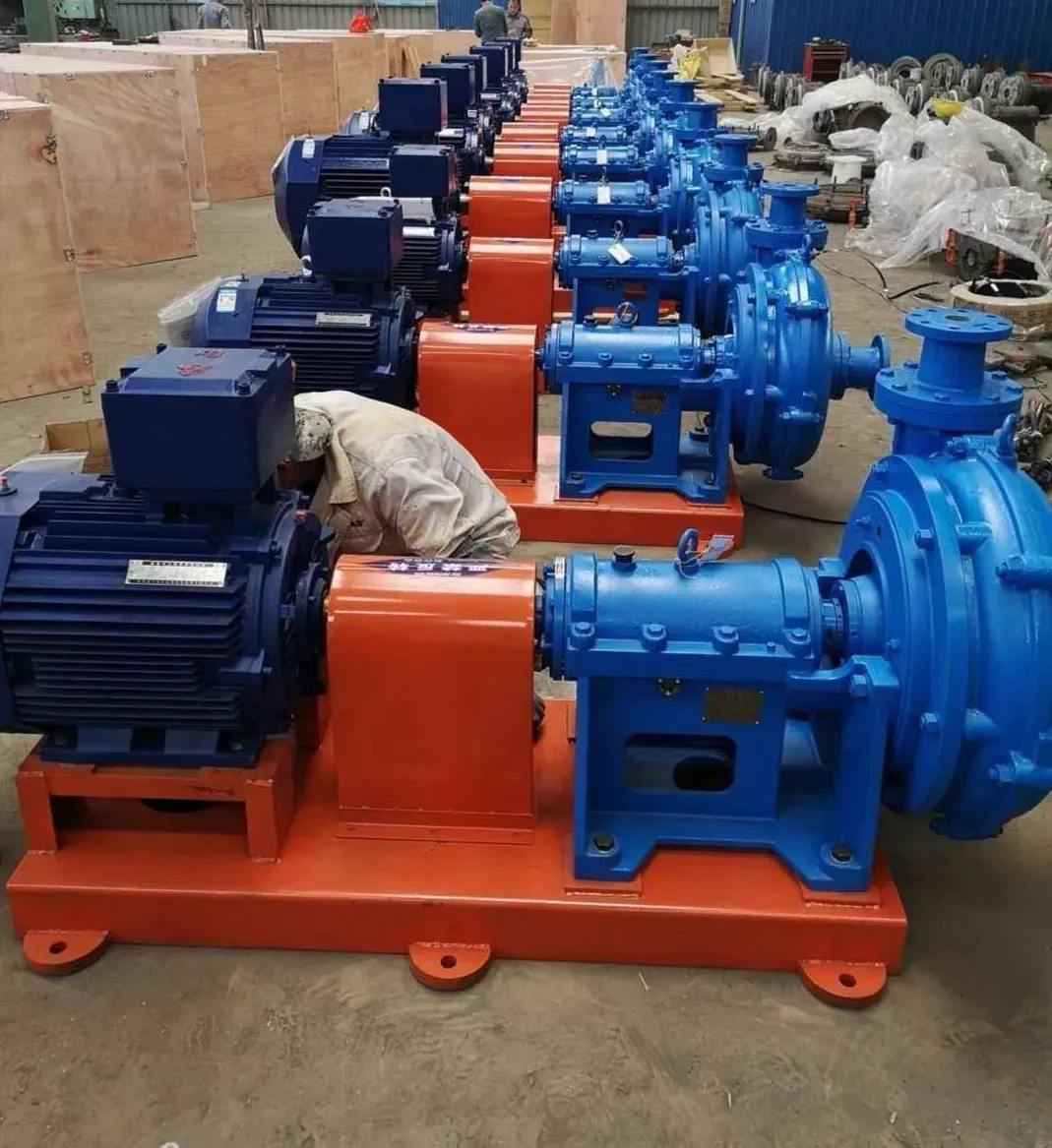
Slurry Pump Bearing Assembly: Technical Performance and Manufacturing Analysis
The slurry pump bearing assembly serves as the critical mechanical interface that supports the rotating shaft while absorbing radial and axial loads generated during the transport of high-density, abrasive fluids. Positioned within the pump's power transmission chain, the bearing assembly is the primary safeguard against shaft deflection and vibration, which are prevalent in mining, dredging, and chemical processing environments. Given the extreme nature of slurry—often containing quartz, pyrite, or other hard mineral particulates—the bearing assembly must maintain precise tolerances under severe mechanical stress and corrosive chemical exposure. The technical integrity of this assembly determines the Mean Time Between Failures (MTBF) of the entire pumping system, as bearing degradation is the leading precursor to seal failure and shaft rupture.
Material Science & Manufacturing
The engineering of a slurry pump bearing assembly begins with advanced metallurgy designed to combat both fatigue and abrasive wear. The rolling elements and races are typically manufactured from High-Carbon Chromium Bearing Steel (such as GCr15 or AISI 52100), which undergoes rigorous vacuum degassing to eliminate non-metallic inclusions that could act as initiation points for spalling. To enhance surface hardness, a precise quenching and tempering process is employed, followed by deep-freezing (cryogenic treatment) to transform retained austenite into martensite, ensuring dimensional stability over long operational cycles.
In environments where chemical corrosion is as prevalent as mechanical abrasion, the assembly utilizes specialized coatings or alternative alloys. Chrome-plated or ceramic-hybrid bearings (silicon nitride balls) are implemented to eliminate galvanic corrosion and reduce the coefficient of friction. The manufacturing process incorporates precision grinding and honing to achieve a surface roughness (Ra) of less than 0.05 μm, minimizing the risk of micropitting. The assembly housing is typically cast from ASTM A216 Grade WCB or ductile iron, utilizing centrifugal casting to ensure a dense, pore-free structure that prevents the ingress of contaminants through the housing wall. Lubrication channels are precision-drilled and deburred to ensure a laminar flow of grease or oil, preventing cavitation within the lubricant film.
Performance & Engineering
From an engineering perspective, the slurry pump bearing assembly must resolve the conflict between high load-bearing capacity and the need for contamination exclusion. The force analysis involves calculating the combined radial load (from the impeller imbalance and fluid dynamics) and the axial thrust (resulting from the pressure differential across the pump). To manage these forces, a combination of tapered roller bearings (for axial thrust) and deep-groove ball bearings (for radial stability) is often utilized in a duplex or triplex arrangement.
Environmental resistance is achieved through a multi-stage sealing strategy. The bearing assembly is isolated from the process fluid by heavy-duty labyrinth seals and V-ring seals, which create a tortuous path for slurry particulates. Engineering focus is placed on the "Lube-Film Thickness," where the viscosity of the lubricant is matched to the operating temperature to ensure a hydrodynamic wedge is maintained, preventing metal-to-metal contact. Thermal expansion coefficients are carefully calculated; the interference fit between the bearing inner ring and the shaft is engineered to prevent "creep" while allowing for the thermal growth of the shaft during continuous high-load operation. Compliance with vibration standards requires the assembly to maintain a damping coefficient that prevents resonance at the pump's critical speeds.
Technical Specifications
| Technical Parameter | Standard Specification | High-Performance Grade | Tolerance Range | Testing Method |
|---|---|---|---|---|
| Material Composition | GCr15 Bearing Steel | Silicon Nitride / AISI 440C | ±0.01% Alloy Variance | Spectroscopy |
| Surface Hardness | 60-64 HRC | 65-67 HRC | ±1 HRC | Rockwell C Scale |
| Radial Clearance | C3 Normal | C4 Loose (for heat) | 0.015 - 0.030 mm | Micrometer/Feelers |
| Dynamic Load Rating | 120 kN - 250 kN | 300 kN+ | ±5% Variance | Static Load Test |
| Operational Temp | -20°C to +80°C | -40°C to +150°C | ±2°C Delta | Thermal Chamber |
| Surface Roughness (Ra) | 0.4 μm | 0.05 μm | ±0.02 μm | Profilometry |
Failure Mode & Maintenance
The failure of slurry pump bearing assemblies typically follows a predictable progression of degradation. The most common failure mode is Abrasive Contamination, where slurry particulates penetrate the seals and embed themselves into the raceways, leading to rapid surface pitting and "scoring." This is followed by Fatigue Spalling, characterized by the flaking of the metal surface due to repeated cyclic loading exceeding the material's endurance limit. In chemically aggressive environments, Stress Corrosion Cracking (SCC) can occur, where microscopic cracks propagate through the bearing ring, leading to catastrophic sudden failure.
Maintenance protocols must shift from reactive to predictive models. Vibration Analysis (using accelerometers) is used to detect early-stage bearing failure by monitoring the "Bearing Defect Frequencies" (BPFO, BPFI). When vibration amplitudes exceed ISO 10816 thresholds, immediate inspection is required. Lubrication maintenance involves regular grease analysis to detect the presence of moisture or metallic wear debris. The "Grease Purge" method is recommended, where fresh lubricant is pumped through the assembly to flush out contaminants. For long-term reliability, the shaft and housing interfaces should be inspected for "fretting corrosion" during every overhaul, with worn surfaces restored via thermal spraying or precision machining.
Industry FAQ
Q: How do we determine whether to use a ceramic hybrid bearing or a standard steel bearing for a specific slurry application?
A: The decision is based on the chemical composition of the slurry and the operating temperature. If the fluid contains corrosive halides or requires high-speed rotation where heat generation is a concern, ceramic hybrid bearings (Si3N4) are preferred due to their lower thermal expansion and chemical inertness. For standard mineral slurries at moderate speeds, GCr15 steel is sufficient and more cost-effective.
Q: What is the primary cause of premature bearing failure in pumps handling high-density tailings?
A: The primary cause is usually seal breach resulting in "slurry ingress." Once particulates enter the bearing housing, they act as grinding media, destroying the hydrodynamic lubricant film and causing rapid abrasive wear. This is often exacerbated by incorrect bearing preload, which allows excessive shaft movement and accelerates seal wear.
Q: How does the bearing assembly handle the axial thrust generated by heavy slurry?
A: The assembly typically employs a combination of tapered roller bearings or angular contact bearings arranged in an "O" or "X" configuration. These bearings are specifically designed to resolve the axial force vector into a radial component, ensuring the shaft remains centered while supporting the heavy thrust loads.
Q: Is oil lubrication superior to grease lubrication for slurry pump bearing assemblies?
A: Oil lubrication (circulating system) offers superior heat dissipation and allows for continuous filtration of contaminants. However, grease lubrication is more common in industrial slurry pumps because it provides a better physical barrier against the ingress of dust and moisture. The choice depends on the pump's duty cycle and available infrastructure.
Q: What are the signs that a bearing assembly requires immediate replacement rather than maintenance?
A: Immediate replacement is mandatory when vibration analysis shows "peak-to-peak" amplitudes entering the danger zone, when there is an audible high-frequency screech (indicating lubrication film collapse), or when the bearing housing temperature exceeds the manufacturer's limit by more than 20°C.
Conclusion
The slurry pump bearing assembly is not merely a supportive component but a precision-engineered system that dictates the operational viability of the entire pump. By integrating high-carbon chromium steels with advanced cryogenic treatments and multi-stage sealing architectures, engineers can mitigate the destructive effects of abrasive wear and mechanical fatigue. The technical synergy between material hardness, precise radial clearance, and robust lubrication is what ensures the assembly can withstand the extreme conditions of industrial slurry transport.
Looking forward, the industry is moving toward "Smart Bearing Assemblies" incorporating embedded sensors for real-time condition monitoring. Adhering to strict international standards and implementing predictive maintenance based on vibration signatures will further reduce unplanned downtime. For operators, the focus must remain on the integrity of the contamination barriers, as the bearing's longevity is directly proportional to its isolation from the process medium.
-
Comprehensive Guide to Waterproof ORings for Optimal Sealing Solutions
News2026-06-09
-
septic system sump pump Performance Analysis
News2026-06-26
-
septic pump company Performance Analysis
News2026-06-26
-
pumps water treatment Performance Analysis
News2026-06-26
-
pumps for septic tanks Material Science and Manufacturing
News2026-06-26
-
pump for septic system Material Science Manufacturing
News2026-06-26
-
heavy duty submersible pump Performance Analysis
News2026-06-25
-
best submersible pump for septic tank Performance Analysis
News2026-06-25
-
basement sewer ejector pump Performance Analysis
News2026-06-25
-
basement pumps ejector pumps Performance Analysis
News2026-06-25
-
basement lift pump Performance and Engineering
News2026-06-25
-
basement bathroom pump systems Performance Analysis
News2026-06-24
-
basement bathroom ejector pump system Performance Engineering
News2026-06-24
-
2 hp sewage pump Performance Engineering
News2026-06-24
-
1 hp septic pump Performance Engineering
News2026-06-24




