English
- Afrikaans
- Albanian
- Amharic
- Arabic
- Armenian
- Azerbaijani
- Basque
- Belarusian
- Bengali
- Bosnian
- Bulgarian
- Catalan
- Cebuano
- Corsican
- Croatian
- Czech
- Danish
- Dutch
- English
- Esperanto
- Estonian
- Finnish
- French
- Frisian
- Galician
- Georgian
- German
- Greek
- Gujarati
- Haitian Creole
- hausa
- hawaiian
- Hebrew
- Hindi
- Miao
- Hungarian
- Icelandic
- igbo
- Indonesian
- irish
- Italian
- Japanese
- Javanese
- Kannada
- kazakh
- Khmer
- Rwandese
- Korean
- Kurdish
- Kyrgyz
- Lao
- Latin
- Latvian
- Lithuanian
- Luxembourgish
- Macedonian
- Malgashi
- Malay
- Malayalam
- Maltese
- Maori
- Marathi
- Mongolian
- Myanmar
- Nepali
- Norwegian
- Norwegian
- Occitan
- Pashto
- Persian
- Polish
- Portuguese
- Punjabi
- Romanian
- Russian
- Samoan
- Scottish Gaelic
- Serbian
- Sesotho
- Shona
- Sindhi
- Sinhala
- Slovak
- Slovenian
- Somali
- Spanish
- Sundanese
- Swahili
- Swedish
- Tagalog
- Tajik
- Tamil
- Tatar
- Telugu
- Thai
- Turkish
- Turkmen
- Ukrainian
- Urdu
- Uighur
- Uzbek
- Vietnamese
- Welsh
- Bantu
- Yiddish
- Yoruba
- Zulu

Telephone: +86 13120555503
Email: frank@cypump.com


Apr . 01, 2024 17:55 Back to list
slurry pump assembly Material Science
Introduction
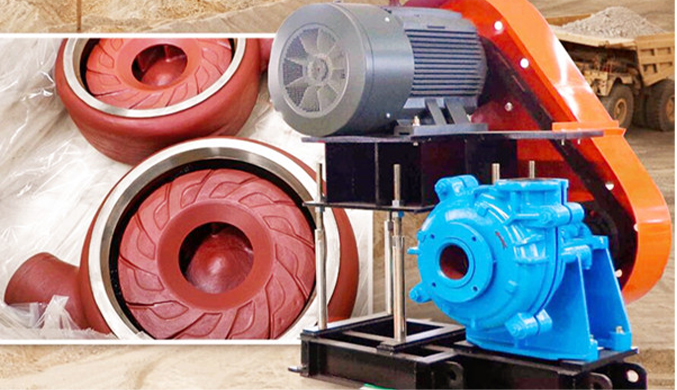
Slurry pump assembly represents a critical process within the broader field of fluid handling, specifically designed for the transportation of abrasive and corrosive mixtures. These pumps are integral to numerous industrial sectors, including mining, wastewater treatment, dredging, and chemical processing. Their core function is to efficiently move slurries – suspensions of solid particles in a liquid medium – without suffering rapid degradation due to abrasion or chemical attack. The assembly process involves integrating various components, including the impeller, casing, seals, bearings, and drive mechanism, ensuring proper alignment and functionality. Performance is fundamentally determined by factors like slurry composition (particle size, concentration, and corrosivity), flow rate, and head pressure. Effective slurry pump assembly and subsequent maintenance are paramount to minimizing downtime, reducing operational costs, and ensuring the long-term reliability of the pumping system. This guide will provide a detailed overview of the material science, manufacturing processes, performance characteristics, failure modes, and maintenance procedures associated with slurry pump assembly.
Material Science & Manufacturing
The selection of materials for slurry pump components is dictated by the specific characteristics of the slurry being handled. Common materials include high-chrome cast iron, stainless steel (various grades like 304, 316, and duplex stainless steels), ceramic materials (alumina, silicon carbide), and polymer linings (rubber, polyurethane). High-chrome cast iron offers excellent abrasion resistance but limited corrosion resistance. Stainless steels provide superior corrosion resistance but are generally less abrasion resistant than high-chrome iron. Ceramics possess exceptional hardness and chemical inertness, making them suitable for highly abrasive and corrosive environments, but are brittle. Polymer linings offer a cost-effective solution for corrosion protection and can provide some degree of abrasion resistance.
Manufacturing processes vary depending on the component. Impellers are typically manufactured using investment casting or sand casting for high-chrome iron and stainless steel, ensuring complex geometries and good surface finish. Casings are often produced through sand casting or centrifugal casting. Shafts are usually forged and machined to high tolerances. Seals are manufactured from materials like elastomers (Viton, EPDM) or mechanical seals utilizing ceramic or tungsten carbide faces. The assembly process itself is critical. Key parameter control includes precise bearing pre-load adjustment, impeller clearance verification, and seal installation torque specifications. Welding processes, if utilized (e.g., for casing repair), must adhere to stringent standards (AWS D1.1 for structural welding) and employ appropriate filler metals to maintain material properties and prevent weld decay. Non-destructive testing (NDT) methods, such as radiographic testing (RT) and ultrasonic testing (UT), are employed to ensure weld integrity and detect any internal flaws.
Performance & Engineering
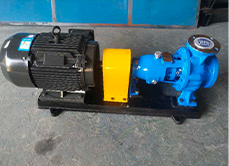
Slurry pump performance is governed by several key engineering principles. Force analysis focuses on the hydrodynamic forces exerted by the slurry on the impeller, the radial and axial loads on the shaft, and the stresses within the casing. Cavitation, a phenomenon caused by pressure drop below the vapor pressure of the liquid, is a significant concern and can lead to impeller damage. Net Positive Suction Head Required (NPSHr) must be carefully considered to prevent cavitation. Pump curves, which plot head versus flow rate at various impeller diameters and speeds, are used to select the appropriate pump for a given application. Environmental resistance is another critical factor, particularly in corrosive environments. Material selection and protective coatings are employed to mitigate corrosion. Compliance requirements vary depending on the industry and location. For example, pumps used in the food and beverage industry must comply with 3-A Sanitary Standards, while pumps used in potentially explosive atmospheres must meet ATEX or IECEx standards. Functional implementation involves selecting the correct pump type (centrifugal, positive displacement) and configuring the drive system (electric motor, diesel engine) to meet the required flow rate, head pressure, and duty cycle. Proper alignment between the pump and driver is essential to prevent premature bearing failure and vibration.
Technical Specifications
| Parameter | Unit | Typical Range (Centrifugal Pump) | Typical Range (Positive Displacement Pump) |
|---|---|---|---|
| Flow Rate | m³/hr | 10 – 1000 | 1 – 100 |
| Head Pressure | m | 5 – 100 | 2 – 50 |
| Slurry Concentration (Solids by Weight) | % | 5 – 60 | 10 – 80 |
| Particle Size | mm | < 25 | < 75 |
| Operating Temperature | °C | -20 – 120 | -30 – 150 |
| Materials of Construction (Impeller) | - | High-Chrome Iron, Stainless Steel, Ceramic | High-Chrome Iron, Stainless Steel |
Failure Mode & Maintenance
Slurry pumps are susceptible to several failure modes. Abrasion is a primary concern, leading to impeller wear, casing erosion, and reduced pump performance. Corrosion can degrade pump components, particularly in acidic or alkaline slurries. Fatigue cracking can occur in the shaft or casing due to cyclic loading. Seal failure is common, resulting in leakage and potential contamination. Cavitation, as previously mentioned, can cause significant impeller damage. Delamination of rubber or polymer linings can occur due to bond failure or chemical attack. Oxidation of metallic components can also contribute to degradation.
Preventive maintenance is crucial for extending pump life and minimizing downtime. Regular inspections should include visual checks for wear, corrosion, and leakage. Vibration analysis can detect bearing failures or misalignment. Oil analysis can identify contamination or wear debris in the lubricant. Impeller and casing wear should be monitored and components replaced when wear exceeds acceptable limits. Seals should be inspected and replaced periodically. Proper lubrication is essential for bearing life. As-needed maintenance includes impeller replacement, casing repair (welding or coating), bearing replacement, and seal replacement. When repairing casings, careful attention must be paid to maintaining material properties and weld quality. The use of hardfacing techniques can extend the life of worn components.
Industry FAQ
Q: What is the impact of slurry particle size on pump selection and performance?
A: Larger particle sizes generally require lower pump speeds and impeller designs optimized for handling solids. Increasing particle size increases abrasion rates and reduces pump efficiency. Pump selection must consider the maximum particle size to prevent clogging and excessive wear.
Q: How do different liner materials perform against varying chemical slurries?
A: Rubber liners offer good resistance to acids and bases but can be susceptible to attack by solvents. Polyurethane liners provide better abrasion resistance and solvent resistance. Ceramic linings are highly chemically inert but brittle. Material compatibility charts should be consulted for specific slurry compositions.
Q: What are the key indicators of impending seal failure?
A: Visible leakage around the seal is the most obvious indicator. Increased pump vibration, higher bearing temperatures, and a decrease in pump performance can also suggest seal degradation. Regular inspection and seal flushing are crucial for early detection.
Q: What is the significance of NPSHr and NPSHa during slurry pump operation?
A: NPSHr (Net Positive Suction Head Required) is the minimum pressure required at the pump suction to prevent cavitation. NPSHa (Net Positive Suction Head Available) is the actual pressure available. NPSHa must always be greater than NPSHr to ensure reliable pump operation and prevent impeller damage.
Q: What are best practices for long-term storage of slurry pumps?
A: Pumps should be stored in a dry, climate-controlled environment. Rotating elements should be periodically rotated to prevent corrosion. Seals should be protected from damage. Consumable parts should be inspected before storage to ensure they are in good condition.
Conclusion
Slurry pump assembly is a complex undertaking demanding careful consideration of material science, manufacturing precision, and operational parameters. Selecting the appropriate materials based on slurry composition is paramount to maximizing pump life and minimizing maintenance. Proper assembly techniques, including precise alignment, bearing preload adjustment, and seal installation, are essential for ensuring reliable performance. Understanding potential failure modes and implementing a robust preventive maintenance program are crucial for mitigating downtime and reducing operational costs.
Looking forward, advancements in materials science, such as the development of new abrasion-resistant alloys and polymer composites, will continue to improve the performance and durability of slurry pumps. Predictive maintenance technologies, utilizing sensors and data analytics, will enable more proactive maintenance strategies. The integration of computational fluid dynamics (CFD) modeling will further optimize pump designs for specific slurry applications, enhancing efficiency and reducing energy consumption.
-
Comprehensive Guide to Waterproof ORings for Optimal Sealing Solutions
News2026-06-09
-
septic system sump pump Performance Analysis
News2026-06-26
-
septic pump company Performance Analysis
News2026-06-26
-
pumps water treatment Performance Analysis
News2026-06-26
-
pumps for septic tanks Material Science and Manufacturing
News2026-06-26
-
pump for septic system Material Science Manufacturing
News2026-06-26
-
heavy duty submersible pump Performance Analysis
News2026-06-25
-
best submersible pump for septic tank Performance Analysis
News2026-06-25
-
basement sewer ejector pump Performance Analysis
News2026-06-25
-
basement pumps ejector pumps Performance Analysis
News2026-06-25
-
basement lift pump Performance and Engineering
News2026-06-25
-
basement bathroom pump systems Performance Analysis
News2026-06-24
-
basement bathroom ejector pump system Performance Engineering
News2026-06-24
-
2 hp sewage pump Performance Engineering
News2026-06-24
-
1 hp septic pump Performance Engineering
News2026-06-24




