English
- Afrikaans
- Albanian
- Amharic
- Arabic
- Armenian
- Azerbaijani
- Basque
- Belarusian
- Bengali
- Bosnian
- Bulgarian
- Catalan
- Cebuano
- Corsican
- Croatian
- Czech
- Danish
- Dutch
- English
- Esperanto
- Estonian
- Finnish
- French
- Frisian
- Galician
- Georgian
- German
- Greek
- Gujarati
- Haitian Creole
- hausa
- hawaiian
- Hebrew
- Hindi
- Miao
- Hungarian
- Icelandic
- igbo
- Indonesian
- irish
- Italian
- Japanese
- Javanese
- Kannada
- kazakh
- Khmer
- Rwandese
- Korean
- Kurdish
- Kyrgyz
- Lao
- Latin
- Latvian
- Lithuanian
- Luxembourgish
- Macedonian
- Malgashi
- Malay
- Malayalam
- Maltese
- Maori
- Marathi
- Mongolian
- Myanmar
- Nepali
- Norwegian
- Norwegian
- Occitan
- Pashto
- Persian
- Polish
- Portuguese
- Punjabi
- Romanian
- Russian
- Samoan
- Scottish Gaelic
- Serbian
- Sesotho
- Shona
- Sindhi
- Sinhala
- Slovak
- Slovenian
- Somali
- Spanish
- Sundanese
- Swahili
- Swedish
- Tagalog
- Tajik
- Tamil
- Tatar
- Telugu
- Thai
- Turkish
- Turkmen
- Ukrainian
- Urdu
- Uighur
- Uzbek
- Vietnamese
- Welsh
- Bantu
- Yiddish
- Yoruba
- Zulu

Telephone: +86 13120555503
Email: frank@cypump.com


Apr . 01, 2024 17:55 Back to list
slurry mixer pump Manufacturing Specification and Performance Analysis
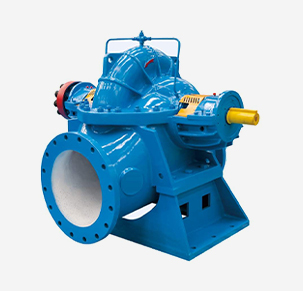
Slurry Mixer Pump Manufacturing Specification and Performance Analysis
The slurry mixer pump is a specialized industrial apparatus engineered for the simultaneous homogenization and transportation of high-viscosity, abrasive fluids. Positioned critically within the industrial chain of mineral processing, chemical synthesis, and wastewater treatment, these pumps serve as the primary interface between raw material feedstock and downstream processing units. Unlike standard centrifugal pumps, a slurry mixer pump must manage non-Newtonian fluid dynamics and mitigate the destructive effects of suspended solids. Its core performance is defined by its ability to maintain a constant flow rate while resisting internal erosion, ensuring that the slurry remains in a suspended state to prevent sedimentation and subsequent pipeline occlusion.
Material Science & Manufacturing
The structural integrity of a slurry mixer pump is predicated on the selection of advanced wear-resistant materials. Given the constant bombardment of particulate matter, the wetted parts are typically fabricated from High-Chrome (Hi-Cr) white iron (ASTM A532), which offers a balanced combination of hardness and fracture toughness. For extremely corrosive environments, duplex stainless steels or nickel-based alloys are employed to prevent pitting and crevice corrosion.
Manufacturing involves high-precision casting and CNC machining. The impeller—the heart of the pump—undergoes a rigorous heat treatment process to achieve a Rockwell C hardness (HRC) typically exceeding 60. The manufacturing flow includes: 1. Investment casting of the volute and impeller; 2. Precision grinding of the shaft seating and seal faces to micron-level tolerances; 3. Dynamic balancing of the rotating assembly to minimize vibration-induced fatigue; 4. Application of ceramic linings in high-velocity zones to reduce wall shear stress and erosion rates. The integration of a mechanical seal system, often utilizing silicon carbide or tungsten carbide faces, is critical to prevent the leakage of abrasive slurry into the bearing housing.
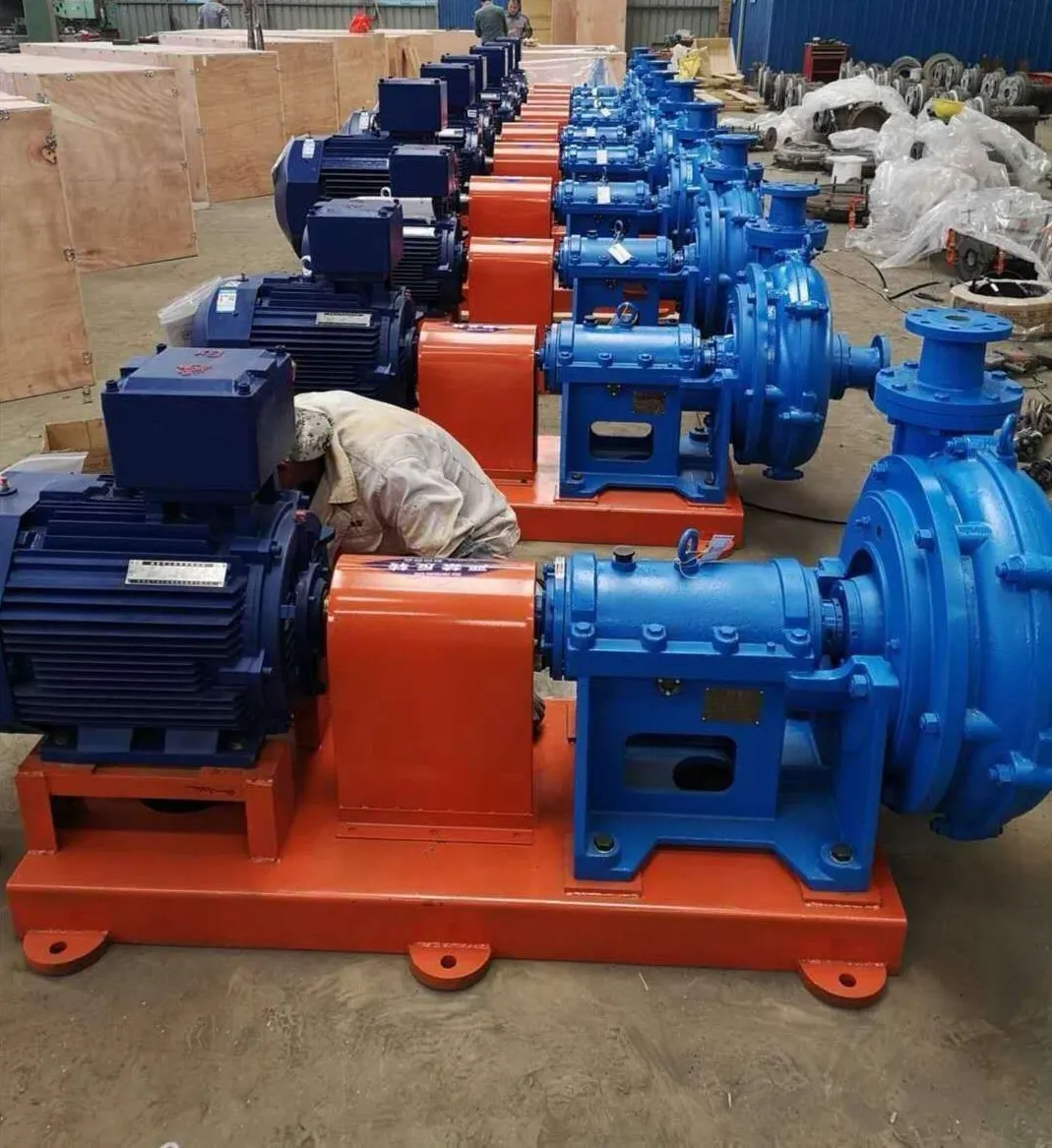
Performance & Engineering
Engineering a slurry mixer pump requires a deep analysis of fluid mechanics, specifically focusing on the Reynolds number and the critical settling velocity. To prevent the "sanding out" of the pipeline, the pump must maintain a flow velocity higher than the settling velocity of the largest particle size in the slurry. Force analysis is applied to the impeller blades to calculate the radial thrust and axial loads, ensuring that the bearings can withstand the dynamic pressure fluctuations inherent in two-phase flow.
Environmental resistance is managed through the use of chemical-resistant coatings and specialized gaskets that can withstand temperature fluctuations and pH extremes. Compliance requirements dictate that the pump's energy efficiency must meet ISO 5199 standards for technical specifications of centrifugal pumps. The mixing functionality is achieved through the design of the impeller vanes, which create controlled turbulence and shear forces to break down agglomerates within the fluid, ensuring a homogeneous mixture without compromising the pump's overall volumetric efficiency.
Technical Specifications
| Technical Parameter | Standard Range (Low-Mid) | Industrial Range (High) | Unit of Measure |
|---|---|---|---|
| Maximum Flow Rate | 150 - 500 | 500 - 2,500 | m³/h |
| Discharge Head (Pressure) | 10 - 40 | 40 - 120 | Meters (m) |
| Max. Particle Size | 5 - 15 | 15 - 50 | Millimeters (mm) |
| Casing Material Hardness | 55 - 60 | 62 - 68 | HRC |
| Operating Temperature | -10 to 60 | 60 to 150 | Celsius (°C) |
| Max. Slurry Density | 1.2 - 1.5 | 1.5 - 2.2 | t/m³ |
Failure Mode & Maintenance
Failure analysis of slurry mixer pumps typically identifies three primary modes: abrasive wear, cavitation, and seal failure. Abrasive wear manifests as a gradual increase in the clearance between the impeller and the wear plate, leading to internal recirculation and a drop in discharge pressure. Cavitation occurs when the Net Positive Suction Head available (NPSHa) falls below the required level (NPSHr), creating vapor bubbles that implode and pit the impeller surface.
Maintenance strategies must transition from reactive to predictive. This includes the implementation of vibration monitoring to detect bearing degradation and ultrasonic thickness testing on the volute casing to track erosion rates. Professional maintenance solutions involve the scheduled replacement of wear liners and the calibration of the mechanical seal flush system. To prevent shaft fatigue, alignment checks using laser precision tools are mandatory after every major overhaul to ensure concentricity between the motor and the pump shaft.
Industry FAQ
Q: How does the solids concentration affect the pump's efficiency?
A: As the weight percentage of solids increases, the fluid's apparent viscosity rises, which increases the frictional losses within the pump. This leads to a shift in the pump curve, typically reducing the total head and volumetric efficiency. Engineers must compensate by increasing the motor power or adjusting the impeller diameter.
Q: What is the primary cause of premature seal failure in slurry applications?
A: The most common cause is the ingress of abrasive particles between the seal faces. This "grinding paste" effect accelerates wear. To mitigate this, we utilize an external flush (API Plan 32 or 54) to maintain a positive pressure barrier of clean fluid at the seal face.
Q: How do you determine the optimal impeller material for a highly acidic slurry?
A: For acidic slurries, hardness alone is insufficient. We analyze the chemical compatibility using the Pitting Resistance Equivalent Number (PREN). In such cases, we substitute high-chrome iron with duplex stainless steels or apply a thick layer of thermal-sprayed ceramic coatings.
Q: Can a slurry mixer pump operate in dry-run conditions?
A: No, dry running is strictly prohibited. Without the slurry to act as a coolant and lubricant, the mechanical seals will overheat and fail within seconds, and the impeller may experience thermal distortion. A dry-run protection sensor is recommended.
Q: What is the significance of the "critical velocity" in slurry transport?
A: The critical velocity is the minimum flow speed required to keep the solid particles in suspension. If the pump operates below this threshold, particles will settle in the pipeline, causing blockages and increasing the risk of localized erosion at the bottom of the pipe.
Conclusion
The operational efficiency of a slurry mixer pump is fundamentally linked to the synergy between material science and hydraulic engineering. By optimizing the hardness of the wetted components and precisely calculating the fluid dynamics of the slurry, industrial operators can significantly extend the mean time between failures (MTBF) and ensure a consistent production output. The integration of high-chrome alloys and precision-engineered impellers allows these pumps to withstand the harshest abrasive environments while maintaining the necessary homogenization for downstream processes.
Looking forward, the industry is shifting toward the integration of smart sensing and Variable Frequency Drives (VFDs) to dynamically adjust flow rates based on real-time slurry density. This evolution will not only reduce energy consumption but also minimize unnecessary wear during periods of low throughput. Adherence to international standards and a rigorous predictive maintenance regime remain the only viable paths to ensuring long-term reliability in high-stress industrial applications.
-
Comprehensive Guide to Waterproof ORings for Optimal Sealing Solutions
News2026-06-09
-
Waste Tank Pump Performance Analysis
News2026-06-27
-
Sewer System Pump Out Material Science
News2026-06-27
-
Sewer Ejector Pit Performance Analysis
News2026-06-27
-
septic tank pumps for sale Performance Engineering
News2026-06-27
-
septic system with lift pump Performance Engineering
News2026-06-27
-
septic system sump pump Performance Analysis
News2026-06-26
-
septic pump company Performance Analysis
News2026-06-26
-
pumps water treatment Performance Analysis
News2026-06-26
-
pumps for septic tanks Material Science and Manufacturing
News2026-06-26
-
pump for septic system Material Science Manufacturing
News2026-06-26
-
heavy duty submersible pump Performance Analysis
News2026-06-25
-
best submersible pump for septic tank Performance Analysis
News2026-06-25
-
basement sewer ejector pump Performance Analysis
News2026-06-25
-
basement pumps ejector pumps Performance Analysis
News2026-06-25




