English
- Afrikaans
- Albanian
- Amharic
- Arabic
- Armenian
- Azerbaijani
- Basque
- Belarusian
- Bengali
- Bosnian
- Bulgarian
- Catalan
- Cebuano
- Corsican
- Croatian
- Czech
- Danish
- Dutch
- English
- Esperanto
- Estonian
- Finnish
- French
- Frisian
- Galician
- Georgian
- German
- Greek
- Gujarati
- Haitian Creole
- hausa
- hawaiian
- Hebrew
- Hindi
- Miao
- Hungarian
- Icelandic
- igbo
- Indonesian
- irish
- Italian
- Japanese
- Javanese
- Kannada
- kazakh
- Khmer
- Rwandese
- Korean
- Kurdish
- Kyrgyz
- Lao
- Latin
- Latvian
- Lithuanian
- Luxembourgish
- Macedonian
- Malgashi
- Malay
- Malayalam
- Maltese
- Maori
- Marathi
- Mongolian
- Myanmar
- Nepali
- Norwegian
- Norwegian
- Occitan
- Pashto
- Persian
- Polish
- Portuguese
- Punjabi
- Romanian
- Russian
- Samoan
- Scottish Gaelic
- Serbian
- Sesotho
- Shona
- Sindhi
- Sinhala
- Slovak
- Slovenian
- Somali
- Spanish
- Sundanese
- Swahili
- Swedish
- Tagalog
- Tajik
- Tamil
- Tatar
- Telugu
- Thai
- Turkish
- Turkmen
- Ukrainian
- Urdu
- Uighur
- Uzbek
- Vietnamese
- Welsh
- Bantu
- Yiddish
- Yoruba
- Zulu

Telephone: +86 13120555503
Email: frank@cypump.com


Apr . 01, 2024 17:55 Back to list
slurry feed pump Performance and Engineering

Introduction
Slurry feed pumps are positive displacement pumps specifically engineered for the transport of abrasive and erosive slurries – mixtures of liquids carrying solid particles. These pumps represent a critical component in numerous industrial processes, including mining, wastewater treatment, dredging, chemical processing, and power generation. Their technical position in the industry chain is predominantly downstream from extraction/processing stages, serving as a key enabling technology for material handling and fluid conveyance. Unlike centrifugal pumps, slurry feed pumps are designed to maintain flow rates even with varying slurry viscosity and solids concentration. Core performance characteristics revolve around volumetric efficiency, solids handling capability (particle size and concentration), abrasion resistance, and the ability to operate reliably under high differential pressures. The selection of a suitable slurry feed pump requires careful consideration of slurry characteristics, pipeline configuration, and operational demands to minimize wear and maximize uptime. The primary pain point in the industry is premature pump failure due to abrasive wear, corrosion, and inadequate pump selection for specific slurry conditions, leading to costly downtime and maintenance.
Material Science & Manufacturing
The construction of slurry feed pumps necessitates a careful selection of materials to withstand the aggressive nature of the transported slurries. Pump casings are commonly manufactured from high-chrome cast iron (typically 27-30% chromium content) due to its exceptional abrasion resistance. This material forms a hard carbide matrix during operation, effectively resisting erosion from solid particles. Impellers, the rotating components generating flow, are often constructed from similarly high-chrome alloys or, in highly abrasive applications, utilize tungsten carbide or ceramic inserts. Shafts are typically forged from alloy steels (e.g., 4140, 4340) heat-treated to achieve high tensile strength and torsional rigidity. Seals are critical, and materials like silicon carbide, tungsten carbide, or specialized elastomers (e.g., Viton) are chosen based on slurry chemistry and temperature. Manufacturing processes vary depending on component complexity. Casings are often produced using sand casting, followed by machining and heat treatment. Impellers can be investment cast or machined from solid billets. Shafts undergo forging, machining, and induction hardening. Parameter control during manufacturing is paramount. Chromium content in cast iron must be precisely controlled to optimize carbide formation. Heat treatment parameters (temperature, time, cooling rate) are critical for achieving desired hardness and toughness in alloy steel components. Dimensional tolerances are tightly controlled to ensure proper pump fit and sealing. Welding processes, if used, require qualified procedures and non-destructive testing (e.g., radiographic inspection) to guarantee joint integrity. Chemical compatibility between slurry constituents and pump materials is thoroughly assessed to prevent corrosion and material degradation.
Performance & Engineering
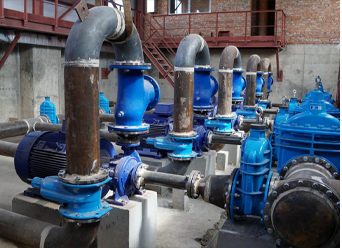
Slurry feed pump performance is dictated by a complex interplay of hydraulic forces, material properties, and operational parameters. Force analysis focuses on stresses induced by slurry impact, pressure differentials, and impeller rotation. Finite element analysis (FEA) is frequently employed to optimize impeller geometry and casing design, minimizing stress concentrations and preventing fatigue failure. Environmental resistance is a major consideration. Pumps operating in corrosive environments require specialized coatings (e.g., epoxy, rubber linings) or exotic alloys to protect against chemical attack. Temperature extremes can affect material properties and seal performance, necessitating appropriate material selection and thermal management strategies. Compliance requirements vary by region and application. For example, pumps used in potable water treatment must meet NSF/ANSI 61 standards for lead content and material safety. Pumps operating in hazardous locations must comply with ATEX or IECEx directives for explosion protection. Functional implementation involves careful consideration of suction and discharge piping. Proper pipe sizing, minimizing bends and restrictions, is crucial for maintaining adequate net positive suction head available (NPSHa) and preventing cavitation. Pump speed control (e.g., using variable frequency drives - VFDs) allows for optimization of flow rate and energy consumption based on process demands. Hydraulic design includes optimization of impeller blade angles, volute geometry, and discharge nozzle configuration to maximize hydraulic efficiency and minimize wear. Particle velocity and impact angles are carefully analyzed to minimize erosive wear on pump components. Leakage control is vital, with mechanical seals employing multiple stages of sealing to prevent slurry escape and environmental contamination.
Technical Specifications
| Parameter | Diaphragm Pump | Progressive Cavity Pump | Centrifugal Pump (Slurry Specific) |
|---|---|---|---|
| Maximum Solids Concentration (by weight) | Up to 60% | Up to 80% | Up to 40% |
| Maximum Particle Size | Up to 75mm | Up to 100mm | Up to 65mm |
| Maximum Discharge Pressure | 10 bar | 15 bar | 8 bar |
| Flow Rate Range | 0 - 200 m³/hr | 0 - 50 m³/hr | 50 - 500 m³/hr |
| Typical Abrasion Resistance | Moderate | High | Moderate to High (depending on materials) |
| Applications | Chemical feed, wastewater | Thick slurries, sludge | High volume transfer, tailings |
Failure Mode & Maintenance
Slurry feed pumps are susceptible to several failure modes, primarily driven by abrasive wear, corrosion, and mechanical fatigue. Abrasive wear, resulting from the impact of solid particles, is the most common cause of impeller and casing failure. Erosion rates are dependent on particle size, shape, velocity, and slurry concentration. Corrosion, induced by chemical reactions between the slurry and pump materials, leads to material degradation and reduced component strength. Fatigue cracking can occur in shafts, impellers, and casings due to cyclic loading and stress concentrations. Delamination of protective coatings (e.g., rubber linings) exposes underlying metal to corrosion and abrasion. Oxidation, particularly at elevated temperatures, can weaken metal components. Cavitation, caused by vapor bubble collapse, erodes impeller surfaces and reduces pump efficiency. To mitigate these failures, proactive maintenance is essential. This includes regular inspections for wear, corrosion, and leakage. Visual inspection of impellers and casings for erosion patterns. Monitoring bearing temperatures and vibration levels. Analyzing slurry composition for changes in solids content or corrosive agents. Preventive maintenance tasks include lubrication of bearings, tightening of bolts, and replacement of worn seals. Scheduled overhaul involves dismantling the pump, inspecting all components, replacing worn parts, and reassembling with new seals and gaskets. Proper pump selection, based on a thorough understanding of slurry characteristics and operating conditions, is the most effective strategy for preventing premature failure. Implementing a wear management program, tracking component life and replacement intervals, optimizes maintenance schedules and minimizes downtime.
Industry FAQ
Q: What is the impact of solids concentration on pump selection?
A: Solids concentration directly influences pump type selection and operating parameters. Higher solids concentrations demand positive displacement pumps (e.g., progressive cavity or diaphragm pumps) capable of handling increased viscosity and abrasive wear. Centrifugal pumps have limitations in high-solids applications, as flow rates and efficiency decrease significantly. Accurate knowledge of solids concentration is vital for selecting a pump with sufficient capacity and abrasion resistance.
Q: How do I prevent cavitation in a slurry pump?
A: Cavitation is prevented by ensuring adequate Net Positive Suction Head Available (NPSHa). This involves minimizing suction lift, increasing suction pipe diameter, reducing fluid temperature, and controlling flow rate. Proper system design and pump selection are crucial. Regular inspection for impeller damage indicative of cavitation is also essential.
Q: What material is best for a pump handling highly corrosive slurries?
A: The optimal material depends on the specific corrosive agents present in the slurry. For strong acids, stainless steels (e.g., 316L) or high-nickel alloys (e.g., Hastelloy) are often used. For alkaline slurries, specialized polymers or ceramic materials may be appropriate. Thorough chemical compatibility testing is essential before material selection.
Q: What are the key indicators of impeller wear?
A: Key indicators include a decrease in pump discharge pressure, a drop in flow rate, increased power consumption, and noticeable vibration. Visual inspection reveals erosion patterns on the impeller vanes. Regular monitoring of these parameters allows for timely identification of wear and proactive component replacement.
Q: How often should mechanical seals be replaced in abrasive slurry applications?
A: Seal replacement frequency depends on slurry abrasiveness and operating conditions. In highly abrasive applications, seals may need to be replaced every few months. Regular monitoring for leakage and performance degradation is crucial for determining the optimal replacement interval. Utilizing hardened seal faces (e.g., silicon carbide) can extend seal life.
Conclusion
Slurry feed pumps are indispensable components in a diverse range of industrial applications, demanding meticulous selection, robust construction, and proactive maintenance. Understanding the interplay between material science, hydraulic performance, and potential failure modes is paramount for ensuring reliable operation and minimizing downtime. The selection process should prioritize pump type and materials based on specific slurry characteristics, including solids concentration, particle size, corrosivity, and abrasiveness.
Future trends in slurry pump technology focus on enhanced abrasion resistance through novel materials and coatings, improved hydraulic designs for increased efficiency, and integration of smart sensors for predictive maintenance. Implementing these advancements will further optimize performance, reduce operational costs, and enhance the overall sustainability of slurry handling processes.
-
Comprehensive Guide to Waterproof ORings for Optimal Sealing Solutions
News2026-06-09
-
septic system sump pump Performance Analysis
News2026-06-26
-
septic pump company Performance Analysis
News2026-06-26
-
pumps water treatment Performance Analysis
News2026-06-26
-
pumps for septic tanks Material Science and Manufacturing
News2026-06-26
-
pump for septic system Material Science Manufacturing
News2026-06-26
-
heavy duty submersible pump Performance Analysis
News2026-06-25
-
best submersible pump for septic tank Performance Analysis
News2026-06-25
-
basement sewer ejector pump Performance Analysis
News2026-06-25
-
basement pumps ejector pumps Performance Analysis
News2026-06-25
-
basement lift pump Performance and Engineering
News2026-06-25
-
basement bathroom pump systems Performance Analysis
News2026-06-24
-
basement bathroom ejector pump system Performance Engineering
News2026-06-24
-
2 hp sewage pump Performance Engineering
News2026-06-24
-
1 hp septic pump Performance Engineering
News2026-06-24




