English
- Afrikaans
- Albanian
- Amharic
- Arabic
- Armenian
- Azerbaijani
- Basque
- Belarusian
- Bengali
- Bosnian
- Bulgarian
- Catalan
- Cebuano
- Corsican
- Croatian
- Czech
- Danish
- Dutch
- English
- Esperanto
- Estonian
- Finnish
- French
- Frisian
- Galician
- Georgian
- German
- Greek
- Gujarati
- Haitian Creole
- hausa
- hawaiian
- Hebrew
- Hindi
- Miao
- Hungarian
- Icelandic
- igbo
- Indonesian
- irish
- Italian
- Japanese
- Javanese
- Kannada
- kazakh
- Khmer
- Rwandese
- Korean
- Kurdish
- Kyrgyz
- Lao
- Latin
- Latvian
- Lithuanian
- Luxembourgish
- Macedonian
- Malgashi
- Malay
- Malayalam
- Maltese
- Maori
- Marathi
- Mongolian
- Myanmar
- Nepali
- Norwegian
- Norwegian
- Occitan
- Pashto
- Persian
- Polish
- Portuguese
- Punjabi
- Romanian
- Russian
- Samoan
- Scottish Gaelic
- Serbian
- Sesotho
- Shona
- Sindhi
- Sinhala
- Slovak
- Slovenian
- Somali
- Spanish
- Sundanese
- Swahili
- Swedish
- Tagalog
- Tajik
- Tamil
- Tatar
- Telugu
- Thai
- Turkish
- Turkmen
- Ukrainian
- Urdu
- Uighur
- Uzbek
- Vietnamese
- Welsh
- Bantu
- Yiddish
- Yoruba
- Zulu

Telephone: +86 13120555503
Email: frank@cypump.com


Apr . 01, 2024 17:55 Back to list
slurry diaphragm pump Performance Analysis and Manufacturing Specifications
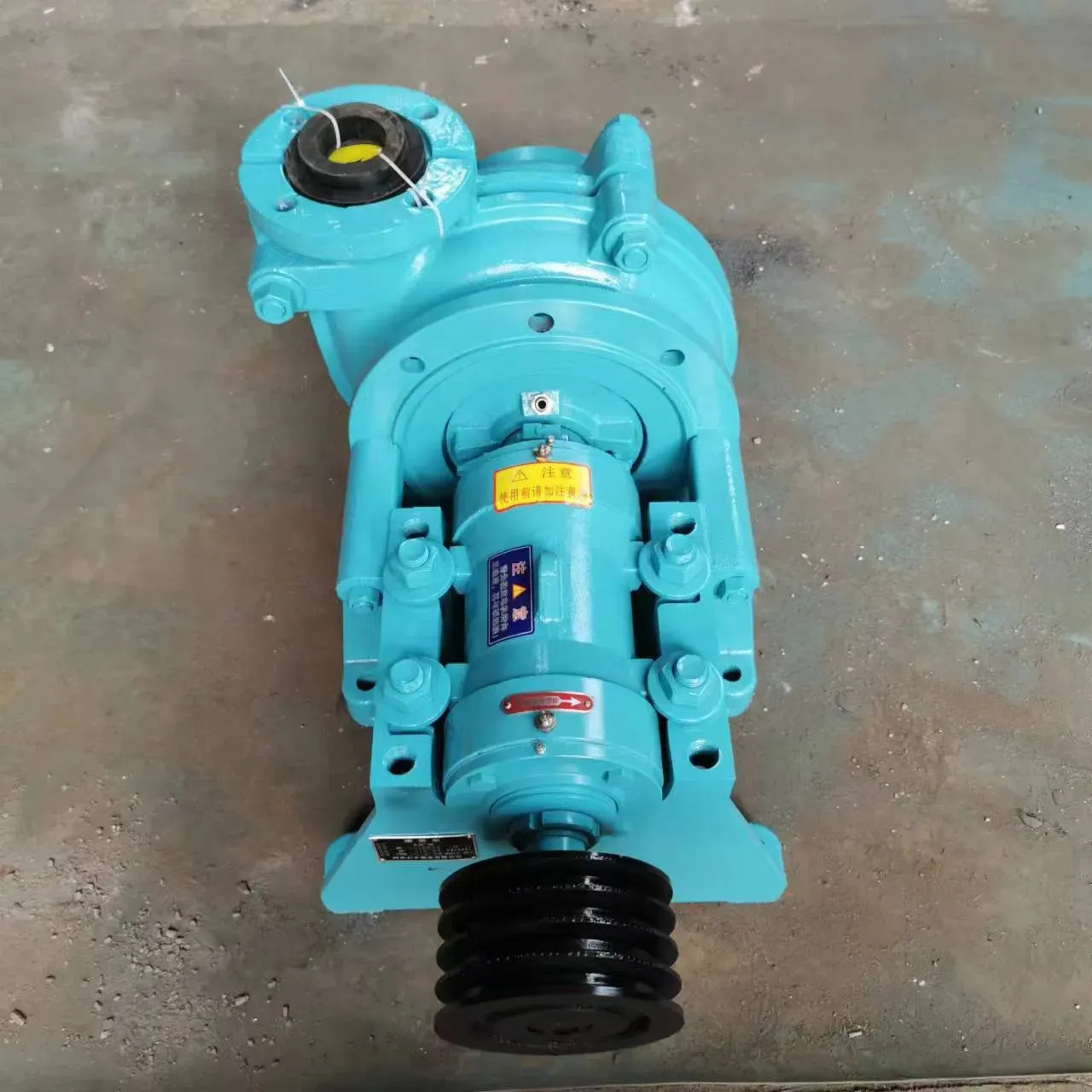
Slurry Diaphragm Pump Performance Analysis and Manufacturing Specifications
The slurry diaphragm pump is a specialized positive displacement pump engineered to transport highly abrasive, viscous, and corrosive fluids containing suspended solids. Positioned as a critical component in the industrial fluid handling chain, these pumps are essential for applications where centrifugal pumps would suffer from excessive impeller erosion and where traditional piston pumps would fail due to seal leakage and particulate ingress. By employing a flexible diaphragm to isolate the pumping mechanism from the process medium, these systems ensure leak-free operation and a high degree of volumetric efficiency. The core technical objective of a slurry diaphragm pump is to maintain constant flow rates while resisting the synergistic effects of mechanical wear and chemical degradation, providing a robust solution for mining, chemical processing, and wastewater treatment sectors.
Material Science & Manufacturing
The manufacturing of slurry diaphragm pumps requires a rigorous selection of materials to combat the extreme abrasive nature of slurries. The wetted parts are typically constructed from high-chromium alloys (such as ASTM A532) or natural rubber linings to mitigate the impact of particle impingement. In the context of material science, the focus is on hardness and fracture toughness; high-chrome irons provide the necessary hardness (typically >60 HRC) to resist sliding abrasion, while elastomeric linings absorb the energy of impacting particles.
The diaphragm represents the most critical engineering element. Modern diaphragm pumps utilize reinforced PTFE (Polytetrafluoroethylene) or synthetic elastomers reinforced with fabric layers to balance chemical inertness with fatigue resistance. The manufacturing process involves precision molding and vulcanization to ensure uniform wall thickness, which is vital for preventing localized stress concentrations that lead to premature rupture. The pump housing is often fabricated using heavy-wall casting techniques followed by precision CNC machining to ensure airtight seals and precise alignment of the valve seats. Key parameter control during manufacturing focuses on the diaphragm's deflection limits and the sealing compression ratios of the valve assemblies, ensuring that the volumetric efficiency remains above 90% even under high-pressure conditions.
Performance & Engineering
Engineering a slurry diaphragm pump involves a complex force analysis of the diaphragm's reciprocating motion. The primary engineering challenge is the management of the "stroke volume" versus the "pressure drop." Because slurries are non-Newtonian fluids—often exhibiting shear-thinning or shear-thickening behavior—the pump must be designed to handle varying viscosities without cavitation. This is achieved through the optimization of the suction chamber geometry to minimize turbulence and the implementation of precision-timed valve actuation.
Environmental resistance is another critical factor. The exterior components must be treated with industrial-grade epoxy coatings to prevent atmospheric corrosion in mining environments. From a compliance perspective, the pump's engineering must adhere to strict leakage standards, particularly when handling toxic slurries, where zero-leakage is a mandatory safety requirement. The functional implementation of the pump often includes a hydraulic drive system, where an oil-filled chamber drives the diaphragm, thereby separating the mechanical drive components from the abrasive medium. This design ensures that the wear is limited to the diaphragm and valve seats, significantly reducing the frequency of comprehensive overhauls.
Technical Specifications
| Parameter Dimension | Standard Duty Spec | Heavy Duty Spec | Ultra-High Pressure Spec | Material Grade |
|---|---|---|---|---|
| Max Discharge Pressure | 1.6 MPa | 4.0 MPa | 10.0 MPa | High-Chrome Alloy |
| Maximum Flow Rate | 50 m³/h | 120 m³/h | 80 m³/h | Reinforced PTFE |
| Max Solid Particle Size | 10 mm | 25 mm | 15 mm | Natural Rubber |
| Diaphragm Cycle Life | 10,000 Cycles | 25,000 Cycles | 15,000 Cycles | Composite Elastomer |
| Permissible Slurry Density | 1.3 g/cm³ | 1.8 g/cm³ | 1.6 g/cm³ | ASTM A532 |
| Operating Temp Range | -10°C to 60°C | -20°C to 80°C | -10°C to 100°C | Stainless Steel 316L |
Failure Mode & Maintenance
Failure analysis in slurry diaphragm pumps typically revolves around three primary modes: diaphragm fatigue, valve seat erosion, and hydraulic system contamination. Diaphragm rupture is often the result of "flex-fatigue," where repeated stress cycles cause microscopic cracks in the elastomer, eventually leading to a catastrophic breach. This is exacerbated by chemical degradation if the fluid is incompatible with the diaphragm material, resulting in hardening or swelling of the polymer matrix.
Valve seat erosion occurs due to the high-velocity impact of abrasive particles during the switching phase of the pump cycle. This leads to "wash-out" patterns, where the sealing surface is pitted, causing backflow and a significant drop in volumetric efficiency. To mitigate this, professional maintenance schedules should include the installation of sacrificial wear plates and the use of ceramic inserts in high-wear areas. Maintenance protocols must involve the systematic inspection of the hydraulic oil quality, as contaminated oil can cause erratic diaphragm movement and accelerated wear. Recommended solutions include the implementation of a predictive maintenance program using vibration analysis and pressure monitoring to detect diaphragm thinning before failure occurs.
Industry FAQ
Q: How do we determine the appropriate diaphragm material for a slurry with high acidity and abrasive quartz particles?
A: For this specific combination, a reinforced PTFE diaphragm is recommended. PTFE provides the necessary chemical inertness to resist acid attack, while the fabric reinforcement provides the mechanical strength to resist the abrasive force of quartz particles during the stroke.
Q: Why is the pump experiencing a sudden drop in discharge pressure despite no visible leaks?
A: This is typically indicative of internal valve leakage or "slip." The most likely cause is the erosion of the valve seats or the presence of a large foreign object preventing the valve from closing completely. A detailed inspection of the check valve seats is required.
Q: What is the impact of slurry density on the pump's energy consumption and diaphragm life?
A: Increased slurry density increases the fluid's viscosity and mass, requiring higher hydraulic pressure to achieve the same displacement. This increases the mechanical stress on the diaphragm, shortening its fatigue life and increasing the power draw of the drive motor.
Q: Can these pumps handle air-entrained slurries without losing prime?
A: Yes, due to their positive displacement nature, diaphragm pumps are generally capable of handling air-entrained fluids. However, excessive air can cause "cavitation-like" hammering effects, which can damage the diaphragm; installing a dampened suction line is recommended.
Q: What is the recommended interval for replacing the diaphragm in a continuous 24/7 mining operation?
A: While it depends on the slurry's abrasiveness, the industry standard is to perform a comprehensive inspection every 2,000 operating hours and replace the diaphragm proactively at 80% of its rated cycle life to avoid unplanned downtime.
Conclusion
The slurry diaphragm pump stands as a pinnacle of fluid engineering, effectively balancing the conflicting requirements of high-pressure delivery and extreme abrasion resistance. By leveraging advanced material science—specifically high-chromium alloys and reinforced polymers—these pumps ensure the continuity of industrial processes in the most hostile environments. The technical integrity of the system depends on the precise synchronization of the diaphragm's mechanical properties with the hydraulic drive parameters, ensuring that volumetric efficiency is maintained throughout the component's lifecycle.
Looking forward, the integration of smart sensors for real-time wear monitoring and the development of nano-composite diaphragms are set to further extend the mean time between failures (MTBF). For operators, the transition from reactive to predictive maintenance, guided by a deep understanding of failure modes such as flex-fatigue and valve erosion, will be essential in optimizing the total cost of ownership and maximizing operational throughput in heavy industrial applications.
-
Comprehensive Guide to Waterproof ORings for Optimal Sealing Solutions
News2026-06-09
-
heavy duty submersible pump Performance Analysis
News2026-06-25
-
best submersible pump for septic tank Performance Analysis
News2026-06-25
-
basement sewer ejector pump Performance Analysis
News2026-06-25
-
basement pumps ejector pumps Performance Analysis
News2026-06-25
-
basement lift pump Performance and Engineering
News2026-06-25
-
basement bathroom pump systems Performance Analysis
News2026-06-24
-
basement bathroom ejector pump system Performance Engineering
News2026-06-24
-
2 hp sewage pump Performance Engineering
News2026-06-24
-
1 hp septic pump Performance Engineering
News2026-06-24
-
submersible effluent pump Performance Analysis
News2026-06-24
-
submergable pump Material Science
News2026-06-23
-
sewer injection pump Performance Engineering
News2026-06-23
-
Sewer Ejector Pump System Performance Analysis
News2026-06-23
-
septic tank pump for sale Performance Engineering
News2026-06-23




