English
- Afrikaans
- Albanian
- Amharic
- Arabic
- Armenian
- Azerbaijani
- Basque
- Belarusian
- Bengali
- Bosnian
- Bulgarian
- Catalan
- Cebuano
- Corsican
- Croatian
- Czech
- Danish
- Dutch
- English
- Esperanto
- Estonian
- Finnish
- French
- Frisian
- Galician
- Georgian
- German
- Greek
- Gujarati
- Haitian Creole
- hausa
- hawaiian
- Hebrew
- Hindi
- Miao
- Hungarian
- Icelandic
- igbo
- Indonesian
- irish
- Italian
- Japanese
- Javanese
- Kannada
- kazakh
- Khmer
- Rwandese
- Korean
- Kurdish
- Kyrgyz
- Lao
- Latin
- Latvian
- Lithuanian
- Luxembourgish
- Macedonian
- Malgashi
- Malay
- Malayalam
- Maltese
- Maori
- Marathi
- Mongolian
- Myanmar
- Nepali
- Norwegian
- Norwegian
- Occitan
- Pashto
- Persian
- Polish
- Portuguese
- Punjabi
- Romanian
- Russian
- Samoan
- Scottish Gaelic
- Serbian
- Sesotho
- Shona
- Sindhi
- Sinhala
- Slovak
- Slovenian
- Somali
- Spanish
- Sundanese
- Swahili
- Swedish
- Tagalog
- Tajik
- Tamil
- Tatar
- Telugu
- Thai
- Turkish
- Turkmen
- Ukrainian
- Urdu
- Uighur
- Uzbek
- Vietnamese
- Welsh
- Bantu
- Yiddish
- Yoruba
- Zulu

Telephone: +86 13120555503
Email: frank@cypump.com


Apr . 01, 2024 17:55 Back to list
slurry agitator pump Technical Dimension and Performance Analysis
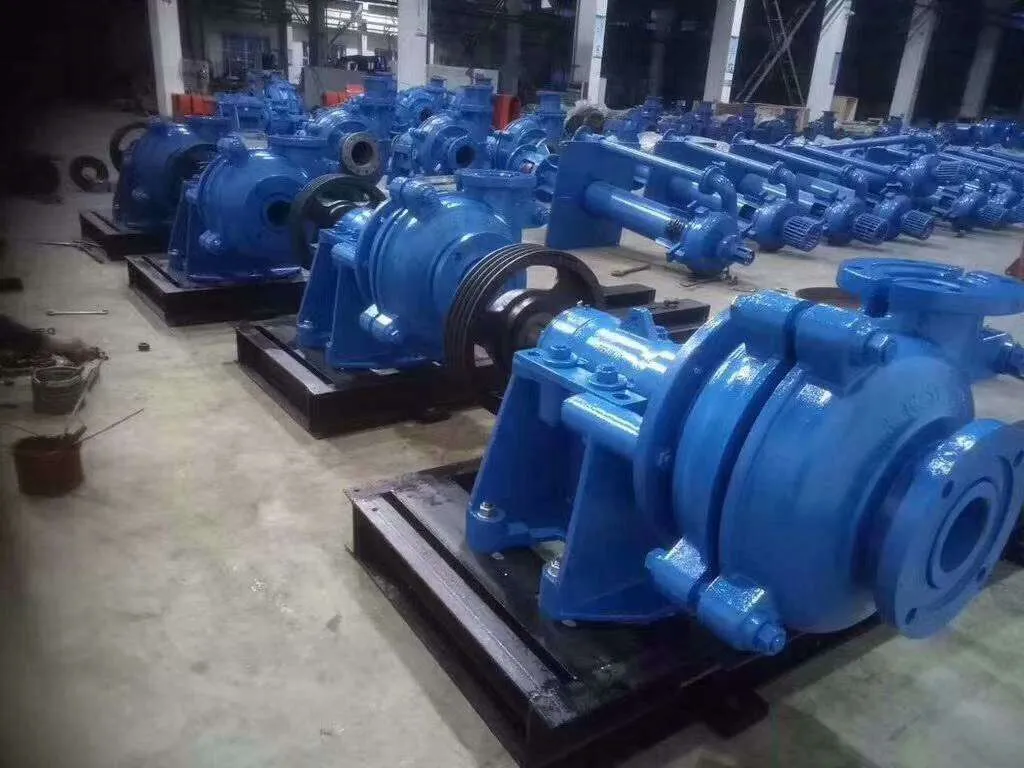
Slurry Agitator Pump: Technical Dimension and Performance Analysis
The slurry agitator pump is a specialized industrial fluid-handling system designed to integrate the dual functions of mechanical agitation and positive displacement or centrifugal transport of non-Newtonian fluids. In the industrial chain, it occupies a critical position between the primary crushing/mixing stage and the downstream processing or storage phase. Unlike standard centrifugal pumps, the slurry agitator pump is engineered to handle high-viscosity fluids containing suspended solid particles, preventing sediment accumulation and maintaining a homogenous mixture through continuous shear force. The core performance of these systems is measured by their ability to maintain volumetric efficiency while resisting the extreme abrasive and corrosive nature of slurry media, typically encountered in mineral processing, chemical synthesis, and wastewater treatment.
Material Science & Manufacturing
The manufacturing of slurry agitator pumps requires a rigorous selection of materials to combat the synergistic effects of abrasion and corrosion. The primary wetted components, specifically the impeller and the agitator blade, are typically constructed from High-Chrome White Iron (ASTM A532) or duplex stainless steels. High-chrome alloys provide a hard martensitic matrix with embedded primary carbides (M7C3), offering superior resistance to sliding abrasion. For highly corrosive environments, nickel-based alloys or rubber-lined casings (using natural rubber or nitrile) are utilized to isolate the metal substrate from chemical attack.
The manufacturing process involves precision casting followed by heat treatment to optimize hardness and toughness. The impeller is balanced dynamically to minimize vibration-induced fatigue. The agitation shaft is typically forged from alloy steel and undergoes induction hardening to prevent deflection and wear at the seal interfaces. Key parameter control during production focuses on the "Clearance Gap" between the impeller and the wear plate; a tight tolerance is essential to prevent recirculation of slurry, which would otherwise accelerate erosive wear and decrease hydraulic efficiency. Furthermore, the integration of mechanical seals often employs silicon carbide (SiC) or tungsten carbide faces to withstand the abrasive grit present in the fluid.
Performance & Engineering
Engineering a slurry agitator pump requires a complex analysis of fluid dynamics and force distribution. The primary engineering challenge is the management of the "Critical Suspension Velocity"—the minimum flow velocity required to keep solid particles suspended to prevent clogging. The pump must generate sufficient turbulence to break up agglomerates without inducing excessive cavitation, which would lead to rapid pitting of the impeller surface.
Force analysis focuses on the radial and axial loads exerted on the shaft during the agitation of high-density slurries. Because slurries are often shear-thinning or shear-thickening, the pump's motor must be equipped with a Variable Frequency Drive (VFD) to adjust torque in real-time. Environmental resistance is achieved through the application of epoxy-based industrial coatings on the exterior and the use of IP66-rated motors to ensure operation in humid or dusty mining environments. Compliance requirements dictate that the system must adhere to strict leakage limits, often necessitating the use of double mechanical seals with an external flushing system (API Plan 53 or 54) to ensure that abrasive particles do not enter the seal faces.
Technical Specifications
| Parameter Dimension | Standard Slurry Grade | High-Density Grade | Corrosive-Slurry Grade | Ultra-Heavy Duty |
|---|---|---|---|---|
| Max Flow Rate (m³/h) | 150 - 300 | 100 - 200 | 80 - 150 | 50 - 120 |
| Total Dynamic Head (m) | 20 - 50 | 30 - 60 | 15 - 40 | 40 - 80 |
| Max Particle Size (mm) | 5 - 10 | 10 - 25 | 2 - 8 | 25 - 50 |
| Wetted Material | High-Chrome Iron | Cr-Mo Alloy Steel | Duplex SS / Rubber | Tungsten Carbide Liner |
| Operating Pressure (MPa) | 0.5 - 1.2 | 0.8 - 1.8 | 0.4 - 1.0 | 1.5 - 2.5 |
| Seal Configuration | Single Mechanical | Double Mechanical | Magnetic Drive | Cartridge Double Seal |
Failure Mode & Maintenance
Failure analysis of slurry agitator pumps typically identifies three primary failure modes: erosive wear, fatigue cracking, and seal degradation. Erosive wear occurs when high-velocity particles impact the pump casing and impeller, leading to "wall thinning." This is most prevalent at the volute tongue and the impeller eye. Fatigue cracking often manifests in the agitation shaft due to the fluctuating torque loads caused by the uneven distribution of solids in the tank, leading to stress concentrations at the shaft shoulders.
Seal degradation is the most common cause of unplanned downtime. Abrasive particles that bypass the flush system can score the seal faces, leading to immediate leakage. Maintenance protocols must include the implementation of a vibration monitoring system to detect bearing wear before catastrophic failure occurs. Professional maintenance involves the periodic replacement of sacrificial wear liners and the use of ultrasonic thickness testing to monitor casing erosion. To extend service life, it is recommended to employ a "Hard-Facing" welding technique on high-wear areas using cobalt-based alloys to restore original dimensions and enhance surface hardness.
Industry FAQ
Q: How do you determine the correct impeller diameter for a specific slurry density?
A: The diameter is calculated based on the required pumping power and the tipping criterion for the specific gravity of the solids. We analyze the Reynolds number for non-Newtonian flow to ensure the impeller creates a sufficient axial flow pattern to prevent sedimenting at the tank bottom.
Q: What is the advantage of using a rubber-lined casing over high-chrome iron?
A: Rubber lining is superior for fine-particle slurries and highly acidic media where corrosion is the dominant failure mechanism. While high-chrome iron resists large-particle abrasion, rubber absorbs the impact of smaller particles and provides a chemical barrier that prevents oxidation of the pump shell.
Q: Why is cavitation more dangerous in slurry pumps than in water pumps?
A: In slurry pumps, cavitation bubbles collapse with extreme force, and the presence of abrasive particles accelerates the material removal process. This results in "synergistic erosion," where cavitation weakens the surface matrix and particles strip the material away much faster than either process alone.
Q: How should we manage the Net Positive Suction Head (NPSH) for high-viscosity slurries?
A: For high-viscosity fluids, the friction loss in the suction line increases significantly. We recommend increasing the suction pipe diameter, minimizing bends, and potentially elevating the feed tank to increase the static head, ensuring that the available NPSH exceeds the required NPSH by at least 1.5 meters.
Q: When should we switch from a single mechanical seal to a double seal with a barrier fluid?
A: When the slurry contains particles that are too abrasive for standard seal faces or when the pumped medium is toxic/hazardous. A double seal with a pressurized barrier fluid (API Plan 53) ensures that the slurry never contacts the atmospheric side of the seal, eliminating leakage risks.
Conclusion
The slurry agitator pump is a sophisticated convergence of hydraulic engineering and material science, designed to resolve the fundamental conflict between fluid transport and solid suspension. The technical integrity of these systems relies heavily on the selection of abrasion-resistant alloys and the precise calculation of shear rates to maintain slurry homogeneity. By addressing the critical variables of particle size, fluid viscosity, and chemical compatibility, operators can maximize volumetric efficiency and minimize the total cost of ownership.
Looking forward, the integration of smart sensors for real-time erosion monitoring and the adoption of additive manufacturing for complex impeller geometries will likely define the next generation of slurry handling. It is imperative for procurement and engineering teams to prioritize the synergy between material hardness and structural toughness to ensure operational reliability in the increasingly demanding environments of modern industrial processing.
-
Comprehensive Guide to Waterproof ORings for Optimal Sealing Solutions
News2026-06-09
-
heavy duty submersible pump Performance Analysis
News2026-06-25
-
best submersible pump for septic tank Performance Analysis
News2026-06-25
-
basement sewer ejector pump Performance Analysis
News2026-06-25
-
basement pumps ejector pumps Performance Analysis
News2026-06-25
-
basement lift pump Performance and Engineering
News2026-06-25
-
basement bathroom pump systems Performance Analysis
News2026-06-24
-
basement bathroom ejector pump system Performance Engineering
News2026-06-24
-
2 hp sewage pump Performance Engineering
News2026-06-24
-
1 hp septic pump Performance Engineering
News2026-06-24
-
submersible effluent pump Performance Analysis
News2026-06-24
-
submergable pump Material Science
News2026-06-23
-
sewer injection pump Performance Engineering
News2026-06-23
-
Sewer Ejector Pump System Performance Analysis
News2026-06-23
-
septic tank pump for sale Performance Engineering
News2026-06-23




