English
- Afrikaans
- Albanian
- Amharic
- Arabic
- Armenian
- Azerbaijani
- Basque
- Belarusian
- Bengali
- Bosnian
- Bulgarian
- Catalan
- Cebuano
- Corsican
- Croatian
- Czech
- Danish
- Dutch
- English
- Esperanto
- Estonian
- Finnish
- French
- Frisian
- Galician
- Georgian
- German
- Greek
- Gujarati
- Haitian Creole
- hausa
- hawaiian
- Hebrew
- Hindi
- Miao
- Hungarian
- Icelandic
- igbo
- Indonesian
- irish
- Italian
- Japanese
- Javanese
- Kannada
- kazakh
- Khmer
- Rwandese
- Korean
- Kurdish
- Kyrgyz
- Lao
- Latin
- Latvian
- Lithuanian
- Luxembourgish
- Macedonian
- Malgashi
- Malay
- Malayalam
- Maltese
- Maori
- Marathi
- Mongolian
- Myanmar
- Nepali
- Norwegian
- Norwegian
- Occitan
- Pashto
- Persian
- Polish
- Portuguese
- Punjabi
- Romanian
- Russian
- Samoan
- Scottish Gaelic
- Serbian
- Sesotho
- Shona
- Sindhi
- Sinhala
- Slovak
- Slovenian
- Somali
- Spanish
- Sundanese
- Swahili
- Swedish
- Tagalog
- Tajik
- Tamil
- Tatar
- Telugu
- Thai
- Turkish
- Turkmen
- Ukrainian
- Urdu
- Uighur
- Uzbek
- Vietnamese
- Welsh
- Bantu
- Yiddish
- Yoruba
- Zulu

Telephone: +86 13120555503
Email: frank@cypump.com


Apr . 01, 2024 17:55 Back to list
sewage slurry mud pump Material Science Manufacturing
Introduction
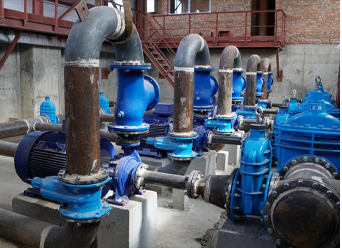
The sewage slurry mud pump is a positive displacement pump designed for the efficient and reliable transfer of highly abrasive, viscous, and solid-laden fluids commonly encountered in wastewater treatment, mining, construction, and industrial effluent management. Positioned within the fluid handling equipment chain, it serves as a critical component following solids separation processes (screening, grit removal) or directly from sedimentation tanks and digesters. Core performance characteristics include high solids handling capacity, resistance to abrasion and corrosion, and the ability to maintain consistent flow rates even with varying fluid viscosities. Unlike centrifugal pumps, which are sensitive to solids content and viscosity, slurry pumps excel in these challenging applications, minimizing downtime and maintenance costs. The inherent limitations of alternative pumping solutions in these environments – such as clogging, wear, and reduced efficiency – underscore the specialized role of the sewage slurry mud pump in maintaining operational continuity.
Material Science & Manufacturing
The construction of a sewage slurry mud pump prioritizes material selection based on abrasion resistance, corrosion resistance, and mechanical strength. Commonly employed materials include high-chrome cast iron for pump casings and impellers due to its exceptional hardness and wear resistance when handling abrasive slurries. Shafts are typically constructed from alloy steels (e.g., 4140, 4340) offering high tensile strength and fatigue resistance. Sealing components utilize materials like Viton, EPDM, or PTFE, selected for their chemical compatibility with a wide range of wastewater constituents, including acids, bases, and organic compounds. Manufacturing processes vary depending on the pump size and complexity. Pump casings are often produced via sand casting, followed by machining to precise tolerances. Impellers may be manufactured using investment casting for complex geometries and tight dimensional control. Welding processes, such as shielded metal arc welding (SMAW) or gas tungsten arc welding (GTAW), are employed for joining components, requiring strict adherence to welding procedures (AWS D1.1) to ensure structural integrity and prevent weld defects (porosity, cracking). Critical parameters monitored during manufacturing include impeller balance (to minimize vibration), casing dimensional accuracy (to maintain hydraulic efficiency), and weld quality (through non-destructive testing – NDT – methods like radiographic testing and ultrasonic testing). Rubber liners (natural rubber, nitrile rubber) are frequently applied to the pump casing and impeller to provide additional abrasion resistance and noise dampening.
Performance & Engineering
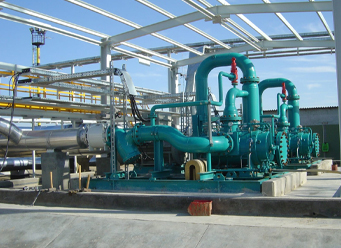
Sewage slurry mud pump performance is governed by several key engineering principles. Hydraulic design focuses on maximizing impeller efficiency and minimizing head loss. Impeller geometry (vane angle, blade thickness) is optimized based on the slurry’s specific gravity, viscosity, and particle size distribution. Force analysis considers the impact forces exerted by solid particles on the impeller and casing, influencing material selection and component sizing. Cavitation – the formation and collapse of vapor bubbles – is a critical concern, particularly when handling low NPSH (Net Positive Suction Head) fluids. Pump manufacturers address this through impeller design modifications (e.g., inducer vanes) and careful system layout to ensure adequate suction pressure. Environmental resistance is paramount; pumps operating in wastewater treatment plants must withstand exposure to corrosive chemicals and varying temperatures. Coatings (epoxy, polyurethane) are often applied to external surfaces to provide corrosion protection. Compliance with industry standards (e.g., API 610 for centrifugal pumps – principles applicable to slurry pump design) ensures safety and reliability. Pump selection considers the total dynamic head (TDH) – the total pressure required to move the slurry – and the flow rate, determined by the system’s demands. Variable Frequency Drives (VFDs) are increasingly employed to optimize pump performance and energy consumption by adjusting pump speed based on flow rate requirements.
Technical Specifications
| Parameter | Typical Value (Small Pump) | Typical Value (Medium Pump) | Typical Value (Large Pump) |
|---|---|---|---|
| Flow Rate (m³/hr) | 5 – 20 | 20 – 80 | 80 – 200+ |
| Total Dynamic Head (TDH) (m) | 10 – 30 | 30 – 60 | 60 – 120+ |
| Solids Handling Capacity (mm) | 10 – 25 | 25 – 50 | 50 – 100+ |
| Pump Speed (RPM) | 500 – 1500 | 800 – 1800 | 1000 – 2000 |
| Motor Power (kW) | 1.5 – 4 | 4 – 15 | 15 – 50+ |
| Casing Material | High-Chrome Cast Iron | High-Chrome Cast Iron / Stainless Steel | Stainless Steel / Alloy Steel |
Failure Mode & Maintenance
Sewage slurry mud pumps are susceptible to several failure modes. Abrasion is a primary concern, leading to impeller wear, casing erosion, and reduced pump efficiency. Corrosion, particularly in aggressive chemical environments, can cause pitting and material degradation. Mechanical failures include bearing failure (due to excessive load or lubrication issues), seal failure (leading to leakage), and shaft breakage (caused by fatigue or overloading). Cavitation damage manifests as pitting on the impeller surface, reducing hydraulic performance. Failure analysis often reveals the root cause: inadequate material selection, improper operation (e.g., running the pump dry), or lack of preventative maintenance. Regular maintenance procedures are crucial. These include routine visual inspections for leaks and wear, bearing lubrication, seal replacement, impeller wear monitoring, and casing thickness checks. Non-destructive testing (NDT) – such as ultrasonic thickness testing (UTT) – can detect corrosion and erosion before catastrophic failure. Preventive maintenance schedules should be based on operating hours and the severity of the slurry being pumped. Vibration analysis can identify early signs of bearing wear or impeller imbalance. Proper pump alignment is critical to minimize stress on the bearings and seals. In cases of severe abrasion, component replacement is inevitable, highlighting the importance of stocking spare parts.
Industry FAQ
Q: What is the impact of slurry particle size on pump selection and performance?
A: Larger particle sizes necessitate pumps with wider impeller passages and increased abrasion resistance. Higher concentrations of large particles reduce pump efficiency and increase wear rates. Pump manufacturers provide charts correlating particle size distribution to recommended pump types and operating parameters. Incorrect particle size consideration can lead to pump clogging, impeller damage, and premature failure.
Q: How does slurry viscosity affect pump performance and power consumption?
A: Increased slurry viscosity leads to higher frictional losses within the pump, reducing flow rate and increasing power consumption. Pumps designed for low-viscosity fluids may struggle to efficiently handle highly viscous slurries. Pump curves typically account for viscosity effects, allowing for accurate performance prediction. VFDs can be used to adjust pump speed and compensate for viscosity changes.
Q: What are the critical considerations for selecting pump seals for abrasive slurries?
A: Seal selection must prioritize abrasion resistance and chemical compatibility. Mechanical seals with hardened faces (e.g., silicon carbide, tungsten carbide) are commonly used. Double mechanical seals with a barrier fluid are employed in applications requiring enhanced leakage control. Regular seal inspection and replacement are crucial to prevent failures.
Q: How can cavitation be prevented or mitigated in sewage slurry pumps?
A: Cavitation can be prevented by ensuring adequate NPSH available (NPSHa) at the pump suction. This involves optimizing system layout, minimizing suction line losses, and ensuring sufficient tank head. Impeller design modifications, such as inducer vanes, can improve NPSH performance. Regular monitoring of pump vibration and noise can detect early signs of cavitation.
Q: What are the typical maintenance intervals for a sewage slurry mud pump operating continuously?
A: Typical maintenance intervals vary based on operating conditions and slurry characteristics. Daily visual inspections for leaks are recommended. Monthly checks should include bearing lubrication and seal inspections. Scheduled maintenance, including impeller wear assessment and casing thickness checks, should be performed every 6-12 months. Vibration analysis should be conducted quarterly.
Conclusion
The sewage slurry mud pump remains an indispensable component in fluid handling systems where abrasive, viscous, and solid-laden fluids are prevalent. Successful implementation hinges on a thorough understanding of material science, hydraulic principles, and failure modes. Proper material selection, optimized impeller design, and robust maintenance practices are paramount for ensuring reliable and efficient operation.
Looking ahead, advancements in pump design, such as the adoption of computational fluid dynamics (CFD) for impeller optimization and the development of more abrasion-resistant materials, will continue to enhance performance and reduce lifecycle costs. Furthermore, the integration of predictive maintenance technologies – leveraging sensor data and machine learning algorithms – will enable proactive identification of potential failures, minimizing downtime and maximizing operational efficiency.
-
Comprehensive Guide to Waterproof ORings for Optimal Sealing Solutions
News2026-06-09
-
basement bathroom pump systems Performance Analysis
News2026-06-24
-
basement bathroom ejector pump system Performance Engineering
News2026-06-24
-
2 hp sewage pump Performance Engineering
News2026-06-24
-
1 hp septic pump Performance Engineering
News2026-06-24
-
submersible effluent pump Performance Analysis
News2026-06-24
-
submergable pump Material Science
News2026-06-23
-
sewer injection pump Performance Engineering
News2026-06-23
-
Sewer Ejector Pump System Performance Analysis
News2026-06-23
-
septic tank pump for sale Performance Engineering
News2026-06-23
-
septic pump for sale Performance Engineering
News2026-06-23
-
septic ejector system Performance Analysis
News2026-06-22
-
replace septic pump Performance Analysis
News2026-06-22
-
pump system septic tank Performance Analysis
News2026-06-22
-
lift pump for sewer Performance and Engineering
News2026-06-22




