English
- Afrikaans
- Albanian
- Amharic
- Arabic
- Armenian
- Azerbaijani
- Basque
- Belarusian
- Bengali
- Bosnian
- Bulgarian
- Catalan
- Cebuano
- Corsican
- Croatian
- Czech
- Danish
- Dutch
- English
- Esperanto
- Estonian
- Finnish
- French
- Frisian
- Galician
- Georgian
- German
- Greek
- Gujarati
- Haitian Creole
- hausa
- hawaiian
- Hebrew
- Hindi
- Miao
- Hungarian
- Icelandic
- igbo
- Indonesian
- irish
- Italian
- Japanese
- Javanese
- Kannada
- kazakh
- Khmer
- Rwandese
- Korean
- Kurdish
- Kyrgyz
- Lao
- Latin
- Latvian
- Lithuanian
- Luxembourgish
- Macedonian
- Malgashi
- Malay
- Malayalam
- Maltese
- Maori
- Marathi
- Mongolian
- Myanmar
- Nepali
- Norwegian
- Norwegian
- Occitan
- Pashto
- Persian
- Polish
- Portuguese
- Punjabi
- Romanian
- Russian
- Samoan
- Scottish Gaelic
- Serbian
- Sesotho
- Shona
- Sindhi
- Sinhala
- Slovak
- Slovenian
- Somali
- Spanish
- Sundanese
- Swahili
- Swedish
- Tagalog
- Tajik
- Tamil
- Tatar
- Telugu
- Thai
- Turkish
- Turkmen
- Ukrainian
- Urdu
- Uighur
- Uzbek
- Vietnamese
- Welsh
- Bantu
- Yiddish
- Yoruba
- Zulu

Telephone: +86 13120555503
Email: frank@cypump.com


Apr . 01, 2024 17:55 Back to list
self priming sewage pumps Performance Engineering
Introduction
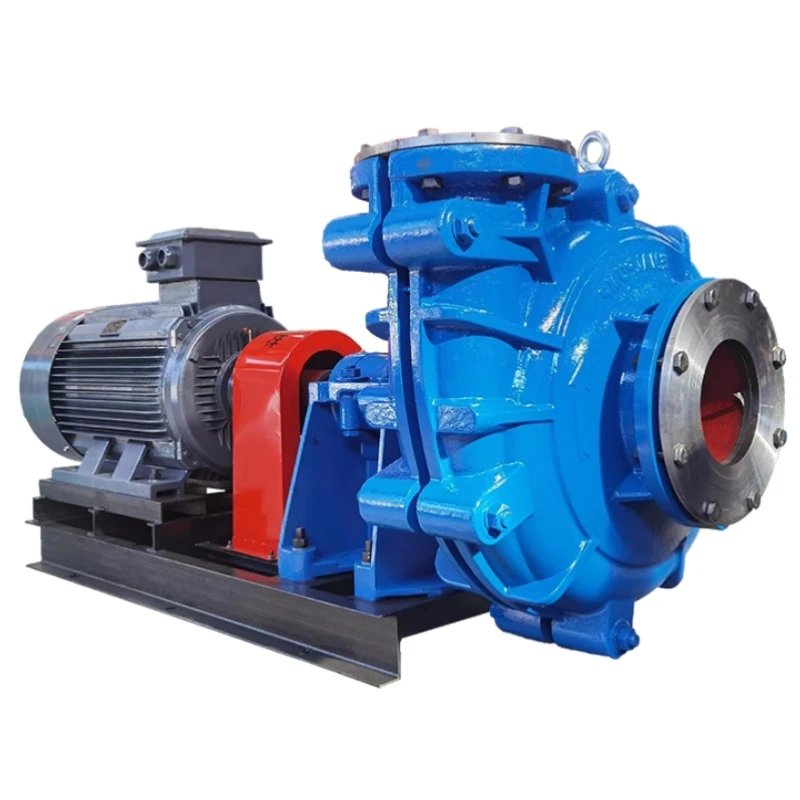
Self-priming sewage pumps are centrifugal pumps specifically designed to handle solids-laden wastewater and automatically remove air from the suction line, thereby eliminating the need for manual priming. Positioned within the wastewater treatment infrastructure, these pumps serve as critical components in municipal sewage systems, industrial effluent management, and flood control. Their core performance characteristics center around efficient solids handling, reliable self-priming capabilities, corrosion resistance, and robust construction to withstand abrasive materials. A key pain point in the industry revolves around pump downtime caused by impeller clogging, seal failures, and motor burnout due to inadequate solids handling or aggressive chemical environments. Therefore, materials selection and hydraulic design are paramount considerations. Furthermore, adherence to increasingly stringent environmental regulations concerning discharge limits drives demand for pumps with optimized efficiency and minimal leakage.
Material Science & Manufacturing
The primary materials utilized in self-priming sewage pump construction are cast iron (typically ASTM A48 Class 30), stainless steel (304, 316, or duplex grades conforming to ASTM A240), and various elastomeric materials for seals and liners. Cast iron provides cost-effectiveness and good wear resistance for pump housings and impellers handling less corrosive media. Stainless steel is essential for components exposed to aggressive chemicals or seawater, mitigating corrosion and extending service life. Impeller materials often include high-chrome cast iron alloys for enhanced abrasion resistance against sand and grit. Manufacturing processes include sand casting for housings, investment casting or centrifugal casting for impellers, and machining for precision tolerances. Critical parameters during impeller casting involve controlling cooling rates to minimize residual stresses. Shaft manufacturing demands precise alignment and surface finish to ensure concentricity and prevent seal leakage. Rubber components, such as lip seals and gaskets, are typically manufactured via compression molding or injection molding using materials like Nitrile Butadiene Rubber (NBR), Ethylene Propylene Diene Monomer (EPDM), or Viton, selected based on chemical compatibility and temperature requirements. Weldments, where employed, require full penetration welds and non-destructive testing (NDT) such as radiographic or ultrasonic inspection to ensure structural integrity. Surface coatings, like epoxy or ceramic coatings, are frequently applied to internal surfaces to enhance corrosion and abrasion resistance.
Performance & Engineering
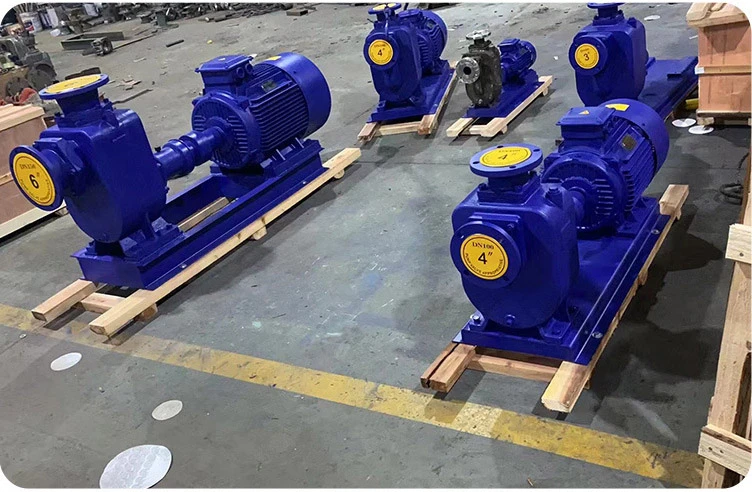
Performance of self-priming sewage pumps is dictated by several engineering principles. The pump’s Net Positive Suction Head Required (NPSHr) is a crucial parameter, influencing the pump’s ability to maintain prime under varying suction conditions. Hydraulic design focuses on maximizing impeller efficiency and minimizing head losses through volute casings and discharge piping. Force analysis considers radial and axial thrust loads imposed on the impeller shaft, requiring robust bearing support to prevent premature failure. Environmental resistance necessitates selection of materials compatible with the conveyed fluid, addressing factors like pH, temperature, and solids concentration. Compliance requirements, such as those stipulated by the EPA regarding wastewater discharge, influence pump selection and control strategies. For example, low-shear impeller designs minimize solids disintegration, preventing the release of harmful substances. Specific gravity of the pumped fluid significantly impacts pump head and power requirements. Furthermore, motor sizing must account for the pump’s hydraulic power curve and anticipated system head losses. Vibration analysis is employed during commissioning to identify and address potential mechanical imbalances, enhancing pump longevity. A key engineering challenge lies in balancing self-priming efficiency with overall pump efficiency and solids handling capabilities.
Technical Specifications
| Parameter | Unit | Typical Range (Small Pumps - ≤ 5HP) | Typical Range (Large Pumps - > 5HP) |
|---|---|---|---|
| Flow Rate | GPM (Gallons per Minute) | 20-150 | 100-1000+ |
| Total Dynamic Head | ft (Feet) | 30-80 | 80-200+ |
| Solids Handling | in (Inches) | Up to 2 | Up to 4 |
| Suction Lift | ft (Feet) | Up to 25 | Up to 28 |
| Pump Casing Material | - | Cast Iron (A48 Class 30) | Ductile Iron or Stainless Steel (316) |
| Impeller Material | - | High-Chrome Cast Iron | Stainless Steel (316) or Bronze |
Failure Mode & Maintenance
Common failure modes in self-priming sewage pumps include impeller clogging (leading to reduced flow and increased power consumption), seal failures (resulting in leakage and potential motor damage), bearing failures (manifesting as excessive noise and vibration), and motor burnout (often caused by overloading or phase imbalance). Impeller clogging is frequently attributable to oversized solids or the buildup of fibrous materials. Seal failures can stem from abrasive particles, dry running, or incompatibility with the pumped fluid. Bearing failures are often linked to inadequate lubrication, misalignment, or excessive loads. Motor burnout can occur due to overheating, voltage fluctuations, or improper overload protection. Preventive maintenance is critical and involves regular inspection of seals, bearings, and impellers. Lubrication schedules should be strictly adhered to, utilizing appropriate greases compatible with operating conditions. Backflushing the pump periodically can help remove accumulated solids. Vibration monitoring can detect early signs of bearing or impeller imbalance. Routine electrical inspections are essential to identify and address potential motor issues. For severe clogging, complete pump disassembly and cleaning may be required. Regularly monitoring discharge pressure and power consumption can provide valuable insights into pump performance and potential problems.
Industry FAQ
Q: What is the significance of NPSHr in selecting a self-priming sewage pump?
A: Net Positive Suction Head Required (NPSHr) represents the minimum absolute pressure required at the pump suction to prevent cavitation. If the available NPSH (NPSHa) in the system is less than the NPSHr, cavitation will occur, leading to impeller damage, reduced pump efficiency, and noisy operation. Therefore, accurately calculating NPSHa based on system conditions (fluid temperature, elevation, suction pipe length, and fluid vapor pressure) and selecting a pump with a corresponding NPSHr is paramount for reliable operation.
Q: How do different impeller designs impact solids handling capabilities?
A: Impeller design significantly affects solids handling. Open impellers, with their unobstructed flow passages, are best suited for handling large, stringy solids without clogging. However, they typically have lower efficiency. Semi-open impellers offer a compromise between solids handling and efficiency. Closed impellers provide the highest efficiency but are more prone to clogging with solids. Vortex impellers create a swirling motion that pulls solids into the center of the impeller, minimizing abrasion and clogging, but generally have lower head and flow rates.
Q: What materials are best suited for pumps handling corrosive fluids?
A: For corrosive fluids, stainless steel alloys (316, duplex stainless steel) are commonly employed due to their superior resistance to chemical attack. However, the specific alloy selection depends on the nature and concentration of the corrosive agents. In extreme cases, more exotic materials like Hastelloy or titanium may be necessary. Additionally, using corrosion-resistant elastomers for seals and gaskets is crucial. Polymer linings (epoxy, polyurethane) can also protect pump housings from corrosion.
Q: How does motor efficiency impact the total cost of ownership?
A: Motor efficiency directly affects energy consumption. A higher efficiency motor consumes less electricity for the same amount of pumping, resulting in lower operating costs over the pump’s lifespan. While higher efficiency motors may have a higher initial cost, the long-term energy savings can often offset the initial investment, reducing the total cost of ownership. Variable Frequency Drives (VFDs) can further optimize energy consumption by adjusting pump speed to match demand.
Q: What are the key considerations when selecting a pump seal?
A: Seal selection involves considering the pumped fluid's chemical compatibility, temperature, abrasiveness, and pressure. Mechanical seals are preferred for their superior sealing performance compared to lip seals, especially in demanding applications. Seal face materials (e.g., silicon carbide, tungsten carbide) must be resistant to abrasion and corrosion. Proper lubrication and cooling are essential for seal longevity. Regular inspection and replacement of seals are crucial to prevent leakage and motor damage.
Conclusion
Self-priming sewage pumps represent a vital component in wastewater management systems, requiring careful consideration of material science, hydraulic design, and operational factors. Selecting the appropriate pump necessitates a comprehensive understanding of the specific application demands, including flow rate, head, solids content, and fluid chemistry. Prioritizing corrosion resistance, solids handling capabilities, and efficient operation are paramount to maximizing pump lifespan and minimizing downtime.
Looking ahead, advancements in pump technology are focused on improving energy efficiency, enhancing solids handling, and enabling remote monitoring and diagnostics. Smart pumps equipped with sensors and data analytics can optimize performance, predict failures, and reduce maintenance costs. Continued development of more robust and corrosion-resistant materials will further extend pump service life in increasingly challenging environments. Compliance with evolving environmental regulations will remain a key driver of innovation in this critical industry.
-
Precision at the Pump: How Better Machining Protects Flow and Uptime
News2026-11-20
-
Why Pump Reliability Begins Before the First Drop of Fluid
News2026-11-20
-
Beyond the Pump: Designing Safer Access Around Critical Water Infrastructure
News2026-11-20
-
Why Pumping Stations Depend on the Infrastructure Beneath the Pumps
News2026-11-20
-
Beyond the Pump Room: How Smarter Loading Protects Industrial Equipment
News2026-11-19
-
When Pumps Stop: Designing More Resilient Power for Critical Pumping Systems
News2026-11-19
-
The Hidden Role of Dust and Gas Monitoring in Reliable Pump Operations
News2026-11-19
-
The Hidden Role of Mineral Compounds in Extending Industrial Pump Lifespan
News2026-10-12
-
Why Pump System Reliability Depends on Precision Hose Assembly Methods
News2026-09-15
-
How Advanced Imaging Films Are Transforming Pump Component Quality Control
News2026-08-25
-
How Advanced Filtration Protects Pump Systems from Premature Wear and Costly Downtime
News2026-08-25
-
How Steel Material Selection Drives Pump Reliability in Heavy-Duty Systems
News2026-08-25
-
Ensuring Pump System Efficiency: The Role of High-Quality Pipe Fittings and Tubing
News2026-08-24
-
Optimizing Fluid Dynamics and Material Consistency in Industrial Processing
News2026-08-18
-
Innovations and Challenges in Hydraulic Systems for Heavy Machinery
News2026-08-13




