English
- Afrikaans
- Albanian
- Amharic
- Arabic
- Armenian
- Azerbaijani
- Basque
- Belarusian
- Bengali
- Bosnian
- Bulgarian
- Catalan
- Cebuano
- Corsican
- Croatian
- Czech
- Danish
- Dutch
- English
- Esperanto
- Estonian
- Finnish
- French
- Frisian
- Galician
- Georgian
- German
- Greek
- Gujarati
- Haitian Creole
- hausa
- hawaiian
- Hebrew
- Hindi
- Miao
- Hungarian
- Icelandic
- igbo
- Indonesian
- irish
- Italian
- Japanese
- Javanese
- Kannada
- kazakh
- Khmer
- Rwandese
- Korean
- Kurdish
- Kyrgyz
- Lao
- Latin
- Latvian
- Lithuanian
- Luxembourgish
- Macedonian
- Malgashi
- Malay
- Malayalam
- Maltese
- Maori
- Marathi
- Mongolian
- Myanmar
- Nepali
- Norwegian
- Norwegian
- Occitan
- Pashto
- Persian
- Polish
- Portuguese
- Punjabi
- Romanian
- Russian
- Samoan
- Scottish Gaelic
- Serbian
- Sesotho
- Shona
- Sindhi
- Sinhala
- Slovak
- Slovenian
- Somali
- Spanish
- Sundanese
- Swahili
- Swedish
- Tagalog
- Tajik
- Tamil
- Tatar
- Telugu
- Thai
- Turkish
- Turkmen
- Ukrainian
- Urdu
- Uighur
- Uzbek
- Vietnamese
- Welsh
- Bantu
- Yiddish
- Yoruba
- Zulu

Telephone: +86 13120555503
Email: frank@cypump.com


Apr . 01, 2024 17:55 Back to list
screw slurry pump Performance Analysis
Introduction
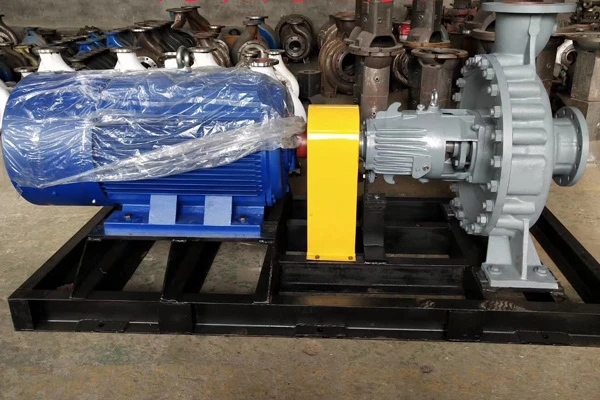
Screw slurry pumps are positive displacement pumps specifically designed for the efficient and reliable transfer of fluids containing solids. Positioned within the industrial fluid handling chain between centrifugal pumps (generally limited to cleaner fluids) and other positive displacement types like progressing cavity pumps, screw pumps excel in handling high solids concentrations, viscous materials, and shear-sensitive substances. Their core performance characteristics revolve around consistent flow rates irrespective of discharge pressure, minimal pulsation, and gentle fluid handling, minimizing degradation of the pumped medium. This makes them critical in applications ranging from wastewater treatment and chemical processing to food production and oil & gas industries. Unlike centrifugal pumps that rely on velocity head, screw pumps utilize the volumetric displacement of rotating screws to move fluid, offering superior performance with difficult-to-pump materials. Key performance indicators include flow rate, pressure head, solids handling capability, and pump efficiency, all heavily influenced by screw geometry, material selection, and operating speed.
Material Science & Manufacturing
The performance and longevity of screw slurry pumps are intrinsically linked to the materials used in their construction and the precision of the manufacturing processes. The screws themselves are typically manufactured from hardened alloy steels (e.g., 4140, 8620) or stainless steels (e.g., 316, duplex stainless steel) depending on the chemical compatibility requirements of the fluid being pumped. Alloy steel screws undergo heat treatment processes like carburizing or nitriding to enhance surface hardness and wear resistance. The pump housing is commonly constructed from cast iron, ductile iron, or stainless steel, chosen for their strength, corrosion resistance, and machinability. Elastomeric liners, often made from materials like natural rubber, neoprene, or EPDM, are frequently incorporated into the housing to provide sealing and protect the metal surfaces from abrasive wear.
Manufacturing processes involve several critical steps. Screw fabrication typically employs CNC machining, ensuring precise screw profile and pitch. Screw profiles are often single-screw (one screw meshing with a fixed elastomeric stator) or multi-screw (two or three screws meshing with each other). Manufacturing tolerances on screw pitch and profile are crucial; deviations can lead to reduced efficiency, increased wear, and premature failure. Housing casting utilizes sand casting or investment casting, followed by machining to ensure dimensional accuracy and smooth surface finishes. Elastomeric liners are bonded to the housing using vulcanization or adhesive bonding processes. Parameter control during manufacturing focuses on heat treatment temperature and duration (for steel screws), casting porosity and hardness, and liner bonding strength. Quality control involves non-destructive testing methods like dye penetrant inspection and ultrasonic testing to detect cracks and voids in both metal and elastomeric components. Proper material selection considering the pumped fluid’s pH, temperature, and abrasive particle size is paramount for preventing corrosion and erosion.
Performance & Engineering
The performance of screw slurry pumps is governed by several engineering principles. Volumetric efficiency, a critical parameter, is determined by the tightness of the seal between the screws and the housing or stator. Leakage past the screws reduces the effective flow rate. Hydraulic power is calculated based on flow rate and differential pressure. The pump’s power requirement is influenced by the fluid viscosity, solids concentration, and pump speed. Cavitation, though less common in screw pumps compared to centrifugal pumps due to their self-priming nature, can still occur under specific conditions (e.g., high suction lift, low inlet pressure). Force analysis involves evaluating shear stresses on the screws and housing, torsional stresses on the screw shaft, and radial loads on bearings.
Environmental resistance is a key consideration. Pump materials must be selected to withstand the corrosive effects of the pumped fluid and the operating temperature. External coatings, such as epoxy or polyurethane, can provide additional protection against corrosion. Compliance requirements vary depending on the application. For example, pumps used in food processing must comply with FDA regulations regarding material compatibility and sanitary design. Pumps used in explosive environments (e.g., oil & gas) must meet ATEX or IECEx standards for explosion protection. Functional implementation necessitates careful selection of drive systems (e.g., electric motors, hydraulic motors) and control systems (e.g., variable frequency drives) to optimize pump performance and energy efficiency. Proper pipe support and alignment are crucial to minimize vibration and bearing wear. Detailed hydraulic modeling and computational fluid dynamics (CFD) analysis are employed to optimize screw geometry and internal flow paths for maximum efficiency and solids handling capability.
Technical Specifications
| Parameter | Unit | Typical Range (Small Pump) | Typical Range (Large Pump) |
|---|---|---|---|
| Flow Rate | GPM (Gallons per Minute) | 10-100 | 200-1000+ |
| Discharge Pressure | PSI (Pounds per Square Inch) | 50-200 | 100-500+ |
| Solids Handling Capability | Inch (Particle Size) | Up to 1" | Up to 4"+ |
| Viscosity Range | cP (Centipoise) | 1-10,000 | 10,000-100,000+ |
| Screw Speed | RPM (Revolutions per Minute) | 100-500 | 200-800 |
| Pump Efficiency | % | 60-80 | 65-85 |
Failure Mode & Maintenance
Screw slurry pumps, while robust, are susceptible to various failure modes. Fatigue cracking in the screws can occur due to cyclic loading and stress concentration, particularly around the screw roots. Erosion caused by abrasive particles in the pumped fluid leads to wear of the screw surfaces, housing liner, and stator (in single-screw pumps). Delamination of the elastomeric liner can occur due to poor bonding, temperature fluctuations, or chemical attack. Oxidation and corrosion affect metal components exposed to corrosive fluids. Bearing failure is common due to insufficient lubrication, contamination, or excessive loading. Cavitation, while less frequent, can cause pitting and erosion of the screw surfaces.
Preventive maintenance is crucial. Regular inspection of screw surfaces, housing liner, and bearings is recommended. Lubrication schedules should be strictly followed, using appropriate lubricants compatible with the pumped fluid and operating temperature. Filter installation upstream of the pump protects the screws and other components from abrasive particles. Monitoring vibration levels can detect bearing wear or imbalance. Periodic testing of the liner bonding strength ensures continued sealing. In case of failure, screw replacement is often necessary. Liner replacement is also common, particularly in abrasive applications. Bearing replacement is a standard maintenance procedure. Root cause analysis of failures should be conducted to identify and address underlying issues, such as improper material selection, inadequate filtration, or excessive operating pressures. Regular performance monitoring (flow rate, pressure, power consumption) helps identify deviations from baseline values, indicating potential problems.
Industry FAQ
Q: What is the primary advantage of a screw pump over a progressing cavity pump when handling highly abrasive slurries?
A: Screw pumps generally exhibit lower shear rates than progressing cavity pumps, leading to less abrasive wear on the pump components and the solids within the slurry. While PC pumps are excellent for viscous fluids, the tighter clearances in PC pumps can exacerbate abrasive wear in high-solids applications. Screw pumps, with their larger flow passages and more robust screw geometry, are often preferred for severely abrasive slurries.
Q: How does the choice of screw profile (single vs. multi-screw) impact pump performance?
A: Single-screw pumps, utilizing a screw and stator, typically offer higher flow rates for a given size and are more tolerant of larger solids. Multi-screw pumps, with multiple meshing screws, generally provide higher pressures and more consistent flow, but may be more susceptible to clogging with large, rigid solids. The choice depends on the specific application requirements.
Q: What are the limitations of screw pumps regarding fluid viscosity?
A: While screw pumps excel with highly viscous fluids, excessively high viscosities can lead to increased power consumption and reduced efficiency. The friction losses within the pump increase exponentially with viscosity. Pump manufacturers typically provide viscosity limits within their product specifications.
Q: What type of seal is best suited for a screw slurry pump handling a corrosive fluid?
A: Mechanical seals constructed from corrosion-resistant materials (e.g., silicon carbide, tungsten carbide, Hastelloy) are typically recommended for corrosive fluids. The seal material must be chemically compatible with the fluid being pumped. Double mechanical seals with a barrier fluid are often used for extremely corrosive or hazardous applications.
Q: What is the impact of solids concentration on pump performance and lifespan?
A: Increasing solids concentration generally reduces pump efficiency and increases wear rates. The screws and housing liner are subjected to increased abrasive wear. Proper filtration and solids classification are crucial to minimize the impact of solids concentration. Pump manufacturers often specify maximum allowable solids concentration limits.
Conclusion
Screw slurry pumps represent a robust and versatile solution for the challenging task of fluid transfer containing solids. Their positive displacement nature, inherent solids handling capability, and gentle pumping action make them indispensable in a wide range of industrial applications. Proper material selection, meticulous manufacturing processes, and proactive maintenance are critical to maximizing pump performance and lifespan. Understanding the interplay between fluid properties, pump parameters, and potential failure modes allows for optimized operation and minimized downtime.
Looking ahead, advancements in materials science and computational fluid dynamics will likely lead to further improvements in screw pump efficiency, reliability, and solids handling capability. The integration of smart sensors and predictive maintenance algorithms will enable condition-based maintenance, reducing unplanned outages and optimizing operational costs. As industries increasingly focus on sustainability and resource efficiency, the role of screw slurry pumps in handling challenging fluids will only continue to grow.
-
Comprehensive Guide to Waterproof ORings for Optimal Sealing Solutions
News2026-06-09
-
basement bathroom pump systems Performance Analysis
News2026-06-24
-
basement bathroom ejector pump system Performance Engineering
News2026-06-24
-
2 hp sewage pump Performance Engineering
News2026-06-24
-
1 hp septic pump Performance Engineering
News2026-06-24
-
submersible effluent pump Performance Analysis
News2026-06-24
-
submergable pump Material Science
News2026-06-23
-
sewer injection pump Performance Engineering
News2026-06-23
-
Sewer Ejector Pump System Performance Analysis
News2026-06-23
-
septic tank pump for sale Performance Engineering
News2026-06-23
-
septic pump for sale Performance Engineering
News2026-06-23
-
septic ejector system Performance Analysis
News2026-06-22
-
replace septic pump Performance Analysis
News2026-06-22
-
pump system septic tank Performance Analysis
News2026-06-22
-
lift pump for sewer Performance and Engineering
News2026-06-22




