English
- Afrikaans
- Albanian
- Amharic
- Arabic
- Armenian
- Azerbaijani
- Basque
- Belarusian
- Bengali
- Bosnian
- Bulgarian
- Catalan
- Cebuano
- Corsican
- Croatian
- Czech
- Danish
- Dutch
- English
- Esperanto
- Estonian
- Finnish
- French
- Frisian
- Galician
- Georgian
- German
- Greek
- Gujarati
- Haitian Creole
- hausa
- hawaiian
- Hebrew
- Hindi
- Miao
- Hungarian
- Icelandic
- igbo
- Indonesian
- irish
- Italian
- Japanese
- Javanese
- Kannada
- kazakh
- Khmer
- Rwandese
- Korean
- Kurdish
- Kyrgyz
- Lao
- Latin
- Latvian
- Lithuanian
- Luxembourgish
- Macedonian
- Malgashi
- Malay
- Malayalam
- Maltese
- Maori
- Marathi
- Mongolian
- Myanmar
- Nepali
- Norwegian
- Norwegian
- Occitan
- Pashto
- Persian
- Polish
- Portuguese
- Punjabi
- Romanian
- Russian
- Samoan
- Scottish Gaelic
- Serbian
- Sesotho
- Shona
- Sindhi
- Sinhala
- Slovak
- Slovenian
- Somali
- Spanish
- Sundanese
- Swahili
- Swedish
- Tagalog
- Tajik
- Tamil
- Tatar
- Telugu
- Thai
- Turkish
- Turkmen
- Ukrainian
- Urdu
- Uighur
- Uzbek
- Vietnamese
- Welsh
- Bantu
- Yiddish
- Yoruba
- Zulu

Telephone: +86 13120555503
Email: frank@cypump.com


Apr . 01, 2024 17:55 Back to list
screw pump centrifugal chemical pump price Performance Analysis
Introduction
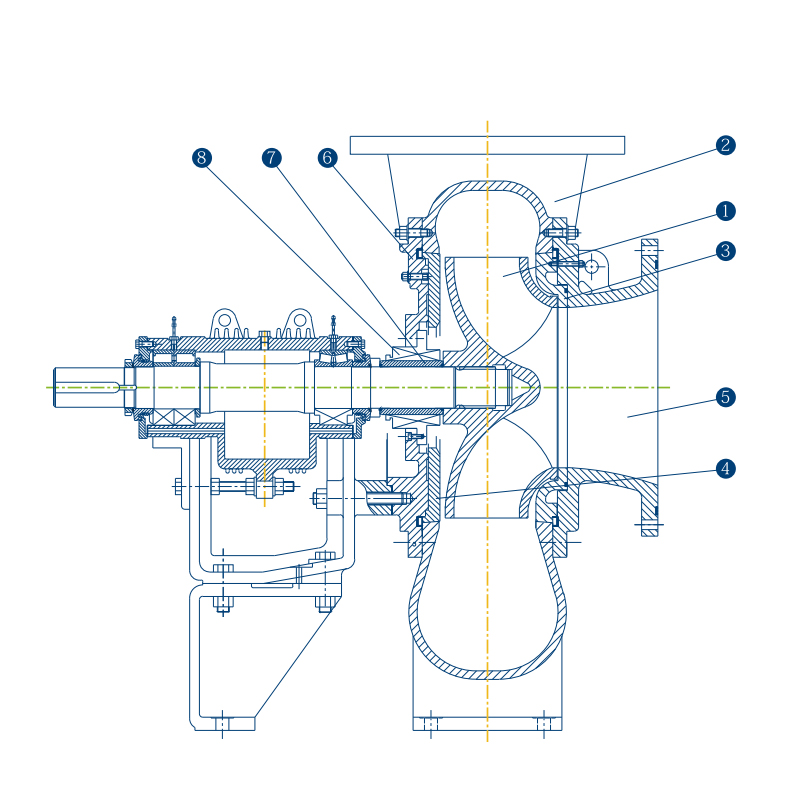
Screw pump centrifugal chemical pumps represent a critical component in the safe and efficient transfer of corrosive and abrasive fluids across a broad spectrum of industrial applications. These pumps combine the positive displacement characteristics of a screw pump with the dynamic head generation of a centrifugal pump, offering a solution adept at handling challenging chemical processing demands. Their position in the industry chain falls between chemical reactors/storage and downstream processing units (e.g., mixing tanks, separators, filling stations). Core performance characteristics revolve around maintaining stable flow rates irrespective of discharge pressure variations, minimizing shear sensitive fluid degradation, providing high suction lift capability, and exhibiting robust resistance to chemical attack. Pricing is dictated by materials of construction, flow rate/head requirements, seal type, and drive configuration, with specialized alloys significantly impacting cost. This guide provides a deep dive into the material science, manufacturing processes, performance engineering, failure modes, and maintenance considerations critical to the selection and operation of these specialized pumps.
Material Science & Manufacturing
The materials used in screw pump centrifugal chemical pump construction are paramount due to the aggressive nature of the fluids handled. Pump housings are frequently constructed from stainless steels (316L, 904L) offering broad chemical resistance, or more specialized alloys like Hastelloy C-276, Alloy 20, or titanium for exceptionally corrosive environments. The screw and impeller typically employ the same materials as the housing, with surface hardening techniques (e.g., nitriding, carburizing) potentially applied to the screw to enhance wear resistance. Seals represent a critical failure point and are often comprised of PTFE, ceramic, or metallic bellows materials depending on the fluid and pressure. Manufacturing processes involve precision casting or forging for the housing, followed by CNC machining to achieve tight tolerances. The screw is typically manufactured via a combination of machining and grinding, requiring multi-axis capabilities to create the complex helical geometry. Impellers are often investment cast for intricate designs. Key parameter control during manufacturing focuses on maintaining dimensional accuracy of the screw and impeller to minimize internal leakage and maximize volumetric efficiency. Welding, where employed, must be performed using qualified procedures and appropriate filler metals to prevent corrosion and ensure structural integrity. Non-destructive testing (NDT) like radiography and liquid penetrant inspection are crucial for verifying weld quality and identifying material defects. Hydrostatic testing is essential to validate pressure containment.
Performance & Engineering
The performance of a screw pump centrifugal chemical pump is dictated by a complex interplay of hydraulic and mechanical factors. Force analysis focuses on both static and dynamic loads imposed on the pump components. Static loads are primarily due to the weight of the pump and fluid, while dynamic loads arise from fluid pressure, impeller rotation, and potential flow-induced vibrations. Environmental resistance is a key design consideration, particularly temperature extremes and exposure to corrosive atmospheres. Material selection plays a vital role in mitigating these effects, along with appropriate coating systems. Compliance requirements vary based on the application and geographical location. For example, pumps handling hazardous chemicals must comply with ATEX directives (Europe) or Class I, Division 1/2 regulations (North America) regarding explosion protection. Functional implementation necessitates careful consideration of suction and discharge piping layout to minimize cavitation and ensure adequate net positive suction head available (NPSHa). Flow rate is controlled by adjusting the impeller speed, while discharge pressure is determined by the system resistance. The pump’s hydraulic efficiency is maximized by optimizing the impeller geometry and minimizing internal clearances. Furthermore, the design must account for the fluid’s viscosity and density, as these properties significantly influence pump performance. Bearing selection and lubrication are critical for ensuring long-term reliability and preventing premature failure.
Technical Specifications
| Parameter | Unit | Typical Range (316L SS Construction) | Notes |
|---|---|---|---|
| Flow Rate | GPM (Gallons Per Minute) | 5 – 500 | Dependent on impeller size and speed |
| Discharge Pressure | PSI (Pounds per Square Inch) | 0 – 200 | Limited by pump material and drive power |
| Temperature Range | °F (°Celsius) | -20 to 250 (-29 to 121) | Material dependent; PTFE seals limit upper range |
| Suction Lift | ft (meters) | Up to 25 (7.6) | Dependent on atmospheric pressure and fluid vapor pressure |
| Viscosity Range | cP (Centipoise) | 1 – 10,000 | Performance degrades with increasing viscosity |
| Materials of Construction (Housing) | - | 316L SS, Hastelloy C-276, Alloy 20, Titanium | Choice dictated by chemical compatibility |
Failure Mode & Maintenance
Screw pump centrifugal chemical pumps are susceptible to several failure modes. Fatigue cracking can occur in the pump housing or impeller due to cyclic loading, particularly if the pump is subjected to pressure pulsations or vibrations. Delamination of coatings or linings can expose the underlying metal to corrosive attack. Degradation of seals leads to leakage and loss of pump efficiency. Oxidation of metal components can occur at elevated temperatures, reducing material strength and increasing corrosion rates. Cavitation, caused by insufficient NPSHa, results in impeller erosion and reduced pump performance. Preventative maintenance is crucial for extending pump life. Regular inspection of seals for wear and leakage is essential. Lubrication of bearings should be performed according to manufacturer’s recommendations. Periodic vibration analysis can detect early signs of bearing or impeller imbalance. Flushing the pump with a clean solvent after use can remove residual chemicals and prevent corrosion. If cavitation is suspected, the suction piping should be inspected for obstructions and the NPSHa should be verified. Scheduled overhauls, including impeller and screw replacement, are necessary to maintain optimal performance and prevent catastrophic failures. Proper documentation of maintenance activities is critical for tracking pump history and identifying recurring issues.
Industry FAQ
Q: What are the key considerations when selecting a material of construction for a pump handling concentrated sulfuric acid?
A: Sulfuric acid is highly corrosive, especially at elevated temperatures. While 316L stainless steel offers some resistance, it's generally insufficient for concentrated sulfuric acid. Hastelloy C-276 or Alloy 20 are commonly preferred due to their exceptional resistance to sulfuric acid corrosion. Titanium is also an option, but its cost is significantly higher. The concentration, temperature, and potential presence of other contaminants must be carefully considered when making the final material selection.
Q: How does fluid viscosity affect the performance of a screw pump centrifugal chemical pump?
A: Increased fluid viscosity leads to a reduction in pump capacity and efficiency. The higher viscosity increases frictional losses within the pump, requiring more power to achieve the same flow rate. The pump's volumetric efficiency also decreases as viscosity increases, due to increased leakage past the screw. In extremely viscous applications, it may be necessary to derate the pump or select a pump specifically designed for handling high-viscosity fluids.
Q: What is NPSHa, and why is it critical for preventing cavitation?
A: NPSHa (Net Positive Suction Head Available) is the absolute pressure at the pump suction, minus the fluid’s vapor pressure. Cavitation occurs when the absolute pressure at the pump suction falls below the fluid’s vapor pressure, causing the liquid to vaporize and form bubbles. These bubbles collapse violently, causing erosion of the impeller and reducing pump performance. Maintaining sufficient NPSHa is crucial to prevent cavitation and ensure reliable pump operation.
Q: What are the advantages of using a mechanical seal over a packed gland in a chemical pump application?
A: Mechanical seals offer several advantages over packed glands, including reduced leakage, lower maintenance requirements, and improved reliability. Packed glands rely on friction to create a seal, which requires frequent adjustment and can lead to excessive wear of the shaft sleeve. Mechanical seals provide a tighter, more consistent seal, minimizing leakage and reducing the risk of environmental contamination. However, mechanical seals are generally more expensive than packed glands.
Q: How can I diagnose a pump that is exhibiting excessive vibration?
A: Excessive vibration can be caused by several factors, including bearing failure, impeller imbalance, misalignment, cavitation, or resonance. A vibration analysis can help identify the source of the vibration. Checking bearing condition, balancing the impeller, aligning the pump and motor, and ensuring adequate NPSHa are all important troubleshooting steps. If the vibration persists, it may be necessary to disassemble the pump and inspect for damaged components.
Conclusion
Screw pump centrifugal chemical pumps offer a robust and versatile solution for handling demanding chemical processing applications. Successful implementation hinges on a thorough understanding of material science principles, precise manufacturing control, and diligent performance engineering. Proper material selection, based on fluid compatibility and operating conditions, is paramount to ensuring long-term reliability and preventing premature failure. Attention to detail during installation and maintenance, including regular inspection of seals, lubrication of bearings, and verification of NPSHa, are essential for maximizing pump lifespan and minimizing downtime.
The continued development of advanced materials and sealing technologies will further enhance the performance and reliability of these critical pumps. Furthermore, the increasing adoption of predictive maintenance techniques, such as vibration analysis and oil analysis, will enable proactive identification of potential problems and reduce the risk of catastrophic failures. Selecting a pump manufacturer with a proven track record of delivering high-quality, application-specific solutions is crucial for achieving optimal results.
-
Precision at the Pump: How Better Machining Protects Flow and Uptime
News2026-11-20
-
Why Pump Reliability Begins Before the First Drop of Fluid
News2026-11-20
-
Beyond the Pump: Designing Safer Access Around Critical Water Infrastructure
News2026-11-20
-
Why Pumping Stations Depend on the Infrastructure Beneath the Pumps
News2026-11-20
-
Beyond the Pump Room: How Smarter Loading Protects Industrial Equipment
News2026-11-19
-
When Pumps Stop: Designing More Resilient Power for Critical Pumping Systems
News2026-11-19
-
The Hidden Role of Dust and Gas Monitoring in Reliable Pump Operations
News2026-11-19
-
The Hidden Role of Mineral Compounds in Extending Industrial Pump Lifespan
News2026-10-12
-
Why Pump System Reliability Depends on Precision Hose Assembly Methods
News2026-09-15
-
How Advanced Imaging Films Are Transforming Pump Component Quality Control
News2026-08-25
-
How Advanced Filtration Protects Pump Systems from Premature Wear and Costly Downtime
News2026-08-25
-
How Steel Material Selection Drives Pump Reliability in Heavy-Duty Systems
News2026-08-25
-
Ensuring Pump System Efficiency: The Role of High-Quality Pipe Fittings and Tubing
News2026-08-24
-
Optimizing Fluid Dynamics and Material Consistency in Industrial Processing
News2026-08-18
-
Innovations and Challenges in Hydraulic Systems for Heavy Machinery
News2026-08-13




