English
- Afrikaans
- Albanian
- Amharic
- Arabic
- Armenian
- Azerbaijani
- Basque
- Belarusian
- Bengali
- Bosnian
- Bulgarian
- Catalan
- Cebuano
- Corsican
- Croatian
- Czech
- Danish
- Dutch
- English
- Esperanto
- Estonian
- Finnish
- French
- Frisian
- Galician
- Georgian
- German
- Greek
- Gujarati
- Haitian Creole
- hausa
- hawaiian
- Hebrew
- Hindi
- Miao
- Hungarian
- Icelandic
- igbo
- Indonesian
- irish
- Italian
- Japanese
- Javanese
- Kannada
- kazakh
- Khmer
- Rwandese
- Korean
- Kurdish
- Kyrgyz
- Lao
- Latin
- Latvian
- Lithuanian
- Luxembourgish
- Macedonian
- Malgashi
- Malay
- Malayalam
- Maltese
- Maori
- Marathi
- Mongolian
- Myanmar
- Nepali
- Norwegian
- Norwegian
- Occitan
- Pashto
- Persian
- Polish
- Portuguese
- Punjabi
- Romanian
- Russian
- Samoan
- Scottish Gaelic
- Serbian
- Sesotho
- Shona
- Sindhi
- Sinhala
- Slovak
- Slovenian
- Somali
- Spanish
- Sundanese
- Swahili
- Swedish
- Tagalog
- Tajik
- Tamil
- Tatar
- Telugu
- Thai
- Turkish
- Turkmen
- Ukrainian
- Urdu
- Uighur
- Uzbek
- Vietnamese
- Welsh
- Bantu
- Yiddish
- Yoruba
- Zulu

Telephone: +86 13120555503
Email: frank@cypump.com


Apr . 01, 2024 17:55 Back to list
rubber lined slurry pumps Performance Analysis and Manufacturing Specifications
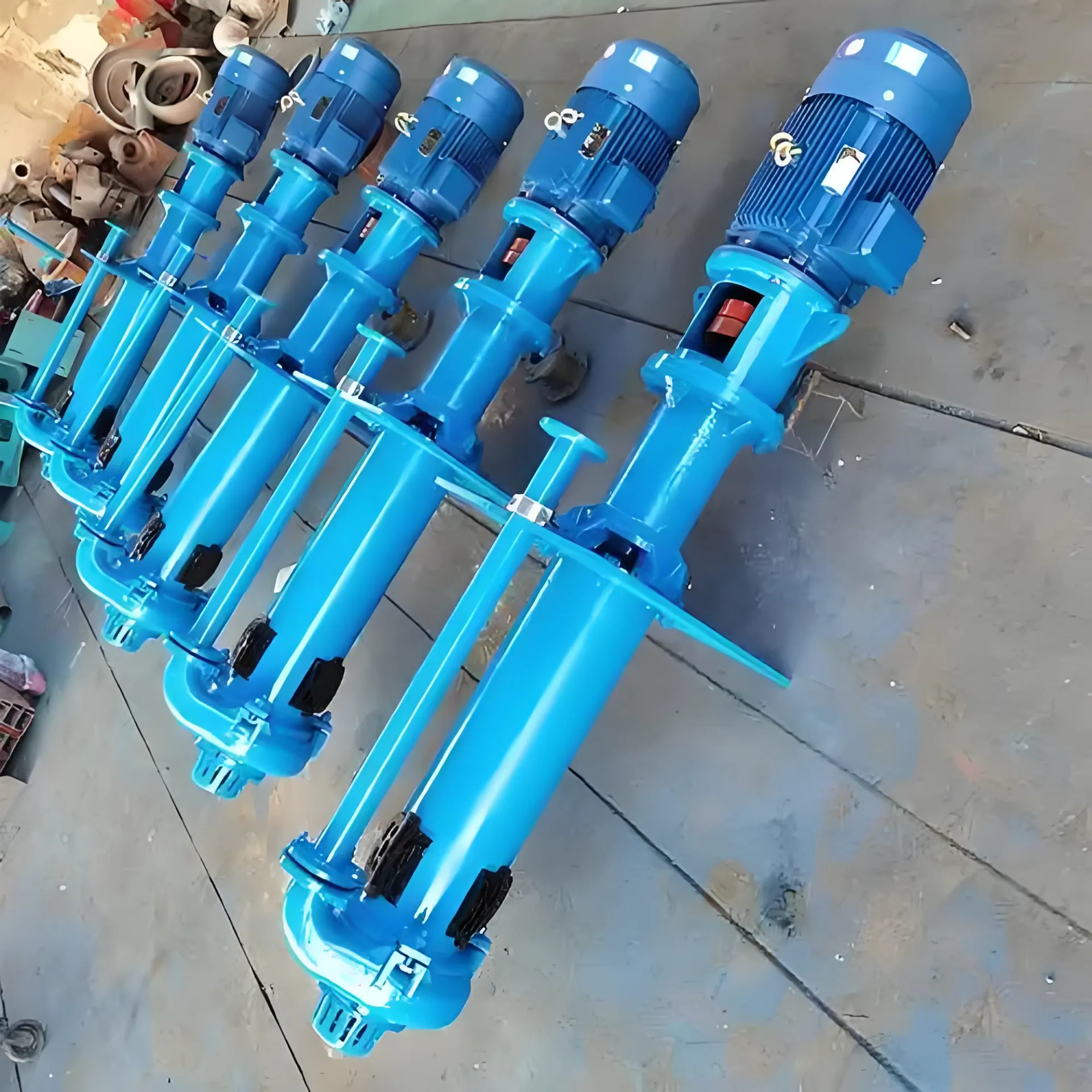
Rubber Lined Slurry Pumps Performance Analysis and Manufacturing Specifications
Rubber lined slurry pumps are specialized centrifugal pumping systems engineered to transport highly abrasive, corrosive, and high-density fluids known as slurries. In the industrial chain, these pumps serve as the critical nexus between mineral extraction/processing and downstream refining. Unlike standard centrifugal pumps, the rubber-lined variant is specifically designed to address the extreme tribological challenges posed by suspended solids—such as silica, tailings, and ore concentrates—which would otherwise cause rapid erosive wear of metallic components. The technical position of these pumps is defined by their ability to balance hydraulic efficiency with extreme wear resistance, utilizing a composite structure where a ductile metal shell provides structural rigidity while a thick, elastomeric liner absorbs the kinetic energy of impacting particles, thereby extending the Mean Time Between Failures (MTBF) in harsh mining and chemical environments.
Material Science & Manufacturing
The efficacy of a rubber lined slurry pump is predicated on the chemical synergy between the base metal casting and the elastomeric liner. The outer casing is typically manufactured from ASTM A48 Class 30 or 35 grey iron or ductile iron, providing the necessary hoop strength to withstand internal hydrostatic pressure and external mechanical loads. The core technical challenge lies in the lining process, which employs high-performance polymers such as Natural Rubber (NR), Nitrile Butadiene Rubber (NBR), or Chloroprene Rubber (CR), depending on the chemical compatibility requirements of the medium.
From a material science perspective, Natural Rubber is preferred for purely abrasive slurries due to its superior resilience and high rebound capacity, which allows the material to "bounce back" after particle impact. NBR is utilized when the slurry contains hydrocarbons or oils, preventing polymer swelling and degradation. The manufacturing process involves a precise "vulcanization bonding" technique. The interior of the metal shell is meticulously grit-blasted to achieve a specific surface roughness (Ra), followed by the application of a chemical bonding agent. The rubber is then inserted as unvulcanized sheets and cured in an autoclave under controlled temperature (typically 140°C to 160°C) and pressure. This creates a covalent bond between the rubber and the metal, preventing delamination under vacuum or high-pressure fluctuations. Key parameter control focuses on the vulcanization degree; under-curing leads to premature softening, while over-curing results in brittleness and stress-cracking.
Performance & Engineering
Engineering a rubber lined slurry pump requires a complex force analysis, specifically focusing on the transition from laminar to turbulent flow and the resulting impingement angles of the abrasive particles. The primary engineering goal is to minimize the relative velocity between the fluid and the liner surface. High-velocity zones, particularly at the impeller eye and the volute tongue, are the primary sites of material loss. To counter this, hydraulic designs incorporate enlarged flow passages and optimized vane geometries to reduce turbulence and localized shear stress.
Environmental resistance is a critical engineering constraint. Rubber liners are subject to thermal degradation; most NR liners lose structural integrity above 70°C. Consequently, engineers must implement cooling jackets or select high-temperature synthetic elastomers when transporting hot slurries. Furthermore, the pump's compliance requirements dictate a strict adherence to NPSH (Net Positive Suction Head) calculations to prevent cavitation. Cavitation in a rubber-lined pump is particularly destructive because the imploding vapor bubbles can cause "pitting" in the rubber, creating micro-voids that accelerate the penetration of abrasive particles into the bonding layer, eventually leading to catastrophic liner failure.
Technical Specifications
| Parameter Dimension | Natural Rubber (NR) Liner | Nitrile Rubber (NBR) Liner | High-Chrome Alloy (Comparison) | Engineering Tolerance |
|---|---|---|---|---|
| Abrasion Resistance | Extreme (Soft particles) | High (Oil-based) | Extreme (Hard particles) | ± 0.5 mm Wear Rate |
| Max Operating Temp | 70°C | 100°C | 300°C | ± 2°C Control |
| Hardness (Shore A) | 40 - 60 | 60 - 80 | 60 - 65 HRC | ± 5 Shore A |
| Chemical Compatibility | Acidic/Neutral | Oils/Hydrocarbons | Highly Corrosive | pH 2.0 - 12.0 |
| Elongation at Break | 400% - 700% | 200% - 400% | Negligible | ± 10% Variance |
| Bonding Strength | > 15 MPa | > 12 MPa | N/A (Cast) | ASTM D429 Standard |
Failure Mode & Maintenance
The failure modes of rubber lined slurry pumps are typically categorized into mechanical erosion, chemical degradation, and adhesive failure. Fatigue cracking often occurs due to repeated pressure cycling or thermal expansion mismatches between the rubber and the metal shell. Delamination (separation of the liner from the shell) is a critical failure mode, usually caused by poor surface preparation during manufacturing or the penetration of slurry through a localized hole, which creates a high-pressure pocket that "lifts" the rubber away from the metal.
Oxidation and ozonolysis also contribute to surface "crazing," where small cracks form on the liner surface, reducing its effective thickness. To maintain these systems, a rigorous predictive maintenance schedule is required. This includes ultrasonic thickness testing of the liners to monitor wear rates without dismantling the pump. When replacing liners, the metal shell must be inspected for corrosion; any oxidation on the shell will compromise the bond of the new liner. Maintenance professionals must ensure that the pump is never run dry, as the lack of fluid lubrication leads to rapid heat buildup from friction, causing the rubber to scorch and lose its elastic properties.
Industry FAQ
Q: How do we determine whether to use a rubber liner or a high-chrome alloy liner for a specific slurry application?
A: The selection depends on the particle size and hardness. Rubber liners are superior for fine, abrasive particles (typically < 0.1mm) because they absorb the energy of impact. High-chrome alloys are required for coarse, large-diameter particles or high-temperature slurries where rubber would either be cut or melted.
Q: What causes the "blistering" effect seen on the interior of rubber lined casings?
A: Blistering is typically a result of improper vulcanization or the presence of moisture/contaminants on the metal surface during the bonding process. It can also occur if the pump is exposed to chemicals that permeate the rubber and gasify at the bond line.
Q: Can rubber lined pumps handle high-pressure discharge without liner collapse?
A: Yes, provided the liner thickness is engineered to match the pressure rating. The metal shell provides the structural support, while the rubber acts as the wear surface. However, excessive vacuum on the suction side can cause the liner to collapse inward if the bond is weak.
Q: What is the impact of slurry pH on the longevity of NBR liners?
A: NBR is highly resistant to non-polar solvents and oils but can be susceptible to strong oxidizing acids. For extreme pH environments, specialized elastomers or a combination of rubber and ceramic inserts are recommended to prevent chemical degradation of the polymer chain.
Q: How often should the liner thickness be measured in a high-tonnage mining operation?
A: In high-wear environments, ultrasonic measurements should be performed weekly. This allows for the calculation of the wear rate (mm/month), enabling the procurement team to schedule liner replacements during planned shutdowns rather than reacting to catastrophic failures.
Conclusion
The engineering of rubber lined slurry pumps is a sophisticated balance of material science and fluid dynamics. By integrating high-resilience elastomeric liners with robust metallic structures, these pumps effectively mitigate the destructive forces of abrasion and corrosion. The technical success of the system relies not only on the selection of the correct polymer—be it NR for abrasion or NBR for chemical resistance—but also on the precision of the vulcanization process and the adherence to strict hydraulic design principles to minimize turbulence.
Looking forward, the industry is shifting toward "smart" slurry pumps incorporating embedded wear sensors and advanced composite liners that combine the elasticity of rubber with the hardness of ceramic beads. For operators, the transition from reactive to predictive maintenance, underpinned by ultrasonic monitoring and failure mode analysis, remains the most effective strategy for optimizing operational uptime and reducing the total cost of ownership in heavy industrial applications.
-
Comprehensive Guide to Waterproof ORings for Optimal Sealing Solutions
News2026-06-09
-
Waste Tank Pump Performance Analysis
News2026-06-27
-
Sewer System Pump Out Material Science
News2026-06-27
-
Sewer Ejector Pit Performance Analysis
News2026-06-27
-
septic tank pumps for sale Performance Engineering
News2026-06-27
-
septic system with lift pump Performance Engineering
News2026-06-27
-
septic system sump pump Performance Analysis
News2026-06-26
-
septic pump company Performance Analysis
News2026-06-26
-
pumps water treatment Performance Analysis
News2026-06-26
-
pumps for septic tanks Material Science and Manufacturing
News2026-06-26
-
pump for septic system Material Science Manufacturing
News2026-06-26
-
heavy duty submersible pump Performance Analysis
News2026-06-25
-
best submersible pump for septic tank Performance Analysis
News2026-06-25
-
basement sewer ejector pump Performance Analysis
News2026-06-25
-
basement pumps ejector pumps Performance Analysis
News2026-06-25




