English
- Afrikaans
- Albanian
- Amharic
- Arabic
- Armenian
- Azerbaijani
- Basque
- Belarusian
- Bengali
- Bosnian
- Bulgarian
- Catalan
- Cebuano
- Corsican
- Croatian
- Czech
- Danish
- Dutch
- English
- Esperanto
- Estonian
- Finnish
- French
- Frisian
- Galician
- Georgian
- German
- Greek
- Gujarati
- Haitian Creole
- hausa
- hawaiian
- Hebrew
- Hindi
- Miao
- Hungarian
- Icelandic
- igbo
- Indonesian
- irish
- Italian
- Japanese
- Javanese
- Kannada
- kazakh
- Khmer
- Rwandese
- Korean
- Kurdish
- Kyrgyz
- Lao
- Latin
- Latvian
- Lithuanian
- Luxembourgish
- Macedonian
- Malgashi
- Malay
- Malayalam
- Maltese
- Maori
- Marathi
- Mongolian
- Myanmar
- Nepali
- Norwegian
- Norwegian
- Occitan
- Pashto
- Persian
- Polish
- Portuguese
- Punjabi
- Romanian
- Russian
- Samoan
- Scottish Gaelic
- Serbian
- Sesotho
- Shona
- Sindhi
- Sinhala
- Slovak
- Slovenian
- Somali
- Spanish
- Sundanese
- Swahili
- Swedish
- Tagalog
- Tajik
- Tamil
- Tatar
- Telugu
- Thai
- Turkish
- Turkmen
- Ukrainian
- Urdu
- Uighur
- Uzbek
- Vietnamese
- Welsh
- Bantu
- Yiddish
- Yoruba
- Zulu

Telephone: +86 13120555503
Email: frank@cypump.com


Apr . 01, 2024 17:55 Back to list
pumps for slurry Performance and Engineering
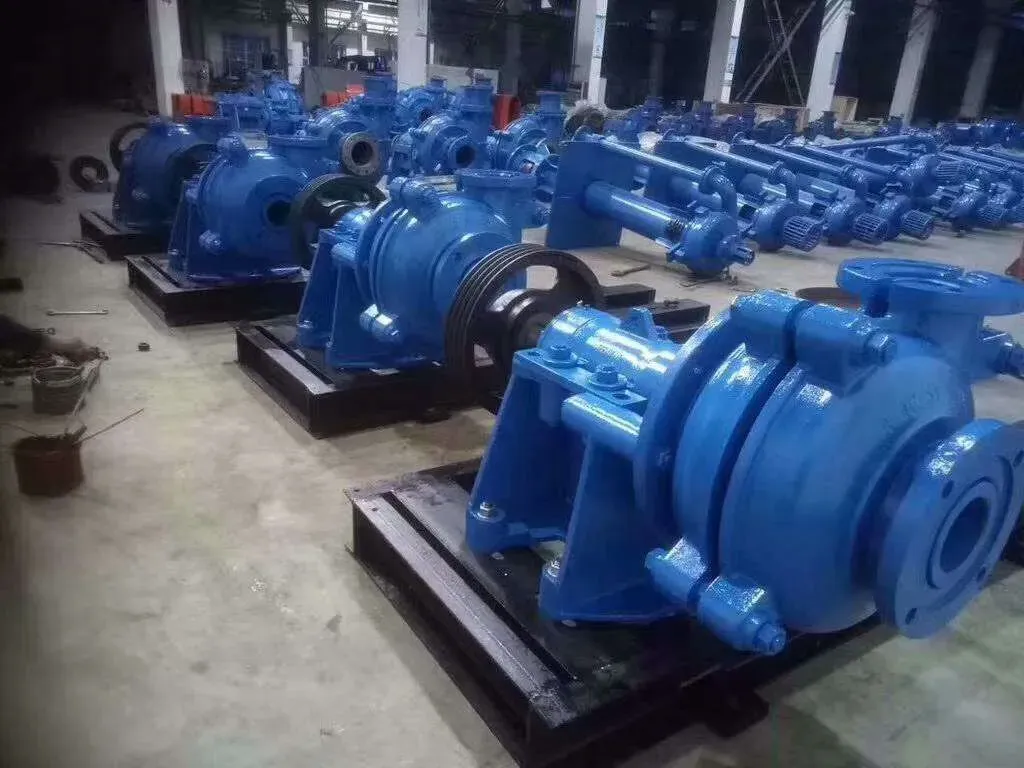
Introduction
Slurry pumps are engineered to efficiently transport abrasive, corrosive, and erosive fluids – collectively known as slurries – commonly encountered in mining, wastewater treatment, chemical processing, and dredging operations. Unlike centrifugal pumps designed for clean liquids, slurry pumps must contend with solids content, ranging from a few percent to over 70% by weight. Their technical position within the industry chain is critical; failure of a slurry pump can halt entire processing lines, leading to significant downtime and financial losses. Core performance metrics include flow rate (typically measured in GPM or m³/hr), head (expressed in feet or meters), solids handling capability (particle size and concentration), and pump longevity, dictated by material selection and wear resistance. The key challenge in slurry pump design revolves around mitigating the detrimental effects of abrasion and erosion on pump components, demanding specialized materials and hydraulic designs.
Material Science & Manufacturing
The materials used in slurry pump construction are paramount to their performance and lifespan. Pump casings are frequently manufactured from high-chrome cast iron (typically 27-30% chromium) due to its exceptional abrasion resistance. However, for highly corrosive slurries, duplex stainless steels (e.g., 2205, 2507) or specialized alloys like Hastelloy are employed, offering superior corrosion resistance but potentially reduced abrasion resistance. Impeller materials mirror casing choices, with the addition of rubber linings or polyurethane coatings for impact resistance. Shaft materials generally consist of alloy steels, often incorporating hardening treatments to resist wear and bending stresses. Seals are critical, and options include mechanical seals with hardened faces (silicon carbide, tungsten carbide) and packed glands.
Manufacturing processes vary depending on pump size and component complexity. Casings are typically produced via sand casting or investment casting, with post-casting heat treatment to relieve stresses and optimize material properties. Impellers are often cast, but can also be forged or fabricated from plate steel for larger sizes. Welding is extensively used, particularly for assembling pump casings and attaching wear plates. Critical welds require rigorous quality control, including non-destructive testing (NDT) such as radiographic inspection and ultrasonic testing to ensure structural integrity. The impeller’s hydraulic profile is crucial; it's often generated through 5-axis CNC machining to ensure precise flow characteristics. Rubber lining application involves bonding rubber to metal surfaces using specialized adhesives and vulcanization processes. Proper surface preparation and adhesive selection are critical for a durable bond. Parameter control during manufacturing includes maintaining precise chemical compositions of alloys, controlling cooling rates during casting, and verifying weld quality according to ASME standards.
Performance & Engineering
Slurry pump performance is fundamentally governed by fluid mechanics and the interplay between solids concentration, particle size, and fluid viscosity. Force analysis centers on impeller forces (centrifugal and pressure), bearing loads, and shaft stresses. Impeller design must account for the increased hydraulic losses associated with solids transport, requiring wider flow passages and optimized blade angles. Cavitation, a common issue in clean liquid pumps, is less prevalent in slurry pumps due to the cushioning effect of the solids. However, abrasive particles can exacerbate wear damage in areas affected by cavitation. Environmental resistance is a key consideration; pumps operating in harsh climates require corrosion-resistant coatings and materials, as well as protection against freezing temperatures.
Compliance requirements vary by region and application. Mining operations often necessitate adherence to MSHA (Mine Safety and Health Administration) standards, while wastewater treatment plants must comply with EPA (Environmental Protection Agency) regulations. ATEX certification is required for pumps operating in potentially explosive atmospheres. Functional implementation includes selecting the appropriate pump type (centrifugal, positive displacement) based on the slurry characteristics and process requirements, and integrating the pump into the overall piping system, including appropriate strainers, filters, and control valves. Proper pump alignment is crucial to minimize bearing wear and vibration. Variable Frequency Drives (VFDs) are frequently employed to control pump speed and flow rate, optimizing energy efficiency and process control.
Technical Specifications
| Parameter | Unit | Typical Range | Testing Standard |
|---|---|---|---|
| Flow Rate | GPM (US) | 50 - 5000 | HI 1.6 |
| Discharge Head | ft | 20 - 300 | HI 1.6 |
| Solids Handling Size | inches | Up to 8 | ASTM D2419 |
| Slurry Concentration (by weight) | % | 5 - 70 | In-house testing |
| Casing Material | - | High Chrome Iron, Duplex SS, Rubber Lined | ASTM A532, ASTM A992 |
| Impeller Material | - | High Chrome Iron, Rubber, Polyurethane | ASTM A532 |
Failure Mode & Maintenance
Slurry pump failures commonly stem from abrasion, erosion, corrosion, and mechanical stress. Abrasion, caused by hard particles impacting surfaces, leads to gradual wear of impellers, casings, and liners. Erosion, resulting from high-velocity fluid flow, preferentially attacks areas with sharp changes in flow direction. Corrosion, particularly in acidic or alkaline slurries, weakens material strength and accelerates wear. Fatigue cracking can occur in shafts and impellers due to cyclic loading. Delamination of rubber linings is another frequent failure mode, caused by bond failure between the rubber and metal substrate. Oxidation of metal components can also contribute to degradation over time.
Preventive maintenance is critical to extending pump life. Regular inspections should focus on wear patterns on impellers and casings, seal leakage, bearing condition, and alignment. Impeller and liner replacement are common maintenance tasks. Lubrication of bearings is crucial, with grease selection based on operating temperature and load. Seal replacement should be performed promptly to prevent catastrophic pump failure. Monitoring pump vibration can provide early warning of mechanical issues. When replacing components, using Original Equipment Manufacturer (OEM) parts is recommended to ensure compatibility and performance. Periodic hydrostatic testing of casings verifies structural integrity. Implementing a robust maintenance schedule based on operating hours and slurry characteristics is paramount. Condition monitoring techniques, such as oil analysis and thermography, can aid in proactive maintenance.
Industry FAQ
Q: What is the primary difference between a centrifugal slurry pump and a positive displacement slurry pump, and when would you choose one over the other?
A: Centrifugal slurry pumps are best suited for high-flow, low-to-medium head applications with relatively low solids concentrations. They are generally more cost-effective and easier to maintain. Positive displacement pumps (e.g., progressing cavity pumps, diaphragm pumps) are ideal for high-viscosity slurries, abrasive slurries with high solids concentrations, and applications requiring precise metering and constant flow regardless of discharge pressure. They handle solids more gently but are generally more expensive and have lower flow rates.
Q: How does the hardness of the slurry affect the selection of pump materials?
A: The hardness of the solids in the slurry directly impacts abrasion rates. For highly abrasive slurries containing hard materials like silica or garnet, high-chrome cast iron is typically the preferred material for casings and impellers due to its exceptional abrasion resistance. For less abrasive slurries, materials like stainless steel or ductile iron may be sufficient. Rubber linings and polyurethane coatings are used to protect components from impact damage in slurries containing larger, less abrasive particles.
Q: What are the key considerations for selecting a mechanical seal for a slurry pump?
A: Mechanical seal selection is critical. The seal faces must be made of hardened materials (silicon carbide, tungsten carbide) to resist abrasion from solids. Double mechanical seals with a barrier fluid are often employed to prevent solids from entering the seal chamber and to provide lubrication and cooling. The seal arrangement (e.g., pusher seal, non-pusher seal) depends on the slurry characteristics and operating pressure. Proper seal flushing is essential to remove abrasive particles and maintain seal integrity.
Q: What are the common causes of reduced pump efficiency in slurry applications, and how can they be addressed?
A: Reduced efficiency is often caused by wear of impellers and casings, leading to increased clearances and recirculation. Build-up of solids in the pump casing and impeller passages also reduces efficiency. Air entrainment in the slurry can also contribute to efficiency losses. Addressing these issues involves regular inspections, cleaning of pump components, impeller and casing replacement when worn, and ensuring proper suction conditions to prevent air entrainment.
Q: How important is proper pump alignment, and what are the consequences of misalignment?
A: Proper pump alignment is paramount. Misalignment causes excessive bearing loads, vibration, and premature failure of bearings, seals, and couplings. It also increases energy consumption. Regular alignment checks using laser alignment tools are recommended. Correcting misalignment involves adjusting the pump baseplate or shimming the motor to achieve proper alignment according to manufacturer’s specifications.
Conclusion
Slurry pumps represent a specialized field within pump technology, demanding a thorough understanding of material science, fluid mechanics, and operational constraints. Successful implementation hinges on selecting the appropriate pump type and materials for the specific slurry characteristics, adhering to rigorous manufacturing standards, and implementing a proactive maintenance program. The longevity and efficiency of slurry pumps are directly tied to the mitigation of abrasive wear, erosive damage, and corrosion, requiring careful consideration of component design and material selection.
Future trends in slurry pump technology include the development of advanced materials with enhanced wear resistance, the integration of predictive maintenance technologies (e.g., sensor-based monitoring, machine learning algorithms), and the optimization of hydraulic designs to minimize energy consumption and maximize solids handling capability. The increasing demand for sustainable and efficient mining and wastewater treatment processes will continue to drive innovation in this critical area of industrial technology.
-
Comprehensive Guide to Waterproof ORings for Optimal Sealing Solutions
News2026-06-09
-
submergable pump Material Science
News2026-06-23
-
sewer injection pump Performance Engineering
News2026-06-23
-
Sewer Ejector Pump System Performance Analysis
News2026-06-23
-
septic tank pump for sale Performance Engineering
News2026-06-23
-
septic pump for sale Performance Engineering
News2026-06-23
-
septic ejector system Performance Analysis
News2026-06-22
-
replace septic pump Performance Analysis
News2026-06-22
-
pump system septic tank Performance Analysis
News2026-06-22
-
lift pump for sewer Performance and Engineering
News2026-06-22
-
industrial submersible water pump Material Science
News2026-06-22
-
industrial submersible pumps Material Science and Manufacturing
News2026-06-21
-
best sewer ejector pump Performance Analysis
News2026-06-21
-
best septic pump Performance Analysis
News2026-06-21
-
1 2 hp septic pump Performance Engineering
News2026-06-21




