English
- Afrikaans
- Albanian
- Amharic
- Arabic
- Armenian
- Azerbaijani
- Basque
- Belarusian
- Bengali
- Bosnian
- Bulgarian
- Catalan
- Cebuano
- Corsican
- Croatian
- Czech
- Danish
- Dutch
- English
- Esperanto
- Estonian
- Finnish
- French
- Frisian
- Galician
- Georgian
- German
- Greek
- Gujarati
- Haitian Creole
- hausa
- hawaiian
- Hebrew
- Hindi
- Miao
- Hungarian
- Icelandic
- igbo
- Indonesian
- irish
- Italian
- Japanese
- Javanese
- Kannada
- kazakh
- Khmer
- Rwandese
- Korean
- Kurdish
- Kyrgyz
- Lao
- Latin
- Latvian
- Lithuanian
- Luxembourgish
- Macedonian
- Malgashi
- Malay
- Malayalam
- Maltese
- Maori
- Marathi
- Mongolian
- Myanmar
- Nepali
- Norwegian
- Norwegian
- Occitan
- Pashto
- Persian
- Polish
- Portuguese
- Punjabi
- Romanian
- Russian
- Samoan
- Scottish Gaelic
- Serbian
- Sesotho
- Shona
- Sindhi
- Sinhala
- Slovak
- Slovenian
- Somali
- Spanish
- Sundanese
- Swahili
- Swedish
- Tagalog
- Tajik
- Tamil
- Tatar
- Telugu
- Thai
- Turkish
- Turkmen
- Ukrainian
- Urdu
- Uighur
- Uzbek
- Vietnamese
- Welsh
- Bantu
- Yiddish
- Yoruba
- Zulu

Telephone: +86 13120555503
Email: frank@cypump.com


Apr . 01, 2024 17:55 Back to list
pumps for slurry application Manufacturing Specifications and Performance Analysis
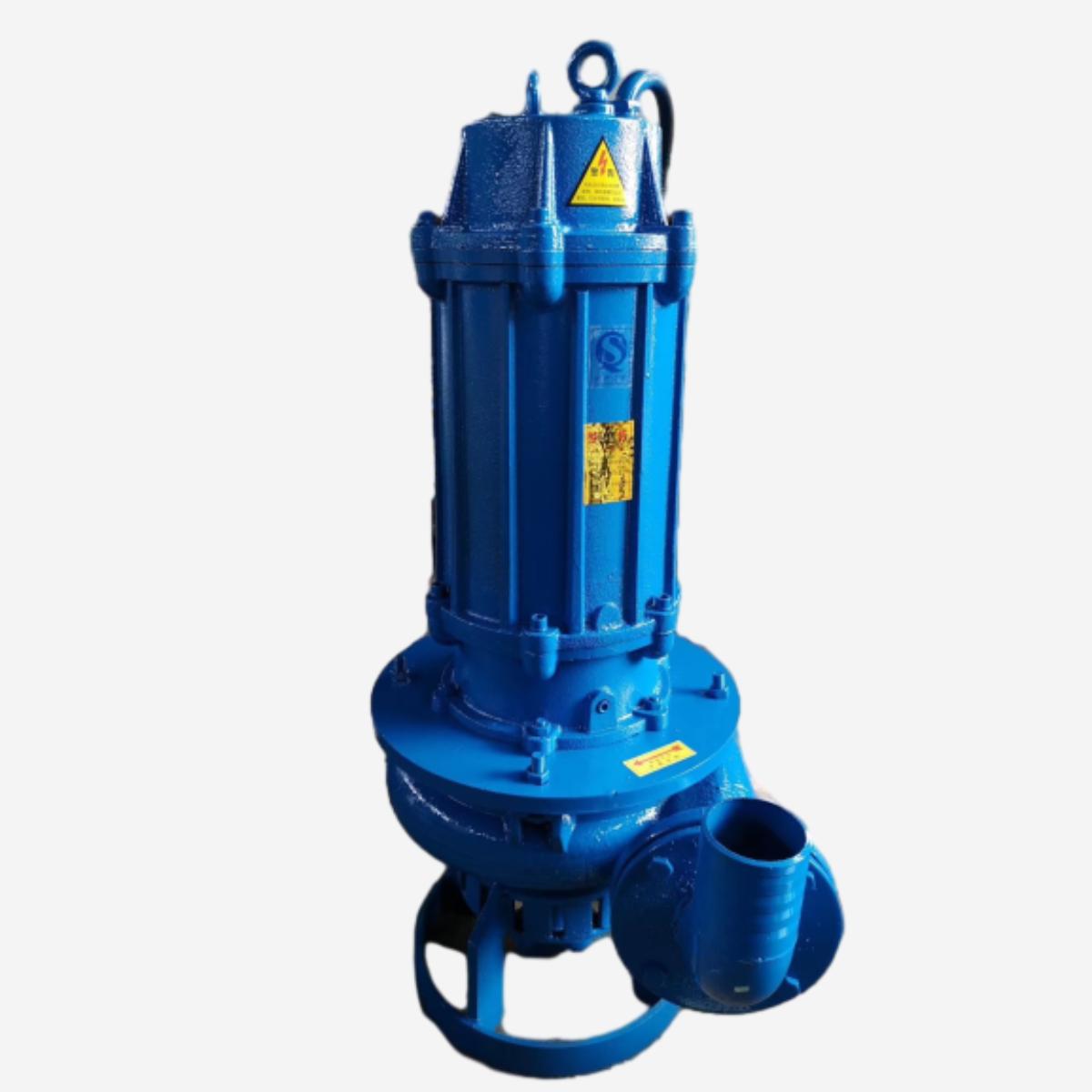
Slurry Pumps: Manufacturing Specifications and Performance Analysis
Slurry pumps are specialized industrial machines engineered to transport fluids containing high concentrations of suspended solid particles, ranging from fine silts to coarse mineral ores. Positioned as critical infrastructure in the mining, dredging, and chemical processing value chains, these pumps must overcome the inherent challenges of abrasive wear, corrosive chemical environments, and high-viscosity fluid dynamics. Unlike standard centrifugal pumps, slurry pumps are designed with heavy-duty casings and specialized impeller geometries to minimize turbulence and maximize the transport of non-Newtonian fluids. The core technical objective is to maintain a critical carrying velocity—the minimum velocity required to keep solids in suspension—while simultaneously mitigating the erosive impact of particle impingement on internal surfaces.
Material Science & Manufacturing
The operational longevity of a slurry pump is primarily determined by the tribological properties of its wetted parts. Material selection focuses on the balance between hardness (to resist abrasion) and toughness (to prevent brittle fracture under impact). High-chrome white irons (ASTM A532) are the industry standard for severe abrasion, utilizing a microstructure of hard chromium carbides embedded in a martensitic matrix. For applications involving both abrasion and corrosion, duplex stainless steels or specialized rubber linings are employed. Rubber linings, typically made of natural rubber or synthetic polymers like polyurethane, operate on the principle of elastic deformation, absorbing the energy of impacting particles rather than resisting them through hardness.
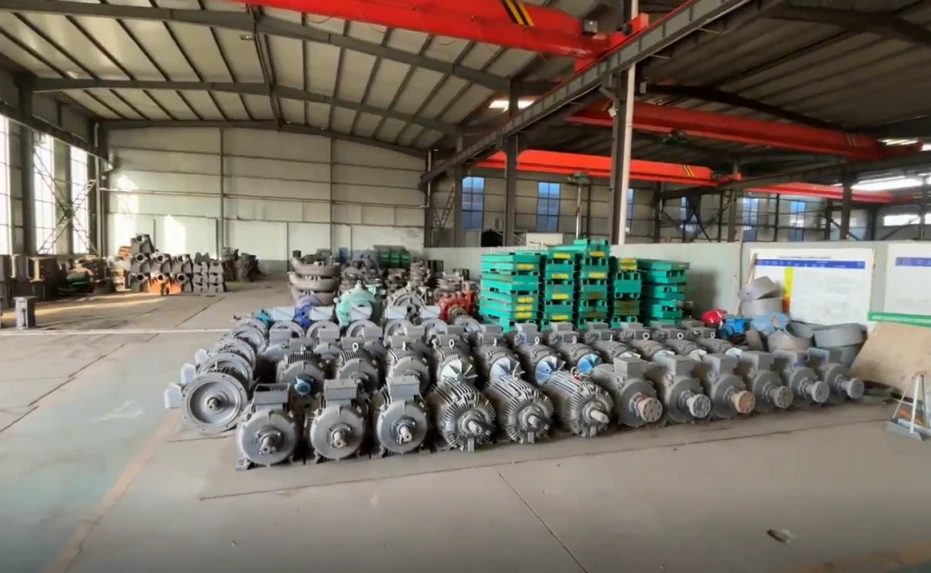
Manufacturing processes involve precision casting and advanced machining. The casting of high-chrome alloys requires strict temperature control during the cooling phase to prevent internal stresses and cracking. Impellers are often dynamically balanced to reduce vibration, which would otherwise accelerate mechanical seal failure. Furthermore, the internal flow paths are precision-machined to eliminate abrupt changes in geometry, as any sudden contraction or expansion in the volute can create localized high-velocity zones, leading to accelerated "wash-out" or cavitation erosion. The assembly process incorporates heavy-duty bearing housings and reinforced shafts to handle the radial loads generated by the asymmetric pressure distribution inherent in slurry pumping.
Performance & Engineering
Engineering a slurry pumping system requires a rigorous analysis of the fluid's rheology. Slurries are often non-Newtonian, meaning their viscosity changes with the shear rate. Engineers must calculate the "Critical Settling Velocity" to ensure that solids do not precipitate and block the pipeline. Force analysis focuses on the Net Positive Suction Head (NPSH) required; since slurries have a higher density than water, they are more prone to cavitation, which can cause catastrophic pitting of the impeller vanes.
Environmental resistance is achieved through the integration of specialized sealing systems. Mechanical seals are often supplemented by an external flush system (API Plan 32 or 54) to prevent abrasive particles from entering the seal faces. From a structural perspective, the pump casing is designed with a thicker wall section (wear allowance) to ensure that the pump remains operational even after significant material loss. Compliance with international hydraulic standards ensures that the pump can handle specific gravity (SG) variations, typically ranging from 1.1 to 1.5 for standard slurries and up to 1.8 for high-density mineral tailings.
Technical Specifications
| Performance Parameter | High-Chrome Alloy Spec | Rubber-Lined Spec | Duplex Steel Spec | Testing Standard |
|---|---|---|---|---|
| Max Particle Size (mm) | Up to 15mm | Up to 8mm | Up to 12mm | ASTM G75/G76 |
| Abrasion Resistance (HRC) | 60 - 65 HRC | Low (Elastic) | 45 - 55 HRC | ISO 6507-1 |
| Fluid Density (SG) | 1.2 - 1.8 | 1.1 - 1.4 | 1.1 - 1.6 | ISO 11855 |
| Corrosion Rate (mm/year) | Moderate | Very Low | Very Low | ASTM G31 |
| Max Operating Pressure (Bar) | 25 - 40 Bar | 10 - 16 Bar | 20 - 30 Bar | EN 1090 |
| Efficiency Range (%) | 65% - 82% | 60% - 75% | 68% - 85% | HI 1.3 |
Failure Mode & Maintenance
The most prevalent failure mode in slurry pumps is abrasive wear, specifically "impeller washout," where high-velocity particles erode the leading edge of the vanes. This leads to a drop in head and flow rate. Another critical failure is "cavitation erosion," occurring when the local pressure drops below the vapor pressure of the liquid, creating bubbles that collapse violently against the metal surface, leaving a characteristic "sponge-like" pitted appearance. Delamination is a common failure in rubber-lined pumps, where the bond between the liner and the cast iron shell fails due to thermal expansion differences or chemical degradation of the adhesive.
Professional maintenance requires a predictive approach. Vibration analysis (accelerometers) is used to detect bearing wear or impeller imbalance before catastrophic failure occurs. For wear management, "wear indicators" or ultrasonic thickness testing are employed to monitor the remaining wall thickness of the volute. Maintenance schedules must include the periodic replacement of sacrificial wear plates and the inspection of the expeller (if equipped) to ensure that the pump can maintain its NPSH requirements. Seals should be inspected for leakage rates; an increase in leakage usually indicates that abrasive fines have breached the primary seal face.
Industry FAQ
Q: How do I choose between a high-chrome alloy and a rubber lining for my slurry pump?
A: The choice depends on the particle size and nature. High-chrome alloys are superior for large, sharp, and hard particles that would puncture or cut rubber. Rubber linings are preferred for fine, sandy particles and applications where chemical corrosion is more prevalent than mechanical abrasion.
Q: What is the impact of slurry concentration on the pump's NPSH requirements?
A: As the concentration of solids increases, the viscosity of the slurry rises, which increases the friction losses in the suction piping. This effectively increases the Net Positive Suction Head Required (NPSHr), making the pump more susceptible to cavitation if the suction head is not adequately increased.
Q: Why is my pump experiencing premature seal failure despite using the correct materials?
A: This is often due to "dry running" or inadequate flushing. In slurry applications, particles can accumulate at the seal face, acting as an abrasive sandpaper. Ensuring an API-compliant flush plan (such as a clean water injection) is essential to keep the seal faces lubricated and clear of solids.
Q: What is the "Critical Carrying Velocity" and why is it vital for pump operation?
A: The critical carrying velocity is the minimum flow speed required to keep solids suspended in the liquid. If the pump operates below this velocity, solids will settle in the pipe or the pump casing, leading to blockages and localized "slugging" which can cause severe mechanical vibration.
Q: How does the specific gravity (SG) of the slurry affect the motor power requirements?
A: Power consumption is directly proportional to the SG of the fluid. A slurry with an SG of 1.4 requires 40% more shaft power than pure water to achieve the same flow and head. Failure to size the motor for the maximum expected SG can lead to frequent motor trips and overheating.
Conclusion
The selection and operation of pumps for slurry applications necessitate a deep integration of fluid mechanics and material science. By balancing the requirements of critical carrying velocity against the destructive forces of abrasion and corrosion, engineers can optimize the lifecycle of the equipment. The transition from standard materials to high-chrome alloys or specialized elastomers is not merely a preference but a technical necessity dictated by the slurry's rheological properties and the operational environment.
Looking forward, the industry is moving toward "smart" slurry pumping, integrating real-time wear sensors and variable frequency drives (VFDs) to maintain optimal flow velocities regardless of slurry density fluctuations. This evolution will reduce unplanned downtime and significantly lower the total cost of ownership by shifting from reactive to predictive maintenance frameworks, ensuring higher efficiency in mineral and chemical processing industries.
-
Comprehensive Guide to Waterproof ORings for Optimal Sealing Solutions
News2026-06-09
-
septic system sump pump Performance Analysis
News2026-06-26
-
septic pump company Performance Analysis
News2026-06-26
-
pumps water treatment Performance Analysis
News2026-06-26
-
pumps for septic tanks Material Science and Manufacturing
News2026-06-26
-
pump for septic system Material Science Manufacturing
News2026-06-26
-
heavy duty submersible pump Performance Analysis
News2026-06-25
-
best submersible pump for septic tank Performance Analysis
News2026-06-25
-
basement sewer ejector pump Performance Analysis
News2026-06-25
-
basement pumps ejector pumps Performance Analysis
News2026-06-25
-
basement lift pump Performance and Engineering
News2026-06-25
-
basement bathroom pump systems Performance Analysis
News2026-06-24
-
basement bathroom ejector pump system Performance Engineering
News2026-06-24
-
2 hp sewage pump Performance Engineering
News2026-06-24
-
1 hp septic pump Performance Engineering
News2026-06-24




