English
- Afrikaans
- Albanian
- Amharic
- Arabic
- Armenian
- Azerbaijani
- Basque
- Belarusian
- Bengali
- Bosnian
- Bulgarian
- Catalan
- Cebuano
- Corsican
- Croatian
- Czech
- Danish
- Dutch
- English
- Esperanto
- Estonian
- Finnish
- French
- Frisian
- Galician
- Georgian
- German
- Greek
- Gujarati
- Haitian Creole
- hausa
- hawaiian
- Hebrew
- Hindi
- Miao
- Hungarian
- Icelandic
- igbo
- Indonesian
- irish
- Italian
- Japanese
- Javanese
- Kannada
- kazakh
- Khmer
- Rwandese
- Korean
- Kurdish
- Kyrgyz
- Lao
- Latin
- Latvian
- Lithuanian
- Luxembourgish
- Macedonian
- Malgashi
- Malay
- Malayalam
- Maltese
- Maori
- Marathi
- Mongolian
- Myanmar
- Nepali
- Norwegian
- Norwegian
- Occitan
- Pashto
- Persian
- Polish
- Portuguese
- Punjabi
- Romanian
- Russian
- Samoan
- Scottish Gaelic
- Serbian
- Sesotho
- Shona
- Sindhi
- Sinhala
- Slovak
- Slovenian
- Somali
- Spanish
- Sundanese
- Swahili
- Swedish
- Tagalog
- Tajik
- Tamil
- Tatar
- Telugu
- Thai
- Turkish
- Turkmen
- Ukrainian
- Urdu
- Uighur
- Uzbek
- Vietnamese
- Welsh
- Bantu
- Yiddish
- Yoruba
- Zulu

Telephone: +86 13120555503
Email: frank@cypump.com


Apr . 01, 2024 17:55 Back to list
pumping slurry Technical Specifications and Fluid Dynamics Analysis
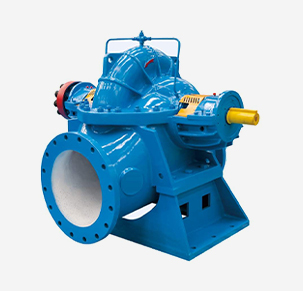
Slurry Pumping Systems: Technical Specifications and Fluid Dynamics Analysis
Slurry pumping refers to the mechanical transport of a non-Newtonian fluid consisting of a liquid carrier (usually water) and suspended solid particles. In the industrial value chain, slurry pumping is a critical enabling process for mineral processing, dredging, wastewater treatment, and chemical manufacturing. The technical complexity of this process lies in the management of the multiphase flow, where the interaction between the solid phase and the liquid phase dictates the energy requirements and the wear rate of the equipment. To achieve operational efficiency, engineers must balance the critical carrying velocity—the minimum speed required to prevent particle sedimentation—against the erosive velocities that accelerate component degradation. The core performance metrics center on volumetric efficiency, solids concentration by weight (Cw), and the mitigation of pressure drops across complex piping geometries.
Material Science & Manufacturing
The selection of materials for slurry pumping components is governed by the synergy between abrasive wear and corrosive attack. In high-concentration slurry applications, the primary failure mechanism is erosive wear, where particles impact the surface at high velocities, removing material via micro-cutting and plastic deformation. To counteract this, high-chromium cast irons (ASTM A532) are frequently employed, utilizing a microstructure of hard M7C3 carbides embedded in a martensitic matrix to provide extreme hardness (up to 650 HB).
For applications involving acidic or alkaline slurries, the industry pivots toward duplex stainless steels or nickel-based alloys, which offer a passive oxide layer to prevent chemical degradation. In the most severe environments, elastomeric linings such as Natural Rubber (NR) or Polyurethane (PU) are utilized. These materials operate on the principle of energy absorption; the elastic deformation of the liner absorbs the kinetic energy of the impacting particles, preventing the underlying metal substrate from sustaining damage. Manufacturing processes for pump impellers involve precision investment casting followed by CNC grinding to ensure dynamic balance and hydraulic efficiency. Key parameter control during the casting phase focuses on the cooling rate to prevent the formation of overly coarse carbides, which can act as initiation sites for stress corrosion cracking.
Performance & Engineering
Engineering a slurry pumping system requires a deep dive into fluid rheology. Slurries are often categorized as Bingham plastics or pseudoplastic fluids, meaning their viscosity changes with the applied shear rate. The total head (H) of the system must account for the static head, friction losses in the piping, and the additional energy required to keep the solids in suspension. The Durand equation is typically employed to determine the critical deposition velocity, ensuring that the flow remains in the turbulent regime to prevent "sanding" or pipe blockage.
Force analysis within the pump focuses on the radial thrust and axial loads exerted on the shaft. Because slurry is denser than water, the centrifugal forces acting on the impeller are significantly higher, necessitating heavy-duty bearings and reinforced shafting. Environmental resistance is managed through the implementation of specialized sealing systems, such as expelled mechanical seals or gland packing with external flushing, to prevent abrasive particles from entering the bearing housing. Compliance with international safety standards requires the integration of pressure relief valves and vibration monitoring sensors to detect cavitation—a phenomenon where vapor bubbles collapse violently, causing pitting on the impeller vanes and significant loss of hydraulic performance.
Technical Specifications
| Material Grade | Hardness (Brinell) | Corrosion Resistance | Max Particle Size (mm) |
|---|---|---|---|
| High Chrome Alloy (27% Cr) | 600 - 650 HB | Moderate | Up to 15 mm |
| Duplex Stainless Steel | 250 - 300 HB | Excellent | Up to 5 mm |
| Natural Rubber Lining | 60 - 80 Shore A | High (Chemical) | Up to 25 mm |
| Hardened Steel (4140) | 350 - 450 HB | Low | Up to 10 mm |
| Ceramic Alumina | 1500 - 2000 HV | Excellent | Up to 2 mm |
| Polyurethane Lining | 90 - 95 Shore A | Moderate | Up to 20 mm |
Failure Mode & Maintenance
The primary failure modes in slurry pumping are abrasive erosion, cavitation-induced pitting, and seal leakage. Abrasive erosion typically manifests as "channeling" in the impeller vanes and casing, where the wall thickness is reduced until structural failure occurs. This is often accelerated by operating the pump below the critical carrying velocity, causing particles to settle and slide along the bottom of the pipe, creating a "sandblasting" effect.
Cavitation occurs when the Net Positive Suction Head available (NPSHa) falls below the Net Positive Suction Head required (NPSHr), leading to the formation of vapor bubbles. When these bubbles migrate to high-pressure zones, they implode, sending micro-jets of liquid into the material surface, causing localized fatigue cracking. Maintenance protocols must include regular ultrasonic thickness testing (UT) of the pump volute and piping elbows to monitor wear rates. Preventive maintenance involves the periodic replacement of sacrificial liners and the calibration of variable frequency drives (VFDs) to optimize flow velocity based on real-time slurry density measurements. For seal failure, the implementation of a "Plan 32" or "Plan 53" seal flush system is recommended to keep the seal faces clean and lubricated.
Industry FAQ
Q: How do we determine the critical velocity to prevent sedimentation in a slurry line?
A: The critical velocity is calculated using the Durand equation, which considers the particle diameter, the density difference between the solid and liquid phases, and the pipe diameter. Operating slightly above this velocity (usually a 10-20% safety margin) ensures that particles remain suspended without inducing excessive erosive wear.
Q: Which is more effective for high-impact slurry: High Chrome Alloy or Rubber Lining?
A: It depends on the particle size and velocity. High Chrome alloys are superior for large, hard particles and high-velocity impacts due to their hardness. Rubber linings are more effective for smaller, finer particles at moderate velocities because they absorb the energy of the impact rather than resisting it through hardness.
Q: What are the signs that a slurry pump is experiencing cavitation?
A: Typical indicators include a characteristic "marbles in the pump" sound, erratic discharge pressure fluctuations, and a noticeable drop in the flow rate. Over time, this results in pitting on the impeller's suction side and increased vibration levels.
Q: How does slurry density affect the power consumption of the pump?
A: Slurry density increases the fluid's specific gravity, which directly increases the brake horsepower (BHP) required to move the fluid. Furthermore, higher concentrations often increase the apparent viscosity, leading to higher friction losses in the piping and necessitating a more powerful motor.
Q: What is the best method for sealing a pump handling highly abrasive slurry?
A: For highly abrasive media, a mechanical seal with a hardened face (such as tungsten carbide) combined with an external clean-water flush is preferred. This creates a pressure barrier that prevents slurry particles from entering the seal gap, significantly extending the Mean Time Between Failures (MTBF).
Conclusion
The technical success of a slurry pumping operation depends on the precise integration of material science, fluid dynamics, and mechanical engineering. By accurately calculating the critical carrying velocity and selecting materials based on the specific synergy of abrasion and corrosion, operators can maximize component longevity and system uptime. The transition from traditional fixed-speed pumping to VFD-controlled systems allows for real-time optimization of flow regimes, reducing energy waste and mitigating premature wear.
Looking forward, the industry is moving toward the integration of IoT-based predictive maintenance, utilizing vibration and acoustic sensors to detect cavitation and liner wear before catastrophic failure occurs. The adoption of advanced composite materials and nano-coatings promises to further increase the resistance of pumping systems to the most aggressive industrial slurries, ensuring higher safety standards and operational efficiency in heavy industrial applications.
-
Comprehensive Guide to Waterproof ORings for Optimal Sealing Solutions
News2026-06-09
-
heavy duty submersible pump Performance Analysis
News2026-06-25
-
best submersible pump for septic tank Performance Analysis
News2026-06-25
-
basement sewer ejector pump Performance Analysis
News2026-06-25
-
basement pumps ejector pumps Performance Analysis
News2026-06-25
-
basement lift pump Performance and Engineering
News2026-06-25
-
basement bathroom pump systems Performance Analysis
News2026-06-24
-
basement bathroom ejector pump system Performance Engineering
News2026-06-24
-
2 hp sewage pump Performance Engineering
News2026-06-24
-
1 hp septic pump Performance Engineering
News2026-06-24
-
submersible effluent pump Performance Analysis
News2026-06-24
-
submergable pump Material Science
News2026-06-23
-
sewer injection pump Performance Engineering
News2026-06-23
-
Sewer Ejector Pump System Performance Analysis
News2026-06-23
-
septic tank pump for sale Performance Engineering
News2026-06-23




