English
- Afrikaans
- Albanian
- Amharic
- Arabic
- Armenian
- Azerbaijani
- Basque
- Belarusian
- Bengali
- Bosnian
- Bulgarian
- Catalan
- Cebuano
- Corsican
- Croatian
- Czech
- Danish
- Dutch
- English
- Esperanto
- Estonian
- Finnish
- French
- Frisian
- Galician
- Georgian
- German
- Greek
- Gujarati
- Haitian Creole
- hausa
- hawaiian
- Hebrew
- Hindi
- Miao
- Hungarian
- Icelandic
- igbo
- Indonesian
- irish
- Italian
- Japanese
- Javanese
- Kannada
- kazakh
- Khmer
- Rwandese
- Korean
- Kurdish
- Kyrgyz
- Lao
- Latin
- Latvian
- Lithuanian
- Luxembourgish
- Macedonian
- Malgashi
- Malay
- Malayalam
- Maltese
- Maori
- Marathi
- Mongolian
- Myanmar
- Nepali
- Norwegian
- Norwegian
- Occitan
- Pashto
- Persian
- Polish
- Portuguese
- Punjabi
- Romanian
- Russian
- Samoan
- Scottish Gaelic
- Serbian
- Sesotho
- Shona
- Sindhi
- Sinhala
- Slovak
- Slovenian
- Somali
- Spanish
- Sundanese
- Swahili
- Swedish
- Tagalog
- Tajik
- Tamil
- Tatar
- Telugu
- Thai
- Turkish
- Turkmen
- Ukrainian
- Urdu
- Uighur
- Uzbek
- Vietnamese
- Welsh
- Bantu
- Yiddish
- Yoruba
- Zulu

Telephone: +86 13120555503
Email: frank@cypump.com


Apr . 01, 2024 17:55 Back to list
pumping sand slurry Technical Performance and Fluid Dynamics Analysis
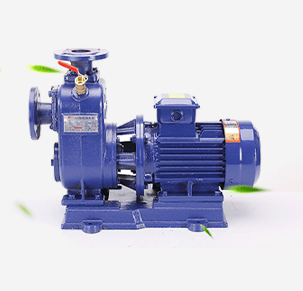
Sand Slurry Pumping Systems: Technical Performance and Fluid Dynamics Analysis
Sand slurry pumping refers to the mechanical transport of a heterogeneous mixture consisting of solid mineral particles (primarily silica sand) suspended in a liquid carrier, typically water. Within the industrial value chain, this process is critical for dredging, mineral processing, hydraulic fracturing (proppant transport), and land reclamation. The technical challenge lies in managing a non-Newtonian fluid that exhibits abrasive wear, sedimentation risks, and significant pressure drops. To ensure system stability, engineers must balance the critical carrying velocity—the minimum speed required to prevent particles from settling—against the exponential increase in pipe wall erosion that occurs at higher velocities. This guide provides a comprehensive analysis of the material science, engineering parameters, and failure modes associated with high-concentration sand slurry transport.
Material Science & Manufacturing
The extreme abrasiveness of silica sand requires a sophisticated approach to material selection for pump impellers, casings, and pipeline conduits. The primary failure mechanism in these systems is abrasive wear, where hard sand particles carve into the substrate through micro-cutting and plastic deformation. To counteract this, high-chromium cast irons ( ASTM A532) are standard for pump internals, utilizing a martensitic matrix embedded with primary M7C3 carbides to provide high hardness (typically >600 HB). In high-velocity zones, tungsten carbide (WC) coatings or ceramics like alumina (Al2O3) are applied via thermal spraying or sintering to create a sacrificial or ultra-hard barrier.
From a manufacturing perspective, the production of slurry pumps involves precision casting followed by rigorous heat treatment. Quenching and tempering are calibrated to optimize the balance between hardness and fracture toughness, preventing the brittle failure of the impeller under hydraulic shock. For pipelines, High-Density Polyethylene (HDPE) or polyurethane-lined steel is employed. The lining material must possess a high resilience coefficient; unlike hard metals that resist wear through hardness, elastomers resist wear by absorbing the impact of the sand particle and "springing back," thereby displacing the abrasive agent without material loss. The manufacturing of these liners involves specialized extrusion processes to ensure a seamless, void-free bond between the elastomer and the steel substrate, preventing delamination under high-pressure fluctuations.
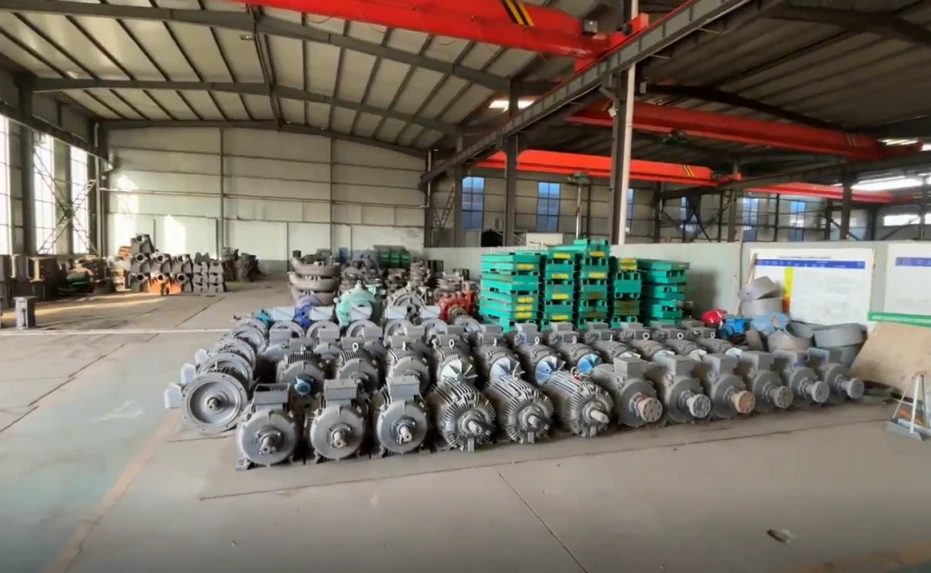
Performance & Engineering
Engineering a sand slurry system requires a rigorous analysis of the slurry's rheological properties. The most critical parameter is the "Critical Velocity" (Vc), calculated using the Durand equation or modified Equal-Settling models. If the flow velocity drops below Vc, sand particles settle at the bottom of the pipe, leading to "slugging" or complete pipeline blockage. Conversely, exceeding the maximum permissible velocity leads to an exponential increase in wall thinning, as the wear rate is generally proportional to the cube of the velocity (v³).
Force analysis must account for the increased density of the slurry compared to pure water. The specific gravity of the mixture (ρm) is calculated based on the volume concentration of solids (Cv). This increased density directly impacts the Net Positive Suction Head Required (NPSHr) and the power requirements of the prime mover. To mitigate cavitation, pumps are often positioned below the slurry source to utilize static head. Furthermore, the transition from laminar to turbulent flow must be carefully managed; while turbulence helps keep particles in suspension, excessive turbulence near the pipe walls accelerates erosive wear. Engineering solutions include the use of long-radius bends to minimize centrifugal impact and the implementation of Variable Frequency Drives (VFDs) to maintain a constant concentration regardless of flow fluctuations.
Technical Specifications
| Performance Parameter | Low Concentration (<10% Vol) | Medium Concentration (10-25% Vol) | High Concentration (>25% Vol) | Engineering Unit |
|---|---|---|---|---|
| Critical Carrying Velocity | 1.2 - 2.1 | 2.2 - 3.5 | 3.6 - 5.0 | m/s |
| Dynamic Viscosity Increase | 1.1x - 1.3x | 1.5x - 2.5x | 3.0x - 8.0x | Relative to Water |
| Pipeline Wear Rate | Low | Moderate | Severe | mm/1000 hrs |
| Pump Impeller Material | High Chrome Iron | CD4MCu / Duplex | Tungsten Carbide Lined | Material Spec |
| Specific Gravity (ρm) | 1.05 - 1.15 | 1.20 - 1.40 | 1.45 - 1.80 | g/cm³ |
| Recommended Liner | HDPE / Epoxy | Polyurethane | Ceramic / Rubber | Lining Type |
Failure Mode & Maintenance
The primary failure modes in sand slurry pumping systems are categorized into abrasive erosion, corrosive wear, and mechanical fatigue. Abrasive erosion typically manifests as "grooving" or "channeling" in the pump casing and elbows, where the slurry flow carves a path of least resistance, eventually breaching the wall. This is exacerbated by "impingement attack" at bends, where the centrifugal force drives sand particles into the outer wall of the pipe.
Another critical failure is the "plugging" of the line, caused by a sudden drop in flow velocity or an increase in solids concentration beyond the pump's capacity. This leads to a rapid increase in discharge pressure and potential pipe bursting. To maintain system integrity, a predictive maintenance schedule is mandatory. This includes ultrasonic thickness testing (UT) of elbows and high-wear zones to monitor wall thinning. For pumps, the wear ring clearance must be measured periodically; excessive clearance allows internal recirculation, reducing hydraulic efficiency and increasing turbulence. Maintenance solutions involve the installation of replaceable wear plates and the use of "flush water" systems to prevent solids from accumulating in the mechanical seals and bearings, which would otherwise lead to premature shaft failure via frictional overheating.
Industry FAQ
Q: How do we determine the optimal flow velocity to prevent settling without accelerating wear?
A: The optimal velocity is typically set at 1.2 to 1.5 times the critical settling velocity (Vc). We use the Durand equation, incorporating the particle size distribution (d50) and slurry density. By maintaining this safety margin, we ensure particles remain suspended while avoiding the exponential wear curve associated with velocities exceeding 4-5 m/s.
Q: Why is the pump experiencing cavitation despite having a sufficient static head?
A: In sand slurry, the "effective" NPSH is reduced because the solids increase the fluid's viscosity and change the vapor pressure dynamics. Furthermore, if the suction line is partially blocked by sand accumulation, the local pressure drops significantly. We recommend checking the suction strainer and ensuring the velocity in the suction line is kept low to minimize friction losses.
Q: Which is more effective for high-velocity sand transport: Hard Metal or Elastomeric linings?
A: It depends on the particle size. For fine sand at high velocities, elastomeric linings (like polyurethane) are superior because they deform and absorb the energy of the impact. For coarse, angular sand or gravel, hard metals or ceramics are required because elastomers would be "cut" or torn by the sharp edges of the material.
Q: How does the concentration of solids affect the power consumption of the pump?
A: Power consumption increases linearly with the density of the slurry but exponentially with the viscosity. As the volume concentration (Cv) increases, the mixture exhibits non-Newtonian behavior, requiring significantly more torque to initiate flow and maintain the carrying velocity, often requiring a pump motor with a 20-30% power reserve.
Q: What is the most common cause of seal failure in slurry pumps?
A: The primary cause is the ingress of sand particles into the seal face. This acts as an abrasive grinding paste, rapidly wearing down the seal faces. The professional solution is to implement an external seal-flush system (API Plan 32 or 54) that maintains a positive pressure barrier of clean water, preventing slurry from entering the seal chamber.
Conclusion
The technical successful implementation of sand slurry pumping systems relies on a precise equilibrium between fluid dynamics and material science. By accurately calculating the critical carrying velocity and selecting materials based on the specific abrasive characteristics of the sand, operators can maximize system uptime and minimize the lifecycle cost of the infrastructure. The transition from empirical "trial-and-error" methods to rigorous engineering analysis—focusing on rheology and wear kinetics—is essential for industrial scalability.
Looking forward, the integration of real-time slurry density monitoring and AI-driven VFD control will allow for "dynamic optimization," where flow rates adjust automatically to the solids concentration. This will not only reduce energy consumption but also extend the lifespan of wear-prone components, moving the industry toward a more sustainable and predictable maintenance paradigm.
-
Comprehensive Guide to Waterproof ORings for Optimal Sealing Solutions
News2026-06-09
-
heavy duty submersible pump Performance Analysis
News2026-06-25
-
best submersible pump for septic tank Performance Analysis
News2026-06-25
-
basement sewer ejector pump Performance Analysis
News2026-06-25
-
basement pumps ejector pumps Performance Analysis
News2026-06-25
-
basement lift pump Performance and Engineering
News2026-06-25
-
basement bathroom pump systems Performance Analysis
News2026-06-24
-
basement bathroom ejector pump system Performance Engineering
News2026-06-24
-
2 hp sewage pump Performance Engineering
News2026-06-24
-
1 hp septic pump Performance Engineering
News2026-06-24
-
submersible effluent pump Performance Analysis
News2026-06-24
-
submergable pump Material Science
News2026-06-23
-
sewer injection pump Performance Engineering
News2026-06-23
-
Sewer Ejector Pump System Performance Analysis
News2026-06-23
-
septic tank pump for sale Performance Engineering
News2026-06-23




