English
- Afrikaans
- Albanian
- Amharic
- Arabic
- Armenian
- Azerbaijani
- Basque
- Belarusian
- Bengali
- Bosnian
- Bulgarian
- Catalan
- Cebuano
- Corsican
- Croatian
- Czech
- Danish
- Dutch
- English
- Esperanto
- Estonian
- Finnish
- French
- Frisian
- Galician
- Georgian
- German
- Greek
- Gujarati
- Haitian Creole
- hausa
- hawaiian
- Hebrew
- Hindi
- Miao
- Hungarian
- Icelandic
- igbo
- Indonesian
- irish
- Italian
- Japanese
- Javanese
- Kannada
- kazakh
- Khmer
- Rwandese
- Korean
- Kurdish
- Kyrgyz
- Lao
- Latin
- Latvian
- Lithuanian
- Luxembourgish
- Macedonian
- Malgashi
- Malay
- Malayalam
- Maltese
- Maori
- Marathi
- Mongolian
- Myanmar
- Nepali
- Norwegian
- Norwegian
- Occitan
- Pashto
- Persian
- Polish
- Portuguese
- Punjabi
- Romanian
- Russian
- Samoan
- Scottish Gaelic
- Serbian
- Sesotho
- Shona
- Sindhi
- Sinhala
- Slovak
- Slovenian
- Somali
- Spanish
- Sundanese
- Swahili
- Swedish
- Tagalog
- Tajik
- Tamil
- Tatar
- Telugu
- Thai
- Turkish
- Turkmen
- Ukrainian
- Urdu
- Uighur
- Uzbek
- Vietnamese
- Welsh
- Bantu
- Yiddish
- Yoruba
- Zulu

Telephone: +86 13120555503
Email: frank@cypump.com


Apr . 01, 2024 17:55 Back to list
pumping bentonite slurry Fluid Dynamics and System Engineering
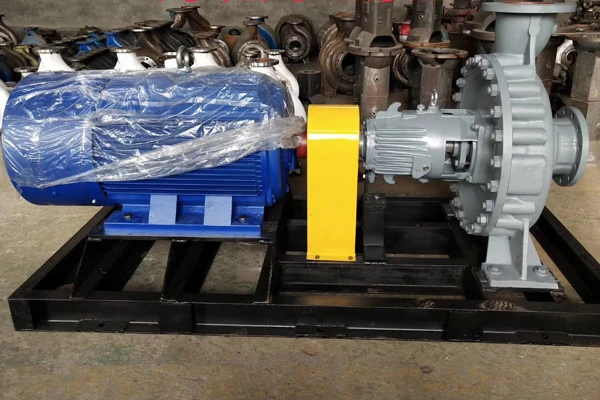
Bentonite Slurry Pumping: Fluid Dynamics and System Engineering
Pumping bentonite slurry is a critical operation in civil engineering, tunneling (TBM), and oil well drilling, serving as the primary mechanism for borehole stabilization, lubrication, and cuttings transport. Bentonite, a smectite clay rich in montmorillonite, exhibits complex non-Newtonian behavior, specifically thixotropy and pseudoplasticity. The technical challenge of pumping this medium lies in its high yield stress and the tendency for viscosity to fluctuate based on shear rates and chemical composition. In the industrial chain, the pumping system acts as the circulatory system of the excavation process; any failure in pressure regulation or flow velocity can lead to catastrophic borehole collapse or equipment seizure. This guide analyzes the intersection of rheology, mechanical engineering, and material science to optimize the transport of high-density bentonite suspensions.
Material Science & Manufacturing
The efficiency of pumping bentonite slurry is fundamentally determined by the physicochemical properties of the montmorillonite particles. These particles are characterized by a layered silicate structure where water molecules are adsorbed between layers, causing the clay to swell. This swelling creates a colloidal suspension that provides the necessary hydrostatic pressure to counteract earth and water pressure in an open borehole.
Rheological Characterization: Bentonite slurry is classified as a Bingham plastic or a Herschel-Bulkley fluid. The yield point (YP) is the minimum stress required to initiate flow, while the plastic viscosity (PV) represents the resistance to flow once the yield point is exceeded. Manufacturing the slurry requires precise control over the water-to-bentonite ratio—typically ranging from 3% to 8% by weight—and the addition of chemical additives such as polymers (PAC or CMC) to control fluid loss and enhance stability in saline environments.
Pump Component Manufacturing: Due to the highly abrasive nature of bentonite particles, the manufacturing of pumps (typically centrifugal, piston, or screw pumps) requires specialized metallurgy. Impellers and casings are often cast from high-chromium white iron or coated with tungsten carbide to resist erosive wear. The mechanical seals must be designed to withstand "slurry ingress," utilizing silicon carbide or zirconia faces to prevent premature leakage caused by the micro-abrasive particles embedded in the fluid.
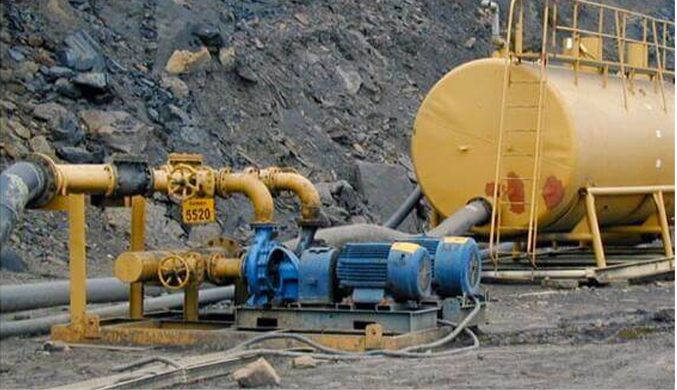
Performance & Engineering
Engineering a bentonite pumping system requires a rigorous force analysis to overcome the frictional pressure losses associated with non-Newtonian flow. Unlike water, the pressure drop in a bentonite slurry pipeline is not linear; it depends heavily on the shear rate at the pipe wall.
Flow Velocity and Turbulence: To prevent the sedimentation of heavier particles (sand and cuttings), the pumping velocity must be maintained above the critical transport velocity. However, excessive velocity leads to exponential increases in friction loss and accelerated pipe erosion. Engineers must calculate the Reynolds number for non-Newtonian fluids to ensure the system operates in the optimal transition zone between laminar and turbulent flow.
Environmental Resistance and Stability: The slurry's performance is highly sensitive to pH levels and ion concentration. For instance, the introduction of calcium ions (Ca2+) can cause "flocculation," where the clay particles clump together, drastically increasing the yield point and potentially clogging the pump. Engineering solutions involve the use of pre-treatment tanks and chemical buffers to maintain a stable pH between 8.5 and 10.0, ensuring the slurry remains dispersed and pumpable over long distances.
Hydraulic Pressure Management: In deep-hole applications, the pumping system must generate sufficient head to overcome the gravity of the dense slurry (typically 1.05 to 1.20 g/cm³) while maintaining a constant flow rate to prevent "slugging" or air entrapment, which can lead to pump cavitation and mechanical vibration.
Technical Specifications
| Parameter Metric | Standard Slurry (3-5%) | High-Density Slurry (6-10%) | Polymer-Modified Slurry | Testing Standard |
|---|---|---|---|---|
| Plastic Viscosity (cP) | 15 - 25 | 30 - 60 | 20 - 40 | ASTM D2843 |
| Yield Point (lb/100ft²) | 10 - 20 | 25 - 50 | 15 - 30 | API RP 13B-1 |
| Fluid Loss (ml/30min) | 15 - 25 | 10 - 15 | < 5 | API Spec 13A |
| Specific Gravity | 1.03 - 1.07 | 1.08 - 1.15 | 1.04 - 1.10 | ISO 10414 |
| Critical Velocity (m/s) | 1.2 - 1.5 | 1.8 - 2.2 | 1.4 - 1.7 | Internal Engineering |
| pH Value | 8.0 - 9.5 | 8.0 - 9.5 | 9.0 - 10.5 | ISO 10523 |
Failure Mode & Maintenance
The failure modes of bentonite pumping systems are primarily linked to the abrasive and thixotropic nature of the fluid. Understanding these failure mechanisms is essential for maintaining system uptime.
1. Abrasive Erosion: The constant impingement of bentonite and rock cuttings on pipe elbows and pump impellers leads to wall thinning. This is identified through ultrasonic thickness testing. Maintenance involves replacing standard carbon steel pipes with HDPE (High-Density Polyethylene) or ceramic-lined steel in high-turbulence zones.
2. Gelation and Pipe Blockage: Due to thixotropy, bentonite slurry forms a gel structure when static. If the pump is shut down for an extended period, the "gel strength" may exceed the pump's starting pressure, causing a "dead-head" scenario. The professional solution is to implement a flushing cycle using clean water or a low-viscosity brine immediately following any operational halt.
3. Mechanical Seal Failure: Bentonite particles can act as a grinding paste between the seal faces. Failure is indicated by a gradual increase in leakage at the pump shaft. Preventative maintenance requires the installation of an external seal-flush system (Plan 32 or Plan 54) to keep the seal faces clean and lubricated.
4. Pump Cavitation: High-viscosity slurry increases the Net Positive Suction Head (NPSH) required. If the suction line is undersized or the slurry is too thick, cavitation occurs, leading to pitting on the impeller. Maintenance involves optimizing the suction pipe diameter and utilizing vacuum-assisted priming pumps.
Industry FAQ
Q: Why does the pump pressure spike suddenly when restarting after a break?
A: This is caused by the thixotropic nature of bentonite. When stationary, the slurry develops a gel structure (yield stress). The pump must exert a "break-out pressure" higher than the operating pressure to break this gel and initiate flow. To mitigate this, always flush the lines or use a variable frequency drive (VFD) to ramp up pressure gradually.
Q: How do we determine if the pump is oversized or undersized for a specific slurry density?
A: Analysis depends on the Total Dynamic Head (TDH) and the required flow rate. For higher densities, the friction loss increases non-linearly. If the motor is drawing maximum current but the flow rate is below the critical transport velocity, the pump is undersized or the viscosity is too high for the current impeller geometry.
Q: Can centrifugal pumps be used for high-concentration bentonite, or are positive displacement pumps mandatory?
A: Centrifugal pumps are efficient for low-to-medium viscosity slurry and high flow rates, but they suffer from efficiency drops (derating) as viscosity increases. For high-concentration slurry (>8%) or high-pressure requirements, positive displacement pumps (e.g., piston or progressive cavity pumps) are mandatory to ensure a constant volume flow regardless of pressure changes.
Q: What is the impact of saltwater contamination on the pumping process?
A: Saltwater introduces cations (Na+, Ca+, Mg++) that collapse the electrical double layer of the bentonite particles, leading to flocculation and a loss of viscosity. This reduces the slurry's ability to carry cuttings, potentially leading to pump clogging due to settled solids. We recommend using salt-stable bentonite or adding pre-hydrated polymers.
Q: How often should the wear plates in the pumping system be inspected?
A: In high-abrasion environments, a bi-weekly inspection of the pump volute and discharge elbows is recommended. If the wall thickness has decreased by more than 20% of the original specification, replacement is required to avoid catastrophic burst failure under pressure.
Conclusion
The successful pumping of bentonite slurry is a balancing act between rheological control and mechanical resilience. By integrating a deep understanding of the non-Newtonian behavior of montmorillonite with advanced materials science—specifically in the selection of erosion-resistant alloys and optimized hydraulic designs—operators can minimize downtime and maximize borehole stability. The technical synergy between the slurry's chemical composition and the pump's mechanical specifications is the only way to ensure consistent performance in challenging geological conditions.
Looking forward, the industry is moving toward "smart pumping" systems that utilize real-time viscometers and automated dosing units to adjust slurry properties on the fly. This transition from empirical "rule-of-thumb" pumping to data-driven fluid management will significantly reduce material waste and enhance the safety and efficiency of deep-earth engineering projects globally.
-
Comprehensive Guide to Waterproof ORings for Optimal Sealing Solutions
News2026-06-09
-
heavy duty submersible pump Performance Analysis
News2026-06-25
-
best submersible pump for septic tank Performance Analysis
News2026-06-25
-
basement sewer ejector pump Performance Analysis
News2026-06-25
-
basement pumps ejector pumps Performance Analysis
News2026-06-25
-
basement lift pump Performance and Engineering
News2026-06-25
-
basement bathroom pump systems Performance Analysis
News2026-06-24
-
basement bathroom ejector pump system Performance Engineering
News2026-06-24
-
2 hp sewage pump Performance Engineering
News2026-06-24
-
1 hp septic pump Performance Engineering
News2026-06-24
-
submersible effluent pump Performance Analysis
News2026-06-24
-
submergable pump Material Science
News2026-06-23
-
sewer injection pump Performance Engineering
News2026-06-23
-
Sewer Ejector Pump System Performance Analysis
News2026-06-23
-
septic tank pump for sale Performance Engineering
News2026-06-23




