English
- Afrikaans
- Albanian
- Amharic
- Arabic
- Armenian
- Azerbaijani
- Basque
- Belarusian
- Bengali
- Bosnian
- Bulgarian
- Catalan
- Cebuano
- Corsican
- Croatian
- Czech
- Danish
- Dutch
- English
- Esperanto
- Estonian
- Finnish
- French
- Frisian
- Galician
- Georgian
- German
- Greek
- Gujarati
- Haitian Creole
- hausa
- hawaiian
- Hebrew
- Hindi
- Miao
- Hungarian
- Icelandic
- igbo
- Indonesian
- irish
- Italian
- Japanese
- Javanese
- Kannada
- kazakh
- Khmer
- Rwandese
- Korean
- Kurdish
- Kyrgyz
- Lao
- Latin
- Latvian
- Lithuanian
- Luxembourgish
- Macedonian
- Malgashi
- Malay
- Malayalam
- Maltese
- Maori
- Marathi
- Mongolian
- Myanmar
- Nepali
- Norwegian
- Norwegian
- Occitan
- Pashto
- Persian
- Polish
- Portuguese
- Punjabi
- Romanian
- Russian
- Samoan
- Scottish Gaelic
- Serbian
- Sesotho
- Shona
- Sindhi
- Sinhala
- Slovak
- Slovenian
- Somali
- Spanish
- Sundanese
- Swahili
- Swedish
- Tagalog
- Tajik
- Tamil
- Tatar
- Telugu
- Thai
- Turkish
- Turkmen
- Ukrainian
- Urdu
- Uighur
- Uzbek
- Vietnamese
- Welsh
- Bantu
- Yiddish
- Yoruba
- Zulu

Telephone: +86 13120555503
Email: frank@cypump.com


Apr . 01, 2024 17:55 Back to list
Pump Service Performance Engineering
Introduction
Pump service encompasses the comprehensive set of activities required to maintain the operational integrity and efficiency of pumping systems. Within the broader industrial landscape, pump service occupies a critical position, impacting sectors ranging from oil and gas to water treatment, chemical processing, and power generation. Pumps are essential for fluid transfer, pressure boosting, and process control; therefore, their reliable operation is paramount. This guide will detail the material science, manufacturing considerations, performance engineering, failure modes, and maintenance protocols associated with industrial pump systems. Core performance indicators include flow rate, head pressure, efficiency, and Net Positive Suction Head (NPSH) requirements. The industry’s primary pain points revolve around pump cavitation, seal failures, bearing degradation, and the impact of abrasive or corrosive fluids on pump component lifespan. Effective pump service seeks to mitigate these issues, minimizing downtime and maximizing return on investment.
Material Science & Manufacturing
Pump components are constructed from a diverse range of materials, selected based on the specific fluid being handled, operating pressure, temperature, and corrosive environment. Common materials include cast iron (ASTM A48), stainless steels (304, 316 – ASTM A240), duplex stainless steels, alloy steels (ASTM A351), and various polymers (e.g., PTFE, Viton) for seals and elastomers. Cast iron, while cost-effective, is susceptible to corrosion and erosion. Stainless steels offer superior corrosion resistance but can be prone to pitting corrosion in chloride-rich environments. Duplex stainless steels provide enhanced strength and corrosion resistance. Manufacturing processes vary depending on component type. Pump casings are frequently produced through sand casting, investment casting, or centrifugal casting. Impellers are often manufactured via investment casting or machining from solid billets. Shafts are typically forged and then machined to precise tolerances. Welding processes, such as Shielded Metal Arc Welding (SMAW) and Gas Tungsten Arc Welding (GTAW) are crucial for joining pump components. Key parameter control during manufacturing includes dimensional accuracy (achieved through CNC machining), heat treatment for hardening and tempering of steel components (ensuring proper hardness and ductility), and non-destructive testing (NDT) methods like radiographic inspection (RT) and ultrasonic testing (UT) to detect internal flaws. Seal faces require lapping to achieve extremely flat surfaces, ensuring proper sealing. Polymer seals are typically injection molded, with careful control of mold temperature and injection pressure to achieve the desired mechanical properties.
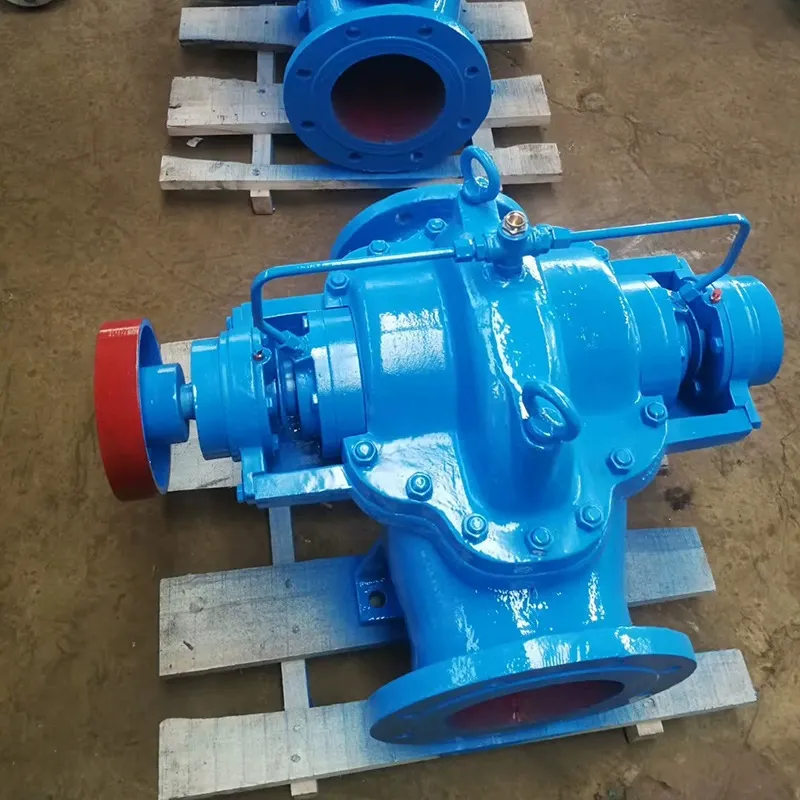
Performance & Engineering
Pump performance is fundamentally governed by fluid mechanics principles. Force analysis involves calculating hydraulic forces acting on the impeller, shaft loads, and bearing loads. Environmental resistance considerations include thermal expansion/contraction, exposure to UV radiation (for polymer components), and resistance to chemical attack. Compliance requirements vary by industry and region; examples include API 610 (Centrifugal Pumps), ANSI/ASME B73.1 (Power Gas Compressors and Steam Turbines – relevant for pump drivers), and hydraulic efficiency standards. Functional implementation details depend on pump type. Centrifugal pumps rely on converting rotational kinetic energy to hydrodynamic energy. Positive displacement pumps (e.g., gear pumps, diaphragm pumps) deliver a fixed volume of fluid per revolution. Pump selection hinges on achieving the required flow rate and head pressure for the specific application, while minimizing energy consumption and maintaining adequate NPSH. Cavitation, a significant concern, occurs when the absolute pressure at the pump suction drops below the vapor pressure of the fluid, forming vapor bubbles that collapse violently, causing damage to the impeller and casing. Proper suction piping design and NPSH calculations are vital to prevent cavitation. Bearing lubrication and alignment are critical for minimizing vibration and extending bearing life. Vibration analysis can detect early signs of bearing failure or misalignment.
Technical Specifications
| Pump Type | Flow Rate (GPM) | Head Pressure (ft) | Maximum Operating Temperature (°F) |
|---|---|---|---|
| Centrifugal | 50-5000 | 20-500 | 250 |
| Positive Displacement (Gear) | 1-250 | Up to 1000 | 200 |
| Diaphragm | 0.5-100 | Up to 150 | 180 |
| Vertical Turbine | 100-10000 | 50-800 | 300 |
| Submersible | 25-2000 | 30-300 | 220 |
| Self-Priming Centrifugal | 20-300 | 20-150 | 200 |
Failure Mode & Maintenance
Pump failures manifest in diverse ways. Fatigue cracking in pump casings or impellers can occur due to cyclical stress, exacerbated by corrosion or high temperatures. Delamination of polymer seals is common due to thermal cycling or chemical attack. Degradation of elastomers leads to leakage. Oxidation of metallic components results in surface corrosion and loss of material. Cavitation erosion rapidly deteriorates impeller surfaces. Bearing failures arise from inadequate lubrication, misalignment, or contamination. Maintenance solutions include preventative maintenance schedules encompassing routine inspections, lubrication, seal replacements, and vibration analysis. Predictive maintenance utilizes sensor data (e.g., temperature, vibration, pressure) to identify potential failures before they occur. Corrective maintenance involves repairing or replacing failed components. Root Cause Failure Analysis (RCFA) is essential for determining the underlying causes of failures and implementing corrective actions to prevent recurrence. Seal flush plans are critical for preventing seal failures in harsh applications. Regular monitoring of pump performance parameters (flow rate, pressure, power consumption) provides valuable insights into pump health. Proper storage of spare parts is essential to minimize downtime.
Industry FAQ
Q: What are the primary causes of pump cavitation and how can it be prevented?
A: Pump cavitation occurs when the absolute pressure at the pump suction drops below the vapor pressure of the fluid, leading to vapor bubble formation and subsequent collapse. Primary causes include insufficient NPSH available, excessive suction lift, blocked suction piping, and operating the pump outside its designed flow range. Prevention strategies include ensuring adequate NPSH, minimizing suction lift, maintaining clear suction piping, optimizing pump speed, and proper system design.
Q: How do different seal materials perform in various chemical environments?
A: Seal material performance is highly dependent on the chemical being handled. Viton (fluoroelastomer) offers broad chemical resistance, but is not suitable for ketones or strong bases. PTFE (Teflon) provides excellent resistance to nearly all chemicals, but has limited mechanical strength. EPDM (ethylene propylene diene monomer) is well-suited for water and steam applications. Selecting the correct seal material requires careful consideration of the fluid’s chemical composition, concentration, temperature, and pressure.
Q: What are the advantages and disadvantages of different bearing lubrication methods?
A: Common bearing lubrication methods include grease lubrication and oil lubrication. Grease lubrication is simpler and requires less maintenance, but has a lower cooling capacity and limited ability to remove contaminants. Oil lubrication provides superior cooling and contaminant removal, but requires a more complex lubrication system and regular oil analysis. The choice depends on pump speed, load, and operating temperature.
Q: How does vibration analysis aid in predictive maintenance of pumps?
A: Vibration analysis detects imbalances, misalignments, bearing defects, and other mechanical issues before they lead to catastrophic failures. By monitoring vibration levels and frequency spectra, engineers can identify potential problems early and schedule maintenance accordingly, minimizing downtime and repair costs.
Q: What are the key considerations when selecting a pump for handling abrasive fluids?
A: Handling abrasive fluids requires careful material selection and pump design. Hardened materials (e.g., high-chrome cast iron, ceramic linings) are essential for resisting wear. Impeller designs that minimize abrasive impact (e.g., recessed impellers) are preferred. Seal arrangements should prevent abrasive particles from entering the seal chamber. Regular inspection and replacement of worn components are crucial.
Conclusion
Effective pump service is a multifaceted discipline requiring a comprehensive understanding of material science, manufacturing processes, fluid mechanics, and failure analysis. Proactive maintenance strategies, coupled with predictive analytics and robust component selection, are critical for maximizing pump reliability and minimizing operational costs. The industry faces continuous challenges related to increasing efficiency, reducing environmental impact, and extending equipment lifespan.
Future developments in pump service will likely focus on advanced sensor technologies, remote monitoring capabilities, and the integration of artificial intelligence for predictive maintenance. Adherence to relevant industry standards (API, ANSI, ISO) and best practices is paramount for ensuring safe and reliable pump operation. Ultimately, a holistic approach to pump service, encompassing design, installation, operation, and maintenance, is essential for achieving long-term success.
-
Precision at the Pump: How Better Machining Protects Flow and Uptime
News2026-11-20
-
Why Pump Reliability Begins Before the First Drop of Fluid
News2026-11-20
-
Beyond the Pump: Designing Safer Access Around Critical Water Infrastructure
News2026-11-20
-
Why Pumping Stations Depend on the Infrastructure Beneath the Pumps
News2026-11-20
-
Beyond the Pump Room: How Smarter Loading Protects Industrial Equipment
News2026-11-19
-
When Pumps Stop: Designing More Resilient Power for Critical Pumping Systems
News2026-11-19
-
The Hidden Role of Dust and Gas Monitoring in Reliable Pump Operations
News2026-11-19
-
The Hidden Role of Mineral Compounds in Extending Industrial Pump Lifespan
News2026-10-12
-
Why Pump System Reliability Depends on Precision Hose Assembly Methods
News2026-09-15
-
How Advanced Imaging Films Are Transforming Pump Component Quality Control
News2026-08-25
-
How Advanced Filtration Protects Pump Systems from Premature Wear and Costly Downtime
News2026-08-25
-
How Steel Material Selection Drives Pump Reliability in Heavy-Duty Systems
News2026-08-25
-
Ensuring Pump System Efficiency: The Role of High-Quality Pipe Fittings and Tubing
News2026-08-24
-
Optimizing Fluid Dynamics and Material Consistency in Industrial Processing
News2026-08-18
-
Innovations and Challenges in Hydraulic Systems for Heavy Machinery
News2026-08-13




