English
- Afrikaans
- Albanian
- Amharic
- Arabic
- Armenian
- Azerbaijani
- Basque
- Belarusian
- Bengali
- Bosnian
- Bulgarian
- Catalan
- Cebuano
- Corsican
- Croatian
- Czech
- Danish
- Dutch
- English
- Esperanto
- Estonian
- Finnish
- French
- Frisian
- Galician
- Georgian
- German
- Greek
- Gujarati
- Haitian Creole
- hausa
- hawaiian
- Hebrew
- Hindi
- Miao
- Hungarian
- Icelandic
- igbo
- Indonesian
- irish
- Italian
- Japanese
- Javanese
- Kannada
- kazakh
- Khmer
- Rwandese
- Korean
- Kurdish
- Kyrgyz
- Lao
- Latin
- Latvian
- Lithuanian
- Luxembourgish
- Macedonian
- Malgashi
- Malay
- Malayalam
- Maltese
- Maori
- Marathi
- Mongolian
- Myanmar
- Nepali
- Norwegian
- Norwegian
- Occitan
- Pashto
- Persian
- Polish
- Portuguese
- Punjabi
- Romanian
- Russian
- Samoan
- Scottish Gaelic
- Serbian
- Sesotho
- Shona
- Sindhi
- Sinhala
- Slovak
- Slovenian
- Somali
- Spanish
- Sundanese
- Swahili
- Swedish
- Tagalog
- Tajik
- Tamil
- Tatar
- Telugu
- Thai
- Turkish
- Turkmen
- Ukrainian
- Urdu
- Uighur
- Uzbek
- Vietnamese
- Welsh
- Bantu
- Yiddish
- Yoruba
- Zulu

Telephone: +86 13120555503
Email: frank@cypump.com


Apr . 01, 2024 17:55 Back to list
positive displacement slurry pump Technical Performance Analysis
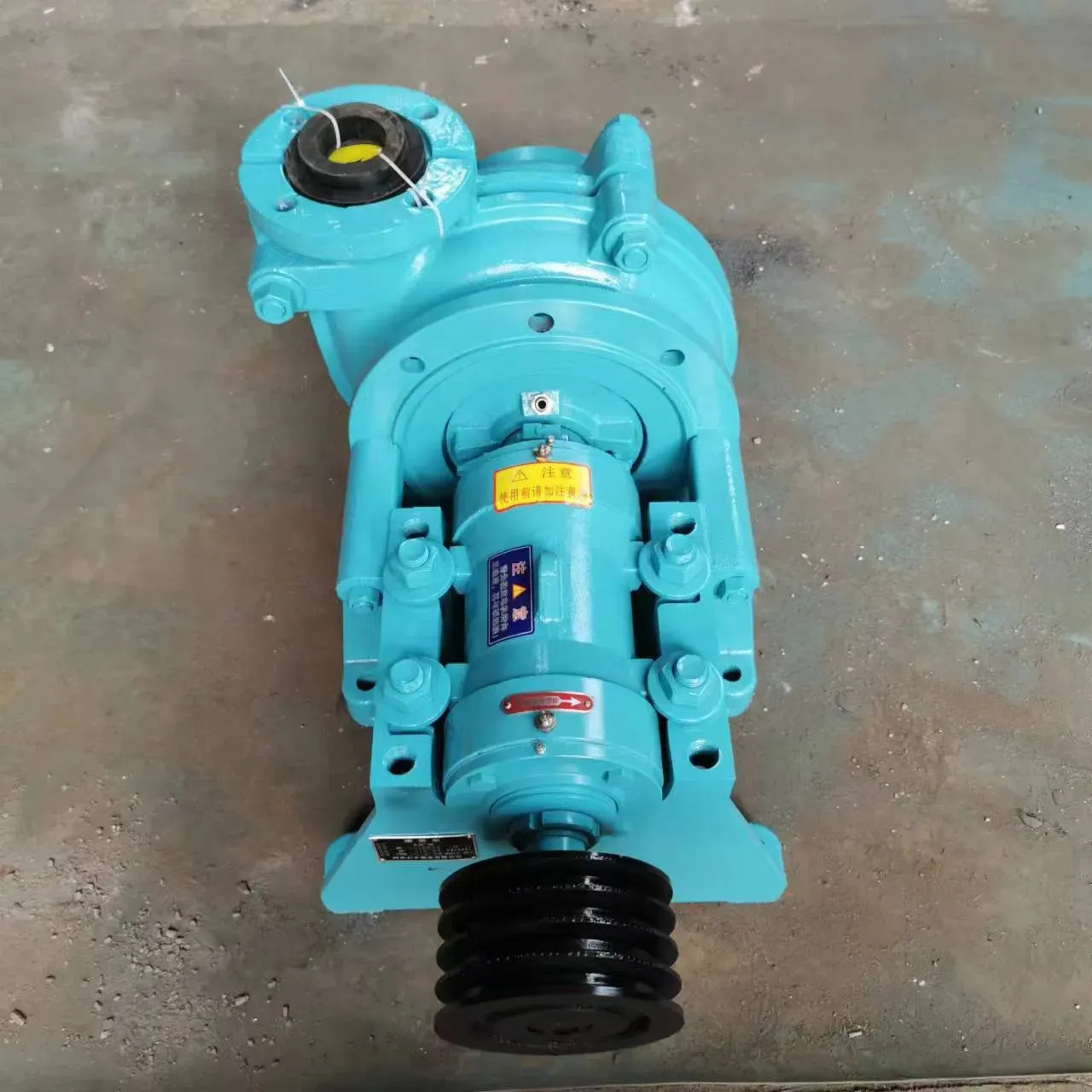
Positive Displacement Slurry Pump: Technical Performance Analysis
A positive displacement (PD) slurry pump is a specialized industrial machine designed to move high-viscosity, abrasive, or shear-sensitive fluids by trapping a fixed volume of liquid and forcing it through a discharge pipe. Unlike centrifugal pumps, which rely on kinetic energy and are prone to significant efficiency losses and rapid erosion when handling solids, PD pumps provide a constant flow rate regardless of the system's discharge pressure. In the industrial value chain, these pumps serve as critical infrastructure for tailings management in mining, chemical processing in metallurgy, and waste sludge transport in municipal treatment plants. The core technical value of the PD slurry pump lies in its ability to maintain volumetric efficiency while mitigating the destructive impact of abrasive particles on internal wetted components, ensuring operational stability in high-head, low-flow applications.
Material Science & Manufacturing
The manufacturing of positive displacement slurry pumps requires a rigorous approach to metallurgy and tribology to combat the dual threats of abrasive wear and corrosive chemical attack. The selection of materials is governed by the Mohs hardness of the transported solids and the pH value of the carrier fluid.
Wetted Component Metallurgy: For high-chrome applications, ASTM A532 Class III high-chromium cast iron is frequently employed, offering a hardness of 60-65 HRC to resist scouring. In environments involving acidic slurries, duplex stainless steels (e.g., SAF 2205) or nickel-based alloys (Hastelloy) are utilized to provide a synergistic balance of tensile strength and pitting resistance. For diaphragm or peristaltic variants, elastomers such as Nitrile (NBR), EPDM, or Hypalon are engineered for specific chemical compatibility and fatigue resistance to prevent premature rupture during cyclic deformation.
Manufacturing Processes: The production flow involves precision investment casting for impellers or rotors to ensure minimal surface roughness, reducing turbulence-induced erosion. Critical sealing surfaces undergo CNC grinding and lap-polishing to achieve micron-level tolerances, essential for maintaining the volumetric seal. Heat treatment processes, including vacuum quenching and tempering, are applied to the drive shafts to maximize fatigue strength and prevent torsional deformation under the high torque loads characteristic of high-density slurry transport.
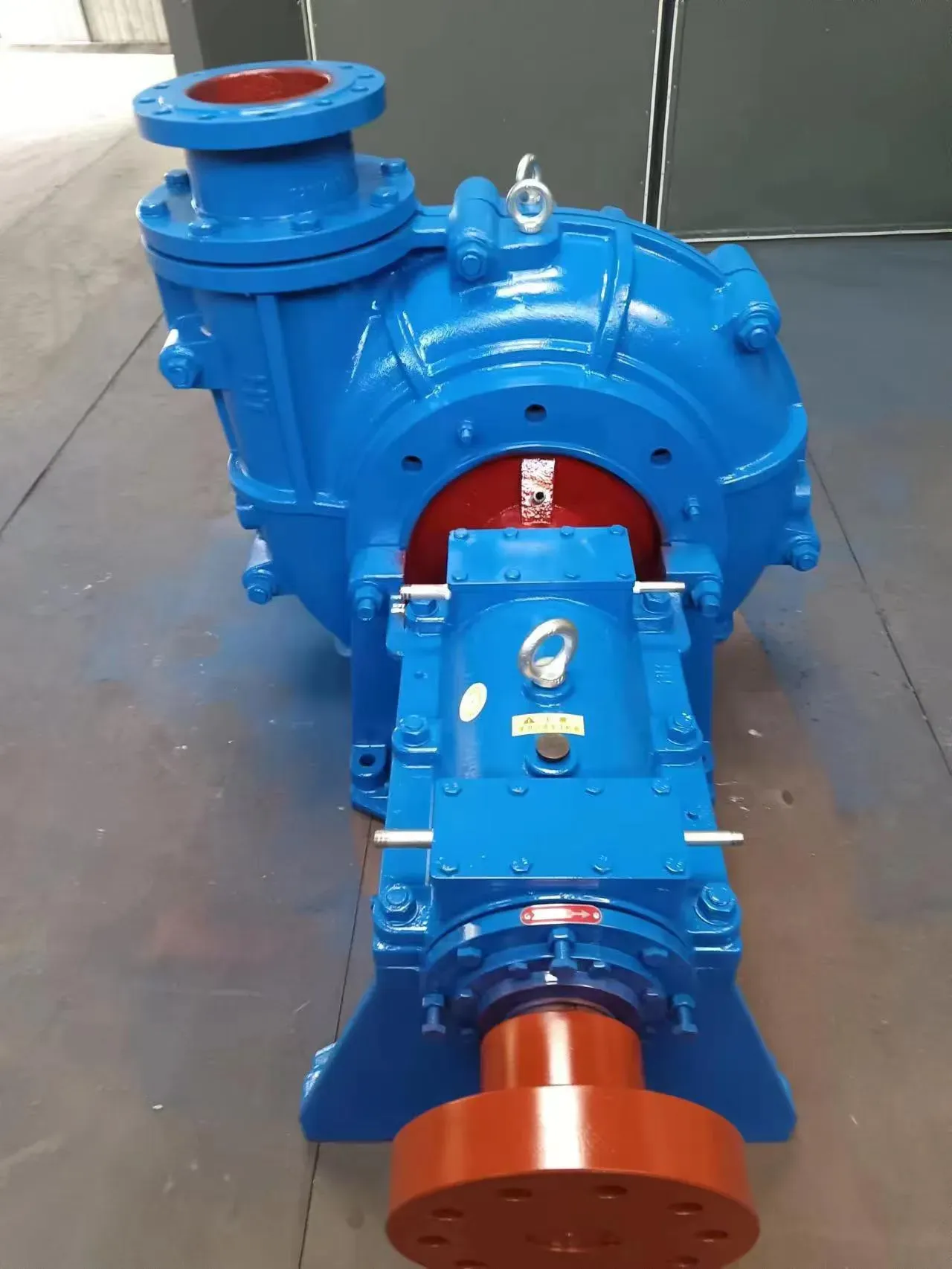
Performance & Engineering
Engineering a PD slurry pump requires an intricate analysis of fluid dynamics and mechanical force distribution. The primary objective is to minimize the "slip"—the internal leakage from the discharge side back to the suction side—which degrades volumetric efficiency.
Force Analysis and Pressure Management: PD pumps generate high pressure by displacing a specific volume. This necessitates the integration of heavy-duty pressure-relief valves (PRVs) to prevent catastrophic casing failure during "dead-head" scenarios. Engineering calculations must account for the non-Newtonian behavior of slurries, specifically the yield stress and thixotropic properties, which influence the Net Positive Suction Head Required (NPSHr). To prevent cavitation, suction piping is engineered for low velocity and minimal bends.
Environmental Resistance and Compliance: To operate in extreme environments, the pump housing is often reinforced with ribs to handle hoop stress. Environmental sealing is achieved through mechanical seals with hardened faces (Tungsten Carbide or Silicon Carbide) and an external flush system to prevent slurry particles from migrating into the seal chamber, which would otherwise cause rapid abrasive wear of the seal faces.
Technical Specifications
| Parameter Dimension | Low-Viscosity Slurry | High-Density Tailings | Chemical Sludge | Ultra-Abrasive Ore |
|---|---|---|---|---|
| Max Discharge Pressure (bar) | 10 - 25 | 40 - 80 | 20 - 50 | 60 - 120 |
| Volumetric Efficiency (%) | 92 - 95 | 88 - 92 | 90 - 94 | 85 - 90 |
| Max Particle Size (mm) | 2.0 - 5.0 | 10.0 - 25.0 | 5.0 - 15.0 | 20.0 - 50.0 |
| Wetted Material | 316L Stainless | High-Chrome Iron | Hastelloy / EPDM | Tungsten Carbide Lining |
| Typical Flow Rate (m³/h) | 50 - 200 | 10 - 60 | 20 - 100 | 5 - 40 |
| Operating Temp Range (°C) | -10 to 80 | -20 to 120 | -10 to 60 | -20 to 200 |
Failure Mode & Maintenance
Failure analysis in PD slurry pumps typically identifies four primary modes: abrasive erosion, fatigue cracking, seal degradation, and cavitation-induced pitting.
Abrasive Erosion & Delamination: The most common failure occurs at the clearances between the rotor and stator or the valves. High-velocity slurry particles act as grinding media, widening these gaps and increasing slip. If coatings are used, delamination may occur due to the impact of large particles. Maintenance involves the use of ultrasonic thickness gauging to monitor wear and the scheduled replacement of wear liners before the casing integrity is compromised.
Fatigue Cracking: Due to the pulsating nature of the flow in PD pumps, the discharge piping and pump housing are subject to cyclic loading. This can lead to fatigue cracking, particularly at weld joints. Engineering solutions include the installation of pulsation dampeners and the use of flexible couplings to isolate vibrations.
Seal Failure and Oxidation: Chemical oxidation of elastomers or the breach of mechanical seals leads to leakage. Maintenance protocols require the implementation of a "seal support system" (API Plan 53 or 54) to maintain a pressurized barrier of clean fluid, preventing the slurry from entering the seal interface.
Industry FAQ
Q: How does a PD slurry pump handle solids compared to a centrifugal pump?
A: A centrifugal pump accelerates slurry to high velocities, which leads to exponential erosion rates (wear increases with the cube of velocity). A PD pump moves the slurry at a low, constant velocity, significantly reducing the kinetic energy of the particles and thereby extending the lifespan of the internal components.
Q: What is the primary cause of "slip" in these pumps and how is it mitigated?
A: Slip is caused by the leakage of fluid from the high-pressure discharge area back to the suction side through internal clearances. It is mitigated by optimizing the tolerance between the rotor and stator and utilizing materials with high dimensional stability to prevent thermal expansion from widening these gaps.
Q: When should I choose a diaphragm PD pump over a screw PD pump for slurry?
A: Diaphragm pumps are preferred for highly corrosive or shear-sensitive slurries because the pumping mechanism is completely isolated from the drive system. Screw pumps are superior for high-viscosity, high-pressure applications where a smooth, pulse-free flow is required.
Q: How do you prevent cavitation in high-density slurry applications?
A: Cavitation is prevented by ensuring the NPSH Available (NPSHa) is significantly higher than the NPSH Required (NPSHr). This is achieved by increasing the suction head (elevating the supply tank), increasing the suction pipe diameter to reduce friction loss, and maintaining lower fluid temperatures to reduce vapor pressure.
Q: What are the indicators that the pump requires an immediate overhaul?
A: Key indicators include a noticeable drop in discharge pressure for a given RPM, an increase in motor current draw (indicating internal friction or blockage), excessive vibration (indicating bearing failure or rotor imbalance), and visible leakage from the mechanical seals.
Conclusion
The positive displacement slurry pump represents a sophisticated synthesis of material science and mechanical engineering, specifically tailored to overcome the inherent challenges of abrasive and viscous fluid transport. By shifting the operational logic from kinetic energy to volumetric displacement, these pumps ensure high efficiency and longevity in the most demanding industrial environments, provided that metallurgy and seal integrity are prioritized.
Future advancements in this field are likely to focus on the integration of "smart" monitoring systems—utilizing IoT sensors for real-time wear tracking—and the development of nano-composite coatings to further reduce friction and erosion. For procurement and engineering teams, the focus must remain on the precise matching of material specifications to the slurry's chemical and physical properties to maximize the Total Cost of Ownership (TCO) and operational uptime.
-
Comprehensive Guide to Waterproof ORings for Optimal Sealing Solutions
News2026-06-09
-
heavy duty submersible pump Performance Analysis
News2026-06-25
-
best submersible pump for septic tank Performance Analysis
News2026-06-25
-
basement sewer ejector pump Performance Analysis
News2026-06-25
-
basement pumps ejector pumps Performance Analysis
News2026-06-25
-
basement lift pump Performance and Engineering
News2026-06-25
-
basement bathroom pump systems Performance Analysis
News2026-06-24
-
basement bathroom ejector pump system Performance Engineering
News2026-06-24
-
2 hp sewage pump Performance Engineering
News2026-06-24
-
1 hp septic pump Performance Engineering
News2026-06-24
-
submersible effluent pump Performance Analysis
News2026-06-24
-
submergable pump Material Science
News2026-06-23
-
sewer injection pump Performance Engineering
News2026-06-23
-
Sewer Ejector Pump System Performance Analysis
News2026-06-23
-
septic tank pump for sale Performance Engineering
News2026-06-23




