English
- Afrikaans
- Albanian
- Amharic
- Arabic
- Armenian
- Azerbaijani
- Basque
- Belarusian
- Bengali
- Bosnian
- Bulgarian
- Catalan
- Cebuano
- Corsican
- Croatian
- Czech
- Danish
- Dutch
- English
- Esperanto
- Estonian
- Finnish
- French
- Frisian
- Galician
- Georgian
- German
- Greek
- Gujarati
- Haitian Creole
- hausa
- hawaiian
- Hebrew
- Hindi
- Miao
- Hungarian
- Icelandic
- igbo
- Indonesian
- irish
- Italian
- Japanese
- Javanese
- Kannada
- kazakh
- Khmer
- Rwandese
- Korean
- Kurdish
- Kyrgyz
- Lao
- Latin
- Latvian
- Lithuanian
- Luxembourgish
- Macedonian
- Malgashi
- Malay
- Malayalam
- Maltese
- Maori
- Marathi
- Mongolian
- Myanmar
- Nepali
- Norwegian
- Norwegian
- Occitan
- Pashto
- Persian
- Polish
- Portuguese
- Punjabi
- Romanian
- Russian
- Samoan
- Scottish Gaelic
- Serbian
- Sesotho
- Shona
- Sindhi
- Sinhala
- Slovak
- Slovenian
- Somali
- Spanish
- Sundanese
- Swahili
- Swedish
- Tagalog
- Tajik
- Tamil
- Tatar
- Telugu
- Thai
- Turkish
- Turkmen
- Ukrainian
- Urdu
- Uighur
- Uzbek
- Vietnamese
- Welsh
- Bantu
- Yiddish
- Yoruba
- Zulu

Telephone: +86 13120555503
Email: frank@cypump.com


Apr . 01, 2024 17:55 Back to list
pneumatic slurry pump Performance Analysis and Manufacturing Specifications
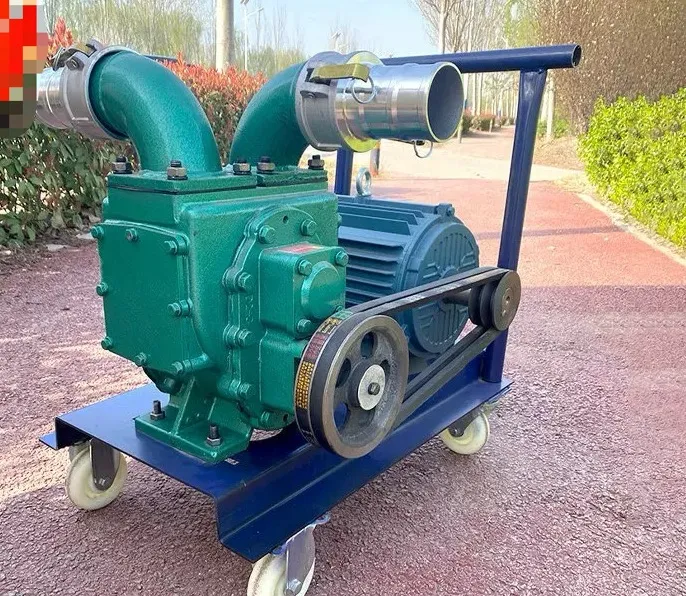
Pneumatic Slurry Pump Performance Analysis and Manufacturing Specifications
The pneumatic slurry pump, specifically the Air-Operated Double Diaphragm (AODD) configuration, represents a critical component in the industrial transport of non-Newtonian fluids, abrasive suspensions, and high-viscosity slurries. Positioned at the intersection of fluid dynamics and pneumatic actuation, these pumps are engineered to handle fluids that would cause rapid cavitation or catastrophic erosive wear in centrifugal systems. By utilizing the displacement principle and the compressibility of air, pneumatic slurry pumps provide a self-priming, leak-free solution for the mining, chemical processing, and wastewater treatment sectors. The core technical value lies in their ability to manage high solids concentration (up to 70% by weight) while maintaining stable volumetric flow rates under varying back-pressure conditions, ensuring a seamless integration within the industrial supply chain from raw extraction to refinery.
Material Science & Manufacturing
The manufacturing of pneumatic slurry pumps necessitates a rigorous selection of materials to counteract the synergistic effects of abrasion, corrosion, and fatigue. The wetted components are typically fabricated from high-performance elastomers or hard-metal alloys. For abrasive slurries, High-Chrome White Iron (ASTM A532) or Tungsten Carbide inserts are employed in valve seats to prevent erosive thinning. The diaphragms, the most critical fatigue-prone element, are engineered from Santoprene, PTFE (Teflon), or reinforced EPDM. These materials are selected based on the Mooney viscosity and tensile strength requirements to ensure they can withstand millions of cycles without rupture.
The manufacturing process involves precision investment casting for the pump housing to minimize turbulence-inducing internal irregularities. The internal bores are subjected to CNC honing to achieve a surface roughness (Ra) of less than 0.8 μm, which reduces the boundary layer friction and slows the onset of erosive wear. The pneumatic valve assembly is precision-machined from anodized aluminum or stainless steel 316L, ensuring that the air-side seals maintain a tight tolerance to prevent compressed air leakage. Key parameter control during assembly focuses on the pre-tensioning of the diaphragm and the alignment of the check valve balls, ensuring that the fluid seal is absolute even under vacuum conditions.
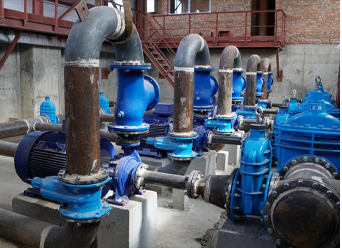
Performance & Engineering
Engineering a pneumatic slurry pump requires a deep analysis of the fluid's rheology. Slurries often exhibit Bingham plastic or pseudoplastic behavior, where the apparent viscosity changes with the shear rate. To overcome this, the pump's displacement volume is optimized to ensure that the shear stress imparted by the diaphragm movement exceeds the yield stress of the slurry. Force analysis is conducted on the diaphragm's flexure points to prevent stress concentration, employing Finite Element Analysis (FEA) to simulate the pressure distribution during the suction and discharge strokes.
Environmental resistance is managed through the integration of chemical-resistant coatings and the use of non-sparking materials for ATEX-compliant zones. The compliance requirements focus on the Moisture Vapor Transmission Rate (MVTR) of the seals and the chemical compatibility of the elastomers with the processed slurry. Engineering calculations specifically address the "Critical Velocity"—the minimum velocity required to keep solids suspended in the discharge line to prevent sedimentation and subsequent line blockage. By modulating the air pressure (typically between 2 and 8 bar), engineers can precisely control the flow rate and the Net Positive Suction Head Required (NPSHr), allowing the pump to operate efficiently even with high-density fluids.
Technical Specifications
| Model Series | Max Flow Rate (m³/h) | Max Discharge Pressure (Bar) | Solid Particle Size (mm) | Diaphragm Material | Fluid Viscosity (cP) |
|---|---|---|---|---|---|
| SL-100-S | 45 | 7.0 | 3.0 | PTFE / EPDM | Up to 10,000 |
| SL-200-M | 85 | 8.0 | 6.0 | Santoprene | Up to 50,000 |
| SL-300-L | 120 | 8.5 | 10.0 | Reinforced PTFE | Up to 100,000 |
| SL-400-XL | 210 | 7.5 | 15.0 | Viton / PTFE | Up to 200,000 |
| SL-500-HD | 300 | 9.0 | 20.0 | High-Strength Nitrile | Up to 500,000 |
| SL-Custom | Custom | Up to 10.0 | Custom | Custom Alloy/Polymer | Custom |
Failure Mode & Maintenance
Failure analysis of pneumatic slurry pumps typically reveals three primary modes: diaphragm fatigue, valve seat erosion, and pneumatic stalling. Diaphragm failure is usually a result of chemical degradation or mechanical fatigue caused by excessive cycling. When the material loses its elastic modulus, stress cracks form, leading to internal leakage between the air chamber and the fluid chamber. To mitigate this, a scheduled replacement cycle based on the number of cycles is mandatory. Valve seat erosion occurs when the slurry particles create micro-cavities (pitting) on the seating surface, resulting in backflow and a significant drop in volumetric efficiency. This is addressed by utilizing ceramic or tungsten carbide balls and seats.
Pneumatic stalling—where the pump stops cycling—is often attributed to contaminated compressed air. Water or oil buildup in the air valve can cause sticking or premature wear of the O-rings. Professional maintenance involves the installation of a high-efficiency air filtration and lubrication unit (FRL) and the implementation of a weekly inspection of the air valve's spool movement. For slurry pumps, "flushing" the system with clean water after each operation is critical to prevent the slurry from settling and hardening inside the pump casing, which would otherwise lead to catastrophic blockage and diaphragm rupture upon restart.
Industry FAQ
Q: How does the solids concentration affect the NPSHr of the pneumatic slurry pump?
A: As the solids concentration increases, the fluid's viscosity and density rise, which increases the frictional losses in the suction line. This elevates the Net Positive Suction Head Required (NPSHr). To compensate, we recommend reducing the suction lift or increasing the suction pipe diameter to maintain a low fluid velocity and prevent cavitation.
Q: What is the primary cause of premature diaphragm failure in acidic slurries?
A: In acidic environments, polymer chains in standard elastomers undergo hydrolysis or oxidative degradation, leading to embrittlement. For these applications, we specify PTFE-lined diaphragms or specialized fluoroelastomers (Viton) that exhibit higher chemical inertia and maintain tensile strength in low-pH environments.
Q: Can these pumps handle "slugs" of highly concentrated material without stalling?
A: Yes, due to the positive displacement nature and the compressibility of the air drive, the pump can handle temporary increases in viscosity (slugs). However, the air pressure must be increased to provide the necessary force to displace the higher-density mass, and the cycle rate will naturally decrease.
Q: How do you determine the optimal ball material for a highly abrasive slurry?
A: We analyze the Mohs hardness of the slurry particles. If the particles exceed a hardness of 6, we transition from stainless steel to hardened chrome steel or Alumina ceramics. The goal is to ensure the ball material hardness is significantly higher than the abrasive media to prevent rapid surface wear.
Q: Why is air filtration critical for the longevity of the pneumatic valve?
A: The pneumatic valve relies on tight tolerances to shift the air flow between chambers. Particulates or moisture in the air line cause abrasive wear on the spool and corrosion of the internal surfaces, leading to air leaks and erratic cycling, which reduces the overall efficiency of the pump.
Conclusion
The pneumatic slurry pump is an indispensable tool for heavy-industrial fluid management, leveraging the principles of positive displacement and pneumatic actuation to handle the most challenging abrasive and viscous media. By integrating advanced material science—such as the use of high-chrome alloys and reinforced PTFE—with precision manufacturing, these pumps achieve the necessary durability to operate in extreme environments where traditional centrifugal pumps would fail.
Moving forward, the optimization of these systems will likely focus on the integration of smart sensors for real-time diaphragm wear monitoring and the development of bio-based, high-performance elastomers to meet evolving environmental standards. For procurement and engineering teams, the key to operational success remains the rigorous alignment of pump material specifications with the rheological and chemical properties of the processed slurry.
-
Comprehensive Guide to Waterproof ORings for Optimal Sealing Solutions
News2026-06-09
-
basement bathroom pump systems Performance Analysis
News2026-06-24
-
basement bathroom ejector pump system Performance Engineering
News2026-06-24
-
2 hp sewage pump Performance Engineering
News2026-06-24
-
1 hp septic pump Performance Engineering
News2026-06-24
-
submersible effluent pump Performance Analysis
News2026-06-24
-
submergable pump Material Science
News2026-06-23
-
sewer injection pump Performance Engineering
News2026-06-23
-
Sewer Ejector Pump System Performance Analysis
News2026-06-23
-
septic tank pump for sale Performance Engineering
News2026-06-23
-
septic pump for sale Performance Engineering
News2026-06-23
-
septic ejector system Performance Analysis
News2026-06-22
-
replace septic pump Performance Analysis
News2026-06-22
-
pump system septic tank Performance Analysis
News2026-06-22
-
lift pump for sewer Performance and Engineering
News2026-06-22




