English
- Afrikaans
- Albanian
- Amharic
- Arabic
- Armenian
- Azerbaijani
- Basque
- Belarusian
- Bengali
- Bosnian
- Bulgarian
- Catalan
- Cebuano
- Corsican
- Croatian
- Czech
- Danish
- Dutch
- English
- Esperanto
- Estonian
- Finnish
- French
- Frisian
- Galician
- Georgian
- German
- Greek
- Gujarati
- Haitian Creole
- hausa
- hawaiian
- Hebrew
- Hindi
- Miao
- Hungarian
- Icelandic
- igbo
- Indonesian
- irish
- Italian
- Japanese
- Javanese
- Kannada
- kazakh
- Khmer
- Rwandese
- Korean
- Kurdish
- Kyrgyz
- Lao
- Latin
- Latvian
- Lithuanian
- Luxembourgish
- Macedonian
- Malgashi
- Malay
- Malayalam
- Maltese
- Maori
- Marathi
- Mongolian
- Myanmar
- Nepali
- Norwegian
- Norwegian
- Occitan
- Pashto
- Persian
- Polish
- Portuguese
- Punjabi
- Romanian
- Russian
- Samoan
- Scottish Gaelic
- Serbian
- Sesotho
- Shona
- Sindhi
- Sinhala
- Slovak
- Slovenian
- Somali
- Spanish
- Sundanese
- Swahili
- Swedish
- Tagalog
- Tajik
- Tamil
- Tatar
- Telugu
- Thai
- Turkish
- Turkmen
- Ukrainian
- Urdu
- Uighur
- Uzbek
- Vietnamese
- Welsh
- Bantu
- Yiddish
- Yoruba
- Zulu

Telephone: +86 13120555503
Email: frank@cypump.com


Apr . 01, 2024 17:55 Back to list
piston diaphragm slurry pumps Performance Analysis
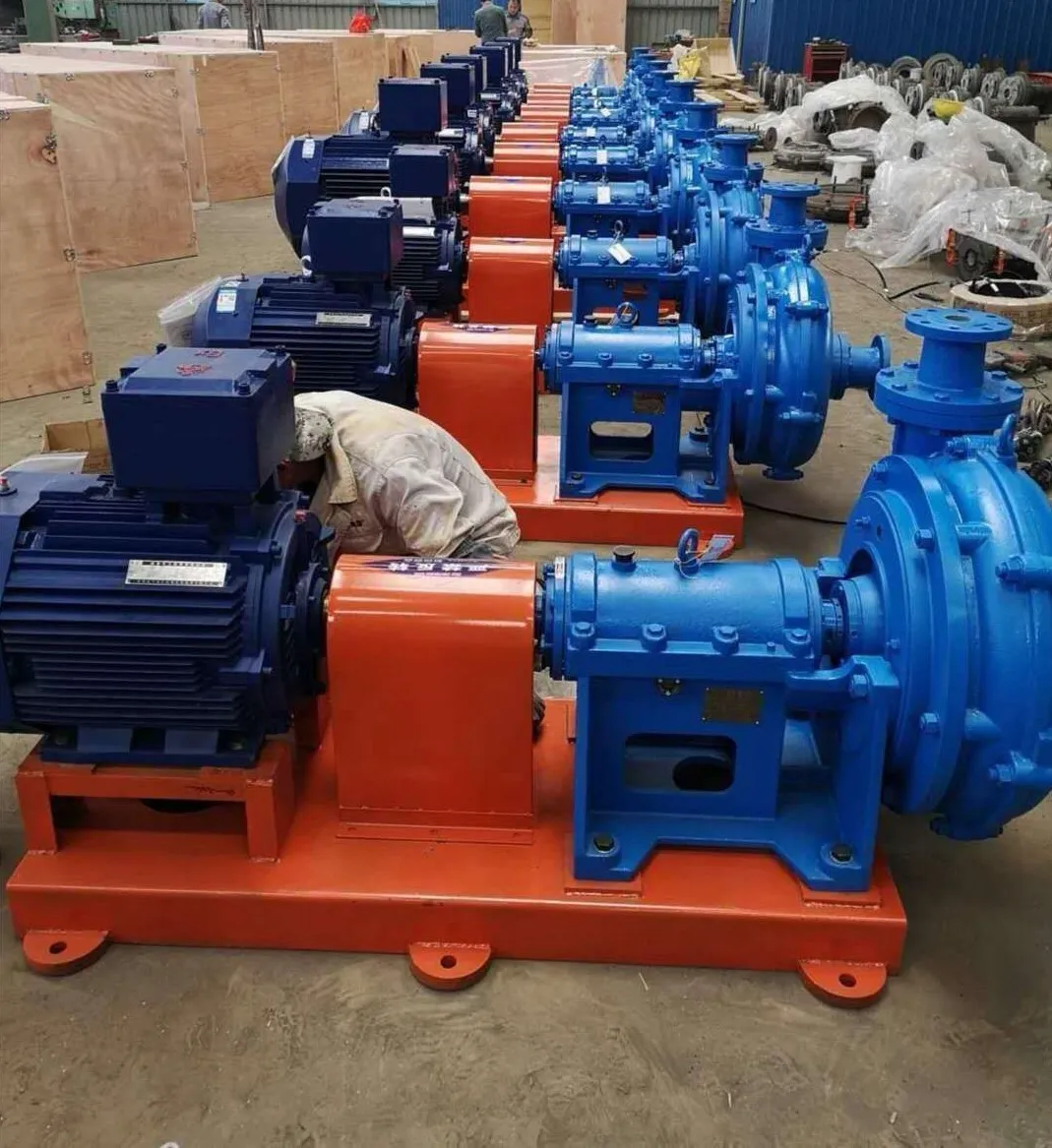
Introduction
Piston diaphragm slurry pumps represent a critical component in numerous industrial processes involving the transfer of abrasive, corrosive, and viscous fluids. Distinguished by their positive displacement action and air-operated or mechanically driven diaphragm, these pumps offer advantages over centrifugal pumps when handling solids-laden slurries or shear-sensitive materials. Their application spans across industries including mining, wastewater treatment, chemical processing, and paint & coatings. The fundamental technical position of these pumps lies in providing reliable and efficient fluid conveyance where conventional pump technologies would suffer from rapid wear, clogging, or product degradation. Core performance characteristics include flow rate capability, differential head pressure, and solids handling capacity, all heavily influenced by diaphragm material, piston stroke length, and pump chamber geometry. A key pain point in industry is maintaining consistent performance in highly abrasive environments and minimizing downtime due to diaphragm failure or valve stiction.
Material Science & Manufacturing
The core materials utilized in piston diaphragm slurry pump construction dictate their durability and chemical compatibility. Pump bodies are commonly manufactured from cast iron (ASTM A48 Class 30), ductile iron (ASTM A536-85), or stainless steel (316L, offering enhanced corrosion resistance). Diaphragms are typically fabricated from elastomers like Nitrile (NBR), Ethylene Propylene Diene Monomer (EPDM), Hypalon (CSM), or PTFE (Teflon). NBR is cost-effective for oil-based slurries, while EPDM excels in water-based applications. Hypalon offers superior chemical resistance, and PTFE is ideal for highly corrosive environments but is more expensive. Valve balls and seats utilize materials such as hardened stainless steel (440C) or ceramic for abrasion resistance. Manufacturing processes vary. Pump bodies are produced via sand casting or investment casting, influencing surface finish and dimensional accuracy. Diaphragms are compression molded, requiring precise control of temperature, pressure, and cure time to achieve optimal elasticity and tear strength. Piston assemblies involve precision machining of metallic components and assembly with seals ensuring leak-free operation. Critical parameter control includes ensuring proper heat treatment for metallic parts to achieve desired hardness and fatigue resistance, and conducting rigorous quality checks on diaphragm material for tensile strength (ASTM D412) and elongation at break.
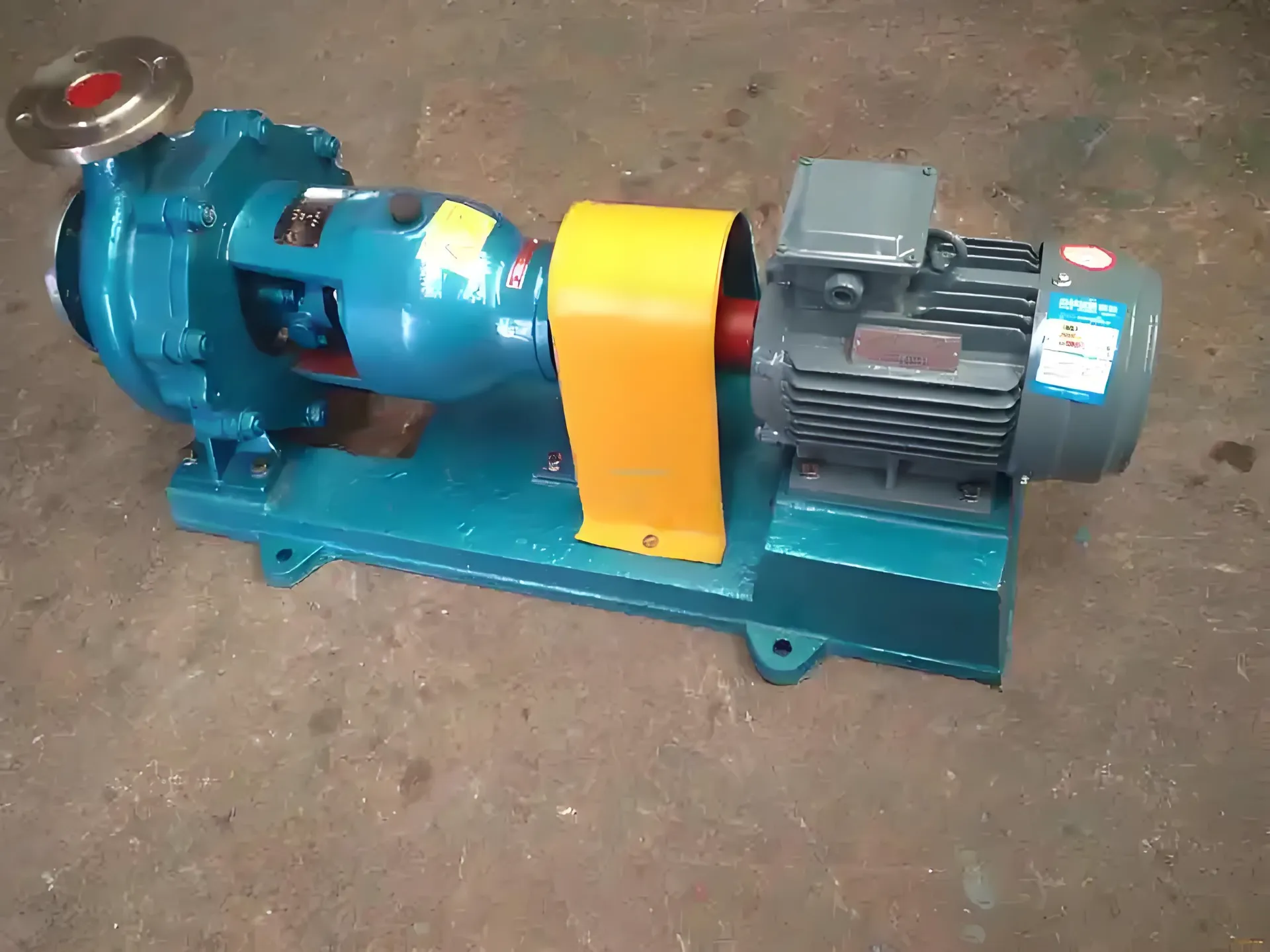
Performance & Engineering
Performance analysis of piston diaphragm slurry pumps centers around understanding the interplay between flow rate, pressure, and solids handling capability. Flow rate is directly proportional to piston stroke length and pump speed. Differential head pressure is determined by diaphragm size, piston force, and the fluid's viscosity and density. The pump’s ability to handle solids is limited by the internal passage diameters and diaphragm deflection characteristics. Force analysis is crucial in diaphragm design, calculating stresses induced by pressure and deflection to prevent premature failure. Environmental resistance is addressed through material selection and protective coatings. Corrosion resistance is paramount in chemical processing, and abrasion resistance is critical in mineral processing. Compliance requirements vary by region. For instance, pumps used in food and beverage applications must adhere to 3-A Sanitary Standards. Pumps handling hazardous materials must comply with ATEX directives (Europe) or Class I, Division 1 & 2 standards (North America). Functional implementation requires careful consideration of suction lift, discharge head, and piping layout to minimize cavitation and ensure efficient operation. A significant engineering challenge is minimizing diaphragm stress concentration points to maximize fatigue life. Finite Element Analysis (FEA) is often employed to optimize diaphragm geometry and material distribution.
Technical Specifications
| Parameter | Unit | Typical Value (Small Pump) | Typical Value (Large Pump) |
|---|---|---|---|
| Maximum Flow Rate | GPM (Gallons Per Minute) | 50 | 400 |
| Maximum Discharge Pressure | PSI (Pounds per Square Inch) | 100 | 250 |
| Maximum Solids Handling | Inches | 0.5 | 2.0 |
| Air Consumption (for AODD pumps) | CFM (Cubic Feet per Minute) | 20 | 100 |
| Diaphragm Material | - | NBR | PTFE |
| Pump Body Material | - | Cast Iron | Stainless Steel 316L |
Failure Mode & Maintenance
Piston diaphragm slurry pumps are subject to several common failure modes. Diaphragm rupture is a frequent occurrence, often caused by overpressure, fatigue cracking (due to repeated flexing), or chemical attack. Valve failure (seat erosion or ball sticking) leads to reduced flow and efficiency. Piston wear results in decreased pump output and increased air consumption (for AODD pumps). Abrasive wear on pump internals is exacerbated by high solids content and sharp-edged particles. Corrosion can lead to pitting and eventual failure of pump body and valve components. Failure analysis often reveals that diaphragm failure is initiated by microcracks at stress concentration points, and valve failure is linked to insufficient lubrication or improper material selection for the slurry being pumped. Preventative maintenance is crucial. Regular inspection of diaphragms for signs of wear or cracking is essential. Lubrication of valve balls and seats prevents sticking. Periodic flushing of pump internals removes abrasive particles. Diaphragm replacement should be performed according to the manufacturer’s recommended schedule or when performance degradation is observed. Implementing a preventative maintenance program, including regular visual inspections, performance monitoring, and timely replacement of wear parts, significantly extends pump lifespan and minimizes downtime. Consider using wear-resistant coatings on pump internals for highly abrasive applications.
Industry FAQ
Q: What is the impact of slurry temperature on diaphragm life?
A: Elevated slurry temperatures accelerate the degradation of elastomeric diaphragms. Higher temperatures reduce the material’s tensile strength and elasticity, leading to increased susceptibility to cracking and failure. Specific temperature limits vary depending on the diaphragm material (e.g., NBR has lower temperature resistance than EPDM or PTFE). Consider using a diaphragm material specifically rated for the operating temperature or implementing a cooling system to reduce slurry temperature.
Q: How do I select the appropriate diaphragm material for a specific chemical slurry?
A: Chemical compatibility is paramount. Consult a chemical resistance chart to determine which diaphragm material is best suited for the specific chemicals in the slurry. Consider the concentration of the chemicals, exposure time, and operating temperature. For aggressive chemicals, PTFE diaphragms are often the preferred choice, despite their higher cost. Incorrect material selection will result in rapid diaphragm degradation and pump failure.
Q: What causes cavitation in a piston diaphragm slurry pump?
A: Cavitation occurs when the absolute pressure at the pump inlet drops below the vapor pressure of the liquid, forming vapor bubbles that collapse violently, causing damage to the pump internals. This can be caused by excessive suction lift, high slurry viscosity, or restrictions in the suction piping. Reducing suction lift, increasing pipe diameter, and ensuring adequate fluid supply can mitigate cavitation.
Q: What is the best method for troubleshooting reduced pump performance?
A: Start by checking for blockages in the suction or discharge piping. Verify that the diaphragm is intact and functioning properly. Inspect the valve balls and seats for wear or damage. Check for air leaks in the air supply system (for AODD pumps). Measure the flow rate and pressure to determine the extent of the performance degradation. Systematic troubleshooting will isolate the root cause of the problem.
Q: How often should the pump’s air filter be replaced (for AODD pumps)?
A: The air filter should be replaced regularly, typically every 6-12 months, depending on the air quality and operating conditions. A clogged air filter restricts airflow, reducing pump performance and increasing air consumption. Inspect the air filter monthly and replace it if it appears dirty or restricted. Using a high-efficiency air filter improves pump reliability and extends diaphragm life.
Conclusion
Piston diaphragm slurry pumps provide a robust and versatile solution for handling challenging fluid transfer applications. Their positive displacement action, coupled with appropriate material selection and diligent maintenance, ensures reliable operation in abrasive, corrosive, and viscous environments. Understanding the underlying principles of material science, performance engineering, and potential failure modes is crucial for optimizing pump selection, operation, and longevity.
Future advancements will likely focus on the development of more durable diaphragm materials, improved pump chamber designs to enhance solids handling capacity, and integration of smart sensors for predictive maintenance. Minimizing diaphragm stress concentration, coupled with real-time performance monitoring, will be essential for maximizing pump uptime and reducing total cost of ownership.
-
Comprehensive Guide to Waterproof ORings for Optimal Sealing Solutions
News2026-06-09
-
submergable pump Material Science
News2026-06-23
-
sewer injection pump Performance Engineering
News2026-06-23
-
Sewer Ejector Pump System Performance Analysis
News2026-06-23
-
septic tank pump for sale Performance Engineering
News2026-06-23
-
septic pump for sale Performance Engineering
News2026-06-23
-
septic ejector system Performance Analysis
News2026-06-22
-
replace septic pump Performance Analysis
News2026-06-22
-
pump system septic tank Performance Analysis
News2026-06-22
-
lift pump for sewer Performance and Engineering
News2026-06-22
-
industrial submersible water pump Material Science
News2026-06-22
-
industrial submersible pumps Material Science and Manufacturing
News2026-06-21
-
best sewer ejector pump Performance Analysis
News2026-06-21
-
best septic pump Performance Analysis
News2026-06-21
-
1 2 hp septic pump Performance Engineering
News2026-06-21




