English
- Afrikaans
- Albanian
- Amharic
- Arabic
- Armenian
- Azerbaijani
- Basque
- Belarusian
- Bengali
- Bosnian
- Bulgarian
- Catalan
- Cebuano
- Corsican
- Croatian
- Czech
- Danish
- Dutch
- English
- Esperanto
- Estonian
- Finnish
- French
- Frisian
- Galician
- Georgian
- German
- Greek
- Gujarati
- Haitian Creole
- hausa
- hawaiian
- Hebrew
- Hindi
- Miao
- Hungarian
- Icelandic
- igbo
- Indonesian
- irish
- Italian
- Japanese
- Javanese
- Kannada
- kazakh
- Khmer
- Rwandese
- Korean
- Kurdish
- Kyrgyz
- Lao
- Latin
- Latvian
- Lithuanian
- Luxembourgish
- Macedonian
- Malgashi
- Malay
- Malayalam
- Maltese
- Maori
- Marathi
- Mongolian
- Myanmar
- Nepali
- Norwegian
- Norwegian
- Occitan
- Pashto
- Persian
- Polish
- Portuguese
- Punjabi
- Romanian
- Russian
- Samoan
- Scottish Gaelic
- Serbian
- Sesotho
- Shona
- Sindhi
- Sinhala
- Slovak
- Slovenian
- Somali
- Spanish
- Sundanese
- Swahili
- Swedish
- Tagalog
- Tajik
- Tamil
- Tatar
- Telugu
- Thai
- Turkish
- Turkmen
- Ukrainian
- Urdu
- Uighur
- Uzbek
- Vietnamese
- Welsh
- Bantu
- Yiddish
- Yoruba
- Zulu

Telephone: +86 13120555503
Email: frank@cypump.com


Apr . 01, 2024 17:55 Back to list
oem slurry pump engineering factory Performance Analysis
Introduction
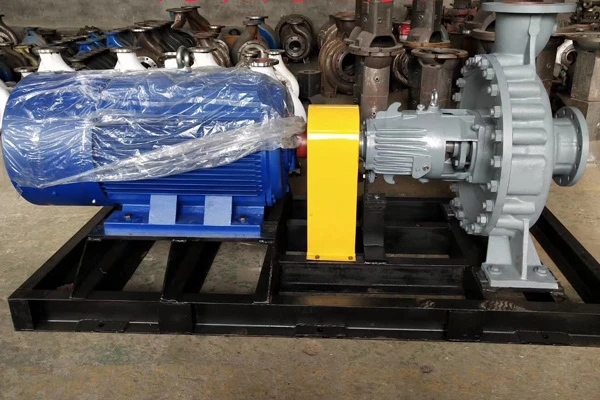
OEM slurry pumps represent a critical component within industrial fluid handling systems, serving diverse sectors including mining, wastewater treatment, chemical processing, and oil & gas. These pumps are characterized by their robust construction, designed to transport abrasive, corrosive, and high-solids content slurries. Unlike standard centrifugal pumps, slurry pumps are engineered to withstand the increased wear and tear associated with these demanding applications. This guide provides a comprehensive technical overview of slurry pump engineering, encompassing material science, manufacturing processes, performance characteristics, failure modes, and relevant industry standards. The core performance of a slurry pump is defined by its flow rate (typically measured in gallons per minute or cubic meters per hour), head (expressed in feet or meters), and solids handling capability (percentage by weight or particle size). A key consideration is the pump’s efficiency, directly impacting energy consumption and operational costs. OEM slurry pump engineering focuses on customizing pump designs to meet specific application requirements, optimizing performance, and maximizing service life.
Material Science & Manufacturing
The selection of materials is paramount in slurry pump design, dictating resistance to abrasion, corrosion, and erosion. Common materials include high-chrome cast iron (for abrasive slurries), stainless steel (particularly duplex and super duplex stainless steels for corrosive environments), and elastomer linings (rubber, polyurethane) for combined abrasion and corrosion resistance. The manufacturing process typically begins with sand casting or investment casting for the pump casing and impeller. Casting allows for complex geometries and efficient production of large components. Following casting, components undergo heat treatment to optimize mechanical properties such as hardness and tensile strength. Impellers, critical for generating flow, are often manufactured using centrifugal casting to enhance density and minimize porosity. Shaft materials commonly utilize alloy steels, subjected to induction hardening to improve wear resistance. Sealing components are often made from materials like Viton, EPDM, or PTFE, selected based on chemical compatibility with the transported slurry. Welding processes, including shielded metal arc welding (SMAW) and gas tungsten arc welding (GTAW), are employed for joining components. Parameter control during welding is crucial to prevent distortion and maintain structural integrity. Dimensional accuracy is ensured through precision machining and quality control inspections utilizing coordinate measuring machines (CMMs).
Performance & Engineering
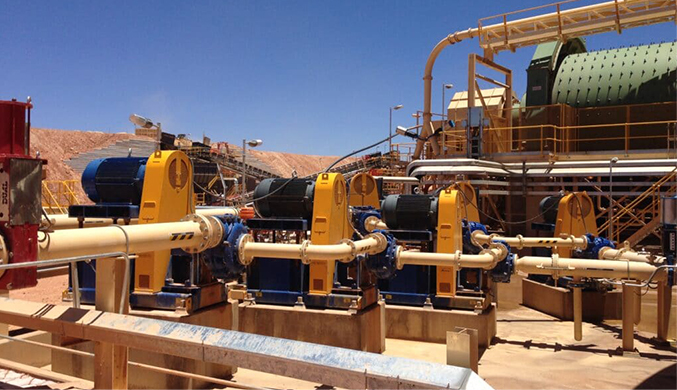
Slurry pump performance is governed by principles of fluid dynamics and hydraulic design. The pump’s head-capacity curve, a graphical representation of the relationship between flow rate and pressure, is a fundamental performance characteristic. Engineers analyze forces acting on the impeller and casing, considering centrifugal forces, hydraulic loads, and potential for cavitation. Cavitation, the formation and collapse of vapor bubbles, can cause significant erosion damage. Minimizing cavitation risk requires careful impeller design and proper net positive suction head (NPSH) calculation. Environmental resistance is a key consideration; pumps operating in harsh climates must be protected against extreme temperatures, humidity, and corrosive atmospheric conditions. Compliance with industry standards, such as ANSI/ASME B73.1 for centrifugal pumps, is essential. Functional implementation involves integrating the pump into the overall fluid handling system, including piping, valves, and control systems. Variable frequency drives (VFDs) are often employed to control pump speed and optimize performance based on varying process demands. Proper pump alignment is critical to minimize vibration and bearing wear. Hydraulic modeling software, like Computational Fluid Dynamics (CFD), is frequently used to simulate pump performance and optimize design parameters.
Technical Specifications
| Pump Model | Maximum Flow Rate (GPM) | Maximum Head (ft) | Maximum Solids Concentration (% by weight) |
|---|---|---|---|
| SP-400 | 500 | 150 | 30 |
| SP-600 | 800 | 200 | 40 |
| SP-800 | 1200 | 250 | 50 |
| SP-1000 | 1800 | 300 | 60 |
| SP-1200 | 2500 | 350 | 70 |
| SP-1500 | 3500 | 400 | 80 |
Failure Mode & Maintenance
Slurry pump failure modes are diverse, often stemming from the abrasive and corrosive nature of the transported media. Common failures include impeller wear, casing erosion, seal failure, bearing failure, and shaft breakage. Impeller wear is a primary concern, particularly in abrasive slurries, leading to reduced pump efficiency and flow rate. Casing erosion occurs due to the impact of solid particles on the pump casing, particularly at the inlet and outlet. Seal failure results in leakage and potential contamination. Bearing failure is often caused by insufficient lubrication, misalignment, or excessive vibration. Shaft breakage can occur due to fatigue cracking or torsional stress. Preventative maintenance is crucial for maximizing pump service life. This includes regular visual inspections, lubrication of bearings, seal replacement, and impeller/casing wear assessment. Vibration analysis can detect early signs of bearing or impeller imbalance. Non-destructive testing methods, such as ultrasonic thickness testing, can assess casing wall thickness and identify areas of erosion. Scheduled maintenance programs should be tailored to the specific application and slurry characteristics. Root cause failure analysis (RCFA) should be performed on failed components to identify the underlying causes of failure and implement corrective actions.
Industry FAQ
Q: What are the key considerations when selecting a slurry pump for a highly abrasive application?
A: For highly abrasive applications, material selection is critical. High-chrome cast iron is often the preferred material for impeller and casing due to its excellent wear resistance. Impeller design should prioritize a robust geometry that minimizes erosion. Consider a pump with replaceable wear plates and liners to extend service life. Particle size distribution and solids concentration should be carefully considered when specifying pump capacity and head.
Q: How can cavitation be prevented in slurry pump applications?
A: Preventing cavitation requires ensuring sufficient Net Positive Suction Head Available (NPSHa) exceeds the Net Positive Suction Head Required (NPSHr) by the pump. Proper system design, including minimizing suction lift and optimizing pipe diameter, is crucial. Impeller design should incorporate features that reduce pressure drop and minimize bubble formation. Monitoring suction pressure and temperature can provide early warning signs of cavitation.
Q: What is the impact of slurry viscosity on pump performance?
A: Increased slurry viscosity leads to reduced pump flow rate and increased power consumption. The pump’s head-capacity curve will shift downwards with increasing viscosity. Selecting a pump with a larger impeller diameter and slower rotational speed can help maintain performance with viscous slurries. Consideration of non-Newtonian fluid behavior may be necessary for highly viscous slurries.
Q: What are the benefits of using elastomer linings in slurry pumps?
A: Elastomer linings, such as rubber or polyurethane, provide excellent resistance to both abrasion and corrosion. They are particularly effective in applications involving slurries with a combination of abrasive particles and corrosive chemicals. Elastomer linings can significantly extend the service life of pump casings and impellers.
Q: How frequently should slurry pump seals be replaced?
A: Seal replacement frequency depends on the slurry characteristics, pump operating conditions, and seal material. Regular inspection of seals is essential to identify signs of wear or leakage. Typically, seals should be replaced every 6-12 months, or more frequently in severe applications. Utilizing advanced seal designs, such as mechanical seals with tungsten carbide faces, can extend seal life.
Conclusion
OEM slurry pump engineering is a complex discipline demanding a thorough understanding of material science, fluid dynamics, and failure mechanisms. The selection of appropriate materials and pump design is crucial for achieving optimal performance and maximizing service life in demanding slurry applications. By carefully considering factors such as slurry characteristics, operating conditions, and industry standards, engineers can ensure reliable and efficient operation of slurry pump systems.
The continued development of advanced materials, improved impeller designs, and sophisticated monitoring technologies will further enhance the performance and reliability of slurry pumps. Future trends include the integration of IoT sensors for predictive maintenance, the use of additive manufacturing for producing complex pump components, and the development of more sustainable and energy-efficient pump designs.
-
Comprehensive Guide to Waterproof ORings for Optimal Sealing Solutions
News2026-06-09
-
submergable pump Material Science
News2026-06-23
-
sewer injection pump Performance Engineering
News2026-06-23
-
Sewer Ejector Pump System Performance Analysis
News2026-06-23
-
septic tank pump for sale Performance Engineering
News2026-06-23
-
septic pump for sale Performance Engineering
News2026-06-23
-
septic ejector system Performance Analysis
News2026-06-22
-
replace septic pump Performance Analysis
News2026-06-22
-
pump system septic tank Performance Analysis
News2026-06-22
-
lift pump for sewer Performance and Engineering
News2026-06-22
-
industrial submersible water pump Material Science
News2026-06-22
-
industrial submersible pumps Material Science and Manufacturing
News2026-06-21
-
best sewer ejector pump Performance Analysis
News2026-06-21
-
best septic pump Performance Analysis
News2026-06-21
-
1 2 hp septic pump Performance Engineering
News2026-06-21




