English
- Afrikaans
- Albanian
- Amharic
- Arabic
- Armenian
- Azerbaijani
- Basque
- Belarusian
- Bengali
- Bosnian
- Bulgarian
- Catalan
- Cebuano
- Corsican
- Croatian
- Czech
- Danish
- Dutch
- English
- Esperanto
- Estonian
- Finnish
- French
- Frisian
- Galician
- Georgian
- German
- Greek
- Gujarati
- Haitian Creole
- hausa
- hawaiian
- Hebrew
- Hindi
- Miao
- Hungarian
- Icelandic
- igbo
- Indonesian
- irish
- Italian
- Japanese
- Javanese
- Kannada
- kazakh
- Khmer
- Rwandese
- Korean
- Kurdish
- Kyrgyz
- Lao
- Latin
- Latvian
- Lithuanian
- Luxembourgish
- Macedonian
- Malgashi
- Malay
- Malayalam
- Maltese
- Maori
- Marathi
- Mongolian
- Myanmar
- Nepali
- Norwegian
- Norwegian
- Occitan
- Pashto
- Persian
- Polish
- Portuguese
- Punjabi
- Romanian
- Russian
- Samoan
- Scottish Gaelic
- Serbian
- Sesotho
- Shona
- Sindhi
- Sinhala
- Slovak
- Slovenian
- Somali
- Spanish
- Sundanese
- Swahili
- Swedish
- Tagalog
- Tajik
- Tamil
- Tatar
- Telugu
- Thai
- Turkish
- Turkmen
- Ukrainian
- Urdu
- Uighur
- Uzbek
- Vietnamese
- Welsh
- Bantu
- Yiddish
- Yoruba
- Zulu

Telephone: +86 13120555503
Email: frank@cypump.com


Apr . 01, 2024 17:55 Back to list
oem metal lined slurry pump Engineering Analysis and Performance Specifications
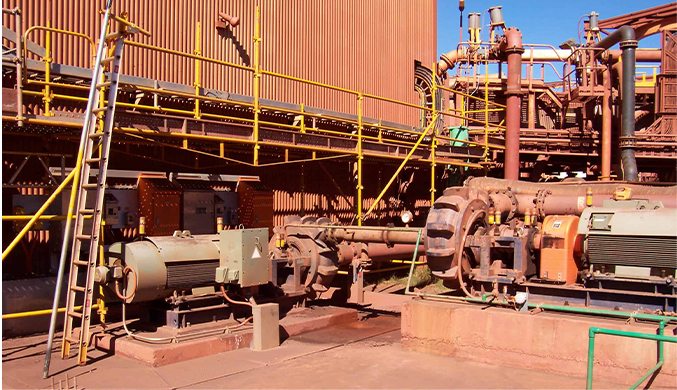
OEM Metal Lined Slurry Pump: Engineering Analysis and Performance Specifications
The OEM metal lined slurry pump is a specialized heavy-duty centrifugal pumping system engineered to transport highly abrasive and corrosive fluids, commonly referred to as slurries. In the industrial chain, these pumps occupy a critical position between primary extraction (such as mining or dredging) and processing (such as flotation or leaching), acting as the primary kinetic driver for material movement. Unlike standard industrial pumps, the metal-lined slurry pump utilizes a composite structural approach: a robust outer shell for structural integrity and a replaceable, high-performance metal liner for wear resistance. The core performance is defined by the pump's ability to maintain volumetric efficiency and NPSH (Net Positive Suction Head) requirements while subjected to constant impingement by solid particulates, ensuring prolonged Mean Time Between Failures (MTBF) in extreme environments.
Material Science & Manufacturing
The efficacy of a metal lined slurry pump depends fundamentally on the metallurgical synergy between the pump casing and the lining material. Manufacturing begins with the selection of the base alloy—typically ductile iron or cast steel—which provides the necessary tensile strength and vibration damping to withstand the mechanical loads of heavy slurry flow.
The lining materials are engineered based on the specific wear mechanism of the application. For high-impact abrasion, High Chromium White Cast Irons (ASTM A532) are employed. These materials utilize a eutectic structure consisting of hard M7C3 carbides embedded in a martensitic matrix, providing a hardness typically exceeding 60 HRC. In environments where corrosive chemicals coexist with abrasive solids, duplex stainless steels or nickel-based alloys are utilized to prevent pitting and galvanic corrosion. The manufacturing process involves precision casting followed by CNC machining to ensure a tight interference fit between the liner and the casing, preventing "liner migration" during operation.
Key parameter control during manufacturing focuses on the heat treatment phase. For high-chrome liners, a rigorous quenching and tempering cycle is required to eliminate internal stresses and prevent brittle fracture. Furthermore, the impeller—the most critical component—is often manufactured using a centrifugal casting process to ensure that the heaviest wear-resistant elements are concentrated on the outer periphery, optimizing the weight-to-durability ratio.
Performance & Engineering
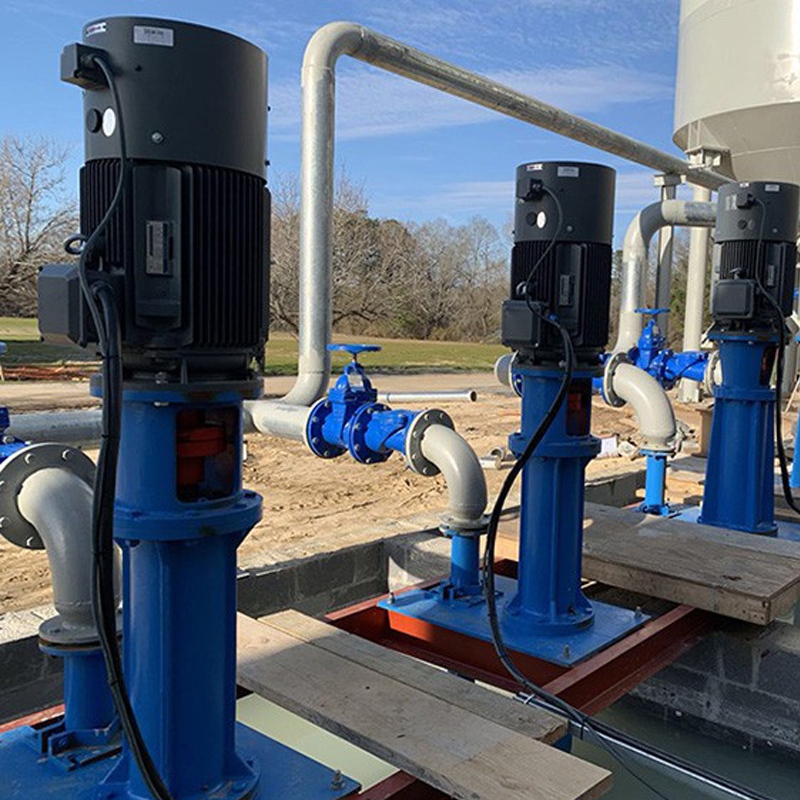
Engineering a slurry pump requires a deep analysis of fluid dynamics and force distribution. The primary challenge is the management of "abrasive wear," which occurs through two main mechanisms: sliding abrasion and impact abrasion. To mitigate this, engineers optimize the flow path to minimize turbulence and high-velocity impingement zones, particularly at the volute tongue and the impeller eye.
Force analysis focuses on the radial thrust generated by the asymmetric pressure distribution within the casing. In OEM designs, this is countered by heavy-duty bearing housings and reinforced shafting to prevent deflection, which would otherwise lead to premature mechanical seal failure. Environmental resistance is further enhanced by the integration of specialized sealing systems, such as expeller seals or gland packing with water-flush systems, which prevent the ingress of slurry into the bearing chamber.
Compliance requirements dictate that the pump must operate within a specific "Critical Speed" range to avoid resonance. The hydraulic design is verified through Computational Fluid Dynamics (CFD) to ensure that the slurry velocity remains above the critical settling velocity (the minimum speed required to keep solids suspended), thereby preventing sedimentation and blockage within the pump volute.
Technical Specifications
| Parameter Dimension | High-Chrome Specification | Duplex Steel Specification | Hardened Alloy Specification | Testing Standard |
|---|---|---|---|---|
| Hardness (Brinell/Rockwell) | 60-65 HRC | 250-350 HB | 50-55 HRC | ASTM E18 |
| Max Particle Size (mm) | Up to 25mm | Up to 15mm | Up to 20mm | ISO 10816 |
| Corrosion Rate (mm/year) | Moderate | Very Low | Low | ASTM G31 |
| Operational Temp Range | -10°C to 120°C | -40°C to 200°C | -20°C to 150°C | EN 10204 |
| Max Flow Rate (m³/h) | 1500 | 1200 | 1400 | ISO 5199 |
| Liner Thickness (mm) | 20 - 50 | 15 - 40 | 20 - 45 | DIN 9120 |
Failure Mode & Maintenance
Failure analysis of metal lined slurry pumps typically reveals three primary modes: erosive wear, fatigue cracking, and cavitation-induced pitting. Erosive wear is the most common, characterized by the gradual thinning of the liner wall. When the liner reaches its "wear limit," the slurry contacts the outer casing, leading to rapid catastrophic failure of the pump shell. This is often exacerbated by "localized turbulence" in the volute where flow velocities exceed the design threshold.
Fatigue cracking typically occurs in the impeller vanes or the liner mounting bolts, driven by the cyclical loading of non-homogeneous slurry. Cavitation occurs when the NPSH available is lower than the NPSH required, creating vapor bubbles that collapse violently against the metal surface, removing microscopic chunks of material regardless of the liner's hardness.
Professional maintenance involves a predictive strategy. Ultrasonic thickness testing (UT) should be performed monthly to monitor liner degradation. Maintenance schedules must include the inspection of the wear plate clearance; an oversized gap between the impeller and the suction liner leads to internal recirculation, which significantly reduces efficiency and increases wear. When replacing liners, it is mandatory to verify the flatness of the mating surfaces to prevent point-loading, which can cause the new liner to crack under hydraulic pressure.
Industry FAQ
Q: How do we determine the optimal liner material for a slurry with high pH and high quartz content?
A: For high pH (alkaline) environments with high quartz (highly abrasive), a high-chromium alloy with a minimum of 27% Cr is recommended. The chromium forms a passive oxide layer to resist alkaline corrosion, while the primary carbides provide the necessary hardness to resist the abrasive nature of quartz particles.
Q: Why is the pump experiencing premature failure of the mechanical seal despite the metal lining?
A: This is likely due to "slurry ingress" caused by an inadequate flush water system. The metal lining protects the casing, but the seal requires a clean barrier. If the flush water pressure is not 1-2 bar higher than the pump internal pressure, abrasive particles enter the seal faces, causing rapid scoring and leakage.
Q: What is the technical significance of the "Critical Settling Velocity" in your pump design?
A: The critical settling velocity is the minimum flow velocity required to keep solids suspended. If the pump is operated too far to the left of its Best Efficiency Point (BEP), the velocity drops, causing solids to settle in the volute. This leads to "slugging," increased vibration, and accelerated localized wear on the bottom of the casing.
Q: Can the metal liners be refurbished or welded in-situ?
A: In-situ welding is generally discouraged for high-chrome liners due to the risk of creating heat-affected zones (HAZ) that are brittle and prone to cracking. The professional standard is full component replacement. For non-critical areas, specialized hard-facing electrodes can be used, but only after rigorous pre-heating and post-weld heat treatment (PWHT).
Q: How does the interference fit between the liner and casing affect performance?
A: A precise interference fit is crucial to prevent "gap flow." If the fit is loose, slurry can seep between the liner and the casing. Because this gap is narrow, the slurry accelerates (Venturi effect), leading to "edge-wearing" which can eat through the structural casing in a fraction of the time it takes to wear the liner.
Conclusion
The OEM metal lined slurry pump represents a sophisticated intersection of metallurgy and fluid dynamics. By decoupling the structural requirements of the pump casing from the wear-resistance requirements of the liner, these systems provide a sustainable solution for the most aggressive industrial fluids. The integration of high-chromium alloys and precision casting ensures that the pump can withstand extreme abrasive forces while maintaining hydraulic efficiency.
To maximize the operational lifespan of these assets, industry operators must shift from reactive to predictive maintenance, utilizing ultrasonic monitoring and strict adherence to NPSH guidelines. As material science evolves, the shift toward nano-structured alloys and hybrid ceramic-metal liners promises even greater durability, further reducing the total cost of ownership in mining and chemical processing industries.
-
Comprehensive Guide to Waterproof ORings for Optimal Sealing Solutions
News2026-06-09
-
septic system sump pump Performance Analysis
News2026-06-26
-
septic pump company Performance Analysis
News2026-06-26
-
pumps water treatment Performance Analysis
News2026-06-26
-
pumps for septic tanks Material Science and Manufacturing
News2026-06-26
-
pump for septic system Material Science Manufacturing
News2026-06-26
-
heavy duty submersible pump Performance Analysis
News2026-06-25
-
best submersible pump for septic tank Performance Analysis
News2026-06-25
-
basement sewer ejector pump Performance Analysis
News2026-06-25
-
basement pumps ejector pumps Performance Analysis
News2026-06-25
-
basement lift pump Performance and Engineering
News2026-06-25
-
basement bathroom pump systems Performance Analysis
News2026-06-24
-
basement bathroom ejector pump system Performance Engineering
News2026-06-24
-
2 hp sewage pump Performance Engineering
News2026-06-24
-
1 hp septic pump Performance Engineering
News2026-06-24




