English
- Afrikaans
- Albanian
- Amharic
- Arabic
- Armenian
- Azerbaijani
- Basque
- Belarusian
- Bengali
- Bosnian
- Bulgarian
- Catalan
- Cebuano
- Corsican
- Croatian
- Czech
- Danish
- Dutch
- English
- Esperanto
- Estonian
- Finnish
- French
- Frisian
- Galician
- Georgian
- German
- Greek
- Gujarati
- Haitian Creole
- hausa
- hawaiian
- Hebrew
- Hindi
- Miao
- Hungarian
- Icelandic
- igbo
- Indonesian
- irish
- Italian
- Japanese
- Javanese
- Kannada
- kazakh
- Khmer
- Rwandese
- Korean
- Kurdish
- Kyrgyz
- Lao
- Latin
- Latvian
- Lithuanian
- Luxembourgish
- Macedonian
- Malgashi
- Malay
- Malayalam
- Maltese
- Maori
- Marathi
- Mongolian
- Myanmar
- Nepali
- Norwegian
- Norwegian
- Occitan
- Pashto
- Persian
- Polish
- Portuguese
- Punjabi
- Romanian
- Russian
- Samoan
- Scottish Gaelic
- Serbian
- Sesotho
- Shona
- Sindhi
- Sinhala
- Slovak
- Slovenian
- Somali
- Spanish
- Sundanese
- Swahili
- Swedish
- Tagalog
- Tajik
- Tamil
- Tatar
- Telugu
- Thai
- Turkish
- Turkmen
- Ukrainian
- Urdu
- Uighur
- Uzbek
- Vietnamese
- Welsh
- Bantu
- Yiddish
- Yoruba
- Zulu

Telephone: +86 13120555503
Email: frank@cypump.com


Apr . 01, 2024 17:55 Back to list
oem medium head heavy duty slurry pump Performance Analysis
OEM Medium Head Heavy Duty Slurry Pump Performance Analysis
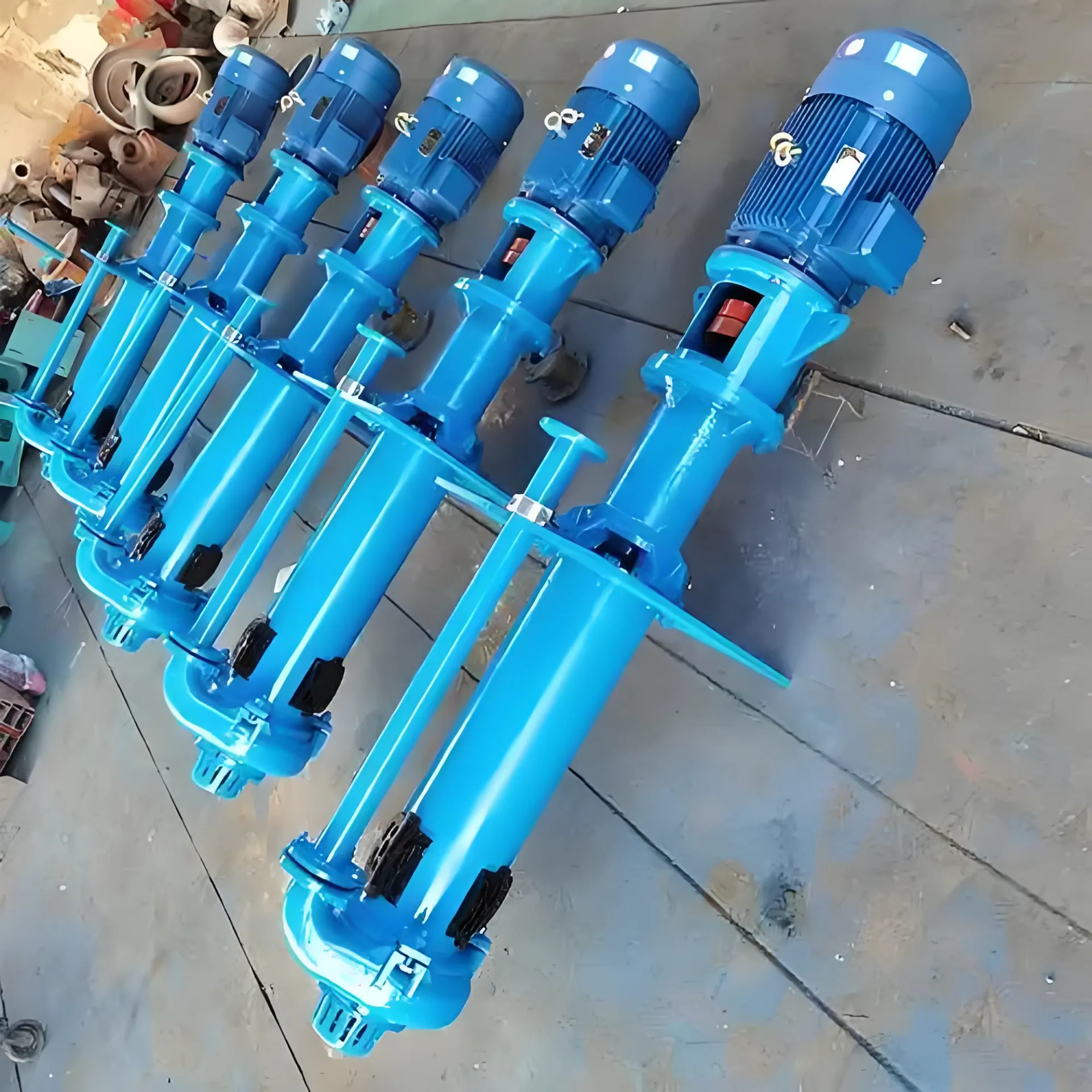
The OEM medium head heavy duty slurry pump is a critical piece of industrial machinery engineered specifically for the transport of high-density, abrasive, and corrosive fluids. Positioned within the fluid handling segment of the mining, dredging, and chemical processing industrial chains, these pumps are designed to bridge the gap between low-head high-volume transfer pumps and high-head pipeline transport systems. The core technical objective of a medium head configuration is to optimize the balance between Total Dynamic Head (TDH) and volumetric flow rate while minimizing the velocity-induced erosion of the internal wetted parts. By integrating advanced centrifugal hydraulics with reinforced structural metallurgy, these pumps ensure the continuous movement of slurries containing high concentrations of solids—such as tailings, mineral concentrates, and crushed ore—maintaining systemic stability under extreme hydrostatic pressures and abrasive shear forces.
Material Science & Manufacturing
The operational longevity of a heavy duty slurry pump is fundamentally determined by the tribological properties of its materials. For the wetted components, specifically the impeller and volute liner, high-chromium white irons (ASTM A532) are utilized. These alloys typically contain 25% to 28% chromium, forming a hard martensitic matrix embedded with M7C3 carbides, which provide exceptional resistance to abrasive wear. In environments where chemical corrosion accompanies abrasion, duplex stainless steels or specialized rubber liners (Natural Rubber or Nitrile) are employed to prevent leaching and surface pitting. The rubber liners utilize a high-molecular-weight polymer structure that absorbs the kinetic energy of impacting particles, effectively "bouncing" the slurry rather than allowing it to erode the substrate.
Manufacturing follows a rigorous precision-casting process. The impeller is produced via investment casting to ensure a balanced hydraulic profile, followed by a precise heat treatment cycle—including quenching and tempering—to achieve a hardness rating of HRC 60-65. The pump casing is typically constructed from heavy-duty cast steel or ductile iron to withstand the structural stress of medium-head pressures. Key parameter control during manufacturing focuses on the "clearance gap" between the impeller and the suction liner; excessive gaps lead to recirculation and increased turbulence, while overly tight gaps risk catastrophic contact during thermal expansion. All mating surfaces are machined to a tolerance of ±0.05mm to prevent slurry leakage and ensure the integrity of the mechanical seals.
Performance & Engineering
Engineering a medium head slurry pump requires a deep analysis of fluid dynamics and force distribution. The primary challenge is managing the "Critical Settling Velocity" (CSV). If the flow velocity drops below the CSV, solids precipitate, leading to pipeline blockage and increased torque on the pump shaft. Conversely, excessive velocity accelerates wear exponentially according to the relationship where erosion rate is proportional to the cube of the velocity (V³). Therefore, the hydraulic design focuses on a gradual transition of the fluid flow from the impeller eye to the discharge flange to minimize turbulence and cavitation.
Force analysis is applied to the shaft assembly to counteract the radial loads generated by asymmetrical wear in the volute. Heavy-duty bearings, often lubricated via an external oil bath or forced-feed system, are utilized to handle these loads. Environmental resistance is addressed through the implementation of "expeller" seals or double-mechanical seals with a pressurized flushing system (API Plan 53 or 54), which prevents abrasive particles from entering the bearing housing. Compliance with engineering standards ensures that the pump can operate at 110% of its rated capacity for short durations without experiencing structural failure or severe vibration, ensuring operational reliability in 24/7 mining cycles.
Technical Specifications
| Technical Parameter | Standard Duty Range | Heavy Duty Range | High-Chrome Spec | Rubber Lined Spec |
|---|---|---|---|---|
| Max Discharge Head (m) | 20 - 45 | 45 - 80 | Up to 90 | Up to 50 |
| Flow Rate (m³/h) | 150 - 600 | 600 - 2500 | 200 - 1800 | 100 - 1200 |
| Max Particle Size (mm) | 15 - 30 | 30 - 100 | Up to 120 | Up to 40 |
| Slurry Density (g/cm³) | 1.1 - 1.3 | 1.3 - 1.8 | Up to 2.0 | Up to 1.5 |
| Impeller Hardness (HRC) | 55 - 58 | 60 - 65 | 62 - 66 | N/A (Elastomer) |
| Bearing Life (L10h) | 20,000 | 40,000+ | 40,000+ | 30,000 |
Failure Mode & Maintenance
Failure analysis of medium head slurry pumps typically identifies three primary modes: Abrasive Wear, Cavitation Erosion, and Mechanical Fatigue. Abrasive wear occurs most prominently at the impeller vanes and the volute cut-water, where high-velocity slurry creates micro-plowing of the metal surface. This leads to a gradual drop in head and efficiency. Cavitation occurs when the Net Positive Suction Head Available (NPSHa) falls below the NPSH Required (NPSHr), creating vapor bubbles that collapse violently against the impeller surface, leaving characteristic "pitting" or "honeycomb" marks.
Mechanical fatigue often manifests as shaft deflection or bearing failure, usually caused by unbalanced impellers or excessive solids loading. To mitigate these failures, a professional maintenance protocol is required: 1) Vibration Analysis: Monthly monitoring of bearing housings to detect early signs of imbalance or misalignment. 2) Wear Measurement: Using ultrasonic thickness gauges to monitor the remaining wall thickness of the liners. 3) Lubrication Audit: Ensuring the purity of the oil to prevent contamination from slurry ingress. When liners reach the minimum allowable thickness (typically 20% of original), they must be replaced to prevent the slurry from eroding the main pump casing, which would necessitate a complete equipment overhaul.
Industry FAQ
Q: How do we determine whether to specify high-chrome alloys or rubber lining for a medium head application?
A: The decision is based on the particle size and chemistry of the slurry. High-chrome alloys are mandatory for large, sharp particles ( >2mm) and high-pressure applications where impact energy is high. Rubber lining is superior for smaller, fine particles and highly acidic or alkaline environments where chemical corrosion is the dominant wear mechanism.
Q: What is the impact of increasing the slurry concentration on the pump's medium head performance?
A: Increasing concentration increases the fluid viscosity and the specific gravity of the medium. This results in a higher friction loss in the pipeline and a shift in the pump curve, typically reducing the maximum achievable head and increasing the power consumption (Brake Horsepower) required by the motor.
Q: Why is the pump experiencing premature impeller failure despite using HRC 65 materials?
A: This is often a symptom of cavitation or "recirculation" at the impeller eye. If the pump is operated too far to the left of its Best Efficiency Point (BEP), internal turbulence increases, causing localized high-velocity zones that can erode even the hardest alloys. We recommend verifying the NPSHa and adjusting the system valve settings.
Q: How does the OEM design optimize the transition from medium head to high head requirements?
A: Optimization is achieved through the use of multi-stage impellers or by modifying the impeller diameter within the same casing. By adjusting the vane angle and the discharge area, the pump can be tuned to provide higher pressure without necessitating a complete change in the structural footprint of the pump.
Q: What are the critical signs that the mechanical seal is about to fail in a heavy duty slurry environment?
A: The primary indicator is an increase in the leakage rate of the flush fluid or the appearance of slurry particles in the seal chamber. Additionally, a sharp increase in the temperature of the seal housing often indicates that the seal faces are running dry or are being compromised by abrasive ingress.
Conclusion
The OEM medium head heavy duty slurry pump represents a sophisticated synthesis of metallurgical science and hydraulic engineering. By balancing the requirements of abrasive resistance—through the application of high-chromium alloys and specialized polymers—with the mechanical demands of medium-head pressure, these systems ensure the operational continuity of heavy industrial processes. The technical integrity of the pump is not merely a result of its material hardness, but of its adherence to precise manufacturing tolerances and the rigorous management of fluid dynamics to prevent cavitation and excessive erosion.
Moving forward, the integration of smart monitoring systems, such as real-time wear sensors and IoT-enabled vibration analysis, will further transition these pumps from reactive to predictive maintenance models. For procurement and engineering managers, the focus must remain on the alignment between the slurry's physical properties and the pump's material specifications to maximize the Mean Time Between Failures (MTBF) and reduce the total cost of ownership in demanding industrial environments.
-
Comprehensive Guide to Waterproof ORings for Optimal Sealing Solutions
News2026-06-09
-
heavy duty submersible pump Performance Analysis
News2026-06-25
-
best submersible pump for septic tank Performance Analysis
News2026-06-25
-
basement sewer ejector pump Performance Analysis
News2026-06-25
-
basement pumps ejector pumps Performance Analysis
News2026-06-25
-
basement lift pump Performance and Engineering
News2026-06-25
-
basement bathroom pump systems Performance Analysis
News2026-06-24
-
basement bathroom ejector pump system Performance Engineering
News2026-06-24
-
2 hp sewage pump Performance Engineering
News2026-06-24
-
1 hp septic pump Performance Engineering
News2026-06-24
-
submersible effluent pump Performance Analysis
News2026-06-24
-
submergable pump Material Science
News2026-06-23
-
sewer injection pump Performance Engineering
News2026-06-23
-
Sewer Ejector Pump System Performance Analysis
News2026-06-23
-
septic tank pump for sale Performance Engineering
News2026-06-23




