English
- Afrikaans
- Albanian
- Amharic
- Arabic
- Armenian
- Azerbaijani
- Basque
- Belarusian
- Bengali
- Bosnian
- Bulgarian
- Catalan
- Cebuano
- Corsican
- Croatian
- Czech
- Danish
- Dutch
- English
- Esperanto
- Estonian
- Finnish
- French
- Frisian
- Galician
- Georgian
- German
- Greek
- Gujarati
- Haitian Creole
- hausa
- hawaiian
- Hebrew
- Hindi
- Miao
- Hungarian
- Icelandic
- igbo
- Indonesian
- irish
- Italian
- Japanese
- Javanese
- Kannada
- kazakh
- Khmer
- Rwandese
- Korean
- Kurdish
- Kyrgyz
- Lao
- Latin
- Latvian
- Lithuanian
- Luxembourgish
- Macedonian
- Malgashi
- Malay
- Malayalam
- Maltese
- Maori
- Marathi
- Mongolian
- Myanmar
- Nepali
- Norwegian
- Norwegian
- Occitan
- Pashto
- Persian
- Polish
- Portuguese
- Punjabi
- Romanian
- Russian
- Samoan
- Scottish Gaelic
- Serbian
- Sesotho
- Shona
- Sindhi
- Sinhala
- Slovak
- Slovenian
- Somali
- Spanish
- Sundanese
- Swahili
- Swedish
- Tagalog
- Tajik
- Tamil
- Tatar
- Telugu
- Thai
- Turkish
- Turkmen
- Ukrainian
- Urdu
- Uighur
- Uzbek
- Vietnamese
- Welsh
- Bantu
- Yiddish
- Yoruba
- Zulu

Telephone: +86 13120555503
Email: frank@cypump.com


Apr . 01, 2024 17:55 Back to list
oem heavy duty slurry pump Material Science Manufacturing

Introduction
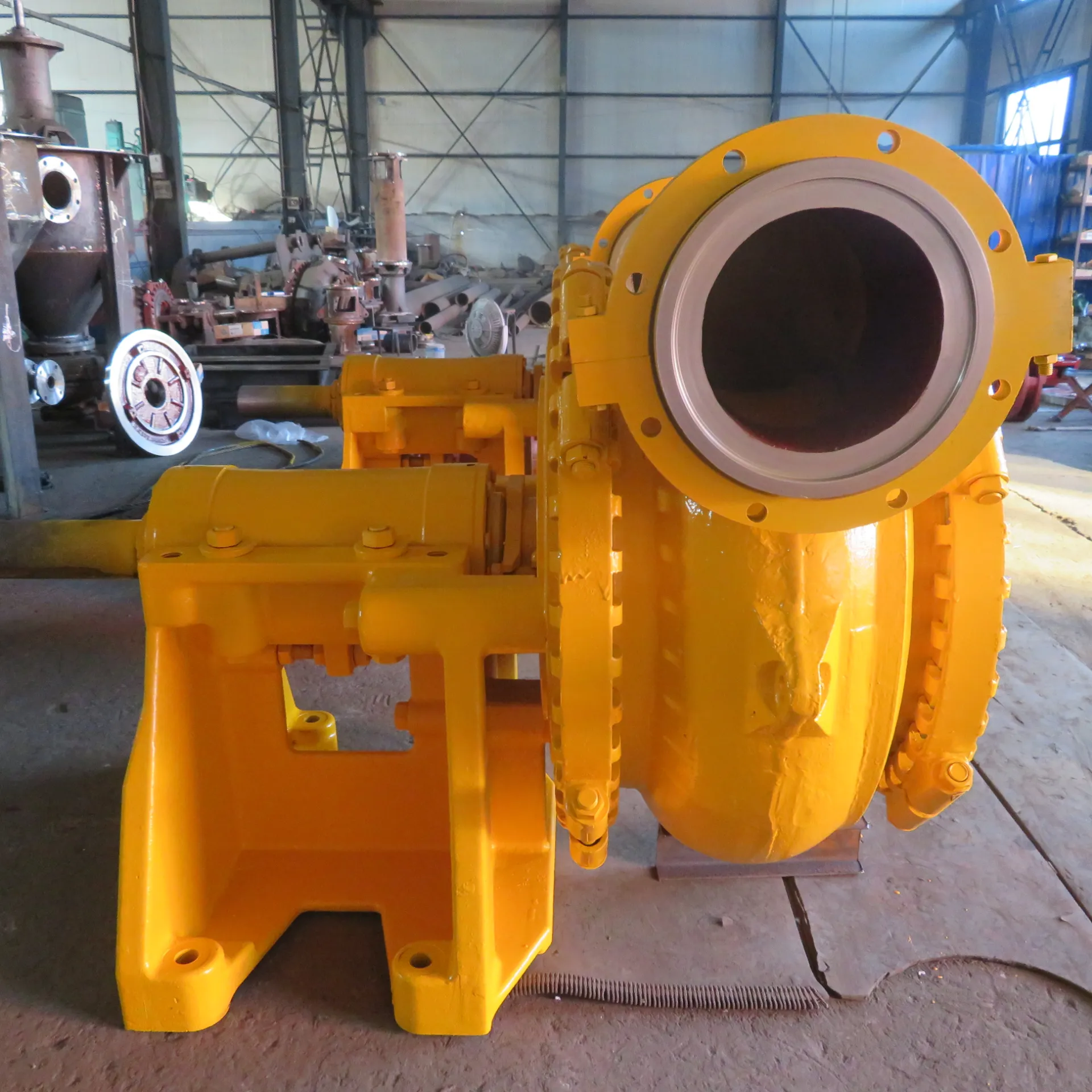
OEM heavy duty slurry pumps are centrifugal pumps specifically designed for the demanding task of transporting abrasive, erosive, and corrosive slurries. Positioned critically within the mining, mineral processing, wastewater treatment, and industrial sands industries, these pumps represent a substantial investment and a key determinant of process efficiency. Unlike standard centrifugal pumps, slurry pumps incorporate robust designs to mitigate wear, corrosion, and blockage. Core performance characteristics include high flow rates at moderate heads, exceptional solids handling capacity, and extended operational life in harsh environments. The increasing complexity of modern slurry compositions, coupled with stricter environmental regulations regarding wastewater discharge, drives the demand for increasingly sophisticated slurry pump technologies. The selection of appropriate materials and pump design is paramount to minimizing total cost of ownership, reducing downtime, and ensuring safe and reliable operation.
Material Science & Manufacturing
The performance and longevity of a heavy-duty slurry pump are fundamentally determined by the materials of construction and the precision of the manufacturing process. Pump casings are commonly cast from high-chromium white iron (typically 27-30% Cr) due to its exceptional abrasion resistance, crucial when handling hard particulate matter. Impeller materials range from similarly alloyed white iron for highly abrasive slurries to ductile iron with elastomer coatings (such as rubber or polyurethane) for a balance of abrasion and corrosion resistance. Shafts are usually forged from alloy steels, heat treated to high tensile strength and surface hardened to resist wear and fatigue. Seals are a critical component, with options including mechanical seals (silicon carbide versus silicon carbide, tungsten carbide versus tungsten carbide) and packing glands, selected based on the slurry’s corrosivity and the required level of leakage control. The manufacturing process for pump casings typically involves sand casting followed by meticulous heat treatment to achieve the desired microstructure. Impellers are often investment cast, providing greater dimensional accuracy and a smoother surface finish, which minimizes turbulence and erosion. Welding procedures, particularly for repairs or the fabrication of complex geometries, must adhere to stringent standards (e.g., AWS D1.1 for structural welding) to ensure weld integrity and prevent cracking. Key parameter control during manufacturing includes dimensional tolerances, material hardness verification (using Rockwell or Brinell scales), non-destructive testing (NDT) such as radiographic inspection and ultrasonic testing, and hydrostatic pressure testing to confirm casing integrity. Elastomer coatings are applied using precisely controlled spraying or molding techniques to ensure uniform thickness and adhesion. The selection and control of welding consumables are crucial to prevent dilution of the base metal and maintain corrosion resistance.
Performance & Engineering
The engineering of a heavy-duty slurry pump necessitates a comprehensive understanding of fluid dynamics, materials science, and mechanical design. Hydraulic performance is characterized by pump curves depicting head (pressure) versus flow rate, alongside efficiency contours. Key considerations include minimizing energy consumption while maximizing solids handling capacity. Impeller design—radial, vortex, or mixed flow—is tailored to the slurry's characteristics; radial impellers are suitable for higher heads and lower solids concentrations, while vortex impellers excel at handling large solids with minimal abrasion. Force analysis is critical in predicting pump component stresses. Centrifugal forces generated by impeller rotation, coupled with the impact forces of solid particles, induce significant loads on the pump casing, shaft, and bearings. Finite element analysis (FEA) is routinely employed to optimize component geometry and material selection to withstand these stresses. Environmental resistance, particularly corrosion, is addressed through material selection and protective coatings. Slurries containing chlorides, sulfates, or acids demand corrosion-resistant alloys such as duplex stainless steels or specialized polymers. Compliance requirements, dictated by industry regulations (e.g., API 610 for centrifugal pumps, ISO 13709 for slurry pumps), mandate specific design features, testing procedures, and documentation requirements to ensure safety and reliability. Pump selection also considers Net Positive Suction Head Required (NPSHr), a critical parameter to prevent cavitation, which can cause severe damage to the impeller. Proper system design, including piping layout and suction lift limitations, is crucial for maintaining adequate NPSHa (available) to exceed NPSHr.
Technical Specifications
| Parameter | Unit | Typical Range (OEM Heavy Duty Slurry Pump) | Notes |
|---|---|---|---|
| Flow Rate | m³/h | 50 – 1500 | Varies significantly with impeller diameter and pump speed |
| Head (Discharge Pressure) | m | 10 – 120 | Dependent on slurry density and pump speed |
| Solids Handling Size | mm | Up to 150 | Limited by impeller passage size |
| Slurry Concentration (Weight %) | % | Up to 70 | Higher concentrations require more robust pump designs |
| Pump Speed | RPM | 500 – 3600 | Affects both head and flow rate |
| Casing Material | - | High-Chromium White Iron, Stainless Steel (Duplex) | Selection based on slurry corrosivity |
Failure Mode & Maintenance
Heavy-duty slurry pumps are susceptible to several failure modes, primarily stemming from abrasive wear, corrosion, erosion, and fatigue. Abrasive wear, caused by the impact of solid particles, leads to impeller and casing erosion, gradually reducing pump performance. Corrosion, especially in acidic or saline slurries, weakens pump components, leading to leaks and eventual failure. Erosion, a synergistic effect of abrasion and corrosion, accelerates material loss. Fatigue cracking can occur in the shaft and impeller due to cyclic loading and stress concentrations. Cavitation, induced by insufficient NPSHa, causes pitting and erosion on the impeller surface. Preventive maintenance is crucial. Regular inspections for wear patterns, corrosion, and leakage are essential. Impeller and casing replacements are inevitable, with intervals depending on slurry abrasiveness and corrosivity. Bearing lubrication and seal replacement are critical to prevent mechanical failures. Vibration analysis can detect early signs of bearing wear or impeller imbalance. To mitigate failures, proper pump selection for the specific slurry characteristics is paramount. Implementing wear-resistant coatings, optimizing impeller design for minimal turbulence, and ensuring adequate NPSHa are crucial preventative measures. Detailed maintenance logs, tracking component replacement intervals and performance data, enable predictive maintenance strategies and minimize unplanned downtime. Periodic non-destructive testing (NDT) of critical components can identify potential cracks or defects before they lead to catastrophic failures.
Industry FAQ
Q: What are the key considerations when selecting a slurry pump for a highly abrasive slurry containing large particles?
A: When dealing with highly abrasive slurries containing large particles, the primary considerations are abrasion resistance, solids handling capacity, and pump speed. A pump constructed with high-chromium white iron or ceramic liners is recommended for optimal abrasion resistance. The impeller design should be a vortex or recessed impeller to facilitate the passage of large solids without clogging. Lower pump speeds generally reduce abrasion rates, but may require a larger pump to achieve the desired flow rate.
Q: How does slurry composition impact the selection of seal materials?
A: Slurry composition dramatically impacts seal material selection. Highly abrasive slurries require seals with hardened faces to resist wear. Corrosive slurries demand seals made from corrosion-resistant materials such as silicon carbide or tungsten carbide. The pH of the slurry is also a critical factor, as some materials are susceptible to degradation in acidic or alkaline environments. Mechanical seals are generally preferred for corrosive slurries, while packing glands may be suitable for less demanding applications.
Q: What is NPSH, and why is it important in slurry pump applications?
A: NPSH (Net Positive Suction Head) is the absolute pressure at the pump suction, minus the vapor pressure of the liquid. It is critical to ensure that the NPSHa (available) is always greater than the NPSHr (required) to prevent cavitation. Cavitation occurs when the pressure drops below the vapor pressure, forming vapor bubbles that collapse violently, causing erosion and damage to the impeller.
Q: What preventative maintenance practices can extend the lifespan of a slurry pump?
A: Regular inspections for wear, corrosion, and leakage are essential. Routine bearing lubrication, seal replacement, and impeller cleaning are critical. Vibration analysis can detect early signs of mechanical issues. Maintaining detailed maintenance logs and implementing a predictive maintenance program based on performance data can significantly extend pump lifespan.
Q: What are the advantages of using variable frequency drives (VFDs) with slurry pumps?
A: VFDs offer significant advantages, including the ability to adjust pump speed to match process demands, reducing energy consumption and minimizing wear. They also allow for soft starting and stopping, reducing stress on the pump and motor. Precise flow control improves process efficiency and reduces the risk of pump clogging or overpressure.
Conclusion
OEM heavy duty slurry pumps represent a sophisticated engineering solution for the challenging demands of solids handling applications. Their robust design, carefully selected materials, and precise manufacturing processes are essential for reliable operation and minimized downtime. Understanding the fundamental principles of slurry flow, abrasion, corrosion, and hydraulic performance is crucial for optimal pump selection and preventative maintenance. The increasing focus on sustainability and operational efficiency will continue to drive innovation in slurry pump technology, with advancements in materials, impeller designs, and control systems.
Ultimately, the longevity and cost-effectiveness of a slurry pump depend on a holistic approach that encompasses proper pump selection, diligent maintenance practices, and a thorough understanding of the specific slurry characteristics. Adherence to industry standards and best practices ensures safe and reliable operation, contributing to the overall efficiency and profitability of the industrial process. Investing in high-quality slurry pumps and implementing a comprehensive maintenance program remains a prudent strategy for minimizing total cost of ownership and maximizing return on investment.
-
Comprehensive Guide to Waterproof ORings for Optimal Sealing Solutions
News2026-06-09
-
septic effluent pump Performance and Engineering
News2026-06-13
-
ejector sump pump Performance Engineering
News2026-06-13
-
Wastewater Pump Performance Analysis
News2026-06-13
-
waste water pumps Material Science Manufacturing
News2026-06-13
-
submersible sewage pumps Material Science Manufacturing
News2026-06-13
-
submersable pumps Performance Analysis
News2026-06-12
-
submerge pump Performance Analysis
News2026-06-12
-
Septic Tank Lift Pump Performance Analysis
News2026-06-12
-
Septic System Pump Replacement Performance Analysis
News2026-06-12
-
Septic Pumps Cost Performance Analysis
News2026-06-12
-
best sewage ejector pump Performance Engineering
News2026-06-11
-
aerobic septic system pump Performance Analysis
News2026-06-11
-
Sumergible Pump Performance Analysis
News2026-06-11
-
ejector pump for basement Performance Engineering
News2026-06-11




