English
- Afrikaans
- Albanian
- Amharic
- Arabic
- Armenian
- Azerbaijani
- Basque
- Belarusian
- Bengali
- Bosnian
- Bulgarian
- Catalan
- Cebuano
- Corsican
- Croatian
- Czech
- Danish
- Dutch
- English
- Esperanto
- Estonian
- Finnish
- French
- Frisian
- Galician
- Georgian
- German
- Greek
- Gujarati
- Haitian Creole
- hausa
- hawaiian
- Hebrew
- Hindi
- Miao
- Hungarian
- Icelandic
- igbo
- Indonesian
- irish
- Italian
- Japanese
- Javanese
- Kannada
- kazakh
- Khmer
- Rwandese
- Korean
- Kurdish
- Kyrgyz
- Lao
- Latin
- Latvian
- Lithuanian
- Luxembourgish
- Macedonian
- Malgashi
- Malay
- Malayalam
- Maltese
- Maori
- Marathi
- Mongolian
- Myanmar
- Nepali
- Norwegian
- Norwegian
- Occitan
- Pashto
- Persian
- Polish
- Portuguese
- Punjabi
- Romanian
- Russian
- Samoan
- Scottish Gaelic
- Serbian
- Sesotho
- Shona
- Sindhi
- Sinhala
- Slovak
- Slovenian
- Somali
- Spanish
- Sundanese
- Swahili
- Swedish
- Tagalog
- Tajik
- Tamil
- Tatar
- Telugu
- Thai
- Turkish
- Turkmen
- Ukrainian
- Urdu
- Uighur
- Uzbek
- Vietnamese
- Welsh
- Bantu
- Yiddish
- Yoruba
- Zulu

Telephone: +86 13120555503
Email: frank@cypump.com


Apr . 01, 2024 17:55 Back to list
mining slurry pumps Performance Analysis
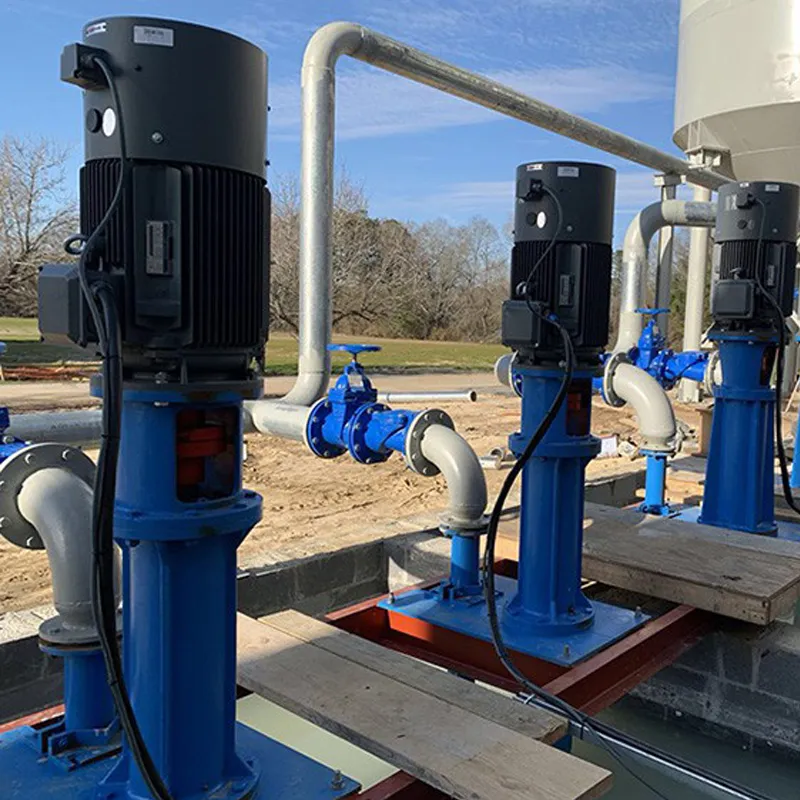
Introduction
Mining slurry pumps are critical components in mineral processing plants, tailings management facilities, and dredging operations. These pumps are designed to efficiently transport abrasive and highly concentrated mixtures of water and solid particles – commonly referred to as slurry – over varying distances and elevations. Unlike centrifugal pumps designed for clean fluids, slurry pumps incorporate specialized designs to mitigate wear, erosion, and blockage resulting from the solid content. Their performance directly impacts the overall efficiency and operational costs of mining and related industries. A primary challenge within the industry lies in maximizing pump lifespan while minimizing downtime, demanding robust materials, sophisticated hydraulic designs, and effective maintenance strategies. This guide provides an in-depth technical overview of mining slurry pumps, covering material science, manufacturing processes, performance characteristics, failure modes, and relevant industry standards.
Material Science & Manufacturing
The performance and longevity of a mining slurry pump are heavily dependent on the materials used in its construction. Pump casings are frequently manufactured from high-chromium cast iron (typically 27% Cr), offering excellent abrasion resistance. The chromium carbides formed during casting provide significant hardness, resisting wear from the impact of solid particles within the slurry. Impellers, volutes, and liners are also commonly constructed from similar high-chromium alloys, or alternatively, from hardened stainless steels (e.g., duplex stainless steels like 2205) for applications involving corrosive slurries. Shafts are generally made from alloy steels, heat-treated to achieve high tensile strength and torsional rigidity. Sealing components often utilize elastomers like nitrile rubber, Viton (fluoroelastomer), or mechanical seals with tungsten carbide or silicon carbide faces to prevent leakage and protect bearings.
Manufacturing processes vary depending on pump size and component complexity. Casings are typically produced using sand casting, although investment casting is employed for smaller, more intricate designs requiring tighter tolerances. Impellers are often manufactured using centrifugal casting, resulting in a dense, homogeneous structure with minimal porosity. Welding processes, such as shielded metal arc welding (SMAW) or gas tungsten arc welding (GTAW), are critical for joining components and applying wear-resistant overlays. Precise machining and grinding operations are essential for ensuring proper fit and alignment of internal components. Critical parameters during manufacturing include controlling the chemical composition of alloys, maintaining consistent heat treatment cycles, and verifying dimensional accuracy through non-destructive testing (NDT) methods like ultrasonic testing and radiographic inspection. The hardness of the cast iron components is a critical parameter, typically measured using Rockwell C hardness testing, aiming for a range of 58-65 HRC for optimal abrasion resistance.
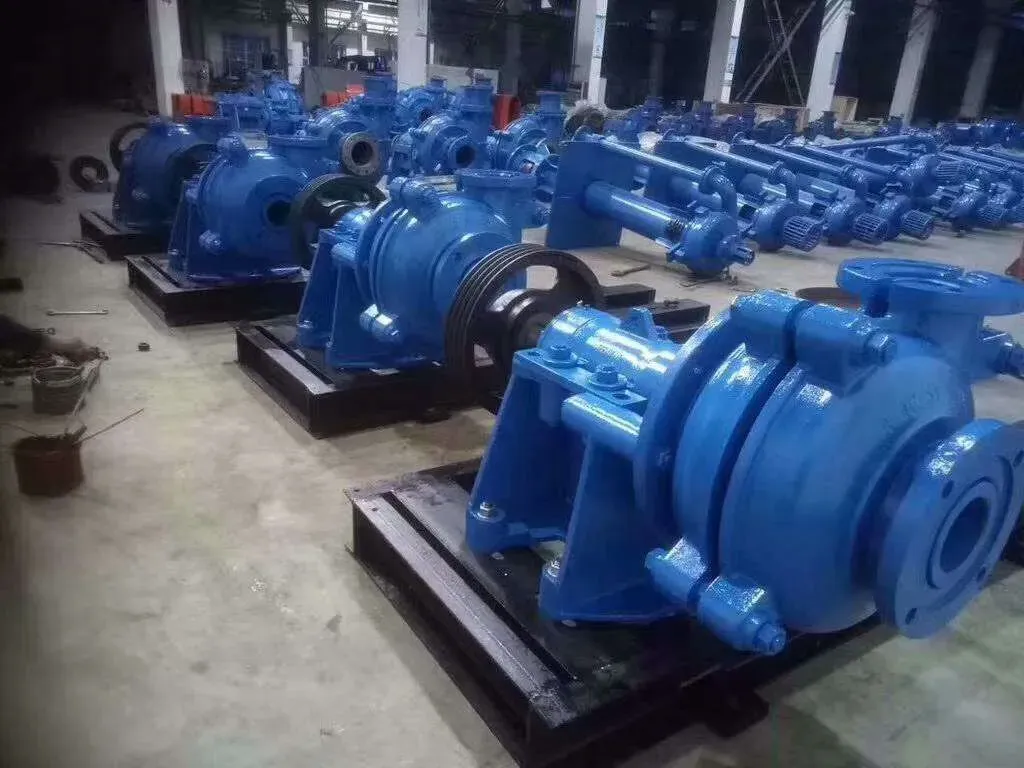
Performance & Engineering
The performance of a mining slurry pump is governed by several key engineering principles. Pump head (the height to which the pump can lift the slurry) is a function of impeller diameter, rotational speed, and slurry density. Flow rate is determined by impeller design, pump speed, and the characteristics of the slurry. A critical performance metric is the pump’s efficiency, which represents the ratio of hydraulic power output to shaft power input. Efficiency is affected by factors such as impeller geometry, internal clearances, and the presence of turbulence.
Force analysis within the pump is crucial for preventing component failure. Impellers experience centrifugal forces due to rotation and impact forces from solid particles. Bearings are subjected to radial and axial loads, necessitating proper selection and lubrication. Environmental resistance is a major consideration, particularly in outdoor installations. Pumps must withstand extreme temperatures, humidity, and exposure to corrosive agents. Compliance requirements vary depending on the geographical location and the nature of the mining operation. For instance, pumps used in potentially explosive environments must comply with ATEX directives (Europe) or Class I, Division 1 & 2 regulations (North America). Functional implementation often involves integrating the pump into a larger piping system, requiring careful consideration of pipe diameter, material compatibility, and the use of appropriate valves and fittings to minimize pressure drop and prevent cavitation.
Technical Specifications
| Parameter | Unit | Typical Value (Centrifugal Slurry Pump) | Typical Value (Positive Displacement Slurry Pump) |
|---|---|---|---|
| Maximum Flow Rate | m³/h | 100 – 1500 | 5 – 200 |
| Maximum Head | m | 10 – 80 | 50 – 200 |
| Maximum Solid Concentration (by weight) | % | Up to 60 | Up to 80 |
| Maximum Particle Size | mm | Up to 75 | Up to 100 |
| Pump Material (Casing) | - | High-Chromium Cast Iron (27% Cr) | High-Chromium Cast Iron (27% Cr) or Stainless Steel |
| Pump Material (Impeller) | - | High-Chromium Cast Iron (27% Cr) | High-Chromium Cast Iron (27% Cr) or Rubber Lined |
Failure Mode & Maintenance
Mining slurry pumps are susceptible to several failure modes. Erosion is a primary concern, particularly at the impeller discharge, volute, and liner surfaces, due to the constant impact of abrasive particles. Fatigue cracking can occur in the impeller and shaft due to cyclic loading and stress concentration. Corrosion can degrade pump components, especially in slurries containing corrosive chemicals. Blockage can occur if large particles or debris accumulate within the pump casing or impeller passages. Cavitation, caused by vapor bubble formation and collapse, can erode impeller surfaces and reduce pump efficiency.
Preventive maintenance is critical for minimizing downtime and extending pump lifespan. Regular inspections should be conducted to identify signs of wear, erosion, or corrosion. Bearing lubrication should be monitored and maintained according to manufacturer’s recommendations. Impeller and liner replacement should be scheduled based on wear rate and operating conditions. Periodic vibration analysis can detect early signs of bearing failure or impeller imbalance. Thorough cleaning of the pump casing and impeller passages is essential for preventing blockage. For pumps handling corrosive slurries, regular monitoring of pH and chemical composition is necessary. When failures occur, root cause analysis should be performed to identify the underlying cause and implement corrective actions. Non-destructive testing methods, like dye penetrant inspection, can help identify cracks before they propagate.
Industry FAQ
Q: What is the impact of slurry solids concentration on pump selection?
A: Higher solids concentrations significantly increase abrasive wear and the risk of blockage. Pump selection must consider the maximum allowable solids concentration for the specific pump type. Positive displacement pumps generally handle higher solids concentrations more effectively than centrifugal pumps. The pump's impeller design and casing geometry must be optimized for handling the increased viscosity and density of the slurry.
Q: How does the slurry’s particle size distribution affect pump performance and wear?
A: A wider particle size distribution, containing a significant proportion of coarse particles, leads to increased abrasive wear. Larger particles cause more significant impact forces, accelerating erosion. Pump selection should consider the maximum particle size that the pump can handle without blockage or excessive wear. Screens or classifiers may be required upstream of the pump to remove oversized particles.
Q: What are the key considerations when selecting a pump for a corrosive slurry?
A: Material compatibility is paramount. Pump components must be constructed from materials that are resistant to the specific corrosive agents present in the slurry. Stainless steels, alloy steels, and rubber linings are commonly used for corrosive slurry applications. Regular monitoring of slurry pH and chemical composition is essential for detecting changes that could accelerate corrosion.
Q: How does cavitation impact slurry pump performance, and what measures can be taken to prevent it?
A: Cavitation reduces pump efficiency, causes noise, and erodes impeller surfaces. It occurs when the pressure at the pump inlet falls below the vapor pressure of the slurry. Preventive measures include ensuring adequate suction head, minimizing suction line losses, and reducing slurry temperature. Proper pump selection and impeller design are also crucial for avoiding cavitation.
Q: What is the role of mechanical seals in slurry pump applications?
A: Mechanical seals prevent leakage of slurry from the pump casing and protect the bearings from contamination. In slurry applications, seals are subjected to abrasive wear and potential damage from solid particles. Selecting seals with hardened faces (e.g., tungsten carbide or silicon carbide) and appropriate flushing arrangements is critical for maximizing seal lifespan. Regular inspection and replacement of seals are essential for preventing pump failure.
Conclusion
Mining slurry pumps represent a complex engineering challenge, demanding careful consideration of material science, hydraulic design, and operational factors. Selecting the appropriate pump for a specific application requires a thorough understanding of the slurry characteristics, process requirements, and environmental conditions. Optimizing pump performance and minimizing downtime necessitate a proactive maintenance strategy that incorporates regular inspections, preventive maintenance, and root cause analysis of failures.
Future trends in slurry pump technology are focused on developing more wear-resistant materials, improving pump efficiency, and incorporating intelligent monitoring systems for predictive maintenance. The integration of advanced modeling and simulation techniques will enable engineers to optimize pump designs for specific applications and predict pump performance with greater accuracy. Continuous innovation in slurry pump technology is crucial for enhancing the efficiency, reliability, and sustainability of mining operations.
-
Comprehensive Guide to Waterproof ORings for Optimal Sealing Solutions
News2026-06-09
-
Septic Pump System Performance Analysis
News2026-06-08
-
pump for septic Material Science
News2026-06-08
-
basement sewer pump Performance Analysis
News2026-06-08
-
submerged pump Performance Engineering
News2026-06-08
-
Septic System Pumps Performance Analysis
News2026-06-08
-
septic system pump Material Science and Manufacturing
News2026-06-07
-
pump for septic tank Material Science Manufacturing
News2026-06-07
-
submersible sewage pump Material Science
News2026-06-07
-
Sewage Ejector Material Science and Manufacturing
News2026-06-07
-
Ejection Pump Material Science
News2026-06-07
-
pump submersible Performance Analysis
News2026-06-06
-
ejector pumps Performance Engineering
News2026-06-06
-
basement ejector pump Material Science Manufacturing
News2026-06-06
-
Septic Tanks Pumping Performance Analysis
News2026-06-06




