English
- Afrikaans
- Albanian
- Amharic
- Arabic
- Armenian
- Azerbaijani
- Basque
- Belarusian
- Bengali
- Bosnian
- Bulgarian
- Catalan
- Cebuano
- Corsican
- Croatian
- Czech
- Danish
- Dutch
- English
- Esperanto
- Estonian
- Finnish
- French
- Frisian
- Galician
- Georgian
- German
- Greek
- Gujarati
- Haitian Creole
- hausa
- hawaiian
- Hebrew
- Hindi
- Miao
- Hungarian
- Icelandic
- igbo
- Indonesian
- irish
- Italian
- Japanese
- Javanese
- Kannada
- kazakh
- Khmer
- Rwandese
- Korean
- Kurdish
- Kyrgyz
- Lao
- Latin
- Latvian
- Lithuanian
- Luxembourgish
- Macedonian
- Malgashi
- Malay
- Malayalam
- Maltese
- Maori
- Marathi
- Mongolian
- Myanmar
- Nepali
- Norwegian
- Norwegian
- Occitan
- Pashto
- Persian
- Polish
- Portuguese
- Punjabi
- Romanian
- Russian
- Samoan
- Scottish Gaelic
- Serbian
- Sesotho
- Shona
- Sindhi
- Sinhala
- Slovak
- Slovenian
- Somali
- Spanish
- Sundanese
- Swahili
- Swedish
- Tagalog
- Tajik
- Tamil
- Tatar
- Telugu
- Thai
- Turkish
- Turkmen
- Ukrainian
- Urdu
- Uighur
- Uzbek
- Vietnamese
- Welsh
- Bantu
- Yiddish
- Yoruba
- Zulu

Telephone: +86 13120555503
Email: frank@cypump.com


Apr . 01, 2024 17:55 Back to list
mining slurry pump Performance Analysis and Manufacturing Specifications
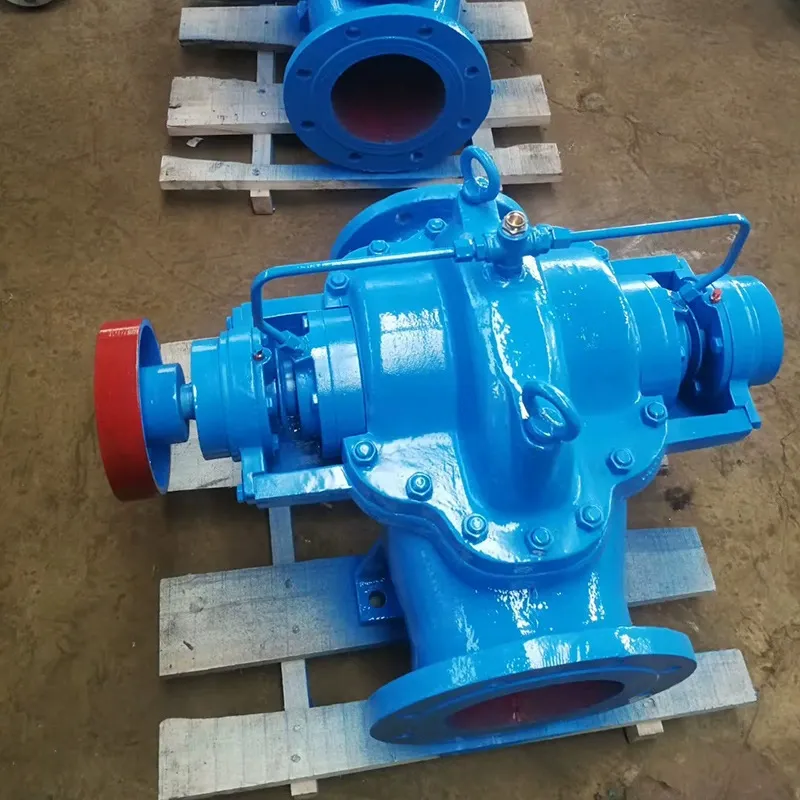
Mining Slurry Pump Performance Analysis and Manufacturing Specifications
The mining slurry pump is a specialized centrifugal pumping system engineered to transport high-density, abrasive fluids—comprising a liquid carrier and suspended solid particulates—within the mining and mineral processing value chain. Positioned as a critical nexus between extraction and refinement, these pumps must maintain volumetric efficiency while operating under extreme hydrostatic pressures and severe abrasive wear. Unlike standard water pumps, slurry pumps are designed to handle non-Newtonian fluids where viscosity varies with shear rate, necessitating a precise balance between impeller tip speed and fluid velocity to prevent premature erosion and cavitation. The core technical objective is the optimization of the Mean Time Between Maintenance (MTBM) by managing the trade-off between hydraulic throughput and the sacrificial wear rate of internal wetted components.
Material Science & Manufacturing
The longevity of a mining slurry pump is fundamentally dictated by the metallurgical properties of its wear liners and impellers. The industry primarily employs two material philosophies: High-Chrome White Irons (ASTM A532) and Elastomeric Polymers. High-chrome alloys (typically 25% to 28% Cr) are engineered to form a dense network of M7C3 carbides within a martensitic matrix. This microstructure provides a hardness of 600-700 HB, offering superior resistance to high-stress abrasion where the impact energy of the slurry particles is significant. Conversely, for finer, low-impact slurries, polyurethane or natural rubber liners are utilized; these materials utilize an elastic deformation mechanism to absorb particle energy, effectively "bouncing" the abrasive media rather than allowing it to carve into the substrate.
Manufacturing these components requires stringent process control. For metallic components, investment casting is often superseded by precision sand casting followed by a rigorous heat treatment cycle of austenitizing and quenching to ensure a uniform martensitic transformation, eliminating internal stresses that could lead to stress-corrosion cracking. The machining process employs CNC grinding for the impeller eye and volute interfaces to ensure a tight tolerance fit, reducing the gap between the impeller and the wear plate to minimize internal recirculation (leakage) and subsequent turbulence-induced erosion. The shaft is typically forged from 4140 or 4340 alloy steel, heat-treated for high torsional strength, and coated with chrome or ceramic to protect against shaft sleeve wear.
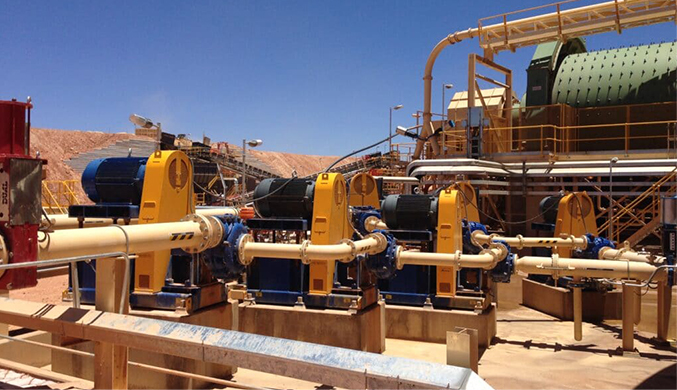
Performance & Engineering
Engineering a slurry pump requires a deep dive into fluid dynamics and force analysis. The primary challenge is the management of the "Critical Settling Velocity." If the flow velocity drops below this threshold, solids precipitate, leading to pipeline blockage and localized "slugging" which can cause catastrophic mechanical shock to the pump casing. Engineers utilize the Durand equation to calculate the minimum transport velocity based on particle size, density, and fluid viscosity. Furthermore, the Net Positive Suction Head required (NPSHr) must be carefully calculated; because slurry is denser than water, the risk of cavitation is heightened. Cavitation in slurry pumps is particularly destructive because the imploding vapor bubbles remove the protective oxide layer of the metal, accelerating the abrasive wear in a synergistic cycle of corrosion-erosion.
From a structural perspective, the pump housing is engineered as a heavy-duty pressure vessel. The volute is designed to gradually convert kinetic energy into pressure while minimizing turbulence. To combat the inherent wear, the engineering design incorporates replaceable liners. The seal system is another critical point; most mining slurry pumps utilize a mechanical seal with an external flushing system (API Plan 32 or 54) to ensure that abrasive particles cannot enter the seal faces, which would otherwise result in immediate failure. Force analysis is also applied to the bearing assembly to handle the radial loads generated by the asymmetrical pressure distribution inherent in high-density fluid transport.
Technical Specifications
| Parameter Dimension | Standard Duty (Rubber Lined) | Heavy Duty (High-Chrome) | Ultra-High Pressure | Evaluation Metric |
|---|---|---|---|---|
| Max Flow Rate (m³/h) | 150 - 1,200 | 200 - 2,500 | 100 - 800 | Volumetric Efficiency |
| Max Head (m) | 10 - 45 | 20 - 80 | 100 - 300 | Hydraulic Gradient |
| Slurry Density (t/m³) | 1.1 - 1.3 | 1.2 - 1.6 | 1.4 - 1.9 | Specific Gravity |
| Max Particle Size (mm) | 2 - 10 | 10 - 50 | 5 - 25 | Clearance Diameter |
| Wear Material Hardness | 60-80 Shore A | 600 - 700 HB | 750+ HV (Ceramic) | Abrasion Resistance |
| Operating Temp (°C) | -10 to +60 | -20 to +150 | -20 to +200 | Thermal Stability |
Failure Mode & Maintenance
Failure analysis of mining slurry pumps generally categorizes degradation into three primary modes: Abrasive Wear, Erosive Cavitation, and Fatigue Cracking. Abrasive wear manifests as a gradual thinning of the impeller vanes and volute liners, typically starting at the impeller eye where fluid velocity is highest. This leads to a drop in discharge pressure and flow rate. Erosive cavitation occurs when the NPSH available is lower than the NPSH required, creating vapor bubbles that collapse against the metal surface, resulting in a "pitting" appearance. Fatigue cracking often occurs in the pump shaft or bearing housing due to prolonged exposure to unbalanced radial loads or vibration caused by impeller imbalance as the material wears unevenly.
Professional maintenance protocols must shift from reactive to predictive. This involves the implementation of vibration analysis to detect bearing degradation and the use of ultrasonic thickness testing on the volute liners to predict the remaining life of the wear parts. When replacing impellers, "balancing" is mandatory to prevent shaft deflection. For maintenance of the sealing system, the flushing fluid must be monitored for purity; any particulate contamination in the flush line will lead to rapid mechanical seal failure. Periodic inspection of the gland packing or mechanical seal faces is required to ensure that leak rates remain within the operational specification of 5-10 drops per minute for packed glands.
Industry FAQ
Q: How do we determine whether to use a high-chrome alloy or a rubber liner for a specific mining application?
A: The selection depends on the particle size and the impact energy. High-chrome alloys are mandatory for coarse, angular particles that cause high-stress abrasion. Rubber liners are superior for fine particles (typically < 0.1mm) and high-velocity flows where the material's elasticity allows it to absorb the impact energy without material loss.
Q: What is the primary cause of premature impeller failure in high-density slurry transport?
A: The primary cause is usually a combination of "sand-blasting" erosion at the vane tips and cavitation at the impeller eye. If the pump is operated too far to the left of its Best Efficiency Point (BEP), internal recirculation occurs, creating vortices that accelerate wear in localized zones.
Q: How does the slurry concentration (percentage of solids) affect the pump's NPSHr?
A: As the concentration of solids increases, the apparent viscosity of the slurry rises. This increases the frictional losses in the suction piping, thereby reducing the NPSH available. Consequently, the pump is more prone to cavitation, requiring a lower mounting height or a larger suction pipe diameter.
Q: Can a slurry pump be operated in a "dry" state for short periods?
A: Absolutely not. Slurry pumps rely on the transported fluid for cooling the mechanical seals and lubricating the internal clearances. Dry running will lead to immediate thermal distortion of the seal faces and can cause the impeller to seize against the wear plate due to rapid thermal expansion.
Q: What is the significance of the "Critical Settling Velocity" in pump system design?
A: It is the minimum velocity required to keep solid particles suspended in the liquid. If the pump operates below this velocity, solids will settle in the volute or the discharge pipeline, creating "sand-beds" that restrict flow and eventually lead to a total system blockage or mechanical failure of the pump shaft due to sudden load spikes.
Conclusion
The operational efficiency of a mining slurry pump is not merely a function of its motor power, but a complex intersection of metallurgical selection, fluid dynamic optimization, and rigorous adherence to hydraulic limits. By aligning the material hardness with the specific abrasive profile of the ore and maintaining the flow velocity above the critical settling threshold, operators can significantly extend the life cycle of the equipment and reduce the total cost of ownership.
Looking forward, the integration of IoT-based condition monitoring—such as real-time wear sensors and automated vibration analysis—will transition the industry toward a truly predictive maintenance model. The future of slurry transport lies in the development of nano-composite liners and variable frequency drive (VFD) optimization to maintain the Best Efficiency Point dynamically as slurry density fluctuates during the mining cycle.
-
Comprehensive Guide to Waterproof ORings for Optimal Sealing Solutions
News2026-06-09
-
Waste Tank Pump Performance Analysis
News2026-06-27
-
Sewer System Pump Out Material Science
News2026-06-27
-
Sewer Ejector Pit Performance Analysis
News2026-06-27
-
septic tank pumps for sale Performance Engineering
News2026-06-27
-
septic system with lift pump Performance Engineering
News2026-06-27
-
septic system sump pump Performance Analysis
News2026-06-26
-
septic pump company Performance Analysis
News2026-06-26
-
pumps water treatment Performance Analysis
News2026-06-26
-
pumps for septic tanks Material Science and Manufacturing
News2026-06-26
-
pump for septic system Material Science Manufacturing
News2026-06-26
-
heavy duty submersible pump Performance Analysis
News2026-06-25
-
best submersible pump for septic tank Performance Analysis
News2026-06-25
-
basement sewer ejector pump Performance Analysis
News2026-06-25
-
basement pumps ejector pumps Performance Analysis
News2026-06-25




