English
- Afrikaans
- Albanian
- Amharic
- Arabic
- Armenian
- Azerbaijani
- Basque
- Belarusian
- Bengali
- Bosnian
- Bulgarian
- Catalan
- Cebuano
- Corsican
- Croatian
- Czech
- Danish
- Dutch
- English
- Esperanto
- Estonian
- Finnish
- French
- Frisian
- Galician
- Georgian
- German
- Greek
- Gujarati
- Haitian Creole
- hausa
- hawaiian
- Hebrew
- Hindi
- Miao
- Hungarian
- Icelandic
- igbo
- Indonesian
- irish
- Italian
- Japanese
- Javanese
- Kannada
- kazakh
- Khmer
- Rwandese
- Korean
- Kurdish
- Kyrgyz
- Lao
- Latin
- Latvian
- Lithuanian
- Luxembourgish
- Macedonian
- Malgashi
- Malay
- Malayalam
- Maltese
- Maori
- Marathi
- Mongolian
- Myanmar
- Nepali
- Norwegian
- Norwegian
- Occitan
- Pashto
- Persian
- Polish
- Portuguese
- Punjabi
- Romanian
- Russian
- Samoan
- Scottish Gaelic
- Serbian
- Sesotho
- Shona
- Sindhi
- Sinhala
- Slovak
- Slovenian
- Somali
- Spanish
- Sundanese
- Swahili
- Swedish
- Tagalog
- Tajik
- Tamil
- Tatar
- Telugu
- Thai
- Turkish
- Turkmen
- Ukrainian
- Urdu
- Uighur
- Uzbek
- Vietnamese
- Welsh
- Bantu
- Yiddish
- Yoruba
- Zulu

Telephone: +86 13120555503
Email: frank@cypump.com


Apr . 01, 2024 17:55 Back to list
Mining Slurry Pump Manufacturers Performance Analysis and Manufacturing Specifications
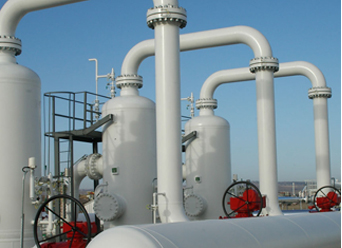
Mining Slurry Pump Performance Analysis and Manufacturing Specifications
Mining slurry pumps are critical infrastructure components designed to transport high-density, abrasive fluids—comprising mineral ores, tailings, and water—through complex piping networks. In the industrial chain, these pumps serve as the primary kinetic energy source for material transport in mineral processing plants and mine drainage systems. The technical position of these pumps is defined by their ability to handle non-Newtonian fluid dynamics while resisting extreme mechanical wear. Core performance is measured by the pump's ability to maintain volumetric efficiency and hydraulic head under conditions of high solid concentration (up to 70% by weight), where the interaction between the abrasive particles and the internal pump surfaces creates a high-stress environment characterized by erosive wear and cavitation.
Material Science & Manufacturing
The engineering of mining slurry pumps begins with advanced metallurgy to combat the synergistic effects of abrasion and corrosion. Mining slurry pump manufacturers primarily utilize high-chromium white irons (ASTM A532) and natural rubber linings. High-chrome alloys, typically containing 25% to 28% Chromium, are engineered to form M7C3 carbides, which provide a hard matrix (600-700 HB) capable of resisting the cutting action of silica and alumina particles. For highly abrasive but less corrosive slurries, polyurethane or natural rubber (NR) linings are employed; these materials utilize elastic deformation to absorb the impact of particles, significantly extending the service life of the pump casing.
The manufacturing process involves precision investment casting for impellers to ensure strict adherence to hydraulic profiles and minimize turbulence. Post-casting, critical components undergo heat treatment—specifically austenitizing and quenching—to optimize the distribution of carbides. Machining is performed using CNC grinding and hard-turning to maintain tolerances within microns, ensuring that the gap between the impeller and the wear plate is minimized to prevent "leak-back" or recirculation, which would otherwise accelerate localized erosion. The assembly phase focuses on the integration of heavy-duty bearings and mechanical seals, often employing silicon carbide or tungsten carbide faces to withstand the grit inherent in mining environments.
Performance & Engineering
From an engineering perspective, the primary challenge in slurry transport is managing the critical settling velocity. If the flow velocity drops below the critical threshold, solids precipitate, leading to pipe blockage and severe pump surge. Engineers employ the Durand equation to calculate the required velocity to ensure a homogeneous suspension. The hydraulic design focuses on the Net Positive Suction Head (NPSH) requirements; since slurry has a higher density than water, the NPSH available must be strictly monitored to prevent cavitation, which can lead to rapid pitting of the impeller vanes.
Force analysis within the pump reveals that the highest wear rates occur at the impeller eye and the volute tongue. To mitigate this, manufacturers implement "variable speed drives" (VSD) to optimize the pump's operating point relative to the Best Efficiency Point (BEP). Environmental resistance is also a priority; pumps operating in acid mine drainage must utilize duplex stainless steels or specialized coatings to prevent galvanic corrosion. Compliance with international safety standards ensures that the structural integrity of the pump casing can withstand the hydrostatic pressure of high-density slurries without deformation or catastrophic rupture.
Technical Specifications
| Component/Parameter | High-Chrome Alloy (ASTM A532) | Natural Rubber Lining | Polyurethane Lining | Duplex Stainless Steel |
|---|---|---|---|---|
| Hardness (Brinell/Shore) | 600 - 700 HB | 60 - 70 Shore A | 90 - 95 Shore A | 250 - 300 HB |
| Abrasion Resistance | Excellent (Fine particles) | Excellent (Coarse particles) | Very High | Moderate |
| Corrosion Resistance | Moderate | High (Chemicals) | High | Excellent (Acidic) |
| Max Slurry Density | 1.8 t/m³ | 1.5 t/m³ | 1.6 t/m³ | 1.4 t/m³ |
| Operating Temp Range | -20°C to 150°C | -20°C to 70°C | -30°C to 80°C | -40°C to 200°C |
| Typical Service Life | High (Impact loads) | High (Erosive loads) | Medium-High | High (Corrosive loads) |
Failure Mode & Maintenance
The failure modes of mining slurry pumps are typically categorized into erosive wear, cavitation, and mechanical fatigue. Erosive wear manifests as the thinning of impeller vanes and casing walls, often accelerating in areas of high turbulence. Cavitation occurs when the local pressure drops below the vapor pressure of the liquid, creating bubbles that collapse violently against the metal surface, leaving a "sponge-like" pitted appearance. Mechanical fatigue is often observed in the pump shaft due to unbalanced loads caused by uneven slurry distribution or the accumulation of solids in the impeller.
Professional maintenance requires a proactive regime of vibration analysis and ultrasonic thickness testing. Vibration monitoring allows engineers to detect bearing failure or misalignment before catastrophic seizure occurs. Ultrasonic testing is used to measure the remaining wall thickness of the volute, enabling scheduled replacements of liners before the primary casing is compromised. For maintenance, the use of a "cartridge-style" mechanical seal is recommended to reduce downtime during replacement. Furthermore, flushing systems should be implemented at the stuffing box to prevent slurry ingress into the bearing housing, which would otherwise lead to rapid abrasive failure of the rolling elements.
Industry FAQ
Q: How do we determine the optimal choice between a high-chrome alloy and a rubber-lined impeller?
A: The choice depends on the particle size and the nature of the slurry. High-chrome alloys are superior for small, hard particles that cause "cutting" wear. Rubber linings are preferred for larger, coarser particles that cause "impact" wear, as the rubber's elasticity absorbs the energy and bounces the particle away.
Q: What is the impact of increasing the slurry concentration on the pump's NPSH requirements?
A: Increasing concentration increases the viscosity and density of the fluid, which typically increases the friction losses in the suction piping. This reduces the NPSH available, thereby increasing the risk of cavitation unless the pump is lowered or the suction head is increased.
Q: Why is vibration analysis critical for slurry pumps compared to standard water pumps?
A: Slurry pumps operate with highly variable loads due to the inconsistent density of the incoming slurry. This can lead to shaft deflection and impeller imbalance. Vibration analysis can identify these shifts in real-time, preventing shaft breakage and unplanned outages.
Q: Can a slurry pump be operated dry for short periods?
A: No. Operating a slurry pump dry is extremely dangerous. The fluid acts as a lubricant and coolant for the mechanical seals and internal clearances. Dry running leads to rapid heat buildup, seal crystallization, and potential seizure of the impeller against the wear plate.
Q: How does pH level affect the selection of liner materials?
A: Extremely low (acidic) or high (alkaline) pH levels can degrade natural rubber and cause pitting in chrome alloys. In such cases, we specify duplex stainless steel or specialized fluoropolymer linings to maintain chemical stability and prevent premature thinning.
Conclusion
The operational efficiency of mining slurry pumps is fundamentally dependent on the synergy between material selection and hydraulic engineering. By utilizing high-chromium alloys and elastic linings tailored to the specific abrasive characteristics of the ore, manufacturers can significantly mitigate the effects of erosive wear and extend the Mean Time Between Failures (MTBF). The integration of precise manufacturing tolerances and rigorous heat treatment ensures that the equipment can withstand the harsh mechanical stresses inherent in mineral transport.
Looking forward, the industry is moving toward the integration of IoT-based predictive maintenance and the development of nano-composite coatings to further enhance surface hardness. For procurement managers and engineers, the focus must remain on the total cost of ownership (TCO) rather than initial capital expenditure, prioritizing pumps that demonstrate superior volumetric efficiency and lower maintenance frequency under peak load conditions.
-
Comprehensive Guide to Waterproof ORings for Optimal Sealing Solutions
News2026-06-09
-
heavy duty submersible pump Performance Analysis
News2026-06-25
-
best submersible pump for septic tank Performance Analysis
News2026-06-25
-
basement sewer ejector pump Performance Analysis
News2026-06-25
-
basement pumps ejector pumps Performance Analysis
News2026-06-25
-
basement lift pump Performance and Engineering
News2026-06-25
-
basement bathroom pump systems Performance Analysis
News2026-06-24
-
basement bathroom ejector pump system Performance Engineering
News2026-06-24
-
2 hp sewage pump Performance Engineering
News2026-06-24
-
1 hp septic pump Performance Engineering
News2026-06-24
-
submersible effluent pump Performance Analysis
News2026-06-24
-
submergable pump Material Science
News2026-06-23
-
sewer injection pump Performance Engineering
News2026-06-23
-
Sewer Ejector Pump System Performance Analysis
News2026-06-23
-
septic tank pump for sale Performance Engineering
News2026-06-23




