English
- Afrikaans
- Albanian
- Amharic
- Arabic
- Armenian
- Azerbaijani
- Basque
- Belarusian
- Bengali
- Bosnian
- Bulgarian
- Catalan
- Cebuano
- Corsican
- Croatian
- Czech
- Danish
- Dutch
- English
- Esperanto
- Estonian
- Finnish
- French
- Frisian
- Galician
- Georgian
- German
- Greek
- Gujarati
- Haitian Creole
- hausa
- hawaiian
- Hebrew
- Hindi
- Miao
- Hungarian
- Icelandic
- igbo
- Indonesian
- irish
- Italian
- Japanese
- Javanese
- Kannada
- kazakh
- Khmer
- Rwandese
- Korean
- Kurdish
- Kyrgyz
- Lao
- Latin
- Latvian
- Lithuanian
- Luxembourgish
- Macedonian
- Malgashi
- Malay
- Malayalam
- Maltese
- Maori
- Marathi
- Mongolian
- Myanmar
- Nepali
- Norwegian
- Norwegian
- Occitan
- Pashto
- Persian
- Polish
- Portuguese
- Punjabi
- Romanian
- Russian
- Samoan
- Scottish Gaelic
- Serbian
- Sesotho
- Shona
- Sindhi
- Sinhala
- Slovak
- Slovenian
- Somali
- Spanish
- Sundanese
- Swahili
- Swedish
- Tagalog
- Tajik
- Tamil
- Tatar
- Telugu
- Thai
- Turkish
- Turkmen
- Ukrainian
- Urdu
- Uighur
- Uzbek
- Vietnamese
- Welsh
- Bantu
- Yiddish
- Yoruba
- Zulu

Telephone: +86 13120555503
Email: frank@cypump.com


Apr . 01, 2024 17:55 Back to list
mini slurry pump Technical Dimension and Performance Analysis
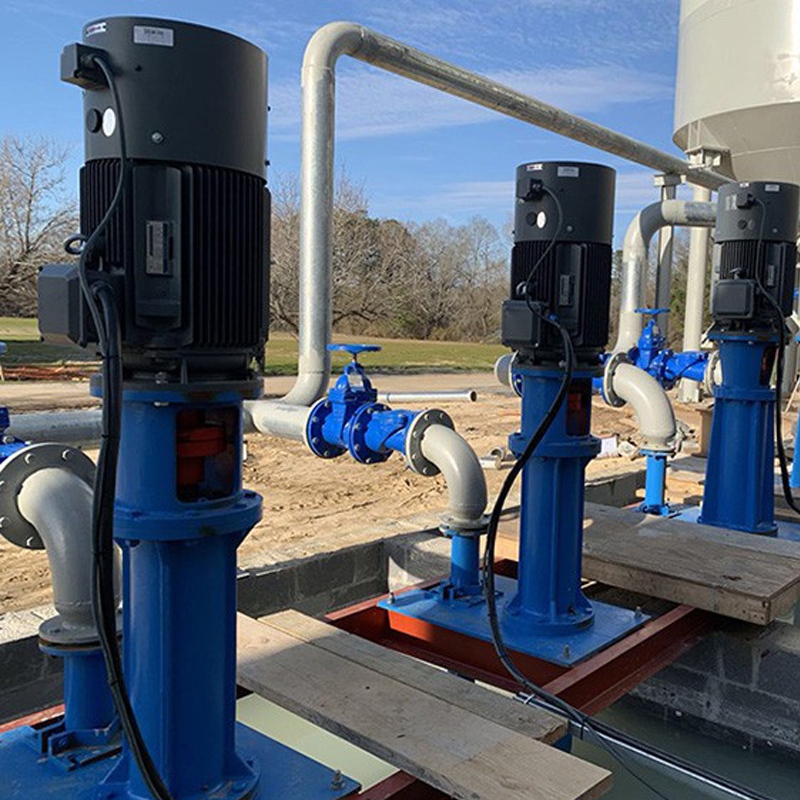
Mini Slurry Pump: Technical Dimension and Performance Analysis
A mini slurry pump is a specialized centrifugal hydraulic machine engineered to transport fluids containing high concentrations of suspended abrasive solids. Positioned as a critical component in the secondary and tertiary stages of the industrial process chain, these pumps occupy the niche between laboratory-scale dosing pumps and large-scale industrial slurry transporters. Their primary technical function is to maintain a steady flow of non-Newtonian fluids—ranging from mineral tailings and chemical slurries to ceramic suspensions—while mitigating the exponential increase in internal wear caused by particulate impingement. The core performance of a mini slurry pump is defined by its ability to balance volumetric efficiency with erosion resistance, ensuring that the pump remains operational under conditions where standard water pumps would suffer catastrophic impeller failure within hours.
Material Science & Manufacturing
The engineering of a mini slurry pump begins with the selection of materials capable of resisting both abrasive wear and corrosive attack. The primary challenge is the interaction between the slurry particles and the pump's wetted parts. High-chrome white irons (ASTM A532) are frequently employed for impellers and liners due to their high volume fraction of M7C3 carbides, which provide a hardness typically exceeding 60 HRC. In environments involving acidic or alkaline slurries, duplex stainless steels (e.g., CD4MCu) are utilized to provide a synergistic combination of pitting resistance and mechanical strength.
The manufacturing process involves precision investment casting to ensure the complex geometry of the impeller minimizes turbulence and stagnant zones where solids could accumulate. Post-casting, the internal flow paths are subjected to CNC grinding and polishing to reduce surface roughness, as microscopic irregularities can act as nucleation sites for erosion-corrosion. For the seals, the industry has shifted toward tungsten carbide mechanical seals with silicon carbide faces, providing a hard-on-hard interface that prevents the abrasive particles from penetrating the shaft seal assembly. The housing is typically constructed from heavy-wall cast iron or steel, reinforced to withstand the higher specific gravity of slurry fluids compared to pure water, preventing deformation under high-pressure operation.
Performance & Engineering
Engineering a mini slurry pump requires a rigorous force analysis of the fluid-structure interaction. The primary engineering concern is the Critical Settling Velocity (CSV); the pump must maintain a flow velocity high enough to prevent particles from settling in the suction line or the pump casing, which would lead to blockage and localized cavitation. The impeller design utilizes a semi-open or open configuration to allow larger particles to pass without clogging, though this introduces a trade-off in hydraulic efficiency. The NPSHr (Net Positive Suction Head required) is carefully calculated to account for the increased viscosity of the slurry, which elevates the risk of cavitation at the impeller eye.
Environmental resistance is achieved through specialized coatings and metallurgy. In chemical processing, the pump must comply with stringent leak-proof standards to prevent the release of hazardous slurries. The mechanical engineering focuses on the shaft deflection analysis; because slurry pumps often operate at variable speeds to handle varying solid concentrations, the shaft must be rigid enough to prevent vibration-induced wear on the seals and bearings. Furthermore, the integration of a variable frequency drive (VFD) allows for the optimization of the pump's duty point, ensuring that the pump operates near its Best Efficiency Point (BEP) regardless of the slurry's density fluctuations.
Technical Specifications
| Technical Parameter | Standard Grade (Steel) | High-Abrasion Grade (Hi-Chrome) | Corrosion-Resistant Grade (Duplex) | Unit of Measurement |
|---|---|---|---|---|
| Max Flow Rate | 15.0 | 12.0 | 15.0 | m³/h |
| Maximum Head | 45.0 | 40.0 | 45.0 | m |
| Max Particle Size | 5.0 | 8.0 | 5.0 | mm |
| Max Slurry Density | 1.3 | 1.5 | 1.4 | t/m³ |
| Impeller Hardness | 250-300 | 600-700 | 280-320 | HB/HV |
| Operational Temp Range | -10 to 80 | -10 to 120 | -20 to 150 | °C |
Failure Mode & Maintenance
The primary failure mode in mini slurry pumps is erosive wear, specifically "impeller thinning," where the high-velocity impingement of particles removes the protective oxide layer and the base metal. This leads to a gradual drop in head and flow rate. Another critical failure mode is "seal face degradation," occurring when particles migrate into the seal chamber, acting as an abrasive paste that scores the mating surfaces and leads to catastrophic leakage. Fatigue cracking can also occur in the pump casing if the system is subjected to frequent pressure surges or if the pump is operated too far from its BEP, leading to excessive radial loads on the shaft.
Professional maintenance requires a predictive approach rather than a reactive one. Technicians should implement a vibration analysis program to detect bearing wear and misalignment before they lead to shaft failure. The impeller and liner wear should be monitored via ultrasonic thickness testing to schedule replacements before the efficiency drops below 70%. Maintenance protocols must include the periodic flushing of the seal chamber with clean water (seal flush) to prevent particle accumulation. When replacing components, the "fit and tolerance" must be strictly verified to ensure that the clearance between the impeller and the wear plate is minimized, as excessive clearance leads to internal recirculation and accelerated wear.
Industry FAQ
Q: How do we determine the correct material selection for a slurry pump when the fluid is both abrasive and corrosive?
A: This requires a dual-analysis approach. First, we evaluate the abrasive index of the solids (Mohs scale) to determine the required hardness. Second, we analyze the chemical composition of the carrier fluid (pH, chloride levels) to determine the required corrosion resistance. For highly aggressive environments, we recommend duplex stainless steel or high-chrome alloys with specific molybdenum additions to provide both hardness and a stable passive film.
Q: What is the impact of slurry viscosity on the NPSH requirements of the pump?
A: Increased viscosity increases the friction losses in the suction piping and at the impeller eye. This raises the Net Positive Suction Head required (NPSHr). If the available NPSH (NPSHa) falls below this threshold, cavitation occurs, not only damaging the impeller but also reducing the transport capacity of the pump. We recommend increasing the suction pipe diameter or lowering the pump elevation to compensate.
Q: Why does the pump experience rapid wear even when the particle size is within specifications?
A: Wear is not only a function of particle size but also of particle concentration (wt%) and flow velocity. According to the Finnie erosion model, wear increases exponentially with velocity. If the pump is operated at a speed higher than necessary for the application, the kinetic energy of the particles increases, leading to accelerated erosion. Optimizing the RPM via a VFD often solves this issue.
Q: Can a mini slurry pump be run dry, and what are the consequences?
A: No, running a slurry pump dry is strictly prohibited. The fluid serves as a lubricant and coolant for the mechanical seals and bearings. Dry running leads to rapid heat buildup at the seal faces, causing thermal shock and cracking of the silicon carbide or tungsten carbide components. This results in immediate seal failure and potential leakage of the processed slurry.
Q: How often should the wear liners be replaced in a high-concentration mining slurry application?
A: Replacement intervals vary based on the solids' hardness, but generally, a monthly thickness check is recommended. In high-abrasion environments, liners are typically replaced when they reach 50% of their original thickness. This prevents the slurry from eroding the actual pump casing, which would be far more costly to repair than replacing a sacrificial liner.
Conclusion
The operational efficiency of a mini slurry pump is fundamentally dependent on the synergy between material science and hydraulic engineering. By utilizing high-chrome alloys and precision-engineered flow paths, these pumps can effectively handle the dual challenges of abrasion and corrosion. The technical integrity of the system is maintained not only through initial design but through a rigorous understanding of the Critical Settling Velocity and the management of NPSH to prevent cavitation and premature component failure.
Looking forward, the integration of smart sensing technology—such as real-time erosion monitoring and AI-driven predictive maintenance—will further enhance the reliability of slurry transport systems. For procurement and engineering teams, the focus must remain on specifying materials based on the precise chemical and physical properties of the slurry to maximize the lifecycle and minimize the total cost of ownership in demanding industrial environments.
-
Comprehensive Guide to Waterproof ORings for Optimal Sealing Solutions
News2026-06-09
-
heavy duty submersible pump Performance Analysis
News2026-06-25
-
best submersible pump for septic tank Performance Analysis
News2026-06-25
-
basement sewer ejector pump Performance Analysis
News2026-06-25
-
basement pumps ejector pumps Performance Analysis
News2026-06-25
-
basement lift pump Performance and Engineering
News2026-06-25
-
basement bathroom pump systems Performance Analysis
News2026-06-24
-
basement bathroom ejector pump system Performance Engineering
News2026-06-24
-
2 hp sewage pump Performance Engineering
News2026-06-24
-
1 hp septic pump Performance Engineering
News2026-06-24
-
submersible effluent pump Performance Analysis
News2026-06-24
-
submergable pump Material Science
News2026-06-23
-
sewer injection pump Performance Engineering
News2026-06-23
-
Sewer Ejector Pump System Performance Analysis
News2026-06-23
-
septic tank pump for sale Performance Engineering
News2026-06-23




