English
- Afrikaans
- Albanian
- Amharic
- Arabic
- Armenian
- Azerbaijani
- Basque
- Belarusian
- Bengali
- Bosnian
- Bulgarian
- Catalan
- Cebuano
- Corsican
- Croatian
- Czech
- Danish
- Dutch
- English
- Esperanto
- Estonian
- Finnish
- French
- Frisian
- Galician
- Georgian
- German
- Greek
- Gujarati
- Haitian Creole
- hausa
- hawaiian
- Hebrew
- Hindi
- Miao
- Hungarian
- Icelandic
- igbo
- Indonesian
- irish
- Italian
- Japanese
- Javanese
- Kannada
- kazakh
- Khmer
- Rwandese
- Korean
- Kurdish
- Kyrgyz
- Lao
- Latin
- Latvian
- Lithuanian
- Luxembourgish
- Macedonian
- Malgashi
- Malay
- Malayalam
- Maltese
- Maori
- Marathi
- Mongolian
- Myanmar
- Nepali
- Norwegian
- Norwegian
- Occitan
- Pashto
- Persian
- Polish
- Portuguese
- Punjabi
- Romanian
- Russian
- Samoan
- Scottish Gaelic
- Serbian
- Sesotho
- Shona
- Sindhi
- Sinhala
- Slovak
- Slovenian
- Somali
- Spanish
- Sundanese
- Swahili
- Swedish
- Tagalog
- Tajik
- Tamil
- Tatar
- Telugu
- Thai
- Turkish
- Turkmen
- Ukrainian
- Urdu
- Uighur
- Uzbek
- Vietnamese
- Welsh
- Bantu
- Yiddish
- Yoruba
- Zulu

Telephone: +86 13120555503
Email: frank@cypump.com


Apr . 01, 2024 17:55 Back to list
Metso Slurry Pump metso slurry pump basic handbook pdf Manufacturing Specifications and Performance
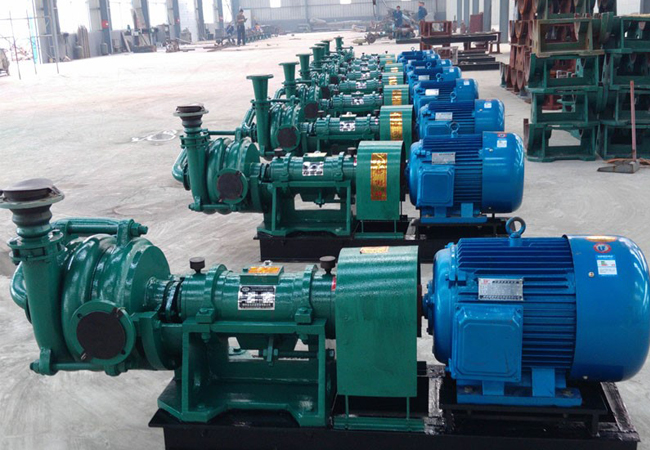
Metso Slurry Pump Manufacturing Specifications and Performance Analysis
The Metso slurry pump represents a critical engineering intersection between fluid dynamics and material science, specifically designed to transport abrasive, corrosive, and high-density mineral slurries. Within the industrial value chain, these pumps serve as the primary movement mechanism for tailings, concentrate, and ore processing circuits in mining and chemical plants. The technical core of these systems lies in their ability to maintain volumetric efficiency while resisting the extreme mechanical wear caused by particulate impingement. This guide analyzes the fundamental engineering principles, metallurgical requirements, and operational parameters outlined in the metso slurry pump basic handbook pdf, focusing on the optimization of Mean Time Between Failure (MTBF) in harsh extractive environments.
Material Science & Manufacturing
The longevity of a slurry pump is directly proportional to the metallurgical integrity of its wetted parts. Manufacturing these components requires a deep understanding of tribology and material hardness. The primary materials used in Metso slurry pumps are divided into high-chrome alloys and natural/synthetic elastomers.
High-Chrome White Irons: For applications with high abrasion and low corrosion, Cr27 (27% Chromium) alloys are employed. These materials are manufactured through a controlled casting process that results in a microstructure of primary M7C3 carbides embedded in a martensitic matrix. The hardness typically exceeds 600 HB (Brinell), providing the necessary resistance to the cutting and plowing actions of sharp mineral particles. Precision casting is followed by rigorous heat treatment (quenching and tempering) to eliminate internal stresses and prevent catastrophic brittle failure.
Polyurethane and Natural Rubber: In scenarios involving finer particles and higher impact, elastomers are utilized. Natural rubber provides superior resilience against impact wear by absorbing the kinetic energy of the slurry particles and "springing back," whereas polyurethane offers higher tear strength and chemical resistance. The manufacturing process involves specialized vulcanization techniques to ensure a void-free bond between the rubber liner and the steel backing shell, preventing delamination under high vacuum or pressure conditions.
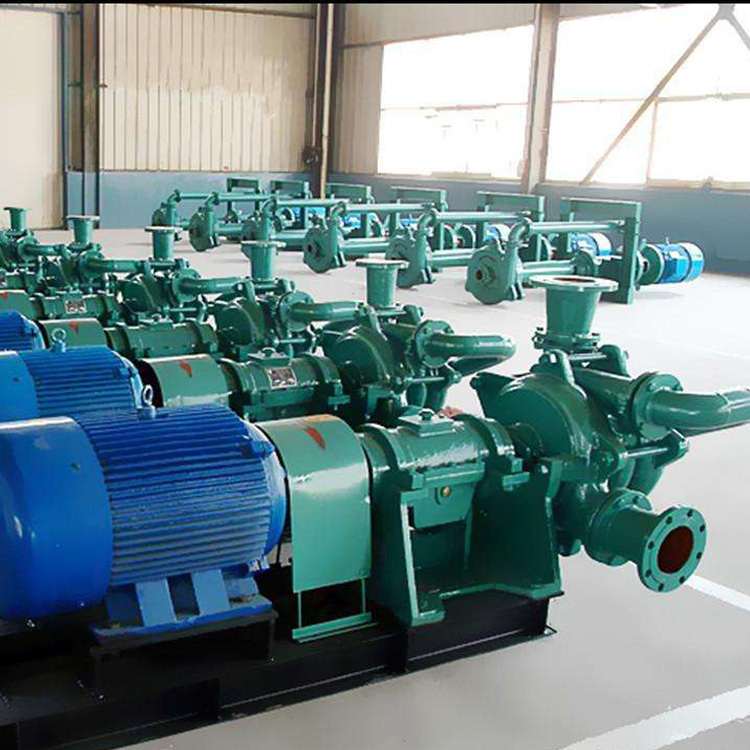
Manufacturing Tolerances: Precision machining of the impeller and volute is critical. Tight clearances between the impeller eye and the suction liner reduce recirculation losses and prevent premature wear of the casing. The dynamic balancing of the impeller to ISO 1940 standards is mandatory to minimize vibration-induced fatigue in the shaft and bearings.
Performance & Engineering
The engineering of slurry transport is governed by the relationship between the critical settling velocity (CSV) and the actual flow velocity. To prevent "sanding out" (the accumulation of solids in the pump casing), the flow velocity must be maintained above the CSV of the specific slurry mixture.
NPSH and Cavitation Analysis: Net Positive Suction Head (NPSH) is the most critical parameter in slurry pump engineering. Slurries have higher viscosities and densities than water, which increases friction losses in the suction line. If the NPSH available (NPSHa) falls below the NPSH required (NPSHr), cavitation occurs. In slurry pumps, cavitation is doubly destructive: it creates vapor bubbles that implode, causing pitting, and these pits then become nucleation sites for accelerated abrasive wear.
Hydraulic Design: The impeller geometry is optimized for a specific "Best Efficiency Point" (BEP). Operating too far to the left or right of the BEP leads to increased turbulence and internal recirculation. This turbulence creates localized high-velocity zones where the abrasive particles strike the liner at oblique angles, accelerating the wear rate exponentially according to the relationship where wear is proportional to the cube of the velocity (V³).
Sealing Technology: To prevent the leakage of abrasive slurry into the bearing housing, Metso utilizes advanced expeller seals or mechanical seals with external flushing. The expeller seal uses centrifugal force to move the slurry away from the shaft, creating a "dry" zone that protects the bearings from contamination.
Technical Specifications
| Parameter Dimension | High-Chrome (Cr27) | Natural Rubber | Polyurethane | Standard Steel (A36) |
|---|---|---|---|---|
| Hardness (Brinell/Shore A) | 600 - 650 HB | 60 - 70 Shore A | 90 - 95 Shore A | 150 - 200 HB |
| Abrasion Resistance | Extreme (Coarse) | High (Fine/Medium) | High (Sharp/Fine) | Low |
| Corrosion Resistance | Moderate | High | Very High | Low |
| Impact Toughness | Low (Brittle) | Very High | Moderate | High |
| Max Operating Temp | < 450°C | < 80°C | < 100°C | < 400°C |
| Typical Application | Mill Discharge | Tailings Pumping | Chemical Slurry | Water Transport |
Failure Mode & Maintenance
Analyzing failure modes in slurry pumps is essential for implementing predictive maintenance strategies. The most common failure modes include:
1. Erosive Wear (Thinning): This is the gradual removal of material from the liner and impeller. Failure occurs when the wall thickness reaches a critical minimum, leading to a breach. Solution: Implementation of a wear-monitoring schedule using ultrasonic thickness gauges to predict liner replacement dates.
2. Cavitation Pitting: Characterized by a "sponge-like" appearance on the impeller vanes. This is usually caused by restricted suction or operating at excessive speeds. Solution: Adjusting the pump speed via VFD or increasing the suction head to ensure NPSHa > NPSHr.
3. Shaft Fatigue and Deflection: Caused by impeller imbalance or excessive slurry density leading to high radial loads. This results in premature bearing failure and mechanical seal leakage. Solution: Routine dynamic balancing of the impeller and ensuring the pump is properly aligned with the motor to within 0.05mm.
4. Elastomer Delamination: In rubber-lined pumps, the bond between the rubber and the steel shell may fail due to chemical attack or extreme temperature cycling. Solution: Selecting the correct elastomer grade based on the pH level of the slurry and avoiding "dry running" which overheats the rubber.
Industry FAQ
Q: How do I determine whether to use a high-chrome or a rubber liner for a specific application?
A: The decision is based on the particle size and the nature of the abrasion. High-chrome alloys are superior for coarse, large particles that cause "grinding" wear. Rubber liners are more effective for fine particles that cause "impact" wear, as the elastic properties allow the material to absorb and deflect the particles.
Q: What is the impact of slurry density on the pump's power consumption?
A: Slurry density increases the fluid's specific gravity, which linearly increases the brake horsepower (BHP) required to move the fluid. However, as density increases, the apparent viscosity also rises, which can lead to higher friction losses and a shift in the pump's performance curve.
Q: Why is the pump vibrating excessively despite being newly installed?
A: This is frequently caused by improper alignment between the pump shaft and the motor, or "air binding" in the suction line. Additionally, if the pump is operating too far from its Best Efficiency Point (BEP), hydraulic instability can cause significant radial vibration.
Q: How often should the impeller clearance be checked?
A: In high-abrasion environments, clearances should be checked during every scheduled shutdown. Once the clearance between the impeller and the wear plate exceeds 2-3mm, volumetric efficiency drops significantly, and the rate of wear on the casing increases due to internal recirculation.
Q: Can a slurry pump be used for pumping pure water?
A: While possible, it is inefficient. Slurry pumps are designed with wider clearances and heavier materials to handle solids, meaning they have lower hydraulic efficiency than pure water pumps. Furthermore, some elastomers require the presence of slurry to maintain a cooling effect during operation.
Conclusion
The technical efficacy of the Metso slurry pump is rooted in the precise synchronization of metallurgical selection and hydraulic engineering. By adhering to the specifications found in the metso slurry pump basic handbook pdf, operators can effectively mitigate the risks of premature erosive wear and cavitation. The transition from reactive to predictive maintenance, driven by ultrasonic thickness monitoring and NPSH analysis, is the only viable path to optimizing the operational lifecycle of these assets in heavy-duty mining environments.
Looking forward, the integration of smart sensors for real-time vibration and wear tracking will further refine the efficiency of slurry transport systems. Engineers must prioritize the balance between material hardness and toughness to ensure that the equipment can withstand the unpredictable nature of mineral processing, thereby ensuring maximum uptime and reduced total cost of ownership.
-
Comprehensive Guide to Waterproof ORings for Optimal Sealing Solutions
News2026-06-09
-
basement bathroom pump systems Performance Analysis
News2026-06-24
-
basement bathroom ejector pump system Performance Engineering
News2026-06-24
-
2 hp sewage pump Performance Engineering
News2026-06-24
-
1 hp septic pump Performance Engineering
News2026-06-24
-
submersible effluent pump Performance Analysis
News2026-06-24
-
submergable pump Material Science
News2026-06-23
-
sewer injection pump Performance Engineering
News2026-06-23
-
Sewer Ejector Pump System Performance Analysis
News2026-06-23
-
septic tank pump for sale Performance Engineering
News2026-06-23
-
septic pump for sale Performance Engineering
News2026-06-23
-
septic ejector system Performance Analysis
News2026-06-22
-
replace septic pump Performance Analysis
News2026-06-22
-
pump system septic tank Performance Analysis
News2026-06-22
-
lift pump for sewer Performance and Engineering
News2026-06-22




