English
- Afrikaans
- Albanian
- Amharic
- Arabic
- Armenian
- Azerbaijani
- Basque
- Belarusian
- Bengali
- Bosnian
- Bulgarian
- Catalan
- Cebuano
- Corsican
- Croatian
- Czech
- Danish
- Dutch
- English
- Esperanto
- Estonian
- Finnish
- French
- Frisian
- Galician
- Georgian
- German
- Greek
- Gujarati
- Haitian Creole
- hausa
- hawaiian
- Hebrew
- Hindi
- Miao
- Hungarian
- Icelandic
- igbo
- Indonesian
- irish
- Italian
- Japanese
- Javanese
- Kannada
- kazakh
- Khmer
- Rwandese
- Korean
- Kurdish
- Kyrgyz
- Lao
- Latin
- Latvian
- Lithuanian
- Luxembourgish
- Macedonian
- Malgashi
- Malay
- Malayalam
- Maltese
- Maori
- Marathi
- Mongolian
- Myanmar
- Nepali
- Norwegian
- Norwegian
- Occitan
- Pashto
- Persian
- Polish
- Portuguese
- Punjabi
- Romanian
- Russian
- Samoan
- Scottish Gaelic
- Serbian
- Sesotho
- Shona
- Sindhi
- Sinhala
- Slovak
- Slovenian
- Somali
- Spanish
- Sundanese
- Swahili
- Swedish
- Tagalog
- Tajik
- Tamil
- Tatar
- Telugu
- Thai
- Turkish
- Turkmen
- Ukrainian
- Urdu
- Uighur
- Uzbek
- Vietnamese
- Welsh
- Bantu
- Yiddish
- Yoruba
- Zulu

Telephone: +86 13120555503
Email: frank@cypump.com


Apr . 01, 2024 17:55 Back to list
metal lined slurry pump Manufacturing Specifications and Performance Analysis
Metal Lined Slurry Pump: Manufacturing Specifications and Performance Analysis
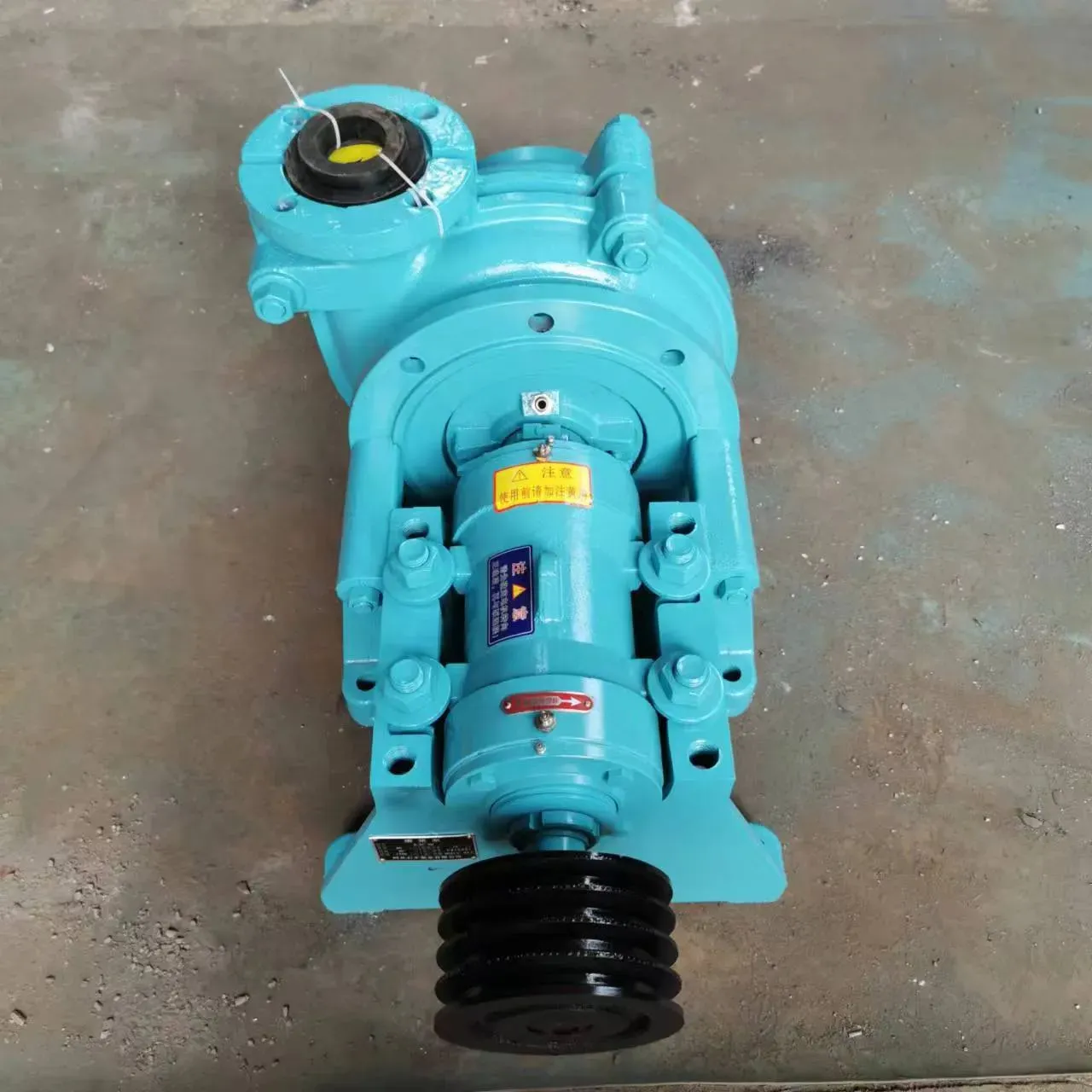
Metal lined slurry pumps are specialized heavy-duty centrifugal pumping systems engineered to transport highly abrasive and corrosive fluids, typically consisting of solid particulate matter suspended in a liquid medium. In the industrial value chain, these pumps occupy a critical position between primary extraction (such as mining or dredging) and processing (such as leaching or tailings management). The core technical objective of a metal lined slurry pump is to decouple the structural integrity of the pump casing from the wear-intensive internal surfaces. By utilizing a sacrificial or ultra-hard metal liner, the system can withstand extreme erosive velocities and impingement attacks that would otherwise lead to rapid catastrophic failure of the pressure-containing shell. The performance of these units is measured by their Net Positive Suction Head (NPSH) requirements, their ability to maintain volumetric efficiency under high solid-volume concentrations, and the longevity of the lining material under varied pH and particle morphology conditions.
Material Science & Manufacturing
The engineering of metal lined slurry pumps centers on the mitigation of abrasive wear—specifically the combination of sliding abrasion and impact erosion. The material selection for the liners is governed by the Hardness-Toughness trade-off. For highly abrasive applications, High-Chrome White Irons (ASTM A532) are utilized; these materials feature a martensitic matrix embedded with M7C3 carbides, providing a hardness typically exceeding 60 HRC. In environments where impact is more prevalent than sliding abrasion, Chrome-Moly steels or hardened Manganese steels are employed to prevent brittle fracturing through work-hardening mechanisms.
The manufacturing process involves complex metallurgical bonding and precision casting. The outer casing is typically cast from ductile iron or carbon steel to provide the necessary tensile strength and pressure containment. The liner is then inserted—either through a shrink-fit interference process or mechanical fastening. Key parameter control during the casting of the liner involves the precise regulation of the cooling rate to ensure a uniform distribution of primary carbides and to minimize internal stresses that could lead to premature cracking. Furthermore, the internal surface finish of the liner is optimized through CNC grinding to reduce turbulence and boundary layer friction, which directly impacts the energy efficiency and the wear rate of the pump.
Performance & Engineering
From an engineering perspective, the performance of a metal lined slurry pump is analyzed through the lens of fluid dynamics and tribology. A critical challenge is the management of "velocity-induced erosion," where the wear rate is proportional to the cube of the fluid velocity. To counter this, engineers design the impeller and volute geometry to minimize high-velocity eddies and stagnant zones where solids might accumulate and cause localized "gouging" wear. Force analysis is conducted to ensure that the axial thrust generated by the heavy slurry is balanced, preventing premature failure of the bearings and mechanical seals.
Environmental resistance is another pivotal engineering pillar. In acidic or alkaline slurry applications, the metal liner must exhibit chemical compatibility to prevent corrosion-erosion synergy—a phenomenon where corrosion removes the protective oxide layer, exposing fresh metal to accelerated abrasive wear. Compliance requirements often dictate the use of specialized coatings or alloy modifications (such as adding Nickel or Molybdenum) to enhance the Pitting Resistance Equivalent Number (PREN). The functional implementation also includes the integration of heavy-duty expeller seals or gland packing systems to prevent the ingress of abrasive particles into the bearing housing, ensuring the operational continuity of the rotating assembly.
Technical Specifications
| Liner Material Grade | Hardness (HRC/HB) | Max Particle Size (mm) | Max Flow Velocity (m/s) |
|---|---|---|---|
| High Chrome Alloy (27% Cr) | 60 - 65 HRC | 12.0 | 6.5 |
| Hardened Manganese Steel | 200 - 250 HB | 25.0 | 4.0 |
| Duplex Stainless Steel | 25 - 30 HRC | 6.0 | 5.0 |
| Nickel-Hardened Alloy | 50 - 55 HRC | 10.0 | 5.5 |
| Tungsten Carbide Lined | >70 HRC | 4.0 | 8.0 |
| Carbon Steel (Standard) | 15 - 20 HRC | 3.0 | 3.0 |
Failure Mode & Maintenance
Failure analysis of metal lined slurry pumps typically identifies three primary modes: erosive thinning, fatigue cracking, and corrosion-erosion synergy. Erosive thinning occurs most rapidly at the impeller vane tips and the volute cutwater, where fluid velocity is highest. This leads to a decrease in head pressure and an increase in NPSH requirements, eventually causing cavitation. Fatigue cracking often manifests in the liner due to thermal cycling or mechanical vibration, particularly in high-pressure systems where the liner may undergo cyclic loading.
Professional maintenance requires a predictive approach based on wall-thickness monitoring. Ultrasonic Testing (UT) is employed to measure the remaining liner thickness without dismantling the pump. Once the liner reaches its "wear limit" (typically 20-30% of original thickness), replacement is mandatory to prevent the slurry from attacking the outer structural casing. Maintenance protocols also emphasize the inspection of the impeller clearance; excessive gaps between the impeller and the liner increase internal recirculation, which accelerates wear and reduces hydraulic efficiency. The use of precision alignment tools during reassembly is critical to prevent shaft deflection and subsequent seal failure.
Industry FAQ
Q: How do we determine whether to use High-Chrome or Manganese steel liners for a specific slurry?
A: The decision is based on the primary wear mechanism. If the slurry consists of small, highly abrasive particles with low impact energy, High-Chrome is superior due to its extreme hardness. If the application involves large, chunky materials that cause high-impact shocks, Manganese steel is preferred because it work-hardens under impact, preventing the brittle fractures common in chrome alloys.
Q: What is the impact of slurry viscosity on the selection of the liner material?
A: High viscosity increases the drag force on the liner surface and can alter the particle trajectory, often shifting the wear zone from the center of the flow to the walls. In high-viscosity applications, we prioritize materials with lower surface roughness and higher shear resistance to maintain flow efficiency and prevent localized erosion hotspots.
Q: Why does cavitation occur more frequently in slurry pumps than in clean water pumps?
A: Slurry pumps often operate with higher NPSH requirements due to the presence of solids which can trigger bubble nucleation. Furthermore, the rougher internal surfaces of worn metal liners create localized low-pressure zones, accelerating the formation of vapor bubbles that implode and cause "pitting" damage to the metal surface.
Q: Can metal lined pumps handle fluctuating pH levels without premature liner degradation?
A: Standard chrome liners can struggle with extreme pH levels, leading to chemical leaching of the binder phase. For fluctuating pH, we recommend duplex stainless steel liners or specialized alloy coatings that provide a passive oxide layer, protecting the bulk material from chemical attack while maintaining abrasive resistance.
Q: What is the most effective way to extend the Mean Time Between Failure (MTBF) for these pumps?
A: The most effective strategy is the optimization of the operating point. Running the pump as close to the Best Efficiency Point (BEP) as possible minimizes turbulence and internal recirculation. Additionally, implementing a rigorous schedule of ultrasonic thickness measurements allows for planned liner replacement before the structural casing is compromised.
Conclusion
The metal lined slurry pump represents a sophisticated synthesis of material science and hydraulic engineering, designed to solve the fundamental conflict between structural durability and surface wear. By strategically employing high-hardness alloys and precision casting techniques, these systems ensure the reliable transport of abrasive media across the most demanding industrial environments. The technical logic dictates that the longevity of the pump is not merely a function of the material hardness, but a result of the synergy between fluid dynamics, appropriate material selection for the specific wear mode, and a rigorous maintenance regime.
Looking forward, the industry is moving toward "smart liners" integrated with embedded wear sensors and the application of nanocomposite coatings to further push the limits of erosion resistance. For procurement and engineering teams, the focus must remain on a total cost of ownership (TCO) analysis, where the initial investment in premium metallurgical liners is balanced against the reduction in unplanned downtime and the extension of the overall equipment lifecycle.
-
Comprehensive Guide to Waterproof ORings for Optimal Sealing Solutions
News2026-06-09
-
Waste Tank Pump Performance Analysis
News2026-06-27
-
Sewer System Pump Out Material Science
News2026-06-27
-
Sewer Ejector Pit Performance Analysis
News2026-06-27
-
septic tank pumps for sale Performance Engineering
News2026-06-27
-
septic system with lift pump Performance Engineering
News2026-06-27
-
septic system sump pump Performance Analysis
News2026-06-26
-
septic pump company Performance Analysis
News2026-06-26
-
pumps water treatment Performance Analysis
News2026-06-26
-
pumps for septic tanks Material Science and Manufacturing
News2026-06-26
-
pump for septic system Material Science Manufacturing
News2026-06-26
-
heavy duty submersible pump Performance Analysis
News2026-06-25
-
best submersible pump for septic tank Performance Analysis
News2026-06-25
-
basement sewer ejector pump Performance Analysis
News2026-06-25
-
basement pumps ejector pumps Performance Analysis
News2026-06-25




