English
- Afrikaans
- Albanian
- Amharic
- Arabic
- Armenian
- Azerbaijani
- Basque
- Belarusian
- Bengali
- Bosnian
- Bulgarian
- Catalan
- Cebuano
- Corsican
- Croatian
- Czech
- Danish
- Dutch
- English
- Esperanto
- Estonian
- Finnish
- French
- Frisian
- Galician
- Georgian
- German
- Greek
- Gujarati
- Haitian Creole
- hausa
- hawaiian
- Hebrew
- Hindi
- Miao
- Hungarian
- Icelandic
- igbo
- Indonesian
- irish
- Italian
- Japanese
- Javanese
- Kannada
- kazakh
- Khmer
- Rwandese
- Korean
- Kurdish
- Kyrgyz
- Lao
- Latin
- Latvian
- Lithuanian
- Luxembourgish
- Macedonian
- Malgashi
- Malay
- Malayalam
- Maltese
- Maori
- Marathi
- Mongolian
- Myanmar
- Nepali
- Norwegian
- Norwegian
- Occitan
- Pashto
- Persian
- Polish
- Portuguese
- Punjabi
- Romanian
- Russian
- Samoan
- Scottish Gaelic
- Serbian
- Sesotho
- Shona
- Sindhi
- Sinhala
- Slovak
- Slovenian
- Somali
- Spanish
- Sundanese
- Swahili
- Swedish
- Tagalog
- Tajik
- Tamil
- Tatar
- Telugu
- Thai
- Turkish
- Turkmen
- Ukrainian
- Urdu
- Uighur
- Uzbek
- Vietnamese
- Welsh
- Bantu
- Yiddish
- Yoruba
- Zulu

Telephone: +86 13120555503
Email: frank@cypump.com


Apr . 01, 2024 17:55 Back to list
medium head heavy duty slurry pump Technical Performance and Engineering Analysis
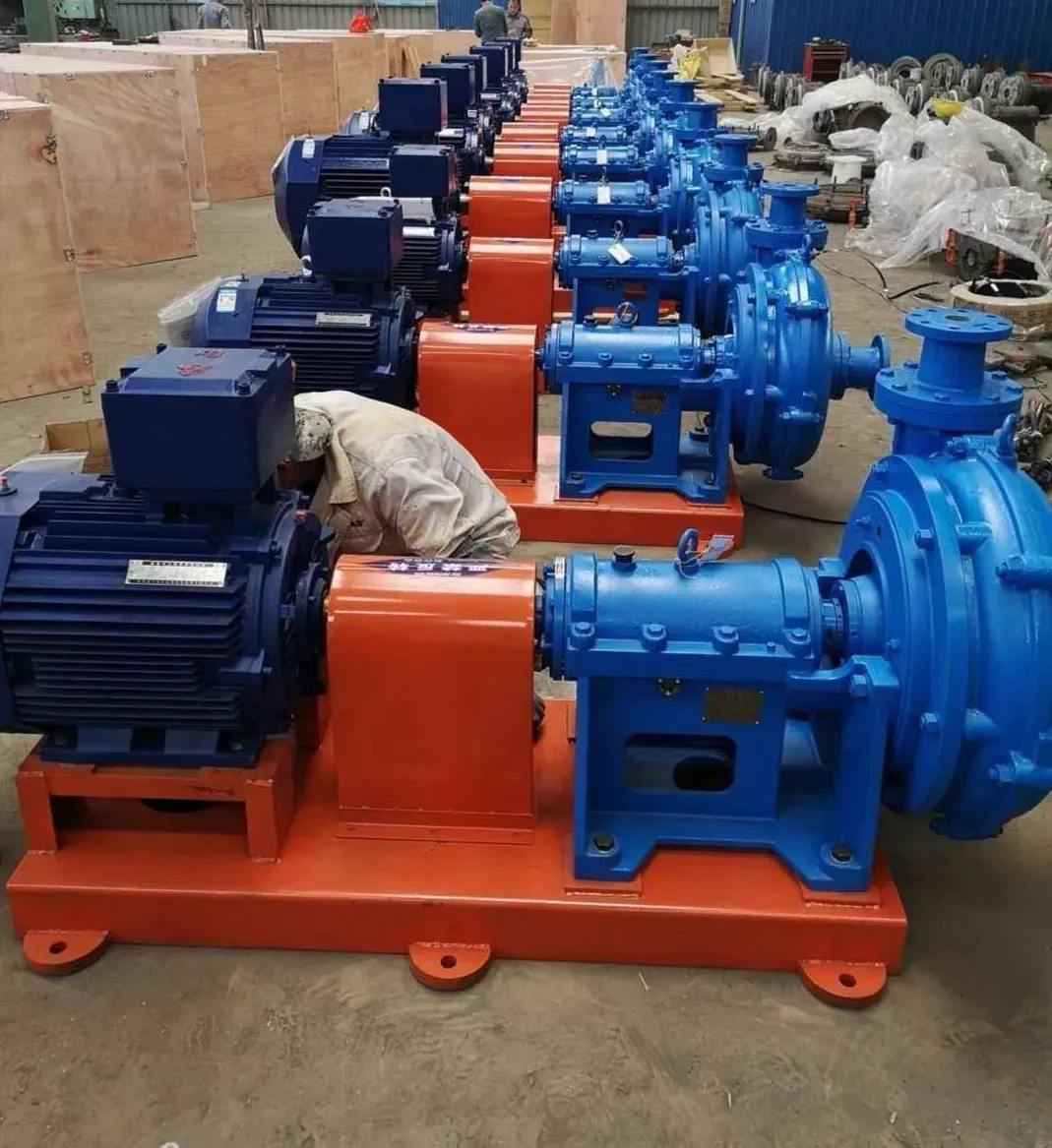
Medium Head Heavy Duty Slurry Pump: Technical Performance and Engineering Analysis
The medium head heavy duty slurry pump is a specialized centrifugal pumping system engineered to transport high-density, abrasive fluids—typically comprising solid particulates suspended in a liquid medium—across moderate pressure gradients. In the industrial value chain, these pumps serve as the critical link between extraction/crushing stages and processing/tailings disposal stages. Unlike standard water pumps, the medium head heavy duty slurry pump must manage the complex rheology of non-Newtonian fluids while resisting extreme erosive wear and corrosive chemical attacks. Its technical position is defined by the balance between flow capacity (Q) and total dynamic head (H), where "medium head" typically refers to a pressure range that necessitates a robust impeller design to prevent cavitation while maintaining sufficient kinetic energy to keep solids in suspension, thereby preventing pipeline sedimentation.
Material Science & Manufacturing
The longevity of a medium head heavy duty slurry pump is fundamentally dependent on the metallurgical properties of its wetted parts. The primary challenge is the synergistic effect of erosion and corrosion. To counteract this, manufacturers employ advanced material science focused on hard-facing and high-chromium alloys.
1. Metallurgical Composition: The industry standard for high-abrasion environments is High Chromium White Iron (e.g., ASTM A532). These materials contain 15% to 28% Chromium, forming a matrix of hard M7C3 carbides. These carbides provide the necessary hardness (typically 600-700 HB) to resist the scouring action of slurry particles. For applications involving acidic or alkaline slurries, duplex stainless steels or specialized rubber linings (such as Natural Rubber or Nitrile) are utilized to provide a flexible, energy-absorbing barrier that prevents the base metal from oxidizing.
2. Manufacturing Processes: The production begins with precision casting. The impeller, the most critical component, is often produced via investment casting to ensure a smooth hydraulic profile, reducing turbulence and localized wear. Post-casting, a rigorous heat treatment process—including normalizing and tempering—is applied to relieve internal stresses and optimize the distribution of carbides. The pump casing is typically machined using CNC technology to ensure tight tolerances between the impeller and the volute, which is essential for maintaining hydraulic efficiency at medium head pressures.
3. Key Parameter Control: During manufacturing, the "balancing" of the rotating assembly is paramount. Given the heavy-duty nature of the pump, any eccentricity in the impeller can lead to severe vibration, which accelerates the failure of the mechanical seals and bearings. Dynamic balancing is performed to ISO 1940 G2.5 standards to ensure operational stability under full load.
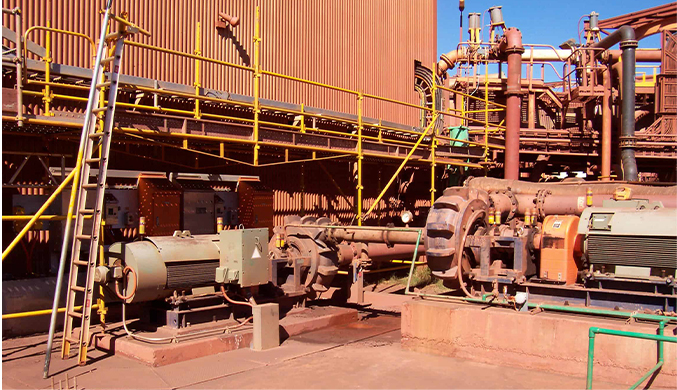
Performance & Engineering
Engineering a medium head heavy duty slurry pump requires a deep understanding of fluid dynamics and structural mechanics. The core objective is to optimize the Net Positive Suction Head available (NPSHa) to exceed the NPSH required (NPSHr) by a sufficient margin to prevent cavitation, which can destroy a pump in hours when transporting slurry.
1. Hydraulic Design and Force Analysis: The impeller geometry is designed with a specific vane angle to maintain a critical velocity—the minimum velocity required to keep solids suspended. If the velocity drops below this threshold, particles settle, causing "sanding" and catastrophic blockage. The force analysis focuses on the radial thrust exerted on the shaft; since slurry density can fluctuate, the pump must be engineered to handle varying hydraulic loads without shaft deflection.
2. Environmental Resistance and Sealing: Slurry pumps operate in harsh environments. The sealing system is the most vulnerable point. Heavy-duty pumps utilize expeller seals (internal pumps) that create a centrifugal barrier, pushing the slurry away from the shaft seal area, or sophisticated double mechanical seals with a pressurized flushing system (API Plan 53 or 54) to ensure no particulate matter enters the seal faces.
3. Compliance and System Integration: Engineering compliance involves aligning the pump's performance curve with the system's resistance curve. This includes calculating the friction loss of the piping based on the slurry's viscosity and particle size distribution. The pump is typically integrated with a Variable Frequency Drive (VFD) to allow the operator to adjust the flow rate based on the real-time density of the slurry, optimizing energy consumption and reducing wear.
Technical Specifications
| Technical Parameter | Standard Heavy Duty | Ultra-Abrasion Grade | Corrosive Slurry Grade | Metric Unit |
|---|---|---|---|---|
| Max Flow Rate | 450 | 600 | 400 | m³/h |
| Rated Head | 35 | 50 | 30 | m |
| Material Hardness | 550 | 680 | 220 (Cr-Ni) | Brinell (HB) |
| Max Particle Size | 25 | 40 | 20 | mm |
| Operational Speed | 1200 | 900 | 1450 | RPM |
| Seal Type | Expeller Seal | Double Mechanical | Teflon-Flushed | Specification |
Failure Mode & Maintenance
Failure analysis in medium head slurry pumps typically reveals three primary modes: abrasive wear, fatigue cracking, and chemical degradation. Understanding these allows for the implementation of a predictive maintenance strategy.
1. Abrasive Wear and Erosion: This is the most common failure. It manifests as thinning of the impeller vanes and volute liners. The "wear pattern" is often uneven, occurring at points of high turbulence (e.g., the impeller eye). Maintenance involves the installation of replaceable wear plates and liners to protect the main pump casing.
2. Fatigue Cracking and Vibration: Continuous operation with non-uniform slurry density can induce cyclic loading on the shaft and bearings. Fatigue cracks often develop at the shaft shoulder or keyway. This is mitigated by using high-tensile alloy steel shafts and performing regular vibration analysis using accelerometers to detect bearing wear before catastrophic failure occurs.
3. Seal Failure and Delamination: In rubber-lined pumps, delamination occurs when the lining peels away from the metal shell, often due to improper bonding or extreme temperature fluctuations. In mechanical seals, "scoring" of the faces occurs if the flushing system fails and particulates enter the seal interface. Maintenance requires a strict adherence to flushing fluid purity and temperature monitoring.
Maintenance Protocol: A professional maintenance schedule includes weekly lubrication checks, monthly vibration monitoring, and quarterly clearance measurements between the impeller and the wear plate. Once clearances exceed 150% of the original specification, the impeller must be replaced or rebuilt to avoid a drop in hydraulic efficiency.
Industry FAQ
Q: How do we determine if a "medium head" pump is sufficient for our specific slurry density?
A: Determination requires calculating the Total Dynamic Head (TDH), which includes the static lift, the pressure drop due to friction (which increases with slurry density), and the required discharge pressure. If your calculated TDH falls within the 20m to 60m range, a medium head pump is appropriate, provided the impeller is sized to maintain the critical carrying velocity.
Q: Why is High Chromium White Iron preferred over Stainless Steel for heavy-duty slurry?
A: While stainless steel offers superior corrosion resistance, it lacks the hardness to resist the mechanical scouring of abrasive particles (like quartz or iron ore). High Chromium White Iron contains a dense network of carbides that act as "hard points," preventing the slurry from carving into the metal surface.
Q: What is the impact of "sanding" during pump shutdown?
A: Sanding occurs when the pump stops and solids settle in the volute and suction line. Upon restart, the pump may be "locked" or suffer a massive torque spike that can shear the shaft. We recommend installing a flush valve or utilizing a water-flush system to clear the pump before complete shutdown.
Q: How does the NPSHr change as the concentration of solids increases?
A: Increasing the solids concentration increases the fluid's apparent viscosity and decreases the vapor pressure margin. This raises the Net Positive Suction Head required (NPSHr), making the pump more susceptible to cavitation. To compensate, the suction lift must be minimized or the suction vessel pressure increased.
Q: When should we choose a rubber-lined pump over a high-chrome pump for medium head applications?
A: Rubber lining is superior for "fine" abrasive particles (small size, high volume) and corrosive environments. High-chrome alloys are superior for "coarse" abrasive particles (large size, high impact). If your slurry contains large shards of rock, rubber will be torn away quickly, making high-chrome the only viable option.
Conclusion
The medium head heavy duty slurry pump represents a sophisticated intersection of hydraulic engineering and material science. Its ability to maintain operational stability while transporting abrasive media is not a result of a single component, but the synergy between high-chromium metallurgy, precise impeller geometry, and robust sealing systems. Ensuring the balance between flow velocity and head pressure is the fundamental technical requirement to prevent both sedimentation and premature erosive failure.
For procurement and operational managers, the focus must shift from initial capital expenditure to total cost of ownership (TCO). By prioritizing advanced materials and implementing a vibration-based predictive maintenance program, industries can significantly extend the mean time between failures (MTBF). As slurry processing moves toward higher densities for environmental efficiency, the evolution of these pumps will likely center on smarter sensing and adaptive VFD control to optimize energy-to-wear ratios.
-
Comprehensive Guide to Waterproof ORings for Optimal Sealing Solutions
News2026-06-09
-
heavy duty submersible pump Performance Analysis
News2026-06-25
-
best submersible pump for septic tank Performance Analysis
News2026-06-25
-
basement sewer ejector pump Performance Analysis
News2026-06-25
-
basement pumps ejector pumps Performance Analysis
News2026-06-25
-
basement lift pump Performance and Engineering
News2026-06-25
-
basement bathroom pump systems Performance Analysis
News2026-06-24
-
basement bathroom ejector pump system Performance Engineering
News2026-06-24
-
2 hp sewage pump Performance Engineering
News2026-06-24
-
1 hp septic pump Performance Engineering
News2026-06-24
-
submersible effluent pump Performance Analysis
News2026-06-24
-
submergable pump Material Science
News2026-06-23
-
sewer injection pump Performance Engineering
News2026-06-23
-
Sewer Ejector Pump System Performance Analysis
News2026-06-23
-
septic tank pump for sale Performance Engineering
News2026-06-23




