English
- Afrikaans
- Albanian
- Amharic
- Arabic
- Armenian
- Azerbaijani
- Basque
- Belarusian
- Bengali
- Bosnian
- Bulgarian
- Catalan
- Cebuano
- Corsican
- Croatian
- Czech
- Danish
- Dutch
- English
- Esperanto
- Estonian
- Finnish
- French
- Frisian
- Galician
- Georgian
- German
- Greek
- Gujarati
- Haitian Creole
- hausa
- hawaiian
- Hebrew
- Hindi
- Miao
- Hungarian
- Icelandic
- igbo
- Indonesian
- irish
- Italian
- Japanese
- Javanese
- Kannada
- kazakh
- Khmer
- Rwandese
- Korean
- Kurdish
- Kyrgyz
- Lao
- Latin
- Latvian
- Lithuanian
- Luxembourgish
- Macedonian
- Malgashi
- Malay
- Malayalam
- Maltese
- Maori
- Marathi
- Mongolian
- Myanmar
- Nepali
- Norwegian
- Norwegian
- Occitan
- Pashto
- Persian
- Polish
- Portuguese
- Punjabi
- Romanian
- Russian
- Samoan
- Scottish Gaelic
- Serbian
- Sesotho
- Shona
- Sindhi
- Sinhala
- Slovak
- Slovenian
- Somali
- Spanish
- Sundanese
- Swahili
- Swedish
- Tagalog
- Tajik
- Tamil
- Tatar
- Telugu
- Thai
- Turkish
- Turkmen
- Ukrainian
- Urdu
- Uighur
- Uzbek
- Vietnamese
- Welsh
- Bantu
- Yiddish
- Yoruba
- Zulu

Telephone: +86 13120555503
Email: frank@cypump.com


Apr . 01, 2024 17:55 Back to list
manure slurry pump Manufacturing Specifications and Performance Analysis

Manure Slurry Pump: Manufacturing Specifications and Performance Analysis
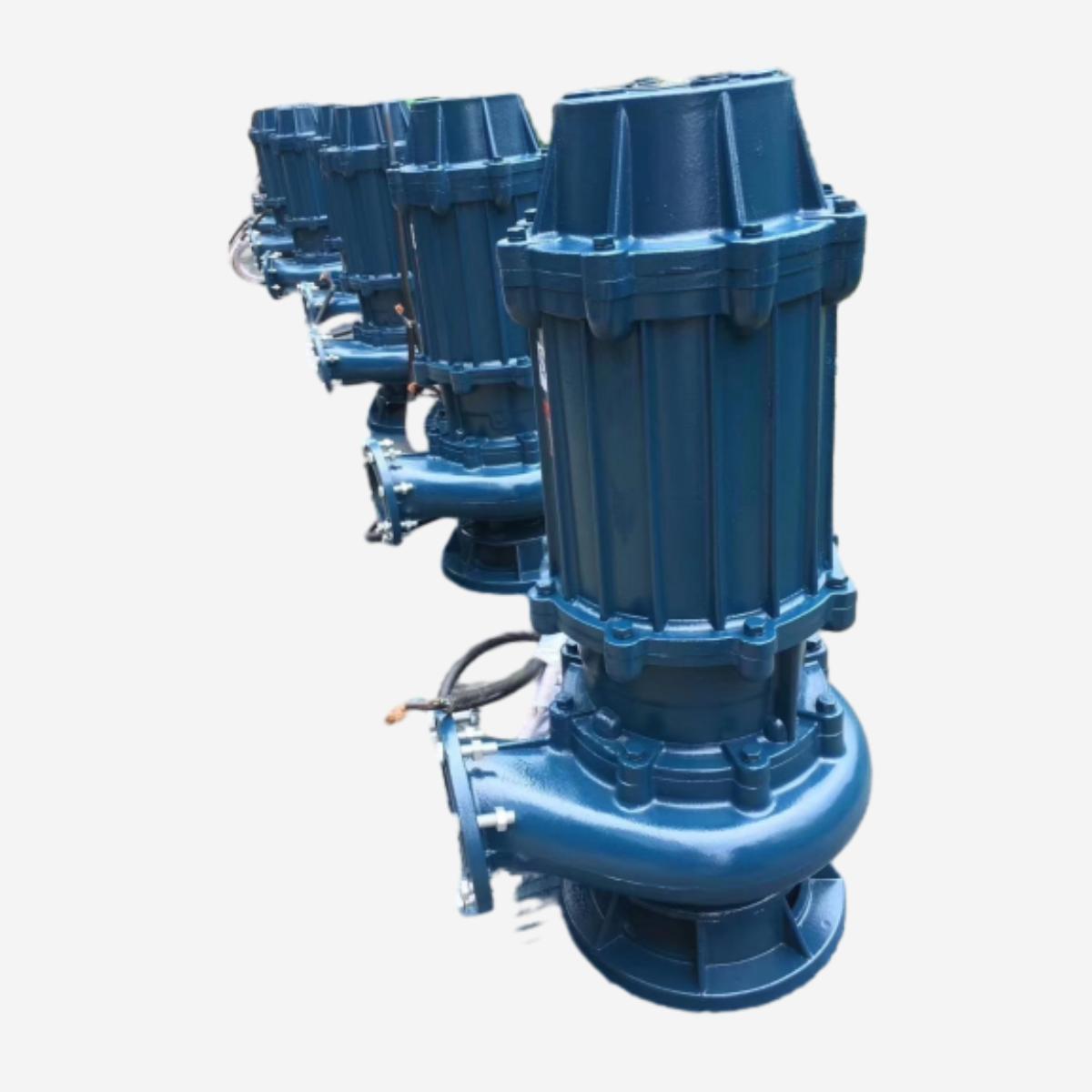
A manure slurry pump is a specialized heavy-duty industrial fluid-handling system engineered to transport non-Newtonian, high-viscosity fluids containing suspended organic solids, fibrous materials, and abrasive particulates. Within the agricultural and waste-to-energy value chain, these pumps serve as the critical link between anaerobic digestion tanks, storage lagoons, and field distribution systems. Unlike standard centrifugal pumps, manure slurry pumps must manage the rheological complexities of livestock waste—specifically the transition between laminar and turbulent flow—while resisting the highly corrosive effects of hydrogen sulfide (H2S), ammonia (NH3), and organic acids. The technical positioning of these systems requires a precise balance between hydraulic efficiency, Net Positive Suction Head (NPSH) requirements, and structural integrity to prevent cavitation and premature component degradation in chemically aggressive environments.
Material Science & Manufacturing
The manufacturing of manure slurry pumps begins with a rigorous selection of materials capable of withstanding both electrochemical corrosion and mechanical abrasion. The pump casing and impeller are typically constructed from high-chromium cast iron (ASTM A532) or duplex stainless steels (e.g., AISI 316L or 2205). Duplex steels are preferred due to their ferritic-austenitic microstructure, which provides superior resistance to pitting and stress-corrosion cracking compared to standard 300-series stainless steels. In high-solid applications, hard-facing alloys such as tungsten carbide or cobalt-based Stellite are applied via plasma spray or laser cladding to the leading edges of the impeller to mitigate erosive wear.
From a manufacturing perspective, the casting process employs precision investment casting or sand casting followed by heat treatment (quenching and tempering) to optimize the hardness-to-toughness ratio. The impeller design often utilizes an open or semi-open vane configuration to reduce the risk of "ragging"—the accumulation of fibrous materials around the impeller eye. Precision machining of the wearing rings and mechanical seal faces is conducted to tolerances within 0.01mm to minimize internal recirculation and maximize volumetric efficiency. Furthermore, the shaft is typically manufactured from 42CrMo alloy steel, induction-hardened and coated with an epoxy-phenolic resin to prevent shaft pitting beneath the seal area.
Performance & Engineering
The engineering of a manure slurry pump is governed by the laws of fluid mechanics applied to heterogeneous mixtures. A primary challenge is the management of the "slurry density," which significantly alters the pump's power requirement. The total dynamic head (TDH) must be calculated by accounting for the higher specific gravity of the slurry compared to water, typically ranging from 1.05 to 1.30. To prevent cavitation, the NPSH available (NPSHa) must exceed the NPSH required (NPSHr) by a safety margin of at least 0.5 to 1.0 meters, particularly when pumping from deep underground pits where atmospheric pressure is the only driving force.
Force analysis during operation reveals that the radial thrust on the shaft increases proportionally with the solid concentration. To counteract this, heavy-duty bearings (typically spherical roller bearings) are utilized to accommodate slight shaft deflections. Environmental resistance is further engineered through the implementation of double mechanical seals with an external flush system (API Plan 53 or 54), which prevents abrasive particles from entering the seal faces. For submersible variants, IP68-rated enclosures and specialized cable entries with polyurethane jackets are mandatory to prevent the ingress of corrosive gases and moisture, ensuring the electromagnetic integrity of the induction motor.
Technical Specifications
| Technical Parameter | Standard Duty Model | Heavy Industrial Model | High-Solid Special Model | Tolerance/Unit |
|---|---|---|---|---|
| Max Flow Rate (m³/h) | 150 - 300 | 500 - 1200 | 200 - 600 | ± 5% |
| Max Discharge Head (m) | 15 - 25 | 30 - 60 | 10 - 20 | ± 0.5m |
| Solid Particle Handling (mm) | ≤ 30 | ≤ 60 | ≤ 100 | Max Diameter |
| Impeller Material | Cast Iron (Ni-Hard) | Duplex SS 2205 | High-Cr Alloy (27% Cr) | ASTM A532/A240 |
| Operating Temperature (°C) | -10 to +60 | -20 to +90 | -10 to +70 | Thermal Range |
| Seal Type | Single Mechanical | Double Mechanical | Hydraulic Expeller | API 682 Std |
Failure Mode & Maintenance
Failure analysis of manure slurry pumps typically reveals four primary failure modes: abrasive wear, chemical corrosion, mechanical fatigue, and clogging. Abrasive wear occurs primarily at the impeller vanes and the volute tongue, where high-velocity particles create micro-cuts in the material surface. Chemical corrosion, specifically "pitting," is driven by the presence of chlorides and H2S, which penetrate the passive oxide layer of stainless steel. Mechanical fatigue often manifests as shaft fractures near the bearing housing due to unbalanced radial loads caused by uneven slurry distribution. Finally, clogging (ragging) leads to a sudden drop in flow rate and increased motor amperage, potentially causing thermal overload of the winding.
Professional maintenance protocols require a predictive approach. Monthly vibration analysis (FFT) should be conducted to detect bearing wear or impeller imbalance before catastrophic failure occurs. Seal leak rates must be monitored; any increase in leakage indicates the breach of the primary seal face. For maintenance, it is recommended to use ultrasonic thickness gauging on the volute casing every six months to track the erosion rate. When replacing impellers, the "Dynamic Balance" must be verified to G2.5 standards to prevent premature bearing failure. Additionally, the flushing system for double seals must be purged with clean water to ensure no particulate buildup occurs between the seal faces.
Industry FAQ
Q: How do we determine the correct impeller type for a slurry with 15% dry matter content?
A: For high dry matter content (15%+), a semi-open or vortex impeller is required. A closed impeller would lead to immediate clogging and high shear forces that increase the apparent viscosity of the slurry. We recommend a vortex impeller to create a swirling action that keeps solids suspended in the center of the flow path, reducing wear on the pump casing.
Q: What is the impact of H2S gas on the pump's structural integrity over a 5-year lifecycle?
A: Hydrogen sulfide induces sulfide stress cracking (SSC) in high-strength steels. To mitigate this, we utilize NACE MR0175 compliant materials. Without these specifications, the pump may suffer from brittle fractures in the shaft or housing, particularly in the anaerobic zones of the slurry pit where H2S concentrations are highest.
Q: Why is the pump experiencing cavitation despite the liquid level being above the minimum requirement?
A: In slurry pumping, "apparent NPSH" is lower than "static NPSH" due to the presence of gas bubbles (methane/CO2) released from the organic matter. This creates "gas-induced cavitation." The solution is to either increase the suction pipe diameter to reduce frictional loss or install a booster pump to increase the inlet pressure.
Q: Can we use standard rubber linings for the volute to increase longevity?
A: Standard rubber is unsuitable due to the chemical composition of manure, which contains fats and oils that cause rubber to swell and delaminate. We recommend using high-density polyurethane or specialized ceramic linings (Alumina) which provide both chemical inertness and superior hardness (Mohs 9) against abrasion.
Q: What is the optimal frequency control (VFD) setting for managing variable slurry density?
A: We recommend a VFD range of 30Hz to 50Hz. Operating below 30Hz may lead to insufficient velocity to keep solids in suspension, causing sedimentation within the pump casing. The VFD should be programmed with a "torque boost" function to overcome the high starting inertia associated with thick slurries.
Conclusion
The operational efficiency of a manure slurry pump is not merely a function of horsepower, but a complex intersection of material science, hydraulic engineering, and chemical compatibility. By prioritizing duplex stainless steels and precision-engineered impeller geometries, operators can significantly reduce the Total Cost of Ownership (TCO) through extended Mean Time Between Failures (MTBF) and reduced energy consumption. The integration of advanced sealing technologies and rigorous adherence to NPSH calculations are mandatory to ensure reliability in the presence of aggressive organic compounds.
Looking forward, the industry is moving toward "smart pumping" systems utilizing IoT sensors for real-time vibration and temperature monitoring. Implementing these predictive maintenance frameworks, alongside a strict adherence to international metallurgy standards, will allow agricultural enterprises to optimize their waste management systems and transition more effectively toward sustainable, circular bio-economy models.
-
Comprehensive Guide to Waterproof ORings for Optimal Sealing Solutions
News2026-06-09
-
septic system sump pump Performance Analysis
News2026-06-26
-
septic pump company Performance Analysis
News2026-06-26
-
pumps water treatment Performance Analysis
News2026-06-26
-
pumps for septic tanks Material Science and Manufacturing
News2026-06-26
-
pump for septic system Material Science Manufacturing
News2026-06-26
-
heavy duty submersible pump Performance Analysis
News2026-06-25
-
best submersible pump for septic tank Performance Analysis
News2026-06-25
-
basement sewer ejector pump Performance Analysis
News2026-06-25
-
basement pumps ejector pumps Performance Analysis
News2026-06-25
-
basement lift pump Performance and Engineering
News2026-06-25
-
basement bathroom pump systems Performance Analysis
News2026-06-24
-
basement bathroom ejector pump system Performance Engineering
News2026-06-24
-
2 hp sewage pump Performance Engineering
News2026-06-24
-
1 hp septic pump Performance Engineering
News2026-06-24




