English
- Afrikaans
- Albanian
- Amharic
- Arabic
- Armenian
- Azerbaijani
- Basque
- Belarusian
- Bengali
- Bosnian
- Bulgarian
- Catalan
- Cebuano
- Corsican
- Croatian
- Czech
- Danish
- Dutch
- English
- Esperanto
- Estonian
- Finnish
- French
- Frisian
- Galician
- Georgian
- German
- Greek
- Gujarati
- Haitian Creole
- hausa
- hawaiian
- Hebrew
- Hindi
- Miao
- Hungarian
- Icelandic
- igbo
- Indonesian
- irish
- Italian
- Japanese
- Javanese
- Kannada
- kazakh
- Khmer
- Rwandese
- Korean
- Kurdish
- Kyrgyz
- Lao
- Latin
- Latvian
- Lithuanian
- Luxembourgish
- Macedonian
- Malgashi
- Malay
- Malayalam
- Maltese
- Maori
- Marathi
- Mongolian
- Myanmar
- Nepali
- Norwegian
- Norwegian
- Occitan
- Pashto
- Persian
- Polish
- Portuguese
- Punjabi
- Romanian
- Russian
- Samoan
- Scottish Gaelic
- Serbian
- Sesotho
- Shona
- Sindhi
- Sinhala
- Slovak
- Slovenian
- Somali
- Spanish
- Sundanese
- Swahili
- Swedish
- Tagalog
- Tajik
- Tamil
- Tatar
- Telugu
- Thai
- Turkish
- Turkmen
- Ukrainian
- Urdu
- Uighur
- Uzbek
- Vietnamese
- Welsh
- Bantu
- Yiddish
- Yoruba
- Zulu

Telephone: +86 13120555503
Email: frank@cypump.com


Apr . 01, 2024 17:55 Back to list
low cost slurry pump Performance Analysis
Introduction
Low cost slurry pumps are centrifugal pumps specifically designed for the transportation of abrasive or corrosive slurries. They occupy a critical position in numerous industrial processes, including mining, wastewater treatment, chemical processing, and dredging, serving as the primary means of moving materials from one location to another. Unlike standard centrifugal pumps, slurry pumps are engineered to handle high solid concentrations and resist the wear and corrosion inherent in these applications. The ‘low cost’ designation typically refers to pumps utilizing simpler designs and more readily available materials, making them accessible for applications where extremely high performance or specialized materials are not required. Core performance characteristics include flow rate (typically measured in gallons per minute or cubic meters per hour), head (pressure developed by the pump, measured in feet or meters), and solids handling capability (maximum particle size and concentration, expressed in millimeters or inches and by weight percentage respectively). A significant industry pain point is balancing cost with longevity; cheap pumps often suffer rapid wear, leading to increased maintenance and downtime, negating initial cost savings. This guide provides an in-depth examination of these pumps, encompassing material science, manufacturing processes, performance engineering, failure modes, and industry standards.
Material Science & Manufacturing
The construction of a low cost slurry pump relies heavily on material selection to mitigate wear and corrosion. Common materials for pump casings include cast iron (ASTM A48 Class 30), offering a cost-effective solution for less abrasive slurries. Impellers are often constructed from high-chrome cast iron (typically containing 15-30% chromium), which exhibits superior wear resistance compared to standard cast iron. Shafts are typically made from carbon steel (ASTM A108 Grade 1018), although stainless steel (304 or 316) may be used in more corrosive environments. Sealing components frequently utilize elastomers like nitrile rubber (NBR) or ethylene propylene diene monomer (EPDM) for their chemical resistance and sealing properties. Manufacturing processes center around sand casting for the casing and impeller, ensuring economical production. The impeller is often manufactured with a closed or semi-open design; semi-open impellers are preferred for handling larger solids and reducing clogging. Key parameter control during manufacturing includes ensuring precise impeller balancing (to minimize vibration and wear) and accurate dimensional tolerances for the casing and impeller to maintain hydraulic efficiency. Welding processes, if required for joining components, must adhere to AWS D1.1 standards for structural welding. Post-casting heat treatment is crucial for relieving stresses in the cast iron and enhancing its mechanical properties. Surface treatments like epoxy coating are commonly applied to the casing exterior to protect against atmospheric corrosion.
Performance & Engineering
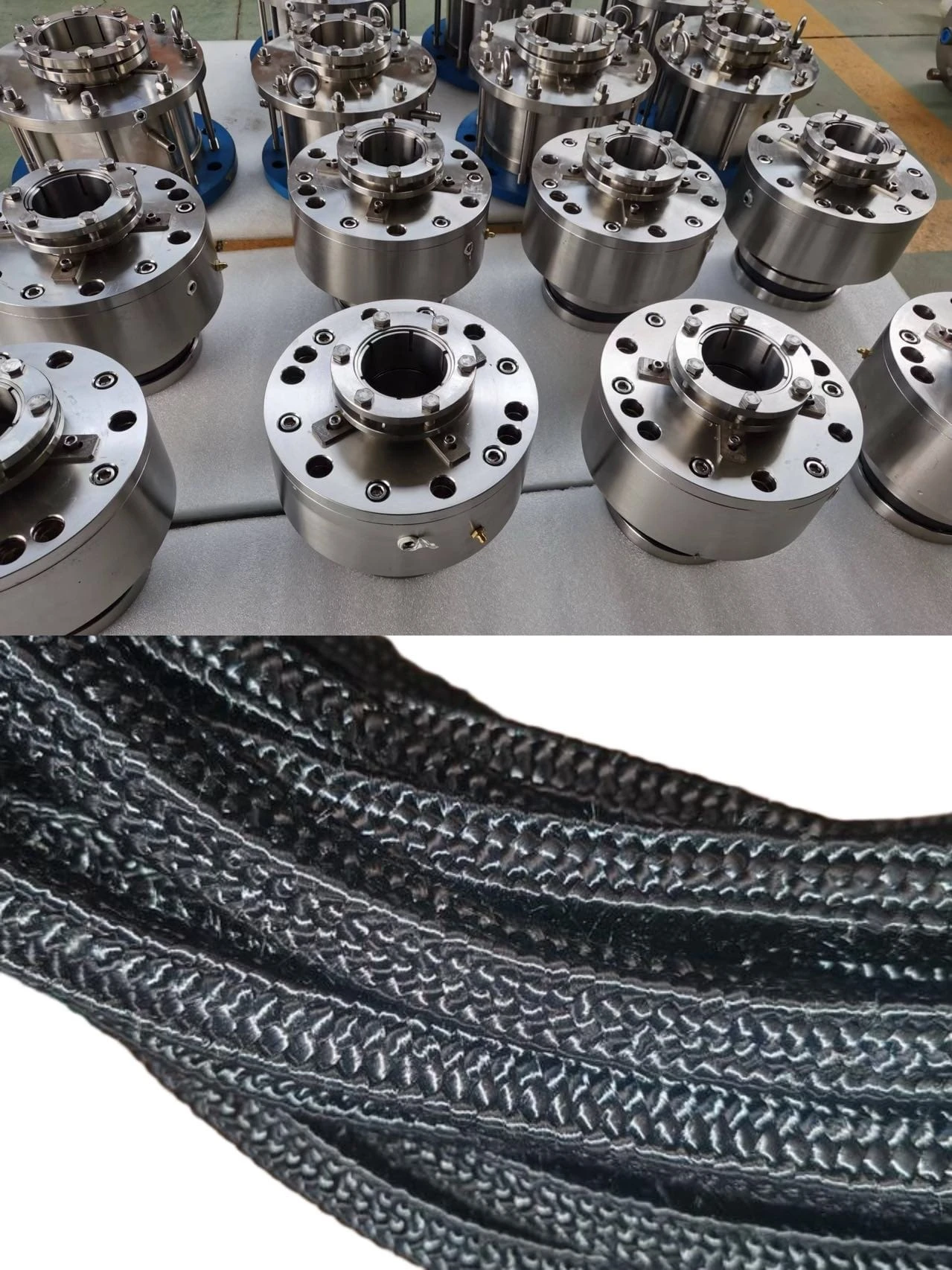
Slurry pump performance is governed by principles of fluid mechanics and hydraulic engineering. The pump's affinity laws dictate the relationships between flow rate, head, and power requirements. Force analysis involves assessing the impact forces exerted by the slurry on the impeller and casing, contributing to wear. Environmental resistance is paramount; pumps operating outdoors are exposed to temperature fluctuations, humidity, and UV radiation, which can degrade elastomers and coatings. Compliance requirements vary depending on the application. For example, pumps used in wastewater treatment must meet EPA standards for effluent discharge. The selection of pump curves – graphical representations of head vs. flow rate for different impeller diameters – is crucial for matching the pump to the specific system requirements. Cavitation, a phenomenon where vapor bubbles form and collapse within the pump, is a major concern with slurries, as it accelerates wear. Net Positive Suction Head Required (NPSHr) must be carefully calculated and maintained to prevent cavitation. The pump’s hydraulic efficiency is influenced by impeller design, casing volute geometry, and internal clearances. Proper piping design, including minimizing bends and maintaining sufficient suction lift, is essential for optimal performance. Mechanical seals are critical components preventing leakage; single mechanical seals are common in low-cost pumps, but dual seals with a barrier fluid are preferred for handling highly abrasive or toxic slurries.
Technical Specifications
| Parameter | Unit | Typical Value (Low Cost Pump) | Notes |
|---|---|---|---|
| Flow Rate | GPM (US) | 50-500 | Varies with impeller size and speed |
| Head | ft | 20-150 | Dependent on slurry density and viscosity |
| Solids Handling Size | in | 0.5-2 | Determines maximum particle diameter |
| Slurry Concentration (Weight %) | % | 10-30 | Higher concentrations increase wear |
| Pump Casing Material | - | Cast Iron (A48 Class 30) | Cost-effective for moderate abrasion |
| Impeller Material | - | High-Chrome Cast Iron (15-30% Cr) | Superior wear resistance |
Failure Mode & Maintenance
Low cost slurry pumps are susceptible to several failure modes. Fatigue cracking in the impeller and casing can occur due to cyclic loading from abrasive particles. Erosion-corrosion, a synergistic effect of wear and corrosion, is common in slurries containing corrosive chemicals. Mechanical seal failure is a frequent issue, leading to leakage and pump inefficiency. Bearing failure can result from inadequate lubrication or excessive load. Cavitation damage, as previously discussed, accelerates wear. Delamination of the impeller coating (if present) reduces wear resistance. Oxidation of the pump casing, particularly in humid environments, can lead to corrosion. Preventative maintenance is crucial. Regular inspections for wear and corrosion are essential. Lubrication of bearings should be performed according to manufacturer's specifications. Mechanical seals should be replaced proactively based on operating hours or observed leakage. Impeller and casing should be inspected for cracks or erosion damage and replaced as needed. Proper alignment of the pump and motor is critical to minimize vibration and bearing wear. Monitoring pump performance parameters (flow rate, head, power consumption) can provide early warning signs of developing problems. Routine cleaning of the pump and surrounding area can prevent debris from entering the pump and causing damage.
Industry FAQ
Q: What is the expected lifespan of a low cost slurry pump compared to a premium-grade pump?
A: Typically, a low-cost slurry pump will have a lifespan 20-50% shorter than a premium-grade pump, depending on the severity of the slurry and operating conditions. Premium pumps utilize more wear-resistant materials and often incorporate advanced design features like replaceable liners and hardened impellers, extending their service life.
Q: How does slurry composition (particle size, concentration, chemical properties) affect pump selection?
A: Slurry composition is the primary factor. Larger particle sizes require pumps with larger free passages to prevent clogging. Higher concentrations demand pumps with more robust impellers and casings. Corrosive slurries necessitate materials resistant to the specific chemical attack (e.g., stainless steel, alloy 20). Incorrect slurry assessment often leads to premature pump failure.
Q: What are the benefits and drawbacks of using a semi-open impeller versus a closed impeller in a slurry pump?
A: Semi-open impellers excel at handling slurries with large solids content, reducing the risk of clogging. However, they generally have lower hydraulic efficiency compared to closed impellers. Closed impellers are more efficient for cleaner slurries but are more prone to blockages.
Q: What maintenance procedures are critical to extending the life of a low-cost slurry pump?
A: Regular inspections for wear, proper lubrication of bearings, proactive mechanical seal replacement, and maintaining correct pump alignment are crucial. Monitoring pump performance parameters and addressing any deviations promptly will also significantly extend service life.
Q: How can I determine the appropriate pump size and flow rate for my application?
A: Accurate determination of the slurry's flow rate, head requirements (considering friction losses in the piping system), and solids characteristics is essential. Consulting pump performance curves and utilizing pump selection software can aid in finding the optimal pump size. Over-sizing or under-sizing the pump can lead to inefficiency and premature failure.
Conclusion
Low cost slurry pumps provide an economical solution for moving abrasive or corrosive slurries in a wide range of industrial applications. While offering a lower initial investment, their longevity is inherently linked to material selection, manufacturing quality, and diligent preventative maintenance. Understanding the fundamental principles of fluid mechanics, wear mechanisms, and relevant industry standards is critical for successful pump operation.
Optimizing pump performance and minimizing downtime requires a comprehensive approach encompassing proper pump selection, meticulous installation, regular inspection, and timely component replacement. By carefully considering the slurry characteristics and adhering to recommended maintenance procedures, operators can maximize the return on investment for these essential pieces of industrial equipment.
-
Comprehensive Guide to Waterproof ORings for Optimal Sealing Solutions
News2026-06-09
-
best sewage ejector pump Performance Engineering
News2026-06-11
-
aerobic septic system pump Performance Analysis
News2026-06-11
-
Sumergible Pump Performance Analysis
News2026-06-11
-
ejector pump for basement Performance Engineering
News2026-06-11
-
sewer lift pump Performance Engineering
News2026-06-11
-
Septic Pump Replacement Performance Analysis
News2026-06-10
-
Septic Pump Price Performance Analysis
News2026-06-10
-
pumps for septic systems Material Science Manufacturing
News2026-06-10
-
ejector pumps for basement bathrooms Performance Analysis
News2026-06-10
-
Ejector Pump Cost Analysis
News2026-06-10
-
drainage pumps Performance and Engineering
News2026-06-09
-
basement bathroom ejector pump Material Science
News2026-06-09
-
Sewer Ejector Pump Cost Performance Analysis
News2026-06-09
-
Septic Tank Pump Replacement Performance Analysis
News2026-06-09




