English
- Afrikaans
- Albanian
- Amharic
- Arabic
- Armenian
- Azerbaijani
- Basque
- Belarusian
- Bengali
- Bosnian
- Bulgarian
- Catalan
- Cebuano
- Corsican
- Croatian
- Czech
- Danish
- Dutch
- English
- Esperanto
- Estonian
- Finnish
- French
- Frisian
- Galician
- Georgian
- German
- Greek
- Gujarati
- Haitian Creole
- hausa
- hawaiian
- Hebrew
- Hindi
- Miao
- Hungarian
- Icelandic
- igbo
- Indonesian
- irish
- Italian
- Japanese
- Javanese
- Kannada
- kazakh
- Khmer
- Rwandese
- Korean
- Kurdish
- Kyrgyz
- Lao
- Latin
- Latvian
- Lithuanian
- Luxembourgish
- Macedonian
- Malgashi
- Malay
- Malayalam
- Maltese
- Maori
- Marathi
- Mongolian
- Myanmar
- Nepali
- Norwegian
- Norwegian
- Occitan
- Pashto
- Persian
- Polish
- Portuguese
- Punjabi
- Romanian
- Russian
- Samoan
- Scottish Gaelic
- Serbian
- Sesotho
- Shona
- Sindhi
- Sinhala
- Slovak
- Slovenian
- Somali
- Spanish
- Sundanese
- Swahili
- Swedish
- Tagalog
- Tajik
- Tamil
- Tatar
- Telugu
- Thai
- Turkish
- Turkmen
- Ukrainian
- Urdu
- Uighur
- Uzbek
- Vietnamese
- Welsh
- Bantu
- Yiddish
- Yoruba
- Zulu

Telephone: +86 13120555503
Email: frank@cypump.com


Apr . 01, 2024 17:55 Back to list
lime slurry pump Manufacturing Specification and Performance Analysis
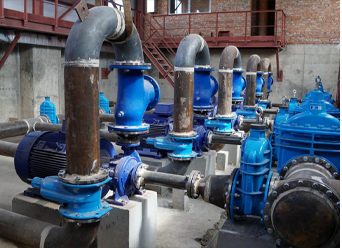
Lime Slurry Pump Manufacturing Specification and Performance Analysis
A lime slurry pump is a specialized heavy-duty industrial centrifugal pump designed for the transport of calcium hydroxide (slaked lime) suspensions. In the industrial value chain, these pumps serve as critical infrastructure in flue gas desulfurization (FGD), water treatment plants, and mining operations. Unlike standard water pumps, lime slurry pumps must handle non-Newtonian fluids characterized by high alkalinity, significant abrasive particle loads, and a propensity for sedimentation. The core technical challenge lies in managing the balance between hydraulic efficiency and the mitigation of erosive wear. The pump's performance is defined by its ability to maintain a consistent volumetric flow rate while resisting the aggressive chemical nature of the lime and the physical scouring caused by suspended solids, ensuring systemic uptime in continuous processing environments.
Material Science & Manufacturing
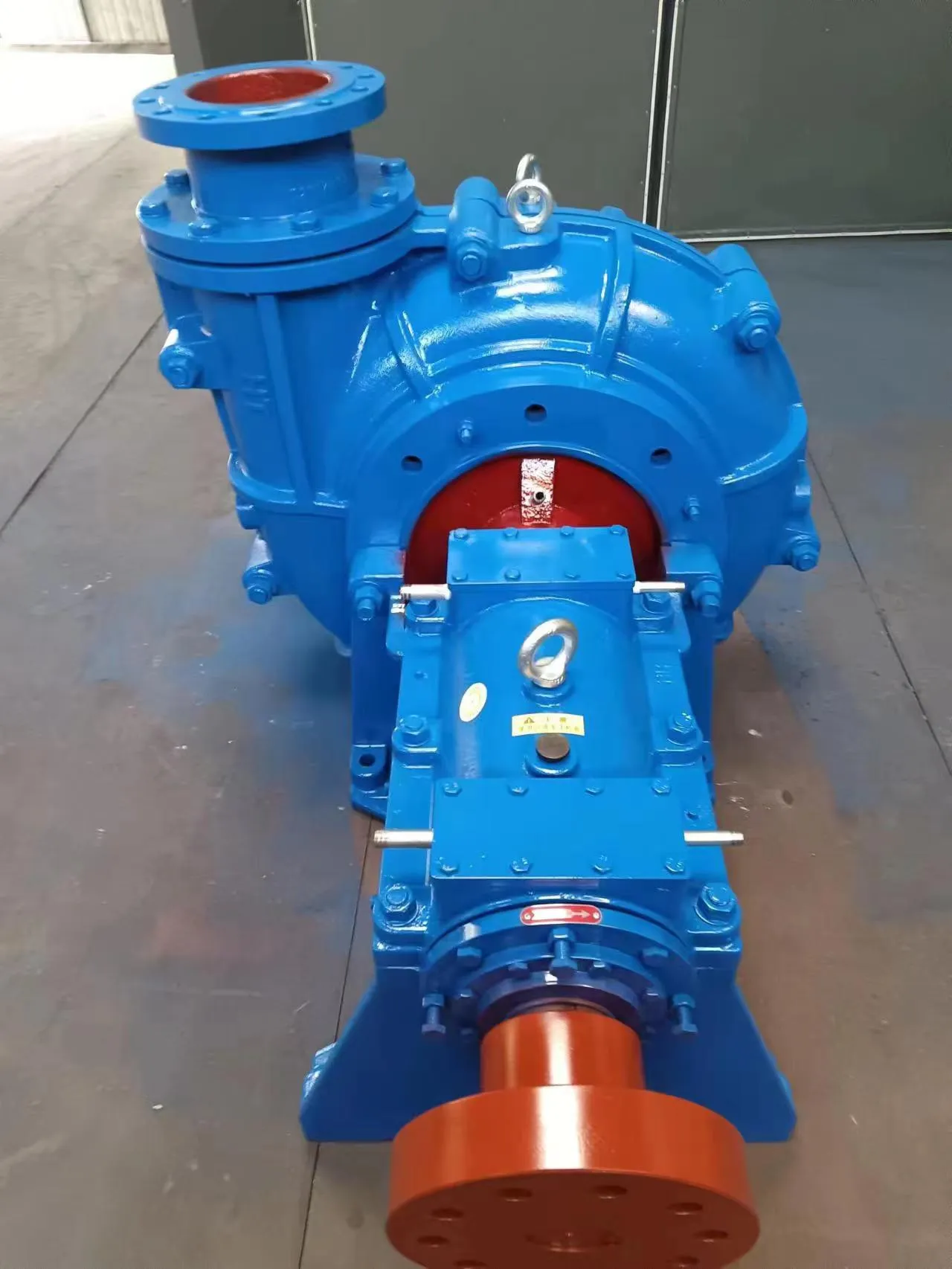
The engineering of a lime slurry pump begins with material selection tailored to combat abrasive wear and alkaline corrosion. The primary components—specifically the impeller and volute casing—are typically manufactured from high-chromium white iron (ASTM A532) or specialty duplex stainless steels. High-chromium alloys provide a hard martensitic matrix with embedded chromium carbides, which offer superior resistance to the micro-cutting and plowing actions of lime particles. For more aggressive chemical environments, rubber-lined casings (natural rubber or nitrile) are employed to absorb the kinetic energy of the slurry particles, thereby reducing the wear rate of the metallic substrate.
Manufacturing involves precision casting and CNC machining to ensure tight tolerances, which are critical for reducing internal turbulence and preventing localized cavitation. The impeller design utilizes a semi-open or closed geometry with specialized vane profiles to maximize shear force and prevent the accumulation of settled lime solids. A key manufacturing focus is the hardening process; heat treatment cycles are strictly controlled to achieve a hardness of 55-65 HRC. Additionally, the shaft is often coated with tungsten carbide or hard-chromed to prevent premature failure at the seal interfaces. The assembly process incorporates heavy-duty bearings and a robust stuffing box designed to accommodate mechanical seals or gland packing capable of handling the abrasive nature of the slurry.
Performance & Engineering
Engineering a lime slurry pump requires a deep dive into fluid dynamics and force analysis. The most significant engineering hurdle is the "settling velocity" of lime particles. To prevent clogging and sedimentation, the pump must maintain a critical velocity—typically above 1.5 to 2.0 m/s—within the casing and discharge piping. This requires the calculation of the Reynolds number for slurry flows, considering the apparent viscosity of the calcium hydroxide suspension, which varies based on the solids concentration (usually expressed as weight percentage, wt%).
Environmental resistance is addressed through the integration of advanced sealing systems. Because lime is highly abrasive, traditional mechanical seals often fail. Engineering solutions include the use of expelled seals or double mechanical seals with a clean water flush (API Plan 32 or 54) to prevent particles from entering the seal faces. From a force analysis perspective, the pump must be designed to handle the increased specific gravity of the slurry (typically 1.1 to 1.4 sg), which increases the radial and axial loads on the shaft and bearings. This necessitates the use of oversized bearing housings and reinforced shafting to prevent deflection and vibrational fatigue, ensuring compliance with ISO 10816 vibration standards.
Technical Specifications
| Specification Parameter | Standard Duty Grade | High-Abrasion Grade | Extreme Chemical Grade | Unit of Measure |
|---|---|---|---|---|
| Casing Material | Cast Iron / Steel | High-Cr White Iron | Duplex SS / Rubber Lined | Material Type |
| Max Discharge Head | 45 | 60 | 50 | Meters (m) |
| Max Flow Rate | 250 | 400 | 300 | m³/h |
| Max Slurry Density | 1.2 | 1.5 | 1.3 | Specific Gravity (sg) |
| Shaft Hardness | 45-50 | 58-62 | 60-65 (Coated) | Rockwell C (HRC) |
| Efficiency Range | 65% - 75% | 60% - 70% | 62% - 72% | Percentage (%) |
Failure Mode & Maintenance
The primary failure mode in lime slurry pumps is erosive wear, specifically "impeller washout," where the high-velocity slurry strips material from the vane tips and the volute tongue. This leads to a gradual decline in head pressure and flow efficiency. Another critical failure mode is "solidification or scaling," where lime precipitates and hardens within the pump casing during periods of inactivity, leading to pump seizure or catastrophic motor overload upon restart.
Furthermore, fatigue cracking can occur in the shaft due to the uneven loading caused by the non-homogeneous nature of the slurry. To mitigate these risks, a professional maintenance protocol must be implemented: 1) Implementation of a scheduled flushing cycle to prevent lime scaling; 2) Periodic ultrasonic thickness testing of the volute casing to monitor wear rates; 3) Vibration analysis to detect early bearing degradation or shaft misalignment; 4) Replacement of wear liners before the base metal is compromised. For mechanical seals, the maintenance focus should be on the integrity of the flush water system, ensuring that the pressure of the flush fluid is always higher than the internal pump pressure to prevent slurry ingress.
Industry FAQ
Q: How do we determine the optimal impeller material for a 30% wt lime suspension?
A: For a 30% weight concentration, the abrasive index is high. We recommend ASTM A532 Class III high-chromium iron. This material provides the necessary hardness to resist the scouring action of the calcium hydroxide particles while maintaining sufficient toughness to avoid brittle fracture under hydraulic shock.
Q: What is the risk of running a lime slurry pump at a flow rate below the critical velocity?
A: Running below the critical velocity leads to "sanding" or sedimentation. The lime particles will settle at the bottom of the volute and discharge piping, creating blockages. This increases the friction factor, reduces the effective diameter of the pipe, and eventually causes the pump to dead-head, which can lead to overheating and seal failure.
Q: Why is a double mechanical seal preferred over a single seal in lime applications?
A: Lime slurry is highly invasive. A single seal allows particles to contact the seal faces directly, leading to rapid abrasive wear. A double seal with an external flush (API Plan 54) creates a pressurized barrier of clean fluid between the two seals, ensuring that no slurry ever reaches the polished seal faces.
Q: How does the pH level of the lime slurry affect the pump's structural integrity?
A: Lime slurry is highly alkaline (pH 12+). While most high-chrome alloys and stainless steels are resistant to alkaline environments, standard carbon steel can suffer from caustic embrittlement over time. Using alloys with high chromium and nickel content ensures a stable passive oxide layer that protects the metal from chemical degradation.
Q: What are the signs that the pump impeller has reached its wear limit?
A: The most prominent sign is a measurable drop in the discharge pressure (head) and a corresponding increase in the motor's amperage draw as the pump struggles to maintain flow. A significant increase in vibration levels and a decrease in the volumetric efficiency (measured via flow meter) also indicate that the impeller clearances have widened due to wear.
Conclusion
The operational reliability of a lime slurry pump is fundamentally dependent on the synergy between material hardness and hydraulic design. By employing high-chromium alloys and ensuring that the operating point remains above the critical settling velocity, engineers can significantly extend the Mean Time Between Failures (MTBF). The transition from standard centrifugal designs to specialized slurry-grade architectures is essential for managing the dual threats of abrasive wear and alkaline corrosion.
Looking forward, the integration of real-time wear monitoring sensors and variable frequency drives (VFDs) will allow for more precise control over slurry velocities, further optimizing energy consumption and component lifespan. For procurement and plant managers, prioritizing the total cost of ownership (TCO) over initial capital expenditure—by investing in superior metallurgy and advanced sealing systems—remains the most technically sound strategy for maintaining industrial lime transport systems.
-
Comprehensive Guide to Waterproof ORings for Optimal Sealing Solutions
News2026-06-09
-
septic system sump pump Performance Analysis
News2026-06-26
-
septic pump company Performance Analysis
News2026-06-26
-
pumps water treatment Performance Analysis
News2026-06-26
-
pumps for septic tanks Material Science and Manufacturing
News2026-06-26
-
pump for septic system Material Science Manufacturing
News2026-06-26
-
heavy duty submersible pump Performance Analysis
News2026-06-25
-
best submersible pump for septic tank Performance Analysis
News2026-06-25
-
basement sewer ejector pump Performance Analysis
News2026-06-25
-
basement pumps ejector pumps Performance Analysis
News2026-06-25
-
basement lift pump Performance and Engineering
News2026-06-25
-
basement bathroom pump systems Performance Analysis
News2026-06-24
-
basement bathroom ejector pump system Performance Engineering
News2026-06-24
-
2 hp sewage pump Performance Engineering
News2026-06-24
-
1 hp septic pump Performance Engineering
News2026-06-24




