English
- Afrikaans
- Albanian
- Amharic
- Arabic
- Armenian
- Azerbaijani
- Basque
- Belarusian
- Bengali
- Bosnian
- Bulgarian
- Catalan
- Cebuano
- Corsican
- Croatian
- Czech
- Danish
- Dutch
- English
- Esperanto
- Estonian
- Finnish
- French
- Frisian
- Galician
- Georgian
- German
- Greek
- Gujarati
- Haitian Creole
- hausa
- hawaiian
- Hebrew
- Hindi
- Miao
- Hungarian
- Icelandic
- igbo
- Indonesian
- irish
- Italian
- Japanese
- Javanese
- Kannada
- kazakh
- Khmer
- Rwandese
- Korean
- Kurdish
- Kyrgyz
- Lao
- Latin
- Latvian
- Lithuanian
- Luxembourgish
- Macedonian
- Malgashi
- Malay
- Malayalam
- Maltese
- Maori
- Marathi
- Mongolian
- Myanmar
- Nepali
- Norwegian
- Norwegian
- Occitan
- Pashto
- Persian
- Polish
- Portuguese
- Punjabi
- Romanian
- Russian
- Samoan
- Scottish Gaelic
- Serbian
- Sesotho
- Shona
- Sindhi
- Sinhala
- Slovak
- Slovenian
- Somali
- Spanish
- Sundanese
- Swahili
- Swedish
- Tagalog
- Tajik
- Tamil
- Tatar
- Telugu
- Thai
- Turkish
- Turkmen
- Ukrainian
- Urdu
- Uighur
- Uzbek
- Vietnamese
- Welsh
- Bantu
- Yiddish
- Yoruba
- Zulu

Telephone: +86 13120555503
Email: frank@cypump.com


Apr . 01, 2024 17:55 Back to list
large slurry pumps Performance Analysis and Manufacturing Specifications
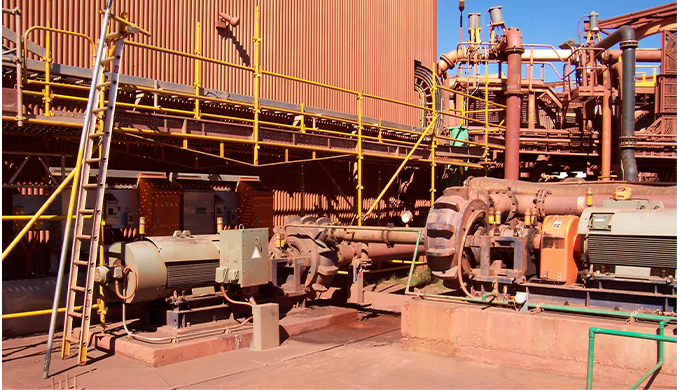
Large Slurry Pumps Performance Analysis and Manufacturing Specifications
Large slurry pumps are heavy-duty industrial centrifugal machines engineered specifically for the transport of abrasive, corrosive, and high-density fluids containing suspended solid particles. Within the industrial value chain, these pumps occupy a critical position in mining, mineral processing, dredging, and chemical waste management, serving as the primary motive force for moving tailings, ore slurries, and grit. Unlike standard water pumps, large slurry pumps must balance the conflicting requirements of high volumetric flow rates and extreme resistance to erosive wear. The core technical challenge lies in managing the fluid dynamics of non-Newtonian fluids—where viscosity changes under shear stress—while maintaining hydraulic efficiency and structural integrity under the constant bombardment of particulate matter. Their performance is measured not only by head and flow but by the Mean Time Between Failures (MTBF) of the wear components, making material selection and precision casting the cornerstones of their engineering design.
Material Science & Manufacturing
The manufacturing of large slurry pumps begins with advanced metallurgy, as the internal components are subject to combined abrasive wear, corrosive attack, and cavitation. The primary materials employed are High-Chromium White Cast Irons (ASTM A532), which utilize a eutectic structure of hard chromium carbides embedded in a martensitic matrix to provide extreme hardness (typically 60-65 HRC). For applications involving higher acidity or alkalinity, duplex stainless steels or specialized rubber linings are utilized. Natural rubber linings, specifically those with high resilience and abrasion resistance, are bonded to the pump casing to absorb the impact of larger particles, converting kinetic energy into heat rather than material loss.
The manufacturing process involves complex precision casting and machining. Large-scale sand casting is typically used for the volute casing, requiring stringent control over cooling rates to prevent internal stresses and shrinkage porosity. The impeller—the most critical component—undergoes rigorous dynamic balancing to minimize vibration, which is a primary driver of premature bearing failure. Precision CNC machining is applied to the mating surfaces of the casing and the shaft journals to ensure a concentricity tolerance within microns. Furthermore, the integration of specialized sealing systems, such as expeller seals or mechanical seals with external flushing, is critical to prevent the leakage of abrasive solids into the bearing housing, which would otherwise lead to catastrophic failure of the rotating assembly.
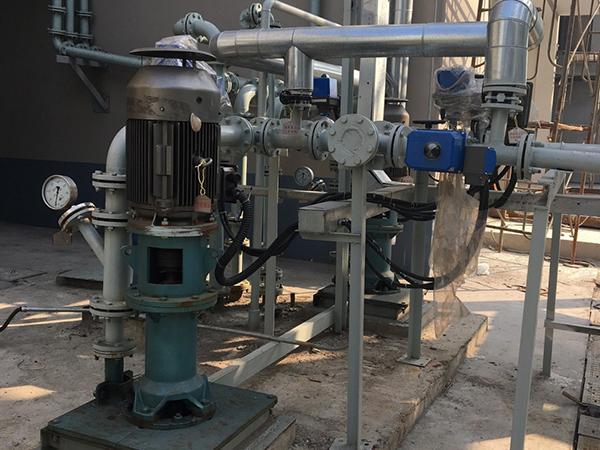
Performance & Engineering
Engineering a large slurry pump requires a deep analysis of fluid-solid interactions. The primary engineering focus is the "Critical Settling Velocity," the minimum speed at which the slurry must move through the pipe and pump to prevent solids from precipitating and causing a blockage. This involves calculating the Reynolds number for non-Newtonian flows and optimizing the impeller vane geometry to minimize turbulence and stagnant zones where erosion is accelerated. Force analysis is conducted on the pump shaft to withstand the high radial loads generated by the unbalanced pressure distribution inherent in high-density slurry transport.
Environmental resistance is another key engineering dimension. Pumps operating in open-pit mines must withstand extreme temperature fluctuations and exposure to saline or acidic groundwater. To combat cavitation—where vapor bubbles collapse and pit the metal surface—engineers optimize the Net Positive Suction Head Required (NPSHr) by adjusting the impeller eye diameter and inlet geometry. Compliance requirements often mandate that these pumps meet strict noise and vibration standards to ensure operational safety in densely packed processing plants. The functional implementation of Variable Frequency Drives (VFDs) has become standard, allowing operators to adjust the pump speed based on the slurry density, thereby optimizing energy consumption and reducing wear by avoiding excessive velocities.
Technical Specifications
| Parameter Dimension | Standard Duty Spec | Heavy Duty Spec | Extreme Erosion Spec | Metric/Unit |
|---|---|---|---|---|
| Max Flow Rate | 1,200 | 2,500 | 4,000 | m³/h |
| Max Discharge Head | 45 | 80 | 120 | Meters |
| Max Particle Size | 30 | 65 | 110 | mm |
| Material Hardness | 55-58 | 60-62 | 65-68 | HRC |
| Max Slurry Density | 1.3 | 1.6 | 1.9 | t/m³ |
| Efficiency Range | 72% - 78% | 70% - 75% | 65% - 72% | % |
Failure Mode & Maintenance
The failure modes of large slurry pumps are primarily driven by the aggressive nature of the medium. The most common failure is "Abrasive Wear," where the high-velocity impact of solids removes material from the impeller vanes and volute liner. This leads to a gradual drop in hydraulic efficiency and an increase in NPSHr. A more acute failure is "Cavitation Erosion," characterized by the formation of small pits on the impeller surface, usually caused by insufficient suction head or excessive flow rates. Another critical failure mode is "Shaft Fatigue," occurring when vibration caused by impeller imbalance or solids buildup leads to stress cracking at the shaft shoulders.
Professional maintenance requires a proactive, condition-based monitoring strategy. Vibration analysis (FFT) is used to detect bearing wear and misalignment before catastrophic failure occurs. Maintenance protocols include the periodic measurement of liner thickness using ultrasonic testing; once the liner reaches its minimum wear limit, it must be replaced to prevent the pump casing from being compromised. For the sealing system, the "gland water" flow rate and pressure must be monitored constantly to ensure that the abrasive slurry is kept away from the shaft. Lubrication schedules for the bearings must account for the heavy radial loads, utilizing high-viscosity synthetic lubricants that can maintain a stable film under extreme pressure.
Industry FAQ
Q: How do you determine whether to use a rubber-lined or a high-chrome alloy pump?
A: The selection depends on the particle size and the nature of the abrasion. Rubber linings are superior for fine, sharp particles that cause "cutting" wear, as the rubber absorbs the impact. High-chrome alloys are required for coarse, heavy particles that cause "impact" wear, as the hard carbide structure resists the crushing force of large solids.
Q: Why is the pump experiencing sudden drops in head despite the motor running at full speed?
A: This is often a symptom of "impeller plugging" or severe internal wear. If the slurry contains oversized particles, they can lodge in the impeller vanes, disrupting the flow. Alternatively, if the clearances between the impeller and the wear plate have widened due to erosion, internal recirculation occurs, significantly reducing the effective head.
Q: What is the impact of slurry viscosity on the NPSH requirements?
A: Increased viscosity increases the frictional losses in the suction piping, which lowers the Net Positive Suction Head Available (NPSHa). If the NPSHa falls below the pump's NPSHr, cavitation will occur, leading to rapid material degradation and unstable flow rates.
Q: How can we extend the life of the expeller seal in high-density applications?
A: Ensuring the correct alignment of the shaft and maintaining a consistent seal water supply is paramount. Additionally, installing a VFD to avoid sudden start-stop cycles reduces the mechanical shock to the seal faces, preventing premature leakage.
Q: What are the signs of imminent bearing failure in a large slurry pump?
A: The primary indicators are an increase in the vibration amplitude in the high-frequency spectrum and a rise in the bearing housing temperature. Any audible change in the pump's acoustic signature, such as grinding or whining, suggests that the lubricant film has broken down or that particles have penetrated the seal.
Conclusion
The operational success of large slurry pumps depends on a rigorous synthesis of material science and fluid dynamics. By balancing the hardness of high-chromium alloys with the resilience of elastomer linings and optimizing the hydraulic geometry to mitigate cavitation, industry operators can maximize the volumetric efficiency of their slurry transport systems. The technical density of these machines requires a shift from reactive maintenance to a predictive model based on vibration analysis and wear-rate monitoring.
Looking forward, the integration of smart sensors for real-time wear tracking and the adoption of additive manufacturing for complex impeller geometries promise to further reduce the total cost of ownership. Ensuring strict adherence to international metallurgy and safety standards remains the only viable path to maintaining system reliability in the most demanding industrial environments.
-
Comprehensive Guide to Waterproof ORings for Optimal Sealing Solutions
News2026-06-09
-
heavy duty submersible pump Performance Analysis
News2026-06-25
-
best submersible pump for septic tank Performance Analysis
News2026-06-25
-
basement sewer ejector pump Performance Analysis
News2026-06-25
-
basement pumps ejector pumps Performance Analysis
News2026-06-25
-
basement lift pump Performance and Engineering
News2026-06-25
-
basement bathroom pump systems Performance Analysis
News2026-06-24
-
basement bathroom ejector pump system Performance Engineering
News2026-06-24
-
2 hp sewage pump Performance Engineering
News2026-06-24
-
1 hp septic pump Performance Engineering
News2026-06-24
-
submersible effluent pump Performance Analysis
News2026-06-24
-
submergable pump Material Science
News2026-06-23
-
sewer injection pump Performance Engineering
News2026-06-23
-
Sewer Ejector Pump System Performance Analysis
News2026-06-23
-
septic tank pump for sale Performance Engineering
News2026-06-23




