English
- Afrikaans
- Albanian
- Amharic
- Arabic
- Armenian
- Azerbaijani
- Basque
- Belarusian
- Bengali
- Bosnian
- Bulgarian
- Catalan
- Cebuano
- Corsican
- Croatian
- Czech
- Danish
- Dutch
- English
- Esperanto
- Estonian
- Finnish
- French
- Frisian
- Galician
- Georgian
- German
- Greek
- Gujarati
- Haitian Creole
- hausa
- hawaiian
- Hebrew
- Hindi
- Miao
- Hungarian
- Icelandic
- igbo
- Indonesian
- irish
- Italian
- Japanese
- Javanese
- Kannada
- kazakh
- Khmer
- Rwandese
- Korean
- Kurdish
- Kyrgyz
- Lao
- Latin
- Latvian
- Lithuanian
- Luxembourgish
- Macedonian
- Malgashi
- Malay
- Malayalam
- Maltese
- Maori
- Marathi
- Mongolian
- Myanmar
- Nepali
- Norwegian
- Norwegian
- Occitan
- Pashto
- Persian
- Polish
- Portuguese
- Punjabi
- Romanian
- Russian
- Samoan
- Scottish Gaelic
- Serbian
- Sesotho
- Shona
- Sindhi
- Sinhala
- Slovak
- Slovenian
- Somali
- Spanish
- Sundanese
- Swahili
- Swedish
- Tagalog
- Tajik
- Tamil
- Tatar
- Telugu
- Thai
- Turkish
- Turkmen
- Ukrainian
- Urdu
- Uighur
- Uzbek
- Vietnamese
- Welsh
- Bantu
- Yiddish
- Yoruba
- Zulu

Telephone: +86 13120555503
Email: frank@cypump.com


Apr . 01, 2024 17:55 Back to list
ksb slurry pumps Manufacturing Specification and Performance Analysis
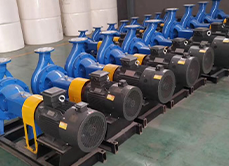
KSB Slurry Pumps Manufacturing Specification and Performance Analysis
KSB slurry pumps are specialized centrifugal pumping systems engineered for the conveyance of abrasive, corrosive, and high-density fluids, typically encountered in mining, mineral processing, and chemical industries. Positioned as critical infrastructure in the industrial value chain, these pumps serve as the primary mechanism for transporting tailings, ore slurries, and waste chemicals. The technical core of the KSB slurry pump lies in its ability to balance hydraulic efficiency with extreme wear resistance. Unlike standard water pumps, slurry pumps must manage the complex rheology of non-Newtonian fluids, where the viscosity and flow characteristics change based on shear rates and solids concentration. The engineering focus is centered on minimizing the erosion-corrosion synergy—a phenomenon where chemical corrosion strips the protective oxide layer from the metal, accelerating mechanical wear by abrasive particles.
Material Science & Manufacturing
The longevity of KSB slurry pumps is predicated on advanced material science, specifically the selection of elastomers and alloys capable of withstanding high-velocity particle impingement. For the wet-end components, high-chrome white irons ( ASTM A532) are frequently utilized. These materials feature a martensitic matrix embedded with primary M7C3 carbides, providing a hardness typically exceeding 60 HRC, which is essential for resisting abrasive wear from quartz or pyrite particles. In environments where chemical corrosion dominates, duplex stainless steels or specialized rubber linings (such as Natural Rubber or Nitrile) are employed. Rubber linings operate on the principle of elastic deformation, absorbing the energy of particle impact rather than resisting it through hardness, which is ideal for slurries with fine particles and high acidity.
The manufacturing process involves precision casting and rigorous machining. The impeller is often produced via investment casting to ensure an optimized hydraulic profile, which reduces turbulence—a primary driver of localized erosion. Post-casting, components undergo heat treatment, including quenching and tempering, to stabilize the metallurgical structure and prevent stress-induced cracking. The sealing systems are engineered with extreme precision; KSB utilizes advanced expeller seals or mechanical seals with hardened faces (Silicon Carbide or Tungsten Carbide) to prevent the ingress of abrasive particles into the bearing housing, thereby ensuring the mechanical integrity of the rotating assembly.
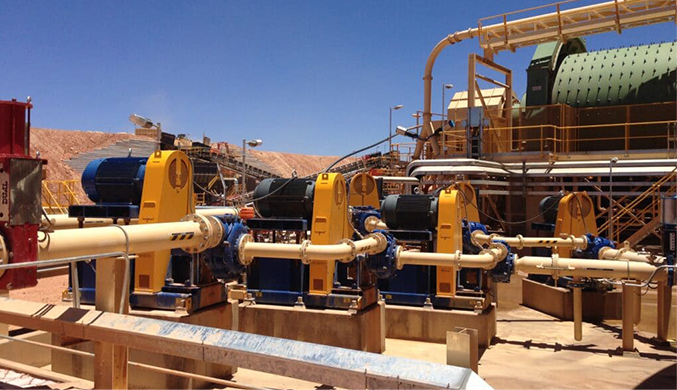
Performance & Engineering
Engineering KSB slurry pumps requires a comprehensive force analysis to mitigate the effects of unbalanced hydraulic loads caused by uneven solids distribution. The hydraulic design focuses on the Net Positive Suction Head required (NPSHr) to prevent cavitation, which is exacerbated in slurry applications due to the presence of gas bubbles and the increased fluid density. To optimize performance, the pump is designed with a wide-passage impeller to minimize clogging and reduce the fluid velocity at the walls, thereby exponentially decreasing the erosion rate (which typically follows a cubic relationship with velocity).
From a compliance and engineering perspective, the pumps are designed to handle high specific gravities (up to 1.5 or higher). The shaft design incorporates high-tensile alloy steels to resist the bending moments exerted by the heavy impeller and the fluctuating torque associated with slurry slugs. Environmental resistance is ensured through the use of anti-corrosive coatings on the external casing and the implementation of heavy-duty bearing housings that can withstand extreme ambient temperatures and vibration levels common in mining sites. Furthermore, the integration of Variable Frequency Drives (VFDs) allows for the precise control of flow rates, ensuring the slurry remains above the critical deposition velocity to prevent pipeline blockage.
Technical Specifications
| Specification Dimension | High-Chrome Alloy Variant | Rubber-Lined Variant | Duplex Steel Variant | Performance Metric |
|---|---|---|---|---|
| Hardness (HRC/Shore A) | 60 - 65 HRC | 60 - 70 Shore A | 25 - 35 HRC | Abrasion Resistance |
| Max Slurry Density (kg/m³) | 1600 - 2200 | 1200 - 1500 | 1400 - 1800 | Fluid Capacity |
| Max Particle Size (mm) | Up to 15mm | Up to 8mm | Up to 12mm | Particle Handling |
| Corrosion Resistance (pH) | pH 4 - 9 | pH 2 - 12 | pH 1 - 13 | Chemical Stability |
| Operating Temp (°C) | -20 to +150 | -10 to +70 | -40 to +200 | Thermal Range |
| Efficiency Rate (%) | 72% - 84% | 68% - 80% | 75% - 86% | Hydraulic Efficiency |
Failure Mode & Maintenance
Failure analysis of KSB slurry pumps typically identifies three primary modes: erosive wear, cavitation-induced pitting, and seal degradation. Erosive wear occurs most prominently at the impeller vanes and the volute tongue, where high-velocity impingement removes material. This is often characterized by "scalloping" patterns on the metal surface. Cavitation occurs when the local pressure drops below the vapor pressure of the liquid, creating bubbles that collapse violently, leading to micro-fractures in the material matrix. Seal degradation is usually caused by the migration of abrasive fines into the seal chamber, acting as a grinding paste that rapidly erodes the sealing faces.
Maintenance protocols must be predictive rather than reactive. Professional maintenance involves the regular measurement of impeller clearance and the monitoring of vibration signatures using FFT (Fast Fourier Transform) analysis to detect early signs of bearing wear or shaft misalignment. To combat erosion, the use of replaceable wear liners is mandatory; these liners should be replaced when the wall thickness reaches a critical threshold (typically 20% of original thickness). For seal maintenance, the implementation of a clean flush-water system (API Plan 32 or 54) is recommended to maintain a positive pressure barrier, preventing slurry from entering the seal zone.
Industry FAQ
Q: How is the critical deposition velocity calculated for a specific KSB slurry pump application?
A: The critical deposition velocity (Vc) is calculated using the Durand equation or modified versions thereof, considering the particle diameter, the density difference between the solid and the liquid, and the fluid viscosity. It is essential to maintain the operating velocity approximately 20-30% above Vc to ensure solids remain in suspension and prevent sedimentation within the pump casing.
Q: When should I choose high-chrome alloys over rubber lining for the pump wet-end?
A: High-chrome alloys are specified for slurries containing coarse, sharp-edged particles with high hardness (e.g., tailings with high quartz content) and for applications involving higher temperatures. Rubber lining is preferred for slurries with fine particles and high chemical aggressiveness where the impact energy is low enough for the elastomer to absorb.
Q: What is the impact of slurry viscosity on the NPSH requirements of the pump?
A: Increased viscosity increases the frictional losses in the suction piping, which reduces the Net Positive Suction Head Available (NPSHa). If the NPSHa falls below the NPSHr of the KSB pump, cavitation occurs, leading to a drastic drop in head and flow, and accelerated material degradation due to imploding vapor bubbles.
Q: How does the "expeller" seal design differ from a standard mechanical seal in slurry applications?
A: An expeller seal uses a rotating disk to create a centrifugal force that pushes the slurry away from the shaft and seal area, creating a low-pressure zone. This minimizes the amount of abrasive material that reaches the actual sealing face, significantly extending the Mean Time Between Failures (MTBF) compared to conventional seals.
Q: What are the indicators of impeller fatigue cracking in high-density slurry service?
A: Indicators include an unexplained increase in vibration amplitudes, particularly at the 1x and 2x rotational frequencies, and a gradual decline in the pump's discharge pressure (head) despite constant RPM. Visual inspection during overhaul typically reveals stress cracks at the vane-to-shroud junctions due to cyclic loading.
Conclusion
The technical superiority of KSB slurry pumps is derived from the synergistic integration of advanced metallurgy and precision hydraulic engineering. By addressing the dual challenges of abrasive wear and chemical corrosion through the strategic use of high-chrome alloys and specialized elastomers, these systems ensure operational continuity in the most demanding industrial environments. The focus on minimizing erosion-corrosion synergy and optimizing fluid dynamics allows for a significant reduction in total cost of ownership through extended component lifecycles.
Looking forward, the industry is moving toward the integration of smart sensing and real-time wear monitoring, which will transform maintenance from scheduled intervals to condition-based interventions. For procurement and engineering teams, the selection of the correct material grade and the strict adherence to NPSH and deposition velocity parameters remain the most critical factors in ensuring the reliability and efficiency of slurry transport systems.
-
Comprehensive Guide to Waterproof ORings for Optimal Sealing Solutions
News2026-06-09
-
heavy duty submersible pump Performance Analysis
News2026-06-25
-
best submersible pump for septic tank Performance Analysis
News2026-06-25
-
basement sewer ejector pump Performance Analysis
News2026-06-25
-
basement pumps ejector pumps Performance Analysis
News2026-06-25
-
basement lift pump Performance and Engineering
News2026-06-25
-
basement bathroom pump systems Performance Analysis
News2026-06-24
-
basement bathroom ejector pump system Performance Engineering
News2026-06-24
-
2 hp sewage pump Performance Engineering
News2026-06-24
-
1 hp septic pump Performance Engineering
News2026-06-24
-
submersible effluent pump Performance Analysis
News2026-06-24
-
submergable pump Material Science
News2026-06-23
-
sewer injection pump Performance Engineering
News2026-06-23
-
Sewer Ejector Pump System Performance Analysis
News2026-06-23
-
septic tank pump for sale Performance Engineering
News2026-06-23




