English
- Afrikaans
- Albanian
- Amharic
- Arabic
- Armenian
- Azerbaijani
- Basque
- Belarusian
- Bengali
- Bosnian
- Bulgarian
- Catalan
- Cebuano
- Corsican
- Croatian
- Czech
- Danish
- Dutch
- English
- Esperanto
- Estonian
- Finnish
- French
- Frisian
- Galician
- Georgian
- German
- Greek
- Gujarati
- Haitian Creole
- hausa
- hawaiian
- Hebrew
- Hindi
- Miao
- Hungarian
- Icelandic
- igbo
- Indonesian
- irish
- Italian
- Japanese
- Javanese
- Kannada
- kazakh
- Khmer
- Rwandese
- Korean
- Kurdish
- Kyrgyz
- Lao
- Latin
- Latvian
- Lithuanian
- Luxembourgish
- Macedonian
- Malgashi
- Malay
- Malayalam
- Maltese
- Maori
- Marathi
- Mongolian
- Myanmar
- Nepali
- Norwegian
- Norwegian
- Occitan
- Pashto
- Persian
- Polish
- Portuguese
- Punjabi
- Romanian
- Russian
- Samoan
- Scottish Gaelic
- Serbian
- Sesotho
- Shona
- Sindhi
- Sinhala
- Slovak
- Slovenian
- Somali
- Spanish
- Sundanese
- Swahili
- Swedish
- Tagalog
- Tajik
- Tamil
- Tatar
- Telugu
- Thai
- Turkish
- Turkmen
- Ukrainian
- Urdu
- Uighur
- Uzbek
- Vietnamese
- Welsh
- Bantu
- Yiddish
- Yoruba
- Zulu

Telephone: +86 13120555503
Email: frank@cypump.com


Apr . 01, 2024 17:55 Back to list
kirloskar self priming sewage pump Performance Analysis
Introduction
Kirloskar self-priming sewage pumps are centrifugal pumps specifically designed for the efficient and reliable transfer of sewage and wastewater containing solids. Positioned within the wastewater management industry chain, these pumps serve as a critical component in municipal and industrial wastewater treatment plants, septic tank systems, and agricultural drainage applications. Unlike standard centrifugal pumps, self-priming pumps are capable of evacuating air from the suction line, eliminating the need for manual priming and ensuring operational readiness even after periods of inactivity. Core performance characteristics center around robust solids handling capacity, efficient priming capabilities, corrosion resistance, and consistent flow rates under varying operating conditions. The market demand for these pumps is driven by increasing urbanization, stricter environmental regulations regarding wastewater discharge, and the need for durable, low-maintenance solutions in challenging environments. A key pain point in the industry revolves around pump clogging due to solids buildup and the subsequent downtime and maintenance costs. Kirloskar addresses this through impeller design and robust construction. Further concerns involve corrosion from the aggressive chemical composition of sewage and ensuring compliance with local discharge standards.
Material Science & Manufacturing
The construction of Kirloskar self-priming sewage pumps relies heavily on material selection to resist corrosion and abrasion. Pump casings are typically manufactured from cast iron (ASTM A48 Class 30) due to its cost-effectiveness and inherent strength. However, for highly corrosive environments, ductile iron (ASTM A536 65-45-12) or stainless steel (AISI 316) are employed, offering superior resistance to chemical attack. Impellers, the rotating component responsible for generating flow, are commonly constructed from high-chrome cast iron, renowned for its exceptional abrasion resistance against solid particles within the sewage. Shafts are manufactured from high-tensile steel (EN 10083-2), undergoing heat treatment to enhance strength and fatigue resistance. Seals are typically mechanical seals comprised of silicon carbide faces, providing a robust barrier against leakage and resisting wear from abrasive materials.
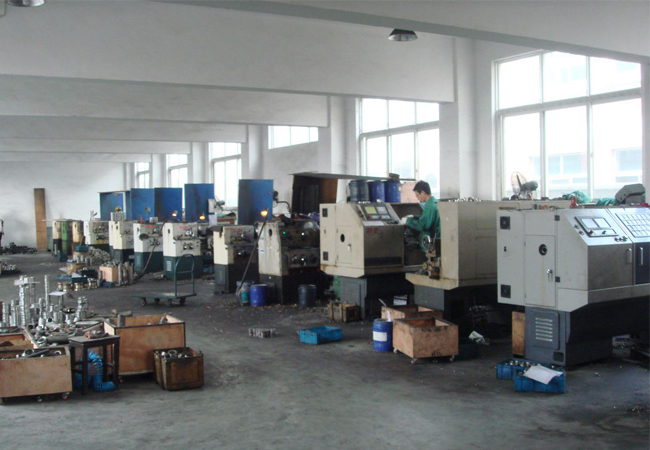
Manufacturing processes involve several critical stages. The casting process for the casing and impeller requires precise mold creation and controlled solidification to minimize porosity and ensure dimensional accuracy. Welding processes, employing shielded metal arc welding (SMAW) or gas metal arc welding (GMAW), are used to join components, requiring stringent quality control to prevent defects. Machining operations, including turning, milling, and drilling, are essential for achieving precise tolerances and smooth surface finishes. The impeller balancing process is vital, ensuring minimal vibration and maximizing pump efficiency. Key parameter control during manufacturing focuses on material composition verification, weld inspection (radiographic and ultrasonic testing), dimensional inspection (coordinate measuring machines – CMM), and hydrostatic testing to verify casing integrity. The proper annealing of cast iron components is critical to minimize residual stresses and improve ductility, while accurate heat treatment of shafts is vital for achieving the required hardness and toughness.
Performance & Engineering
Performance of Kirloskar self-priming sewage pumps is governed by several key engineering principles. The pump’s ability to self-prime relies on a specifically designed impeller geometry that creates a vacuum within the suction line, drawing fluid into the pump. Force analysis focuses on hydraulic forces exerted on the impeller, radial loads on the shaft, and axial thrust generated by the fluid flow. Proper bearing selection (typically deep groove ball bearings or angular contact ball bearings) is crucial to handle these loads and ensure long-term reliability. Environmental resistance is paramount, particularly concerning corrosion and abrasion. The pump’s materials must withstand the chemical constituents of sewage, which can include sulfates, chlorides, and organic matter. Abrasion resistance is achieved through the use of high-chrome cast iron impellers.
Compliance requirements vary by region and application. Pumps must meet relevant efficiency standards (e.g., Hydraulic Institute standards), and electrical components must comply with safety regulations (e.g., UL, CSA, CE). Hydraulic performance is evaluated according to ISO 9906, specifying procedures for determining pump efficiency, head, and flow rate. Wastewater discharge regulations often dictate permissible solids content and effluent quality, influencing pump selection and system design. Functional implementation necessitates careful consideration of system head loss, suction lift limitations, and the characteristics of the wastewater being pumped. Proper piping design, including minimizing bends and ensuring adequate pipe diameter, is essential to prevent cavitation and maintain efficient operation. Variable Frequency Drives (VFDs) are often integrated to optimize pump performance and energy consumption based on fluctuating demand.
Technical Specifications
| Parameter | Unit | Value (Typical - Model KSPS65) | Tolerance |
|---|---|---|---|
| Flow Rate | m³/hr | 30-120 | ±5% |
| Total Head | m | 10-30 | ±10% |
| Solids Handling Capacity | mm | 50 | N/A |
| Motor Power | kW | 3-7.5 | ±5% |
| Suction Lift | m | 8 (Max) | N/A |
| Casing Material | - | Cast Iron (A48 Class 30) | N/A |
Failure Mode & Maintenance
Kirloskar self-priming sewage pumps, despite their robust design, are susceptible to several failure modes. Fatigue cracking of the impeller, particularly around the vanes, can occur due to repeated stress from solids impact and hydraulic forces. Delamination of the impeller coating (if applied) can lead to reduced abrasion resistance and decreased pump efficiency. Corrosion, especially in aggressive sewage environments, can weaken the casing and impeller, leading to leaks and eventual failure. Bearing failure, stemming from inadequate lubrication, excessive loading, or contamination, is a common issue. Cavitation, caused by vapor bubble formation within the pump due to low suction pressure, can erode the impeller and casing. Blockage due to solids buildup in the impeller or discharge pipe is a frequent occurrence.
Preventive maintenance is critical. Regular inspection of the impeller for wear and damage is essential. Lubrication of bearings should be performed according to the manufacturer’s recommendations. Periodic cleaning of the pump casing and impeller to remove solids buildup is crucial. Visual inspection for corrosion and timely repair or replacement of corroded components are necessary. Vibration analysis can detect bearing wear or impeller imbalance before catastrophic failure. Scheduled seal replacement is recommended to prevent leaks. In case of failure, disassembly should be performed by qualified personnel following the manufacturer’s instructions. Proper alignment of the pump and motor is critical after reassembly. Utilizing a strainer upstream of the pump intake is recommended to minimize the ingress of large solids. The implementation of a robust preventative maintenance schedule, incorporating regular inspections and timely component replacement, significantly extends the service life of the pump.
Industry FAQ
Q: What is the primary difference between a self-priming pump and a standard centrifugal pump for sewage applications?
A: The key difference lies in their priming capability. Standard centrifugal pumps require manual priming – filling the pump casing and suction line with fluid before operation. Self-priming pumps automatically evacuate air from the suction line, allowing for immediate operation without manual intervention, which is critical for intermittent use and applications where the pump is located above the liquid level.
Q: How does impeller design contribute to solids handling capability?
A: Kirloskar’s impellers feature an open or semi-open design with large flow passages. This minimizes the risk of clogging and allows solids to pass through the pump without causing damage or significant performance degradation. The impeller vanes are also typically made from high-chrome cast iron for enhanced abrasion resistance.
Q: What materials are best suited for pumps handling highly corrosive sewage?
A: For highly corrosive environments, ductile iron (ASTM A536 65-45-12) or stainless steel (AISI 316) are recommended for the pump casing and impeller. Stainless steel offers superior corrosion resistance but comes at a higher cost. Mechanical seals with silicon carbide faces are also essential to prevent leakage in corrosive fluids.
Q: What are the common causes of cavitation in these pumps, and how can it be prevented?
A: Cavitation occurs when the absolute pressure at the pump suction drops below the vapor pressure of the liquid, forming vapor bubbles that collapse and erode the impeller. Common causes include insufficient suction head, high suction lift, excessive flow rate, and blockages in the suction line. Prevention involves ensuring adequate suction head, minimizing suction lift, selecting the appropriate pump size, and maintaining a clear suction line.
Q: What is the recommended maintenance schedule for a Kirloskar self-priming sewage pump?
A: A typical maintenance schedule includes monthly visual inspections for leaks and corrosion, quarterly lubrication of bearings, semi-annual impeller inspections for wear, and annual seal replacement. Regular monitoring of pump performance (flow rate, head, power consumption) can also help identify potential issues early on.
Conclusion
Kirloskar self-priming sewage pumps represent a robust and reliable solution for wastewater management. Their ability to efficiently handle solids, self-prime automatically, and resist corrosion makes them well-suited for diverse applications ranging from municipal wastewater treatment to industrial effluent handling. Understanding the material science behind their construction, the intricacies of their manufacturing processes, and the importance of preventative maintenance is crucial for maximizing their operational lifespan and minimizing downtime.
Future advancements in this field are likely to focus on further enhancing pump efficiency through optimized impeller designs, integrating smart monitoring systems for predictive maintenance, and developing more sustainable materials with increased corrosion resistance. Continuous improvement in these areas will be essential to meet the evolving demands of the wastewater treatment industry and ensure compliance with increasingly stringent environmental regulations.
-
Precision at the Pump: How Better Machining Protects Flow and Uptime
News2026-11-20
-
Why Pump Reliability Begins Before the First Drop of Fluid
News2026-11-20
-
Beyond the Pump: Designing Safer Access Around Critical Water Infrastructure
News2026-11-20
-
Why Pumping Stations Depend on the Infrastructure Beneath the Pumps
News2026-11-20
-
Beyond the Pump Room: How Smarter Loading Protects Industrial Equipment
News2026-11-19
-
When Pumps Stop: Designing More Resilient Power for Critical Pumping Systems
News2026-11-19
-
The Hidden Role of Dust and Gas Monitoring in Reliable Pump Operations
News2026-11-19
-
The Hidden Role of Mineral Compounds in Extending Industrial Pump Lifespan
News2026-10-12
-
Why Pump System Reliability Depends on Precision Hose Assembly Methods
News2026-09-15
-
How Advanced Imaging Films Are Transforming Pump Component Quality Control
News2026-08-25
-
How Advanced Filtration Protects Pump Systems from Premature Wear and Costly Downtime
News2026-08-25
-
How Steel Material Selection Drives Pump Reliability in Heavy-Duty Systems
News2026-08-25
-
Ensuring Pump System Efficiency: The Role of High-Quality Pipe Fittings and Tubing
News2026-08-24
-
Optimizing Fluid Dynamics and Material Consistency in Industrial Processing
News2026-08-18
-
Innovations and Challenges in Hydraulic Systems for Heavy Machinery
News2026-08-13




